Web3 innovations redefining user interactions online
Web3 innovations redefine how users interact with the internet by enhancing privacy, control over personal data, and enabling decentralized applications, which transform digital experiences across various industries.
Web3 innovations redefining how users interact with the internet are changing the way we connect online. Have you ever wondered how these advancements can impact your digital experiences? In this article, we delve into the transformative effects of Web3.
Understanding Web3 technology
Understanding Web3 technology is essential for anyone interested in the future of the internet. This innovative framework allows users to interact with digital platforms in ways that enhance privacy and autonomy.
The backbone of Web3 is decentralized technology, which ensures that users have greater control over their data. Unlike traditional internet models where central authorities govern everything, Web3 empowers individuals to engage directly.
Key Components of Web3
- Blockchain: This technology underpins Web3, allowing secure, transparent transactions.
- Smart Contracts: These self-executing contracts automate processes without intermediaries.
- Decentralized Applications (dApps): These apps run on the blockchain, providing users with enhanced security and functionality.
As we delve deeper into Web3, it becomes clear that this technology opens doors to new opportunities. Users can build relationships with platforms without giving up their personal data. For example, in Web3, social media users can monetize their content directly, bypassing the need for corporate middlemen.
This shift fundamentally changes how we interact online. In this new landscape, security and trust become paramount. With Web3, users can verify transactions and connections, leading to increased confidence in their digital interactions.
Understanding the implications of Web3 technology can help businesses and individuals alike leverage its potential. As more users become aware of their digital rights, the demand for legislation and ethical standards in the digital world will grow. In conclusion, Web3 technology represents a significant shift towards user-centric internet models that prioritize privacy.
Key benefits of Web3 innovations
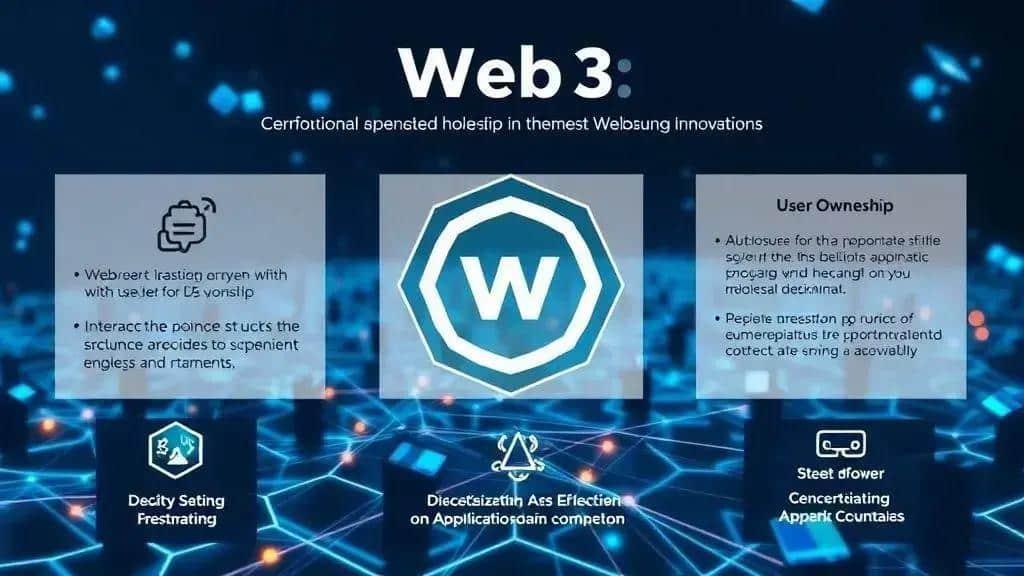
The key benefits of Web3 innovations highlight the transformative potential of this new internet paradigm. Users can enjoy enhanced control and privacy, making their online experiences more secure and tailored to their needs.
One significant advantage is the decentralization of data. Unlike traditional platforms, which store user information on centralized servers, Web3 enables data to be distributed across a network. This distribution not only increases security but also enhances trust among users.
Advantages of Decentralization
- Improved Security: With data spread across multiple locations, it is less vulnerable to hacks and breaches.
- User Ownership: Individuals have ownership over their own data, choosing what to share and when.
- Transparency: Users can verify transactions and interactions, promoting a culture of openness.
Another benefit is the ability to create decentralized applications (dApps). These applications function without a single point of control, providing users with real power and choice. For example, users can directly connect to services or marketplaces, eliminating intermediaries and reducing costs.
Furthermore, Web3 innovations allow for new economic models. Creators can be compensated fairly and promptly, thanks to smart contracts. These self-executing agreements ensure that payments are made automatically when certain conditions are met, streamlining transactions.
In addition, the rise of tokenomics introduces new ways for users to engage with platforms. Participants can earn tokens for contributing or interacting, giving them a stake in the ecosystem. This incentivizes user participation and fosters a more vibrant community.
Real-world applications of Web3
Real-world applications of Web3 showcase how this technology is being implemented across various industries. As businesses and developers embrace the potential of decentralized systems, innovative solutions are emerging.
One major area of application is in finance. Decentralized finance (DeFi) platforms allow users to lend, borrow, and trade without traditional banks. These platforms use smart contracts to execute transactions automatically, providing users with faster and more efficient services.
Key Use Cases in Finance
- Crypto Lending: Users can earn interest on their cryptocurrency assets without intermediaries.
- Decentralized Exchanges (DEX): These enable peer-to-peer trading of cryptocurrencies, enhancing privacy and control.
- Yield Farming: Investors can provide liquidity to platforms and earn rewards in the process.
Another fascinating application is in content creation. Web3 enables artists and creators to monetize their work directly, using non-fungible tokens (NFTs). These tokens represent ownership of digital assets, allowing artists to sell their creations without going through traditional galleries or auction houses.
Additionally, Web3 is making strides in supply chain management. By utilizing blockchain technology, businesses can track products from production to delivery. This transparency helps ensure the authenticity of goods and boosts consumer trust.
Gaming is also being transformed by Web3. Through blockchain, players can have true ownership of in-game assets. They can buy, sell, or trade these items freely, creating a dynamic economy within games.
As Web3 continues to evolve, its applications are only set to expand. From revolutionizing finance to empowering creators and enhancing transparency in industries, the impact of Web3 is profound and far-reaching.
Challenges and the future of Web3
Challenges and the future of Web3 present a mixture of obstacles and opportunities. While the technology promises to change the internet landscape, several challenges must be addressed for it to thrive.
One primary challenge is scalability. As more users adopt Web3 applications, ensuring that these platforms can handle increased traffic without slowing down can be difficult. This issue can lead to slower transactions and higher fees, which may deter users.
Scalability Solutions
- Layer 2 Solutions: Implementing technologies that build on top of existing blockchains to optimize performance.
- Sharding: Splitting the blockchain into smaller pieces to process transactions more efficiently.
- Interoperability: Creating systems that allow different blockchains to communicate seamlessly.
Another significant challenge is regulation. Governments around the world are still figuring out how to approach Web3 technologies. This uncertainty can create hurdles for developers and users alike. Regulations can either encourage innovation or stifle it, depending on how they are implemented.
Despite these challenges, the future of Web3 remains bright. Decentralization is gaining momentum, with more users seeking control over their data and digital interactions. As public awareness increases, demand for secure, private solutions will likely grow. This shift can push businesses to adapt and incorporate Web3 technologies.
Moreover, improving user experience will be a critical focus. Making Web3 applications more intuitive can help onboard users who are not familiar with blockchain technology. Education and effective design will play essential roles in this transition.
In conclusion, while challenges like scalability and regulation must be navigated, the drive towards a more decentralized internet creates exciting possibilities for innovation and user empowerment.
In summary, Web3 has the potential to transform our digital experiences by enhancing privacy, security, and user control. While challenges such as scalability and regulation exist, they can be overcome with innovation and collaboration. As more individuals and businesses embrace these changes, the future of the internet looks promising, opening doors to new opportunities and empowering users everywhere.
FAQ – Frequently Asked Questions about Web3 Innovations
What is Web3?
Web3 is a new internet paradigm that emphasizes decentralization, giving users more control over their online interactions and data.
What are the main benefits of Web3?
The main benefits include enhanced privacy, user ownership of data, and the ability to create decentralized applications (dApps).
How does Web3 impact finance?
Web3 introduces decentralized finance (DeFi), which allows for peer-to-peer lending, trading, and borrowing without traditional banks.
What challenges does Web3 face?
Challenges include scalability, regulatory uncertainty, and the need for improved user experience to attract more users.