Altcoin Security Architectures: Navigating 2026 Cyber Threats
In the rapidly evolving digital frontier, the security of our digital assets is paramount. As we look towards 2026, the landscape of cyber threats is becoming increasingly sophisticated, posing significant challenges to the integrity and resilience of cryptocurrency networks. While Bitcoin pioneered a revolutionary approach to secure digital transactions, the myriad of altcoins that have emerged since have introduced diverse and often innovative security architectures. Understanding these Altcoin Security Architectures is not just an academic exercise; it’s a critical component of informed investment and participation in the decentralized economy.
This comprehensive analysis will delve into the security paradigms of six leading altcoins, scrutinizing their core architectural designs and evaluating their preparedness against the projected cyber threats of 2026. From quantum computing advancements to state-sponsored attacks and increasingly complex social engineering schemes, the future of blockchain security demands constant vigilance and adaptation. We will explore how these altcoins are fortifying their networks, protecting user data, and maintaining decentralization in the face of an ever-hostile digital environment.
The Evolving Threat Landscape: What 2026 Holds
Before we dissect specific Altcoin Security Architectures, it’s crucial to understand the threats they are designed to withstand. The year 2026 is anticipated to bring a new wave of cyber challenges, driven by technological advancements and geopolitical shifts. Quantum computing, once a theoretical threat, is inching closer to practical application. A sufficiently powerful quantum computer could potentially break current cryptographic standards, rendering many blockchain security mechanisms obsolete. This necessitates a proactive approach to quantum-resistant cryptography, a field where some altcoins are already making strides.
Beyond quantum threats, traditional attack vectors will also become more refined. Advanced persistent threats (APTs) from well-funded state actors or sophisticated criminal organizations will continue to target critical infrastructure and high-value targets within the crypto space. These attacks often involve multi-stage infiltration, exploiting zero-day vulnerabilities and employing highly evasive techniques. Furthermore, the rise of artificial intelligence (AI) can be a double-edged sword; while AI can enhance security measures, it can also empower attackers to create more convincing phishing scams, automate exploit generation, and orchestrate more effective denial-of-service (DoS) attacks.
Social engineering remains a perennial threat, with attackers constantly devising new ways to trick users into compromising their private keys or sharing sensitive information. As the cryptocurrency ecosystem expands, so too does the attack surface, increasing the potential for supply chain attacks targeting wallet providers, exchanges, or even core development teams. The increasing interconnectedness of Web3 applications also introduces new vulnerabilities, where a flaw in one component can cascade across an entire ecosystem. Therefore, a holistic understanding of these diverse and interconnected threats is fundamental to assessing the robustness of any altcoin’s security posture.
Core Principles of Blockchain Security: A Foundation for Altcoins
At the heart of every secure blockchain lies a set of fundamental principles. These principles form the bedrock upon which all Altcoin Security Architectures are built. Understanding them is key to appreciating the innovations and challenges specific to each altcoin.
Decentralization
Decentralization is arguably the most critical security feature of blockchain technology. By distributing control and data across a vast network of independent nodes, it eliminates single points of failure. This makes it incredibly difficult for any single entity to censor transactions, alter historical records, or shut down the network. A truly decentralized network is resilient against attacks that would cripple a centralized system.
Cryptography
Cryptographic primitives are the mathematical tools that secure blockchain transactions and user identities. Hash functions ensure data integrity, making it impossible to tamper with a block without invalidating all subsequent blocks. Digital signatures, powered by public-key cryptography, verify the authenticity of transactions and prove ownership of funds without revealing private keys. The strength of these cryptographic algorithms is paramount; any weakness here can undermine the entire system.
Consensus Mechanisms
Consensus mechanisms are the rules by which network participants agree on the state of the blockchain. Proof-of-Work (PoW), Proof-of-Stake (PoS), and their many variations are designed to make it economically unfeasible or computationally prohibitive for malicious actors to gain control of the network and execute attacks like the 51% attack. A robust consensus mechanism ensures the immutability and finality of transactions.
Immutability
Once a transaction is recorded on the blockchain and confirmed by the network, it is virtually impossible to alter or delete it. This immutability provides a high degree of trust and transparency, as the history of all transactions is permanently available for verification. This feature is a direct result of cryptographic linking of blocks and strong consensus.
Transparency (with Anonymity)
While transaction details are transparently viewable on the public ledger, the identities of the participants are typically pseudonymous, represented by cryptographic addresses. This balance allows for public verification and auditing without revealing personal information, though enhanced privacy features are a growing area of innovation in Altcoin Security Architectures.
Deep Dive: Leading Altcoins and Their Security Architectures
Let’s now examine the specific Altcoin Security Architectures of six prominent cryptocurrencies, evaluating their strengths and weaknesses against the backdrop of 2026’s cyber threats.
1. Ethereum (ETH): The Smart Contract Powerhouse
Ethereum, the pioneer of smart contracts, transitioned from Proof-of-Work to Proof-of-Stake with ‘The Merge’, significantly altering its security model. Ethereum’s security relies on a distributed network of validators who stake ETH to participate in block production and validation. This PoS mechanism aims to be more energy-efficient and, theoretically, more resistant to 51% attacks than PoW, as an attacker would need to acquire and stake a vast amount of ETH, making such an attack prohibitively expensive and easily detectable.
From a cryptographic perspective, Ethereum utilizes ECDSA (Elliptic Curve Digital Signature Algorithm) for transaction signing and SHA-256 for hashing, similar to Bitcoin. However, its primary attack surface extends to its smart contract layer. Vulnerabilities in smart contract code, such as reentrancy attacks, integer overflows, or access control issues, have historically led to significant losses. Ethereum’s security strategy includes extensive community auditing, formal verification tools, and a robust bug bounty program to identify and mitigate these risks. Looking towards 2026, Ethereum is actively researching and implementing quantum-resistant cryptographic algorithms, particularly for future upgrades, to safeguard against potential quantum computing threats. The development of zero-knowledge proofs (ZKPs) and other privacy-enhancing technologies within its ecosystem also adds a layer of security by reducing the amount of exposed data.
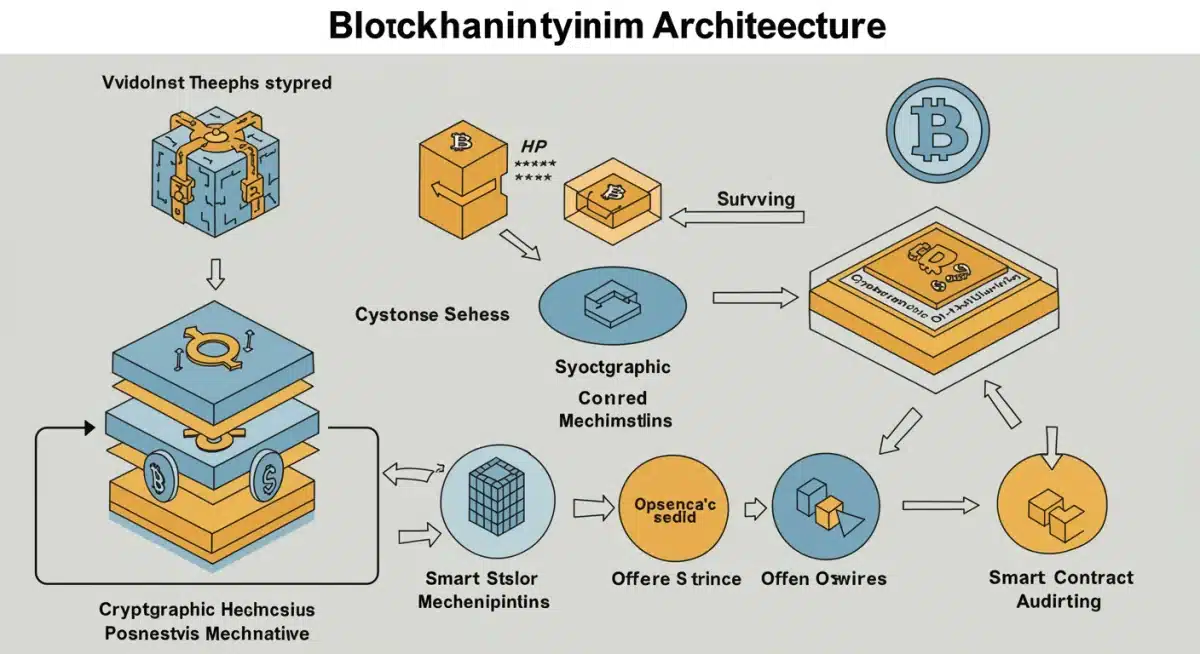
2. Cardano (ADA): Academic Rigor and Formal Verification
Cardano distinguishes itself with a research-driven, peer-reviewed approach to blockchain development. Its Ouroboros Proof-of-Stake consensus protocol is formally verified, meaning its security properties are mathematically proven. This academic rigor is a core tenet of Cardano’s Altcoin Security Architectures. Ouroboros is designed to be highly secure, resistant to various attacks, and ensures fair participation among stakepool operators.
Cardano’s smart contract platform, Plutus, is built using Haskell, a functional programming language known for its strong type system and suitability for formal verification. This reduces the likelihood of subtle bugs and vulnerabilities that often plague smart contracts written in less rigorous languages. For 2026, Cardano’s emphasis on formal methods positions it well against sophisticated exploits. Its multi-layer architecture, separating the settlement layer (CSL) from the computation layer (CCL), also adds a degree of modularity and isolation, potentially limiting the impact of an attack on one layer. Cardano’s commitment to decentralized governance through Project Catalyst further enhances its security by enabling community-driven proposals and upgrades, fostering a resilient and adaptive ecosystem.
3. Solana (SOL): Speed and Scalability with Unique Security Challenges
Solana prioritizes high transaction throughput and low fees, achieving this through a unique combination of technologies, including Proof-of-History (PoH) and a delegated Proof-of-Stake (DPoS) consensus mechanism. PoH acts as a cryptographic clock, creating a verifiable order of events, which significantly reduces the overhead typically associated with distributed consensus. This allows Solana to process thousands of transactions per second.
However, Solana’s architecture, while fast, has faced scrutiny regarding its centralization aspects and network stability. Its reliance on powerful hardware for validators can lead to a more centralized validator set, potentially increasing the risk of coordinated attacks or censorship. Network outages have also been a concern, highlighting the challenges of maintaining stability at extreme scales. Solana’s security against 2026’s threats will depend on its ability to further decentralize its validator set and enhance its resilience against DoS attacks. Ongoing efforts to improve network stability, implement robust monitoring, and diversify validator participation are critical for strengthening Solana’s Altcoin Security Architectures in the coming years. The use of advanced cryptography for transaction signing and a strong focus on secure development practices are also key components of its defense strategy.
4. Polkadot (DOT): Shared Security and Interoperability
Polkadot introduces a novel shared security model where multiple blockchains (parachains) derive their security from a central Relay Chain. This means that all parachains benefit from the collective security of Polkadot’s entire network of validators, even if they have a smaller individual validator set. The Relay Chain uses a Nominated Proof-of-Stake (NPoS) consensus mechanism, which is designed to be highly secure and decentralized.
Polkadot’s security architecture is particularly robust against 51% attacks on individual parachains, as an attacker would need to compromise the entire Relay Chain. Its interoperability features, while powerful, also present a unique security challenge: ensuring secure communication between different parachains and external networks. Polkadot addresses this through its cross-chain message passing (XCMP) protocol, which is designed with cryptographic guarantees. For 2026, Polkadot’s modular design allows for flexible integration of new cryptographic primitives and security upgrades, making it adaptable to emerging threats. The WebAssembly (Wasm) runtime for smart contracts also provides a sandboxed execution environment, reducing the risk of vulnerabilities compared to traditional EVM-based contracts. Its governance model, allowing for rapid protocol upgrades, is another security advantage, enabling quick responses to discovered vulnerabilities.
5. Avalanche (AVAX): Subnets and a Unique Consensus
Avalanche employs a unique consensus protocol known as Avalanche consensus, which is a departure from traditional Nakamoto consensus (PoW) or classical Byzantine Fault Tolerance (BFT) protocols. It combines elements of both, achieving high throughput, low latency, and strong finality. Its security model relies on a probabilistic voting mechanism where validators repeatedly sample other validators until a high confidence threshold is reached. This design makes it highly resistant to Sybil attacks and ensures rapid transaction finality.
A key aspect of Avalanche’s Altcoin Security Architectures is its subnet architecture. Subnets are custom blockchain networks that can define their own rules, including their own security parameters and validator sets. While the primary C-chain (Contract Chain) and X-chain (Exchange Chain) benefit from the main network’s security, custom subnets can opt for different security models, potentially introducing new vulnerabilities if not carefully designed. However, this flexibility also allows for specialized security implementations tailored to specific use cases. Looking ahead to 2026, Avalanche’s robust consensus and subnet flexibility offer a strong foundation, but the security of individual subnets will be paramount. Continuous auditing of subnet implementations and strong developer best practices will be essential to mitigate risks.
6. Chainlink (LINK): Oracle Security and Data Integrity
While not a blockchain in itself, Chainlink plays a crucial role in the security of many altcoins by providing decentralized oracles that connect smart contracts to real-world data and off-chain computations. The security of smart contracts often hinges on the integrity of the data they receive, making Chainlink’s security architecture vital for the broader Web3 ecosystem.
Chainlink’s security relies on several layers: decentralization of oracle networks, cryptographic proofs for data integrity (e.g., verifiable randomness functions, VRF), and reputation systems for node operators. Decentralized oracle networks (DONs) mitigate single points of failure by aggregating data from multiple independent nodes. Cryptographic proofs ensure that the data provided by oracles is tamper-proof and verifiable. For 2026, Chainlink is continuously enhancing its security through advanced cryptographic techniques, including zero-knowledge proofs for data privacy and security, and trusted execution environments (TEEs) to protect sensitive computations. Its commitment to robust, cryptographically secure data feeds is fundamental to the security of the trillions of dollars expected to flow through smart contracts. The ongoing development of Chainlink’s Cross-Chain Interoperability Protocol (CCIP) also brings a new set of security considerations for cross-chain asset transfers and message passing, which are being addressed with multi-layered cryptographic and economic security mechanisms.
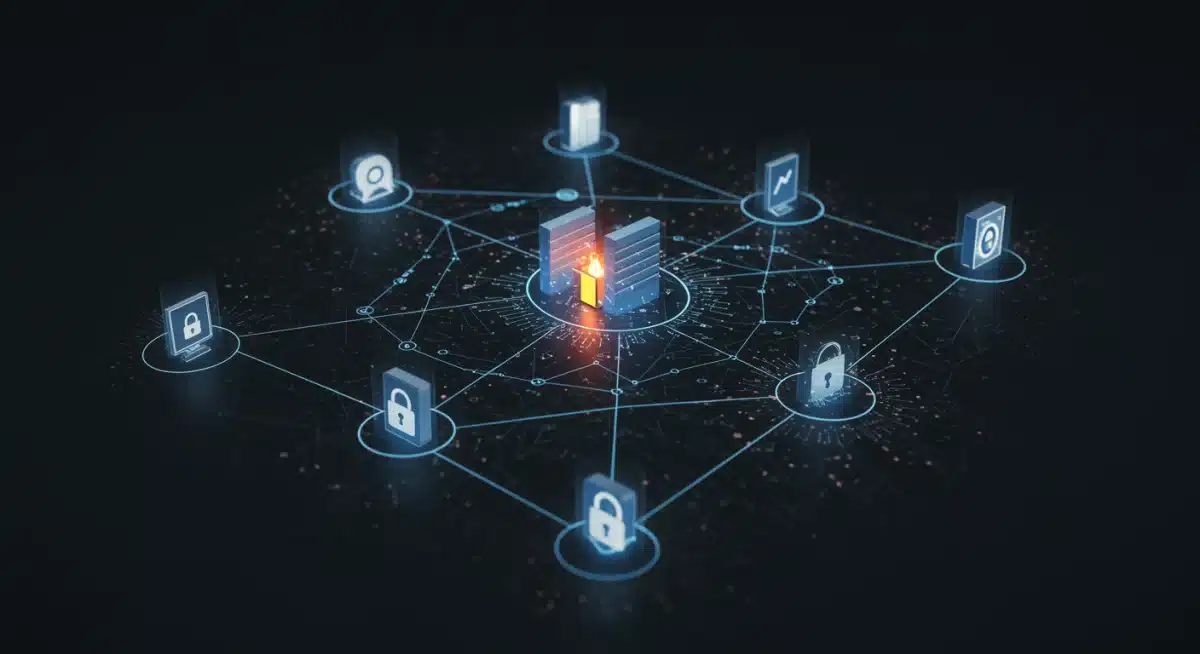
Common Security Challenges and Mitigations for Altcoins in 2026
Despite their individual strengths, all Altcoin Security Architectures face common challenges in the dynamic cyber threat landscape of 2026. Addressing these effectively will determine their long-term viability and trustworthiness.
Quantum Computing Threat
As mentioned, quantum computers pose a significant threat to current public-key cryptography. Many altcoins are actively researching and integrating quantum-resistant algorithms (post-quantum cryptography) into their roadmaps. This proactive transition is crucial, as retrofitting an entire blockchain with new cryptographic primitives is a monumental task.
Smart Contract Vulnerabilities
The complexity of smart contracts often leads to exploitable bugs. Continuous auditing, formal verification, bug bounty programs, and standardized secure coding practices are essential. The development of more secure programming languages and execution environments (like Wasm) also plays a vital role.
Centralization Risks
Some altcoins, particularly those prioritizing scalability, can inadvertently lean towards centralization if validator requirements are too high or if mining/staking power becomes concentrated. Decentralization is a continuous effort, requiring mechanisms to encourage broad participation and prevent cartelization.
Interoperability and Cross-Chain Security
As the blockchain ecosystem becomes more interconnected, the security of cross-chain bridges and communication protocols becomes paramount. Vulnerabilities in these bridges have led to some of the largest hacks in crypto history. Robust cryptographic designs, multi-party computation (MPC), and economic security models are being developed to secure these critical links.
Social Engineering and User Education
No matter how strong the underlying blockchain security, the weakest link often remains the human element. Phishing, malware, and other social engineering tactics continue to be effective. Continuous user education on best security practices (e.g., hardware wallets, strong passwords, recognizing scams) is indispensable.
Regulatory and Legal Risks
While not a direct cyber threat, evolving regulations can impact the operational security of altcoins. Compliance with data protection laws, anti-money laundering (AML), and know-your-customer (KYC) requirements can introduce new points of interaction and potential vulnerabilities if not handled with utmost care and cryptographic integrity.
The Future of Altcoin Security: Innovation and Adaptation
The journey to secure the decentralized future is continuous. The Altcoin Security Architectures we’ve examined demonstrate a diverse range of approaches to tackle current and future threats. Innovation in cryptography, consensus mechanisms, and network design is not static; it’s a constant race against increasingly sophisticated adversaries.
Looking towards 2026 and beyond, we can expect several key trends to shape altcoin security:
- Enhanced Privacy Solutions: Zero-knowledge proofs (ZKPs), homomorphic encryption, and other privacy-preserving technologies will become more integrated, not just for privacy but as a security feature by reducing exposed data.
- AI-Powered Security: Artificial intelligence and machine learning will be increasingly deployed for real-time threat detection, anomaly identification, and automated incident response within blockchain networks.
- Formal Verification Expansion: The rigorous, mathematical proof of software correctness will extend beyond consensus protocols to smart contracts and critical infrastructure components, reducing the surface area for bugs.
- Decentralized Identity Solutions: Self-sovereign identity (SSI) and decentralized identifiers (DIDs) will provide more secure and privacy-respecting ways for users to interact with Web3 applications, reducing reliance on centralized identity providers.
- Hardware-Level Security: The integration of trusted execution environments (TEEs) and specialized hardware security modules (HSMs) will move beyond just validators to potentially secure user wallets and other critical operations.
- Community-Driven Security: The open-source nature of most altcoins fosters a global community of developers and auditors. Bug bounty programs, security audits, and decentralized governance models will continue to be crucial for identifying and patching vulnerabilities quickly.
The resilience of Altcoin Security Architectures in 2026 will largely depend on their ability to anticipate and adapt to these emerging trends. It will require not only technical prowess but also a strong commitment to transparency, community engagement, and continuous improvement.
Conclusion: A Secure Foundation for Web3
The digital assets we interact with daily are only as strong as the security architectures that underpin them. As 2026 approaches, the imperative for robust and adaptive security in the altcoin space has never been greater. Ethereum, Cardano, Solana, Polkadot, Avalanche, and Chainlink each bring unique strengths to the table, from formally verified consensus to shared security models and critical oracle infrastructure. Their ongoing efforts to combat quantum threats, enhance smart contract safety, and foster decentralization are vital for the health and growth of the entire cryptocurrency ecosystem.
Investors and users must remain diligent, understanding that no system is entirely impervious to attack. However, by appreciating the sophisticated security measures these leading altcoins are employing, we can make more informed decisions and contribute to a more secure and resilient decentralized future. The continuous evolution of Altcoin Security Architectures is a testament to the innovation driving the blockchain industry forward, ensuring that our digital assets are not just revolutionary, but also reliably safe.