Decentralized Identity Solutions: Enhancing Web3 Privacy by 2025

Decentralized identity solutions are poised to fundamentally reshape how US Web3 users manage their digital personas, offering unprecedented control over personal data and significantly bolstering online privacy and security by 2025.
As the digital landscape evolves, the demand for robust privacy and security measures intensifies, especially within the burgeoning Web3 ecosystem. For US Web3 users, understanding and adopting decentralized identity solutions is becoming paramount to navigating this new frontier with confidence. These innovative technologies promise to redefine how we interact online, shifting power from centralized entities back to the individual, ensuring personal data remains private and secure in an increasingly interconnected world.
The imperative for decentralized identity in Web3
The current internet, often termed Web2, relies heavily on centralized identity providers. Companies like Google and Facebook act as gatekeepers for our digital identities, storing vast amounts of personal data. This model, while convenient, presents significant privacy and security risks, making users vulnerable to data breaches, surveillance, and identity theft. Web3, built on blockchain technology, offers a paradigm shift.
In Web3, the philosophy revolves around decentralization, user ownership, and transparency. However, realizing these ideals fully requires an equally decentralized approach to identity. Traditional identity systems are fundamentally incompatible with Web3’s core principles, creating a bottleneck for true user empowerment. Decentralized identity solutions address this by allowing individuals to own and control their digital identities, rather than relying on third parties.
Understanding digital identity in a centralized world
Our digital footprint today is fragmented across countless platforms, each holding a piece of our personal information. This siloed data creates a complex web where users have little visibility or control over who accesses their information and how it’s used. The implications for privacy are substantial, as personal data can be aggregated, analyzed, and even sold without explicit, granular consent.
- Data breaches: Centralized databases are attractive targets for malicious actors, leading to widespread data compromises.
- Identity theft: Compromised credentials can result in severe financial and personal repercussions for individuals.
- Censorship and control: Centralized entities can restrict access or de-platform users based on their own policies.
The push towards decentralized identity is a direct response to these systemic vulnerabilities. It represents a fundamental shift in control, moving from corporations and governments to the individual. This change is not merely technical; it’s a philosophical reorientation towards digital self-sovereignty, enabling a more equitable and secure online experience.
Ultimately, the transition to decentralized identity in Web3 is about building a more resilient and trustworthy digital infrastructure. It’s about ensuring that as we move further into a blockchain-powered future, the foundational layer of identity is as secure and user-centric as the applications built upon it. This protects not only individual privacy but also fosters a more robust and democratic internet.
Self-sovereign identity: the foundational principle
At the heart of decentralized identity solutions lies the concept of self-sovereign identity (SSI). SSI empowers individuals to own and control their digital identities without reliance on any central authority. This means users have complete autonomy over their personal data, deciding what information to share, with whom, and for how long. It’s a radical departure from the current model where our digital lives are often dictated by third-party platforms.
The core idea behind SSI is that individuals should be the ultimate arbiters of their own data. Instead of creating accounts on various platforms and entrusting them with personal information, users generate and manage their own unique identifiers. These identifiers are then linked to verifiable credentials, which are digital proofs of attributes (like age, education, or professional qualifications) issued by trusted entities.
How SSI redefines data ownership
SSI utilizes cryptographic techniques, typically leveraging blockchain technology, to ensure the authenticity and integrity of digital identities and credentials. When a user needs to prove an attribute, they can present a verifiable credential directly from their digital wallet, without exposing any unnecessary personal data. This selective disclosure is a cornerstone of SSI, minimizing the attack surface for identity theft and enhancing privacy.
- User control: Individuals decide which data to share and when, maintaining ultimate ownership.
- Privacy by design: Information is only disclosed when absolutely necessary, reducing exposure.
- Portability: Digital identities and credentials are not tied to a single platform and can be used across various services.
The benefits of SSI extend beyond individual privacy. For businesses, it can streamline compliance processes, reduce the risk of handling sensitive user data, and foster greater trust with their customer base. By adopting SSI, organizations can move away from being data custodians towards becoming verifiers of user-controlled information, significantly reducing their liability and operational overhead.
The paradigm shift introduced by self-sovereign identity is profound. It moves us towards a future where digital interactions are built on trust, transparency, and individual empowerment. By placing the individual at the center of their digital identity, SSI lays the groundwork for a more secure, private, and equitable Web3 ecosystem, fostering innovation while protecting fundamental rights.
Verifiable credentials and zero-knowledge proofs
Two critical technologies underpinning advanced decentralized identity solutions are verifiable credentials (VCs) and zero-knowledge proofs (ZKPs). These innovations work in tandem to enable secure, privacy-preserving identity verification, fundamentally changing how we prove aspects of our identity online without oversharing sensitive information.
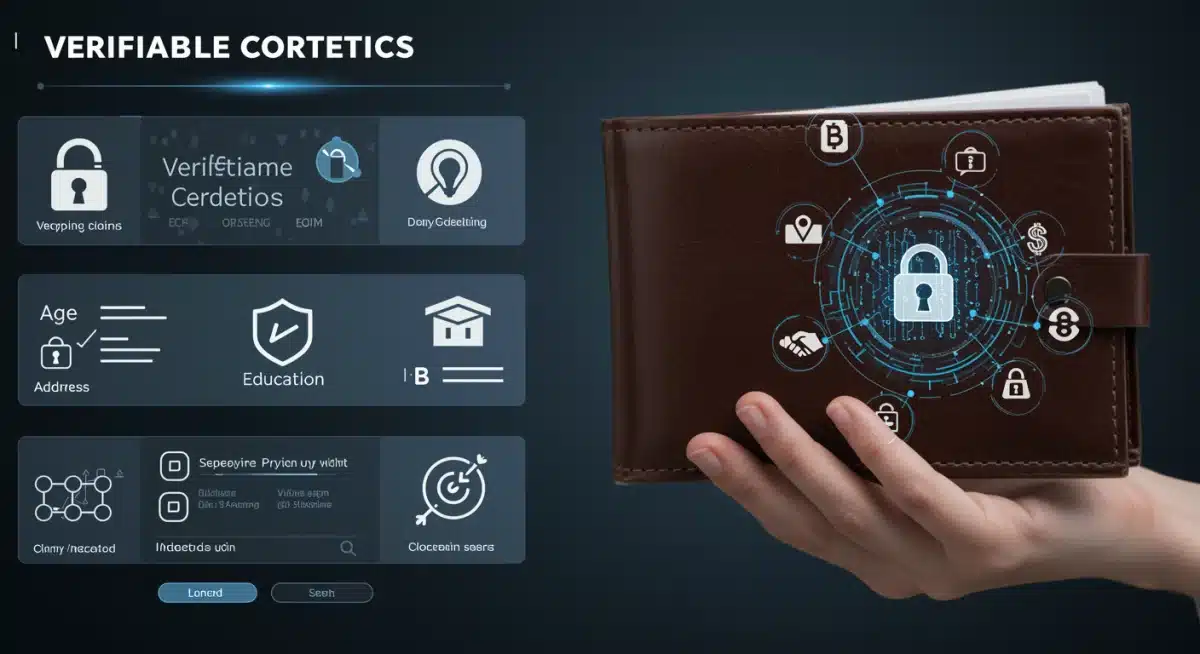
Verifiable credentials are tamper-proof digital documents that cryptographically link an issuer (e.g., a university, a government agency) to a holder (the individual) and a specific set of claims (e.g., degree earned, date of birth). These credentials are then stored securely in the holder’s digital wallet, ready to be presented to a verifier without the need for the issuer’s direct involvement in every transaction.

Enhancing privacy with zero-knowledge proofs
Zero-knowledge proofs take privacy a step further. A ZKP allows one party (the prover) to prove to another party (the verifier) that a given statement is true, without revealing any information beyond the validity of the statement itself. For instance, a user could prove they are over 21 without revealing their exact birthdate, or prove they have sufficient funds without disclosing their bank balance.
- Selective disclosure: Share only the necessary information, nothing more.
- Data minimization: Reduce the amount of personal data transmitted during verification.
- Fraud prevention: Cryptographically secure proofs make it difficult to forge credentials.
The combination of VCs and ZKPs creates a powerful framework for digital identity. VCs provide the trusted, verifiable claims, while ZKPs ensure these claims can be used in a highly private manner. This synergy is crucial for applications ranging from age verification in online gaming to proving professional qualifications for employment, all while maintaining user privacy.
By 2025, these technologies are expected to become foundational elements of the Web3 identity stack for US users. They offer a robust alternative to current identity systems, which often demand excessive personal data. The adoption of VCs and ZKPs promises a future where privacy is not an afterthought but an integral part of every digital interaction, fostering greater trust and security across the Web3 ecosystem.
Blockchain-based identity networks and protocols
The underlying infrastructure for many decentralized identity solutions consists of blockchain-based identity networks and protocols. These decentralized ledgers provide the immutable and transparent foundation necessary to manage digital identities without central control. Unlike traditional databases, blockchain networks distribute identity data across multiple nodes, making it highly resistant to single points of failure and censorship.
Various blockchain platforms are being developed or adapted to host decentralized identity systems. These include general-purpose blockchains like Ethereum, which supports a wide array of decentralized applications, as well as specialized identity blockchains designed specifically for managing digital credentials and identifiers. The choice of blockchain often depends on factors like scalability, transaction costs, and community support.
Key protocols driving adoption
Several protocols are emerging as standards for decentralized identity, facilitating interoperability and widespread adoption. These protocols define how decentralized identifiers (DIDs) are created, resolved, and managed, and how verifiable credentials are issued, presented, and verified across different systems. The goal is to create a seamless and standardized experience for users and developers alike.
- Decentralized Identifiers (DIDs): A new type of identifier that enables verifiable, decentralized digital identity.
- DID Methods: Specific blockchain or distributed ledger implementations that define how DIDs are managed.
- DIDComm: A secure, private messaging protocol for interactions between DIDs.
These protocols are crucial for building an interconnected ecosystem of decentralized identity. Without common standards, different identity systems would operate in silos, undermining the goal of universal portability and interoperability. Organizations like the Decentralized Identity Foundation (DIF) and the World Wide Web Consortium (W3C) are actively working on standardizing these protocols to ensure broad compatibility.
The development of robust blockchain-based identity networks and protocols is essential for the widespread adoption of decentralized identity. By providing a secure, transparent, and interoperable foundation, these technologies enable US Web3 users to manage their digital lives with unprecedented control and privacy. As these networks mature, they will become the backbone of a new, more secure internet identity paradigm.
Decentralized autonomous organizations (DAOs) and identity governance
As decentralized identity solutions gain traction, the question of governance becomes increasingly important. Decentralized Autonomous Organizations (DAOs) are emerging as a powerful model for governing these identity systems, aligning perfectly with Web3’s ethos of collective ownership and transparent decision-making. DAOs allow stakeholders to collectively manage and evolve the rules and parameters of a decentralized identity network.
In the context of identity, a DAO could oversee the issuance of DIDs, the accreditation of verifiable credential issuers, or the resolution of disputes. This distributed governance model ensures that no single entity has undue control over the identity system, preventing censorship, manipulation, or unilateral changes that could harm users. It fosters a more democratic and resilient infrastructure for digital identity.
Collective stewardship of digital identity
Members of an identity DAO, typically holding governance tokens, can propose and vote on various aspects of the system. This might include updates to the underlying protocols, the addition of new features, or changes to fee structures. This collective decision-making process ensures that the identity system evolves in a way that serves the best interests of its users and the broader Web3 community.
- Community-driven development: Identity protocols evolve based on collective input and needs.
- Transparency: All governance decisions and proposals are recorded on the blockchain, ensuring auditability.
- Resilience: Decentralized decision-making reduces the risk of single points of failure or malicious attacks.
The integration of DAOs with decentralized identity represents a significant leap forward in creating truly self-sovereign systems. It’s not enough to simply remove centralized control; there must be a robust, transparent, and fair mechanism for ongoing management and evolution. DAOs provide this mechanism, ensuring that the identity infrastructure remains aligned with its core principles of decentralization and user empowerment.
For US Web3 users, DAO-governed identity systems offer an additional layer of trust and assurance. Knowing that their digital identity infrastructure is managed by a community, rather than a corporation, can significantly increase confidence in the system’s integrity and neutrality. By 2025, DAOs are expected to play a pivotal role in shaping the future of decentralized identity governance, ensuring its long-term viability and fairness.
Hardware security modules and secure enclaves
While software and protocol innovations are crucial for decentralized identity solutions, the physical security of our digital identities often relies on hardware. Hardware Security Modules (HSMs) and secure enclaves are vital components that protect the cryptographic keys and sensitive data associated with decentralized identities, providing a robust layer of defense against sophisticated attacks.
HSMs are dedicated physical computing devices that safeguard and manage digital keys, perform cryptographic functions, and provide strong authentication. They are designed to resist tampering and are often certified to high security standards. For decentralized identity, HSMs can securely store the private keys that control DIDs and verifiable credentials, preventing their unauthorized access or extraction.
Protecting private keys at the hardware level
Secure enclaves, found in modern processors (like Apple’s Secure Enclave or Intel SGX), offer a similar but often more integrated approach. These are isolated, secure areas within a main processor that execute code and store data in a way that is protected from the rest of the system, even if the operating system is compromised. This provides a safe environment for performing cryptographic operations related to decentralized identity.
- Tamper resistance: Physical and logical protections against unauthorized access to keys.
- Key isolation: Private keys are generated and stored in a secure environment, never exposed to general-purpose software.
- Attestation: Ability to cryptographically prove that software is running in a secure environment.
The integration of HSMs and secure enclaves into devices used by US Web3 users, such as smartphones and computers, significantly enhances the security posture of decentralized identity. Without strong hardware-level protection for private keys, even the most advanced blockchain protocols can be vulnerable if the user’s device is compromised. These hardware solutions provide the ‘root of trust’ necessary for truly secure digital identities.
By 2025, the proliferation of devices with integrated secure enclaves and the increasing availability of personal HSMs (like hardware wallets) will make decentralized identity even more secure and accessible. This hardware-software synergy is essential for building a resilient and user-friendly decentralized identity ecosystem, giving individuals confidence that their digital identity assets are protected at the deepest levels.
Interoperability and cross-chain identity solutions
The Web3 ecosystem is inherently fragmented, with numerous blockchains and decentralized applications operating independently. For decentralized identity solutions to achieve widespread adoption and truly empower US Web3 users, interoperability is paramount. Users need to seamlessly use their decentralized identities and verifiable credentials across different chains and platforms without friction or re-verification.
Cross-chain identity solutions aim to bridge these disparate ecosystems, allowing a single decentralized identity to function across multiple blockchains. This involves developing standards and protocols that enable the secure transfer or verification of identity attributes from one chain to another, or from an off-chain identity wallet to a blockchain application.
Building bridges for universal identity
Achieving interoperability involves several technical challenges, including differing blockchain architectures, consensus mechanisms, and smart contract languages. Solutions often involve the use of specialized ‘identity bridges,’ atomic swaps for credentials, or standardized APIs that allow different identity systems to communicate and exchange information securely.
- Seamless user experience: A single identity works across various Web3 platforms.
- Reduced friction: Eliminate the need for multiple identity setups and repeated verifications.
- Ecosystem growth: Foster greater collaboration and innovation across different blockchain projects.
The work on interoperability is a collaborative effort involving various organizations and blockchain projects. Initiatives like the Decentralized Identity Foundation are crucial in defining the technical specifications and best practices that facilitate cross-chain identity management. The goal is to create a universal layer of identity that transcends individual blockchain boundaries, much like how email works across different providers.
By 2025, significant progress in interoperability will be crucial for the mainstream adoption of decentralized identity. US Web3 users will increasingly expect their digital identities to be portable and functional across the entire decentralized landscape. As these cross-chain solutions mature, they will unlock the full potential of decentralized identity, making it a truly universal and empowering tool for digital self-sovereignty.
| Key Technology | Privacy & Security Benefit |
|---|---|
| Self-Sovereign Identity (SSI) | Grants users full ownership and control over their digital identities and personal data. |
| Verifiable Credentials (VCs) | Offers tamper-proof digital proofs of claims, reducing reliance on central authorities. |
| Zero-Knowledge Proofs (ZKPs) | Allows proof of information without revealing underlying data, enhancing privacy. |
| Hardware Security Modules (HSMs) | Secures private keys at the hardware level, protecting against software-based attacks. |
Frequently asked questions about decentralized identity
The primary benefit is self-sovereignty, meaning users gain complete control and ownership over their digital identity and personal data. This significantly reduces reliance on centralized entities, mitigating risks of data breaches and unauthorized surveillance, and empowering individuals with unprecedented privacy and security in their online interactions across the Web3 ecosystem.
Verifiable credentials enhance privacy by allowing users to selectively disclose specific pieces of information without revealing their entire identity. Instead of sharing a full ID, a user can present a cryptographically secure credential proving, for example, only their age. This minimizes data exposure and limits the potential for misuse of personal information.
Zero-knowledge proofs (ZKPs) allow users to prove the truth of a statement without revealing any underlying data. For instance, you can prove you meet a certain age requirement without disclosing your birth date. This cryptographic technique is crucial for maintaining maximum privacy during identity verification processes, making oversharing of sensitive data obsolete.
Decentralized identity solutions significantly enhance security by eliminating single points of failure common in centralized systems. By distributing identity data across blockchain networks and employing strong cryptography, they are highly resistant to data breaches. Furthermore, hardware security modules and secure enclaves protect private keys, adding robust physical security layers against attacks.
Yes, interoperability is a key focus for decentralized identity development. Efforts are underway to create standards and protocols that allow a single decentralized identity to function seamlessly across various blockchains and Web3 platforms. This cross-chain capability is essential for widespread adoption, ensuring users can utilize their digital identities universally without friction.
Conclusion
The journey towards widespread adoption of decentralized identity solutions for US Web3 users by 2025 is not merely a technological upgrade but a fundamental reorientation towards digital self-sovereignty. By leveraging innovations like self-sovereign identity, verifiable credentials, zero-knowledge proofs, blockchain-based networks, DAO governance, and hardware security, individuals are poised to regain unprecedented control over their personal data. This paradigm shift promises a future where privacy is inherently designed into our online interactions, security is dramatically enhanced, and the power dynamic of the internet is rebalanced in favor of the user. As these technologies mature and integrate, they will pave the way for a more trustworthy, resilient, and empowering Web3 experience, safeguarding digital lives in an increasingly complex digital world.