Navigating Altcoin Regulatory Changes in the US: Q1 2025 Compliance
Understanding and adapting to the evolving landscape of altcoin regulatory changes in the US is paramount for investors to maintain compliance and protect their digital assets in Q1 2025.
As the digital asset space matures, understanding the intricate web of altcoin regulatory changes in the US becomes not just prudent, but essential for every investor. The first quarter of 2025 is poised to bring significant shifts, demanding a proactive approach to compliance. This guide offers a comprehensive checklist to help you navigate these evolving requirements.
Understanding the Evolving US Regulatory Landscape
The regulatory environment for altcoins in the United States remains a dynamic and often complex domain. As digital assets gain mainstream adoption, regulators are intensifying their efforts to establish clear guidelines, aiming to protect investors while fostering innovation. Q1 2025 is expected to be a pivotal period, with potential new legislation and enforcement actions.
Investors must recognize that the regulatory approach is multifaceted, involving various federal agencies, each with its own jurisdiction and focus. The classification of an altcoin, for instance, significantly impacts how it is regulated, determining whether it falls under securities law, commodities law, or other financial regulations.
Key Regulatory Bodies and Their Roles
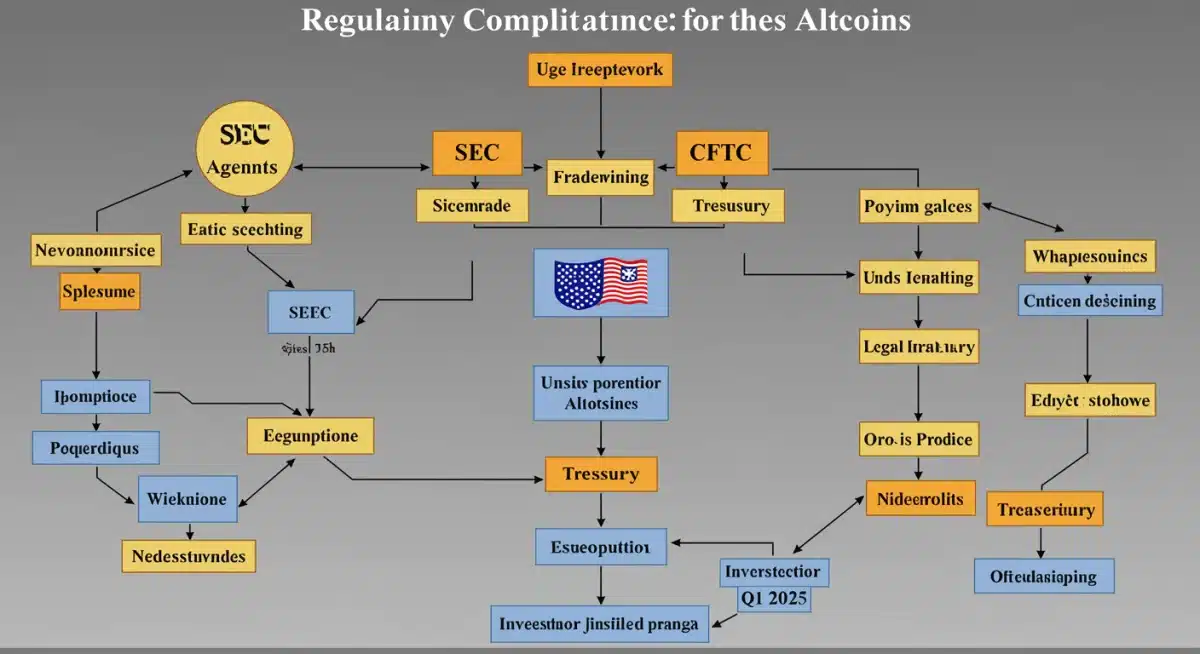
Several government entities play crucial roles in shaping altcoin regulation. Staying informed about their pronouncements and actions is key to compliance.
- Securities and Exchange Commission (SEC): Primarily concerned with altcoins deemed as securities, focusing on investor protection and market integrity.
- Commodity Futures Trading Commission (CFTC): Oversees altcoins classified as commodities, especially in the context of derivatives trading.
- Financial Crimes Enforcement Network (FinCEN): Focuses on anti-money laundering (AML) and combating the financing of terrorism (CFT) regulations for entities dealing with virtual assets.
- Internal Revenue Service (IRS): Provides guidance on the taxation of cryptocurrency transactions, treating virtual currency as property for tax purposes.
These bodies frequently collaborate, but their individual mandates can sometimes lead to overlapping or even conflicting interpretations. This makes it imperative for investors to adopt a holistic view of the regulatory landscape and seek professional advice when necessary.
Identifying Altcoin Classifications and Their Implications
One of the most critical aspects of navigating altcoin regulatory changes is understanding how different altcoins are classified by US authorities. This classification dictates the regulatory framework that applies, directly impacting an investor’s obligations and potential liabilities.
The distinction between a security, a commodity, or a currency for a digital asset is not always clear-cut and is often determined on a case-by-case basis through the application of tests like the Howey Test. As new altcoins emerge with novel functionalities, these classifications continue to be debated and refined by regulators.
The Howey Test and its Application to Altcoins
The Howey Test, originating from a 1946 Supreme Court case, remains the primary framework used by the SEC to determine if an asset constitutes an ‘investment contract’ and thus a security. Its application to altcoins involves assessing whether there is:
- An investment of money
- In a common enterprise
- With an expectation of profits
- To be derived from the efforts of others
Many altcoins initially offered through ICOs have been deemed securities under this test, bringing them under the purview of SEC regulations. This means they are subject to registration requirements, disclosure obligations, and other rules designed to protect investors in securities markets.
Conversely, altcoins that function primarily as a medium of exchange or a utility within a decentralized network, without a central party whose efforts drive profit expectations, are more likely to be classified as commodities or even currencies, falling under different regulatory regimes.
Q1 2025 Compliance Checklist for Investors
As we enter Q1 2025, investors must be prepared for potential shifts in regulatory enforcement and new guidance. A proactive compliance strategy is essential to mitigate risks and ensure continued participation in the altcoin market. This checklist provides a foundational framework.
Staying informed about legislative developments, court rulings, and agency statements will be paramount. The landscape is not static, and what was compliant yesterday might not be tomorrow. Regular review of your holdings and associated regulatory status is highly recommended.
Essential Steps for Investor Compliance
To effectively navigate the expected altcoin regulatory changes in Q1 2025, consider the following actions:
- Review Wallet and Exchange Providers: Ensure your chosen platforms are registered and compliant with US regulations (e.g., FinCEN for MSB licenses).
- Understand KYC/AML Requirements: Be prepared for stricter Know Your Customer (KYC) and Anti-Money Laundering (AML) verification processes on all platforms.
- Track Altcoin Classification: Regularly research the regulatory classification of your specific altcoin holdings (security, commodity, etc.) and understand the implications.
- Tax Compliance Preparation: Maintain meticulous records of all transactions for accurate capital gains/losses reporting to the IRS.
- Stay Updated on Legislation: Monitor proposed and enacted legislation related to digital assets at both federal and state levels.
- Seek Professional Advice: Consult with legal and tax professionals specializing in cryptocurrency to clarify complex situations.
Diligent record-keeping and a clear understanding of the platforms you use are foundational elements of this checklist. Non-compliance, even unintentional, can lead to significant penalties, making these steps non-negotiable.
Tax Implications and Reporting Requirements
Taxation remains a significant area of focus for US regulators concerning digital assets. The IRS has consistently stated that virtual currency is treated as property for tax purposes, meaning that every transaction involving altcoins can have tax consequences. Q1 2025 serves as a crucial period for investors to ensure their tax reporting is accurate and complete for the previous year and to prepare for the current one.
Understanding capital gains and losses, income from staking or mining, and the nuances of various altcoin-related activities is vital. The IRS has also increased its enforcement efforts, making it more important than ever for investors to prioritize tax compliance.
Key Tax Considerations for Altcoin Investors
Investors must be aware of several critical tax implications:
- Capital Gains/Losses: Selling, trading, or spending altcoins generally triggers a capital gain or loss, which must be reported. The holding period (short-term vs. long-term) impacts the tax rate.
- Ordinary Income: Income derived from mining, staking rewards, airdrops, or receiving altcoins as payment for goods or services is typically taxed as ordinary income.
- Gift Tax: Gifting altcoins above a certain threshold may be subject to gift tax rules.
- Record Keeping: Detailed records of purchase dates, costs, sale dates, and proceeds for every transaction are essential for accurate reporting.
The complexity of altcoin transactions often necessitates the use of specialized crypto tax software or the consultation of a tax professional experienced in digital assets to ensure all obligations are met and to identify any potential tax-loss harvesting opportunities. Proper documentation is your best defense against future audits.
Navigating DeFi and Decentralized Autonomous Organizations (DAOs)
Decentralized Finance (DeFi) and Decentralized Autonomous Organizations (DAOs) represent some of the most innovative and rapidly evolving segments of the altcoin ecosystem. However, their decentralized and often pseudonymous nature poses unique challenges for regulators, leading to increased scrutiny and potential new frameworks in Q1 2025. Understanding how these entities might be regulated is crucial for investors participating in them.
Regulators are grappling with how to apply existing laws to these novel structures, particularly concerning investor protection, market manipulation, and financial stability. The lack of a central authority in many DeFi protocols and DAOs complicates the assignment of responsibility and accountability.
Regulatory Challenges and Investor Considerations in DeFi/DAOs
The regulatory challenges surrounding DeFi and DAOs are significant, and investors should be mindful of the following:
- Jurisdictional Ambiguity: The global and borderless nature of DeFi makes it difficult to pinpoint specific jurisdictions for regulatory oversight.
- Token Classification: Many tokens within DeFi protocols (e.g., governance tokens, liquidity provider tokens) may fall under existing security or commodity classifications, creating compliance obligations.
- Smart Contract Risk: While not directly regulatory, smart contract vulnerabilities can lead to significant financial losses, which regulators may eventually address through consumer protection laws.
- AML/KYC in DeFi: Regulators are exploring ways to implement AML/KYC requirements in decentralized settings, which could impact user privacy and access.
Investors participating in DeFi and DAOs should exercise extreme caution, conduct thorough due diligence on protocols, and stay informed about any regulatory guidance or enforcement actions that could impact their holdings or participation. The evolving nature of these spaces means that regulatory clarity is still developing, making risk assessment even more critical.
Future Outlook and Proactive Strategies
The trajectory of altcoin regulatory changes in the US points towards increased clarity and, likely, stricter enforcement. While the exact form these regulations will take remains somewhat fluid, Q1 2025 is expected to set the tone for the year. Investors who adopt a proactive and informed approach will be best positioned to thrive in this evolving environment.
The goal of regulators is generally to mitigate systemic risks, protect consumers, and prevent illicit activities, without stifling innovation entirely. Finding this balance is a continuous process, and investor engagement with policy discussions can also play a role in shaping future outcomes.
Developing a Robust Future-Proof Strategy
To prepare for future regulatory developments, consider these strategic approaches:
- Diversify Your Portfolio: Beyond financial diversification, consider geographical diversification for your digital assets, understanding different regulatory regimes.
- Engage with Policy: Stay informed about legislative proposals and consider participating in public comments where appropriate.
- Leverage Compliance Tools: Utilize blockchain analytics and compliance software to monitor your transactions and identify potential risks.
- Continuous Education: The crypto and regulatory landscapes are constantly changing. Continuous learning is vital to adapt quickly.
- Advocate for Sensible Regulation: Support industry groups and initiatives that advocate for clear, fair, and innovation-friendly regulatory frameworks.
Ultimately, navigating the future of altcoin regulation requires a blend of vigilance, adaptability, and an ongoing commitment to understanding the legal and financial implications of your digital asset activities. Building a strong foundation of knowledge and professional support can turn potential challenges into opportunities.
| Key Point | Brief Description |
|---|---|
| Regulatory Agencies | SEC, CFTC, FinCEN, and IRS each have distinct roles in altcoin oversight. |
| Altcoin Classification | Understanding if an altcoin is a security or commodity dictates applicable regulations. |
| Compliance Checklist | Reviewing platforms, KYC/AML, tax records, and seeking expert advice are crucial. |
| Tax Reporting | Accurate tracking of capital gains/losses and ordinary income from altcoins is mandatory. |
Frequently Asked Questions About Altcoin Regulation
The primary challenges include adapting to evolving classifications of altcoins, navigating stricter KYC/AML requirements, ensuring comprehensive tax compliance, and understanding the regulatory stance on decentralized finance (DeFi) activities. Keeping up with diverse agency mandates adds complexity.
The Howey Test helps determine if an altcoin is an investment contract, thus classifying it as a security under SEC jurisdiction. This is crucial because securities are subject to stringent registration and disclosure rules, directly impacting how an altcoin can be legally offered and traded.
To ensure tax compliance, maintain meticulous records of all altcoin transactions, including purchase/sale dates, costs, and proceeds. Report all capital gains/losses and treat income from staking, mining, or airdrops as ordinary income. Consider using crypto tax software or consulting a specialized tax professional.
Yes, DeFi and DAOs are highly likely to face increased regulatory scrutiny. Regulators are actively exploring how to apply existing laws to these decentralized structures, particularly concerning investor protection, market integrity, and AML/KYC. This could lead to new guidelines or enforcement actions.
Investors should monitor official announcements from the SEC, CFTC, FinCEN, and IRS. Subscribing to reputable crypto legal and news publications, attending industry webinars, and consulting with legal experts specializing in digital assets are also effective ways to stay informed.
Conclusion
Navigating altcoin regulatory changes in the US for Q1 2025 demands vigilance and a proactive stance from investors. The evolving landscape, characterized by increased regulatory clarity and enforcement, underscores the importance of understanding altcoin classifications, ensuring tax compliance, and adapting to new rules impacting decentralized finance. By diligently following compliance checklists and seeking expert advice, investors can confidently manage their digital assets, mitigate risks, and contribute to a more secure and transparent cryptocurrency ecosystem.