Quantum Computing’s Impact on Crypto Security: US Digital Assets 2025

Quantum computing presents an imminent threat to existing cryptographic protocols, necessitating immediate action to protect US digital assets through the adoption of quantum-resistant solutions and strategic foresight for 2025 and beyond.
The potential of quantum computing to revolutionize various industries is immense, but it also casts a long shadow over the current state of digital security. Specifically, the threat it poses to cryptocurrency and the broader landscape of US digital assets is a growing concern. As we approach 2025, understanding and preparing for quantum crypto security becomes paramount for safeguarding our financial and informational infrastructures.
the quantum threat to current cryptographic standards
Quantum computers, leveraging principles of quantum mechanics, possess the theoretical capability to break many of the encryption algorithms that currently secure our digital world. This includes the public-key cryptography underpinning blockchain technology, which is essential for the integrity and security of cryptocurrencies and other digital assets. The imminent arrival of fault-tolerant quantum computers demands a re-evaluation of our cybersecurity posture.
Traditional cryptographic methods rely on mathematical problems that are computationally infeasible for classical computers to solve within a reasonable timeframe. However, quantum algorithms, such as Shor’s algorithm, could efficiently factor large numbers, a task that would effectively dismantle widely used encryption like RSA and elliptic curve cryptography (ECC). These algorithms are foundational to how digital signatures are created and verified in blockchain networks, ensuring transactions are secure and immutable.
understanding cryptographic vulnerabilities
The vulnerability stems from the fundamental difference in how classical and quantum computers process information. While classical bits are either 0 or 1, quantum bits (qubits) can be 0, 1, or both simultaneously through superposition. This allows quantum computers to explore multiple computational paths in parallel, drastically speeding up certain types of calculations relevant to cryptography.
- RSA and ECC breaking: Shor’s algorithm can efficiently factor large integers, compromising RSA, and solve discrete logarithm problems, compromising ECC.
- Hashing functions: Grover’s algorithm could speed up brute-force attacks on symmetric key ciphers and hash functions, though the impact is less severe than on public-key cryptography.
- Digital signatures: The integrity of digital signatures, crucial for transaction validation in cryptocurrencies, would be compromised, allowing malicious actors to forge transactions.
The implications extend beyond just cryptocurrencies. Any digital asset or system relying on these compromised cryptographic primitives, from secure communications to national infrastructure, would be at risk. This makes proactive preparation not just a recommendation but a critical imperative for national security and economic stability.
The potential for quantum computers to render current encryption obsolete creates a significant security gap that needs to be addressed before it becomes a reality. This threat landscape necessitates a shift in how we approach digital security, moving towards quantum-resistant solutions.
strategy 1: accelerating post-quantum cryptography adoption
One of the primary defenses against the quantum threat is the development and adoption of post-quantum cryptography (PQC). PQC refers to cryptographic algorithms that are believed to be secure against attacks by sufficiently powerful quantum computers, as well as classical computers. The goal is to transition to these new standards before quantum computers become powerful enough to break existing encryption.
Governments and research institutions worldwide, including the National Institute of Standards and Technology (NIST) in the US, have been actively working on standardizing PQC algorithms. This process involves rigorous evaluation and selection of algorithms that offer robust security while being practical for real-world implementation. The selection of these algorithms is critical, as it will determine the future of digital security.
nists’s standardization efforts and challenges
NIST’s Post-Quantum Cryptography Standardization project has been a multi-year effort to identify and standardize quantum-resistant algorithms. Several rounds of evaluation have narrowed down a large pool of candidates to a select few deemed most promising. These include lattice-based cryptography, code-based cryptography, multivariate polynomial cryptography, and hash-based cryptography.
- Lattice-based cryptography: Offers strong theoretical security and good performance, making it a leading candidate for various applications.
- Hash-based signatures: Provide excellent security guarantees but often have larger signature sizes or stateful requirements.
- Code-based cryptography: Based on error-correcting codes, known for its long-standing security but can have large key sizes.
The challenge lies not only in developing secure PQC algorithms but also in their widespread adoption. Migrating existing systems and infrastructure to new cryptographic standards is a complex undertaking, requiring significant coordination, investment, and careful planning. The transition must be seamless to avoid disruptions and maintain security.
Accelerating the adoption of PQC involves not just technical implementation but also educating developers, cybersecurity professionals, and policymakers about the urgency and necessity of this transition. The timeline for this migration is critical, as delaying could leave digital assets vulnerable to harvest-now-decrypt-later attacks.
strategy 2: implementing hybrid cryptographic solutions
Given the uncertainties surrounding the exact timeline for quantum computer development and the long migration period for PQC, a prudent approach involves implementing hybrid cryptographic solutions. Hybrid schemes combine classical, pre-quantum cryptographic algorithms with new PQC algorithms. This strategy offers a pragmatic pathway to enhance security immediately, providing a layered defense against both classical and potential quantum threats.
The core idea behind a hybrid approach is to leverage the well-understood security properties of existing cryptographic primitives while simultaneously integrating the quantum-resistance of emerging PQC algorithms. This ensures that even if one component of the cryptographic scheme is compromised, the other still provides a layer of protection. It’s a way to hedge against future risks without waiting for perfect quantum-safe solutions.
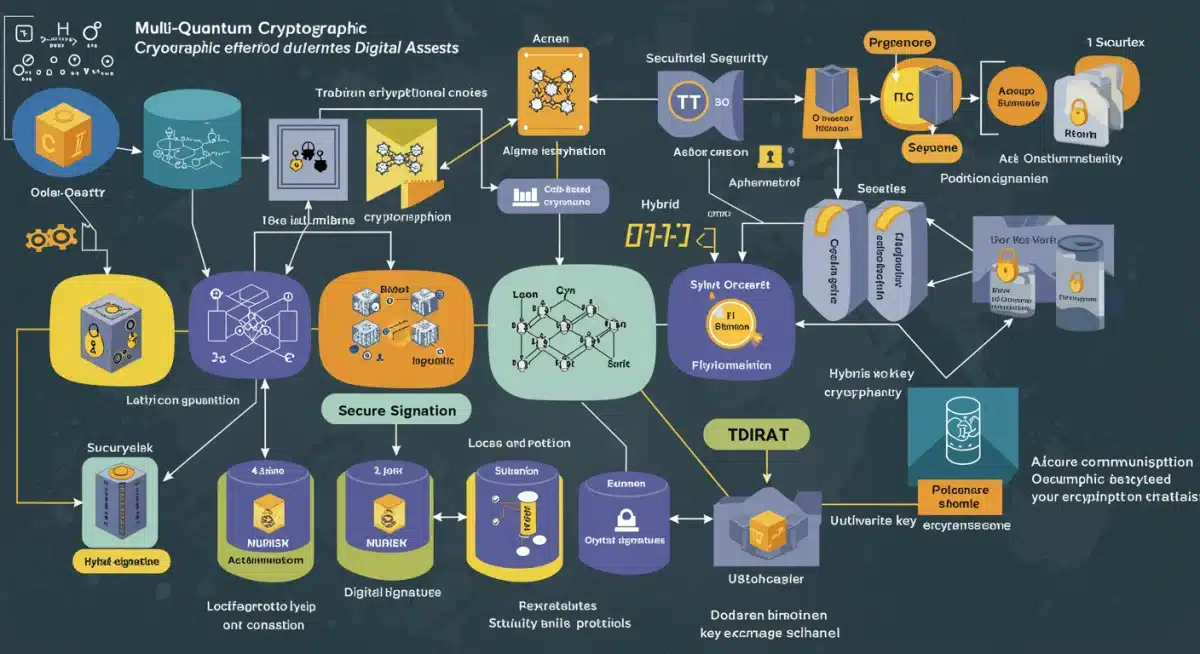
For instance, a hybrid digital signature could involve signing a transaction with both an ECC signature and a PQC signature. A valid transaction would then require verification of both signatures. This redundancy adds a crucial layer of security, making it significantly harder for attackers to compromise the system, even with advanced quantum capabilities.
benefits of a hybrid approach
Implementing hybrid solutions offers several distinct advantages in the transition period towards full PQC adoption:
- Enhanced security: Provides protection against both classical and quantum attacks, ensuring robust security today and tomorrow.
- Risk mitigation: Reduces the risk associated with potential vulnerabilities in new PQC algorithms that might be discovered later.
- Gradual transition: Allows organizations to slowly integrate PQC components into their existing infrastructure, easing the migration process.
- Interoperability: Can maintain compatibility with existing systems while introducing new quantum-resistant features.
The hybrid approach is particularly relevant for high-value digital assets and critical infrastructure where the cost of a security breach is exceptionally high. By taking this measured step, organizations can begin to fortify their defenses against future quantum threats without having to completely overhaul their systems overnight. It provides a flexible and adaptable framework for evolving cryptographic needs.
Ultimately, hybrid cryptographic solutions serve as a bridge, ensuring continuity of security while the world moves towards a fully quantum-resistant cryptographic landscape. This proactive strategy is vital for protecting US digital assets as the quantum era unfolds.
securing us digital assets: a national imperative
The security of US digital assets, ranging from financial systems and intellectual property to critical infrastructure and government data, is inextricably linked to the strength of its cryptographic defenses. The advent of quantum computing necessitates a national-level strategy to protect these assets from the impending threat. This involves not only technological advancements but also policy frameworks and international cooperation.
A comprehensive national strategy for quantum-resistant security must address several key areas. Firstly, it requires significant investment in research and development to accelerate the creation and refinement of PQC algorithms and their efficient implementation. Secondly, it demands the establishment of clear guidelines and mandates for the adoption of these new standards across both public and private sectors. Thirdly, continuous monitoring and threat intelligence are crucial to stay ahead of evolving quantum capabilities.
policy and regulatory considerations
Government agencies, particularly those involved in national security and cybersecurity, are already recognizing the urgency of this challenge. Policy initiatives are being developed to facilitate the transition to quantum-resistant cryptography. These policies will likely include:
- Mandates for federal agencies: Requiring federal systems to adopt PQC standards within specified timelines.
- Incentives for private sector: Encouraging businesses to invest in PQC research and implementation through grants or tax breaks.
- International collaboration: Working with allies to develop common standards and share intelligence on quantum threats.
The regulatory landscape will need to adapt quickly to support this cryptographic transition. This means updating existing cybersecurity regulations to include PQC requirements and providing clear guidance to industries on best practices. Without a coordinated effort, the nation’s digital assets will remain vulnerable.
Protecting US digital assets is not merely a technical problem; it is a strategic national imperative that requires a multi-faceted approach involving technology, policy, and human capital. The time to act decisively is now, ensuring that the nation is prepared for the quantum future.
the role of blockchain in future-proofing security
Blockchain technology, while currently reliant on cryptographic methods vulnerable to quantum attacks, also holds significant potential in the development of future-proof security solutions. Its decentralized and immutable nature provides a robust foundation upon which quantum-resistant protocols can be built. The transparency and distributed ledger aspects of blockchain can contribute to a more secure and verifiable transition to new cryptographic standards.
Integrating post-quantum cryptography into blockchain platforms will be a complex but essential undertaking. This involves modifying the underlying cryptographic primitives used for transaction signing, block hashing, and consensus mechanisms. The decentralized nature of blockchain means that any such upgrade requires broad consensus among network participants, adding a layer of complexity to the implementation process.
blockchain’s adaptation to quantum threats
Several approaches are being explored to make blockchain quantum-resistant:
- Quantum-resistant signature schemes: Replacing existing digital signature algorithms with PQC alternatives.
- Quantum-safe hashing: Utilizing hash functions that are more resistant to Grover’s algorithm or other quantum attacks.
- Hybrid blockchain solutions: Combining existing blockchain technology with new quantum-resistant layers or sidechains to enhance security.
Furthermore, blockchain’s inherent properties, such as its distributed ledger technology, can be leveraged to create transparent and verifiable systems for cryptographic key management in a post-quantum world. This could involve using blockchain to record and verify the migration of keys to PQC standards, adding an additional layer of trust and auditability.
While blockchain itself faces quantum threats, its foundational principles offer unique opportunities for building more resilient and secure digital asset ecosystems. By adopting quantum-resistant techniques, blockchain can continue to play a crucial role in securing the future of digital finance and data integrity.
economic implications of quantum crypto security
The impact of quantum computing on crypto security extends far beyond technical challenges; it carries profound economic implications for the US and the global digital economy. A successful quantum attack on current cryptographic standards could lead to massive financial losses, erode trust in digital transactions, and destabilize markets. Preparing for this future is not just a security measure but an economic imperative.
The value locked in cryptocurrencies and other digital assets is substantial, and a breach in their underlying security due to quantum capabilities would have catastrophic consequences. Imagine a scenario where private keys are compromised, allowing unauthorized access to wallets and exchanges. The resulting panic and loss of confidence could trigger a widespread economic downturn in the digital sector.
investment and market stability
Proactive investment in quantum-resistant technologies and strategies is crucial for maintaining economic stability. This includes:
- Research and development funding: Directing resources towards advancing PQC and quantum-safe hardware.
- Infrastructure upgrades: Allocating capital for the migration of critical financial and digital asset infrastructure to new standards.
- Cybersecurity workforce development: Investing in training programs to equip professionals with the skills needed for a quantum-resilient future.
Moreover, the perception of security directly influences investment and adoption. If digital assets are seen as vulnerable to quantum attacks, it could deter institutional investors and slow the growth of the digital economy. Conversely, demonstrating a clear path to quantum-resistant security can bolster confidence and foster continued innovation and investment.
The economic ramifications of failing to address quantum crypto security are too significant to ignore. By investing strategically and implementing robust defense mechanisms, the US can safeguard its digital economy and maintain its leadership in the evolving technological landscape.
preparing for 2025 and beyond: a roadmap
The year 2025 serves as a critical milestone for assessing progress in quantum crypto security. While a fully disruptive quantum computer might still be a few years away, the preparatory work needs to be well underway by then. A clear roadmap is essential to guide organizations and governments in fortifying their digital assets against future threats.
This roadmap should encompass a phased approach, starting with immediate actions and progressing towards long-term strategic goals. It’s not about a single solution but a continuous process of adaptation and enhancement. The dynamic nature of quantum technology demands flexibility and ongoing assessment of emerging threats and solutions.
key stages in the preparation roadmap
To effectively prepare for the quantum era, a structured approach is necessary:
- Phase 1 (Immediate to 2025):
- Inventory current cryptographic assets and identify vulnerabilities.
- Begin pilot programs for PQC algorithms and hybrid solutions.
- Educate stakeholders and raise awareness about quantum risks.
- Invest in quantum-safe research and development.
- Phase 2 (2025-2030):
- Implement hybrid cryptographic solutions across critical systems.
- Scale PQC adoption based on NIST and other international standards.
- Develop robust key management strategies for a quantum-resistant environment.
- Continuously monitor quantum computing advancements and refine strategies.
Beyond 2025, the focus will shift towards full transition to quantum-resistant cryptography, deprecating vulnerable algorithms, and establishing a new baseline for digital security. This long-term vision requires sustained commitment and collaboration across all sectors. The goal is to ensure that US digital assets remain secure and resilient, regardless of how quantum technology evolves.
By following a well-defined roadmap, organizations can systematically address the challenges posed by quantum computing, transforming a potential threat into an opportunity to build a more secure and future-proof digital infrastructure.
| Key Point | Brief Description |
|---|---|
| Quantum Threat | Quantum computers can break current public-key encryption, endangering digital assets. |
| PQC Adoption | Accelerating the implementation of post-quantum cryptography is crucial for future security. |
| Hybrid Solutions | Combining classical and quantum-resistant methods provides layered, immediate protection. |
| National Imperative | Securing US digital assets against quantum threats requires a coordinated national strategy. |
frequently asked questions about quantum crypto security
The primary threat is the ability of quantum computers to break widely used public-key encryption algorithms, like RSA and ECC, which underpin the security of cryptocurrencies and blockchain transactions. This could lead to unauthorized access and theft of digital assets.
PQC refers to cryptographic algorithms designed to be secure against attacks by both classical and quantum computers. These new algorithms are being developed and standardized to replace current vulnerable encryption methods before quantum computers become fully operational and powerful.
Hybrid solutions combine existing classical encryption with new PQC algorithms. This approach offers enhanced security by providing a layered defense, mitigating risks associated with potential vulnerabilities in new PQC, and allowing for a gradual transition to fully quantum-resistant systems.
While a definitive timeline is uncertain, many experts predict that fault-tolerant quantum computers capable of breaking current encryption could emerge between 2025 and 2035. Proactive measures are necessary now to secure digital assets well before this period.
Preparation involves inventorying existing cryptographic uses, staying informed about PQC developments, planning for system upgrades, and considering the adoption of hybrid cryptographic solutions. Early planning and investment in quantum-resistant technologies are key.
conclusion
The looming threat of quantum computing to current cryptographic standards presents a formidable challenge to the security of US digital assets. However, by proactively adopting forward-thinking strategies such as accelerating post-quantum cryptography implementation and deploying hybrid cryptographic solutions, we can build a resilient defense. The period leading up to and beyond 2025 is critical for this transition, requiring a concerted effort from governments, industry, and academia to safeguard our digital future against the quantum era’s disruptive potential.