Hardware vs. Software Wallets: 2025 US Investor Security Guide
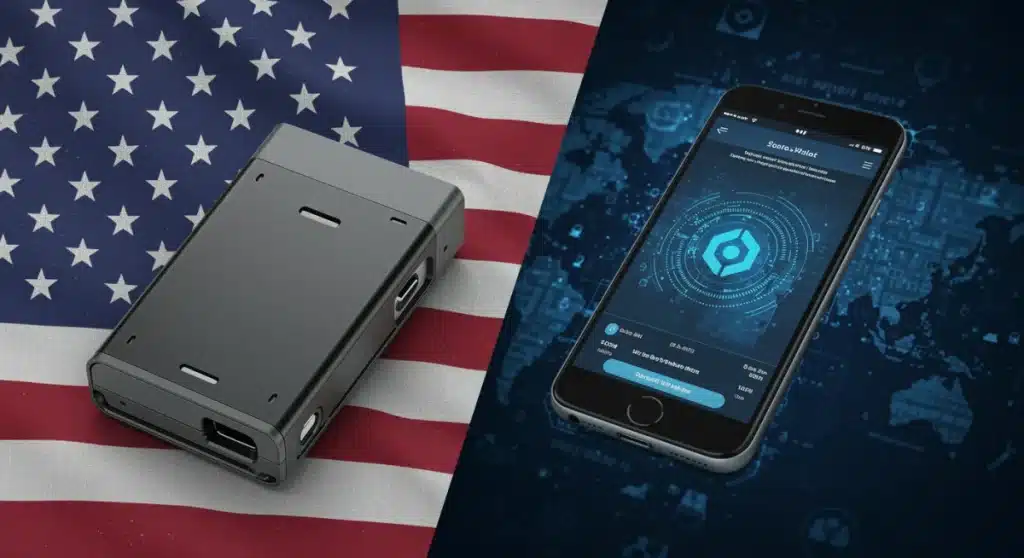
For US investors, understanding the fundamental differences between hardware and software wallets is crucial in 2025 to effectively safeguard digital assets against evolving cyber threats and ensure robust digital security.
As the digital asset landscape continues its rapid evolution, particularly for investors in the United States, the choice between different types of cryptocurrency storage solutions becomes increasingly critical. This comprehensive guide delves into the core differences between hardware software wallets, offering a 2025 perspective on digital security for those navigating the complexities of protecting their investments.
Understanding the Core Differences: Hardware vs. Software
The foundational distinction between hardware and software wallets lies in their approach to private key management. Private keys are the cryptographic strings that prove ownership of your digital assets, and their security is paramount. A clear understanding of how each wallet type handles these keys is the first step toward making an informed decision about your digital security.
Hardware wallets, often referred to as ‘cold storage,’ are physical devices designed to keep your private keys offline. This isolation from internet-connected devices significantly reduces the attack surface for cyber threats. Conversely, software wallets, or ‘hot storage,’ exist as applications on internet-connected devices, offering convenience at a potential trade-off in security.
Physical Form Factor and Connectivity
The most immediate difference is the physical nature of hardware wallets. These small, often USB-like devices are purpose-built for crypto storage, lacking the multi-functionality of a smartphone or computer. This singular purpose contributes to their enhanced security profile.
- Hardware Wallets: Tangible devices, typically resembling USB drives, that store private keys offline.
- Software Wallets: Applications installed on computers, smartphones, or web browsers, inherently connected to the internet.
- Connectivity Impact: Offline storage minimizes exposure to online threats like malware and phishing attacks.
Software wallets, while convenient for frequent transactions, are perpetually exposed to the online environment. This means that if your device is compromised by malicious software, your private keys could be at risk. Understanding this fundamental difference in connectivity is essential for US investors weighing security against accessibility.
In essence, the choice between hardware and software wallets often boils down to a balance between ultimate security and daily usability. For long-term holdings and significant investments, the offline nature of hardware wallets generally offers a more robust defense against sophisticated cyber threats.
Security Protocols and Threat Vectors
When evaluating hardware software wallets, a deep dive into their respective security protocols and the threat vectors they address is indispensable. Hardware wallets are engineered with multiple layers of security to protect private keys, even when connected to an infected computer. Software wallets, while constantly improving, face a broader range of online threats due to their internet connectivity.
Hardware wallets typically incorporate secure elements, PIN protection, and physical confirmation for transactions. This multi-factor authentication ensures that even if a device is physically stolen, accessing the assets remains exceedingly difficult without the owner’s knowledge or input. The firmware on these devices is often open-source, allowing for community audits and greater transparency in their security mechanisms.
Advanced Encryption and Seed Phrases
Both wallet types rely on cryptographic principles, but their implementation differs. Hardware wallets perform cryptographic operations within their isolated environment, never exposing the private key to the host device. Software wallets, while using strong encryption, conduct these operations within the general operating system, which can be vulnerable to exploits.
- Private Key Isolation: Hardware wallets keep private keys completely separate from online devices.
- Seed Phrase Recovery: Both use a mnemonic seed phrase for recovery, but hardware wallets often guide users through an offline generation process.
- Transaction Signing: Hardware wallets sign transactions internally, presenting them for physical verification before broadcast.
The recovery seed phrase, a series of words that can restore access to your funds, is a critical component of both wallet types. However, the secure generation and storage of this phrase are often more robustly managed by hardware wallets, further enhancing their security posture. For US investors, understanding how these phrases are generated and protected across different wallet types is vital for disaster recovery planning and overall asset security.
Software wallets, on the other hand, are susceptible to malware, phishing attacks, and operating system vulnerabilities. While many reputable software wallets employ robust encryption and security practices, the inherent risk of an internet-connected environment can never be fully eliminated. Therefore, users must exercise extreme caution, employ strong passwords, and utilize two-factor authentication whenever possible.
User Experience and Accessibility Considerations
Beyond security, the practical aspects of using hardware software wallets significantly influence their suitability for different types of US investors. User experience (UX) and accessibility are key factors, balancing the stringent security of hardware devices with the convenience of software applications. This comparison helps investors align their choice with their trading frequency, technical proficiency, and overall investment strategy.
Hardware wallets, while offering superior security, often come with a steeper learning curve for new users. The process of setting up the device, managing PINs, and physically confirming each transaction can feel cumbersome for those accustomed to instant digital interactions. However, this deliberate friction is a security feature, designed to prevent unauthorized access and impulsive actions.

Software wallets, by contrast, excel in user-friendliness and immediate accessibility. They integrate seamlessly with various online platforms, making quick trades, purchases, and transfers straightforward. This ease of use is a major draw for active traders and those who frequently interact with decentralized applications (dApps) or DeFi protocols.
Transaction Frequency and Integration
The frequency of transactions plays a significant role in determining the ideal wallet type. For investors who make infrequent, large transactions, the security overhead of a hardware wallet is a small price to pay. For daily micro-transactions or active trading, a software wallet might be more practical.
- Hardware Wallet UX: Requires physical device interaction for every transaction, potentially slower but more secure.
- Software Wallet UX: Offers instant access and seamless integration with exchanges and dApps, highly convenient.
- Learning Curve: Hardware wallets may require more initial setup and understanding; software wallets are often intuitive.
Integration with other financial services and platforms is another crucial point. Many software wallets are designed to connect directly with exchanges, lending platforms, and other Web3 services, streamlining the user journey. Hardware wallets often require a companion software application to interact with the blockchain, adding an extra step to the process.
Ultimately, the best choice for a US investor depends on their individual needs. A combination strategy, where significant long-term holdings are secured in a hardware wallet and smaller, frequently traded amounts are kept in a software wallet, often provides a balanced approach to both security and accessibility.
Cost Implications and Investment Scale
The financial outlay for hardware software wallets is another critical factor US investors must consider, as it directly relates to the scale of their digital asset holdings and their overall investment strategy. While software wallets are predominantly free, hardware wallets represent a tangible investment, ranging from affordable to premium models. This cost difference often reflects varying levels of security features, build quality, and brand reputation.
Software wallets are generally free to download and use, making them an accessible entry point for new investors or those with smaller portfolios. Their cost is often indirect, tied to potential risks if not properly secured, rather than an upfront purchase. This zero-cost entry allows for greater flexibility and experimentation within the digital asset ecosystem without immediate financial commitment to a storage solution.
Pricing Tiers and Value Proposition
Hardware wallets, conversely, have an upfront cost that can range from $50 to over $200. This price typically covers the secure element, robust physical construction, and the specialized firmware designed to protect private keys. For investors holding substantial amounts of cryptocurrency, this cost is often viewed as a necessary and worthwhile insurance premium against theft and loss.
- Software Wallets: Generally free, making them highly accessible for any investment size.
- Hardware Wallets: Involve an upfront purchase cost, typically ranging from $50 to $200+, depending on features.
- Investment Scale: Higher-value portfolios often justify the investment in a hardware wallet for enhanced security.
The perception of value also differs. For a US investor with a portfolio valued in the tens or hundreds of thousands, a $100 hardware wallet represents a minimal percentage of their total holdings, offering significant peace of mind. For someone just starting with a few hundred dollars, a free software wallet might be the more practical initial choice, provided they understand and mitigate the associated risks.
It is crucial for investors to consider not just the initial cost but the potential cost of losing assets due to inadequate security. A compromised software wallet can lead to total loss, whereas the physical security and offline nature of a hardware wallet significantly reduce this catastrophic risk, making its upfront cost a sound investment in asset protection for many.
Emerging Trends and Future Outlook for 2025
Looking ahead to 2025, the landscape for hardware software wallets is continually evolving, driven by technological advancements, increasing regulatory scrutiny, and a growing user base. US investors should be aware of these emerging trends, as they will undoubtedly shape the future of digital asset security and influence wallet choices. Innovations in both hardware and software solutions are aiming to enhance security while simultaneously improving user experience, addressing some of the traditional trade-offs.
One significant trend is the integration of multi-signature technology into more accessible wallet solutions. Multi-sig requires multiple private keys to authorize a transaction, adding an extra layer of security that can be beneficial for institutional investors or families managing shared digital assets. This feature, once complex, is becoming more streamlined in both advanced software and hardware offerings.
Regulatory Impact and Biometric Integration
Regulatory developments in the US are also set to play a crucial role. As digital asset adoption grows, so does the demand for consumer protection. This could lead to stricter standards for wallet providers, potentially influencing wallet design, security audits, and recovery mechanisms. Investors should stay informed about these changes, as they may affect the compliance and reliability of their chosen wallet solutions.
- Biometric Authentication: Increasing adoption of fingerprint and facial recognition for enhanced security and convenience.
- Quantum Resistance: Research into quantum-resistant cryptography for future-proofing wallets against advanced threats.
- Interoperability: Improved seamless integration between different wallet types and decentralized applications.
Another area of rapid advancement is biometric authentication. Fingerprint scanners and facial recognition are becoming standard features in many high-end hardware wallets and are increasingly integrated into mobile software wallets, providing a more secure and convenient way to access funds. This trend aims to reduce reliance on traditional PINs and passwords, which can be vulnerable to social engineering or brute-force attacks.
Furthermore, the concept of ‘smart wallets’ that combine elements of both hardware and software functionality is gaining traction. These hybrid solutions aim to offer the security of cold storage with the accessibility of hot wallets, potentially revolutionizing how US investors interact with their digital assets in 2025 and beyond.
Making an Informed Decision: A Tailored Approach
For US investors, the decision between hardware software wallets is rarely a one-size-fits-all answer. Instead, it requires a tailored approach that considers individual risk tolerance, investment size, transaction habits, and technical comfort level. Understanding the nuances of each type allows for a strategic choice that optimizes both security and usability in the dynamic digital asset environment of 2025.
For those holding substantial amounts of cryptocurrency, especially for long-term investment, a hardware wallet is almost universally recommended. Its offline nature provides the strongest defense against the most sophisticated cyber threats, making it an invaluable tool for safeguarding significant wealth. The slight inconvenience of physical interaction is a small trade-off for enhanced peace of mind.
Hybrid Strategies and Best Practices
Many experienced investors adopt a hybrid strategy, utilizing both wallet types. This often involves storing the majority of their assets in a hardware wallet for cold storage and maintaining smaller, readily accessible amounts in a software wallet for daily transactions, trading, or interacting with decentralized applications. This approach balances maximum security with practical accessibility.
- Assess Risk Tolerance: Determine your comfort level with potential online threats.
- Evaluate Investment Size: Larger portfolios typically warrant the enhanced security of hardware wallets.
- Consider Transaction Needs: Frequent traders may prefer the convenience of software wallets for active use.
- Prioritize Education: Continuously learn about wallet security best practices and emerging threats.
Regardless of the chosen wallet type, adhering to best practices is paramount. This includes securely backing up seed phrases, enabling two-factor authentication whenever available, using strong unique passwords, and being vigilant against phishing attempts and malicious software. Regular software updates for both wallet firmware and operating systems are also crucial for maintaining optimal security.
Ultimately, the most secure wallet is the one you understand and use correctly. By carefully weighing the pros and cons of hardware and software wallets, US investors can make an informed decision that best protects their digital assets in 2025 and beyond, fostering confidence in their cryptocurrency journey.
| Key Feature | Comparison Summary |
|---|---|
| Security Level | Hardware wallets offer superior offline security; software wallets are vulnerable to online threats. |
| Accessibility | Software wallets provide instant access; hardware wallets require physical interaction for transactions. |
| Cost | Software wallets are free; hardware wallets have an upfront purchase price. |
| Target Use | Hardware for long-term storage; software for frequent transactions and active use. |
Frequently Asked Questions About Crypto Wallets
The primary security advantage of a hardware wallet is its ability to store private keys offline, completely isolated from internet-connected devices. This ‘cold storage’ method drastically reduces the risk of cyberattacks, malware, and phishing attempts, making it highly secure for significant digital asset holdings.
While generally less secure due to online exposure, a well-secured software wallet used for small, frequent transactions might be considered ‘safer’ in terms of convenience and immediate access. However, for large sums or long-term storage, hardware wallets maintain a clear security lead over software alternatives.
The seed phrase (or recovery phrase) is critically important for both hardware and software wallets. It is a series of words that serves as your master key to restore access to your cryptocurrency if your wallet device is lost, stolen, or damaged. Securely backing it up and keeping it private is non-negotiable.
A hardware wallet is designed to resist compromise even when connected to an infected computer. Transactions are signed internally, and typically require physical confirmation on the device itself, ensuring private keys are never exposed to the potentially malicious online environment of the computer.
A common hybrid strategy involves storing the majority of significant digital assets in a hardware wallet for maximum security (cold storage) and keeping smaller, actively traded amounts in a well-secured software wallet for convenience and quick access. This balances robust protection with practical usability.
Conclusion
The distinction between hardware software wallets is more than just a technical detail; it is a fundamental aspect of digital asset security that every US investor must grasp in 2025. While hardware wallets offer unparalleled protection through offline private key storage, software wallets provide convenience and accessibility for everyday use. The optimal choice often lies in a balanced approach, leveraging the strengths of both to create a robust security posture tailored to individual investment needs and risk appetites. As the digital finance landscape continues to evolve, staying informed and adopting best security practices will remain paramount for safeguarding your valuable digital assets.