IP-NFT Royalties: Web3’s 10% Annual Return for Creators
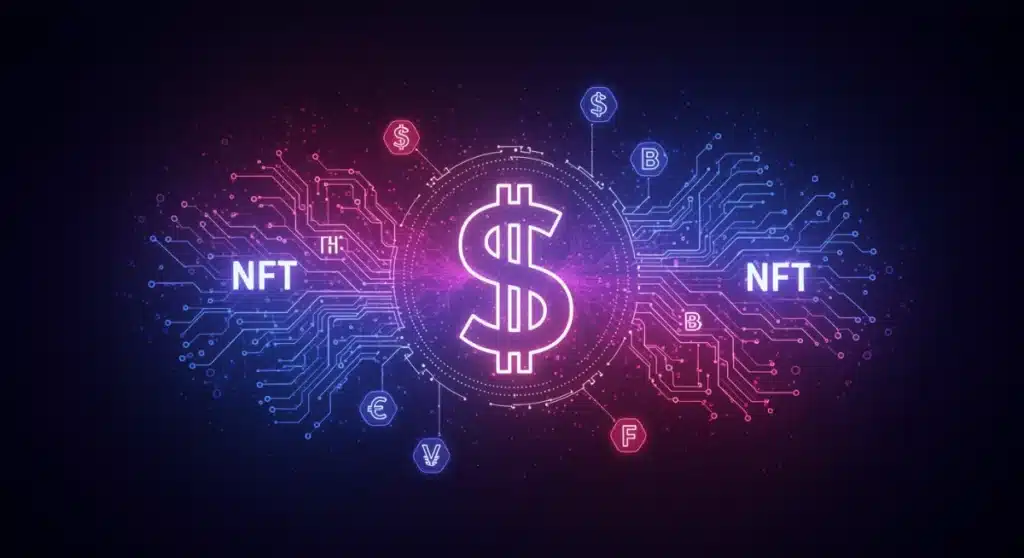
IP-NFTs represent a paradigm shift for creators, offering a robust mechanism to generate substantial annual royalties, with projections indicating a sustainable 10% return for many by mid-2025, fundamentally altering how intellectual property is owned and monetized in Web3.
The digital landscape is constantly evolving, and with it, the opportunities for creators to monetize their work. We’re on the cusp of a major transformation where IP-NFTs to generate 10% annual royalties for creators in Web3 by mid-2025 is not just a pipe dream but a tangible reality for those who understand how to navigate this innovative space.
Understanding IP-NFTs: A New Frontier for Intellectual Property
Intellectual Property Non-Fungible Tokens, or IP-NFTs, are revolutionizing the concept of ownership and monetization for creative works. Unlike traditional NFTs, which often represent ownership of a digital asset itself, IP-NFTs specifically tokenize the underlying intellectual property rights associated with that asset. This distinction is crucial, as it allows creators to retain core rights while still enabling new forms of value exchange and royalty distribution.
This innovative approach leverages blockchain technology to provide immutable records of ownership and transparent mechanisms for licensing and royalty collection. For artists, musicians, writers, and innovators, it opens up a world where their creations can generate passive income streams far beyond traditional models.
The Core Mechanics of IP-NFTs
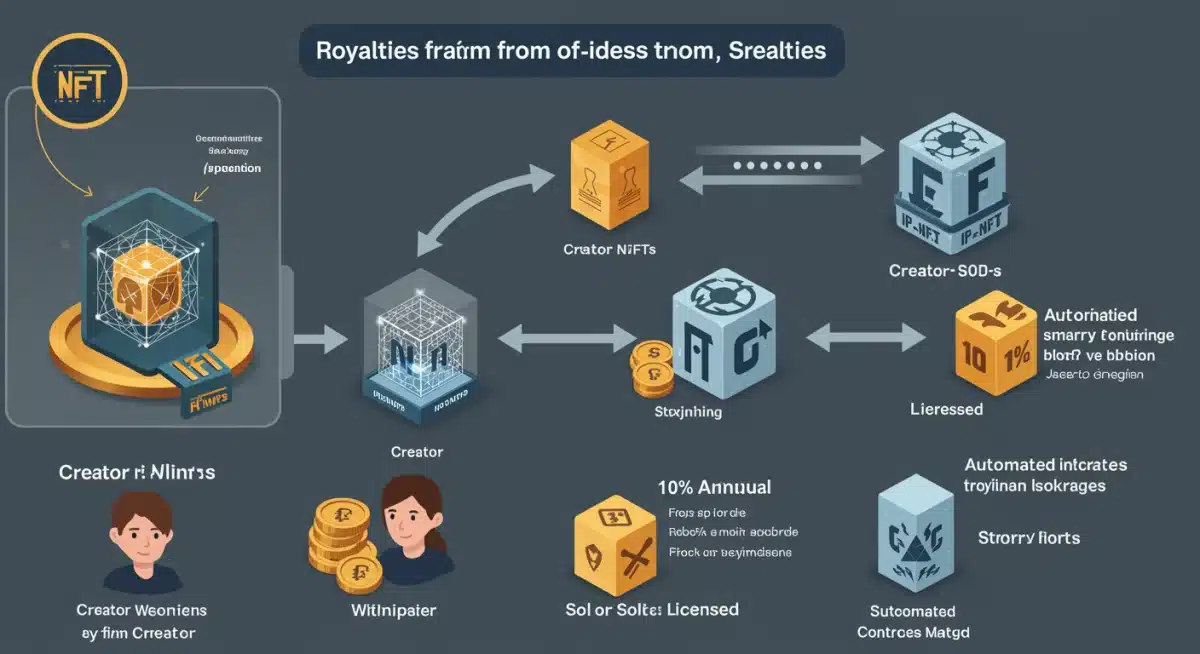
At its heart, an IP-NFT functions as a digital deed to intellectual property. It’s built on smart contracts, which are self-executing agreements whose terms are directly written into code. These contracts automate the distribution of royalties, ensuring that creators receive their predetermined share whenever their IP is utilized or resold within the blockchain ecosystem.
- Decentralized Ownership: IP-NFTs move intellectual property rights away from centralized intermediaries, giving creators more direct control.
- Automated Royalties: Smart contracts are programmed to automatically distribute a percentage of future sales or licensing fees back to the original creator.
- Fractional Ownership: The ability to divide IP-NFTs allows for collective ownership and investment, democratizing access to valuable intellectual property.
- Enhanced Transparency: All transactions and royalty distributions are recorded on a public blockchain, ensuring an unprecedented level of transparency.
The integration of IP-NFTs into creative industries is still in its nascent stages, but the potential for growth and impact is immense. As more platforms and legal frameworks adapt to this technology, creators will find it increasingly easier to protect their work and earn from it in novel ways.
In essence, IP-NFTs are not merely about owning a digital item; they are about owning the rights to that item and establishing a verifiable, automated system for perpetual earnings. This fundamental shift empowers creators to become their own publishers, distributors, and rights holders, bypassing many of the traditional gatekeepers.
The Promise of 10% Annual Royalties by Mid-2025
The projection of 10% annual royalties for creators via IP-NFTs by mid-2025 is not an arbitrary figure; it’s a calculated estimate based on several converging factors within the Web3 ecosystem. This includes the maturation of blockchain infrastructure, the increasing adoption of NFT marketplaces, and the growing demand for unique, verifiable digital assets with clear intellectual property backing.
This potential return significantly outperforms many traditional royalty structures, which often involve multiple intermediaries, complex contracts, and delayed payouts. With IP-NFTs, the royalty percentages are hard-coded into the smart contract, ensuring immediate and direct distribution to the creator’s wallet upon each transaction or use.
Driving Factors for Increased Royalties
Several key elements are contributing to the rise of these projected royalty rates. The efficiency of blockchain technology in eliminating middlemen is paramount, allowing a larger share of revenue to flow directly to creators. Furthermore, the global accessibility of Web3 platforms expands the market for intellectual property, reaching audiences and licensees that might have been inaccessible through traditional channels.

- Reduced Intermediary Costs: Smart contracts automate processes, cutting out agents, publishers, and other third parties who traditionally take a significant cut.
- Global Market Access: Web3 platforms allow creators to license their IP to anyone, anywhere, expanding their potential revenue streams.
- Secondary Market Royalties: IP-NFTs can be programmed to pay royalties on secondary sales, providing ongoing income long after the initial sale.
- Increased Demand for Unique Content: The burgeoning metaverse and digital economies are driving an unprecedented demand for original, verifiable intellectual property.
The transparency and immutability of blockchain also build trust among licensees and investors, making IP-NFTs a more attractive investment. This enhanced trust can lead to higher valuations and more frequent transactions, ultimately boosting the total royalty pool available to creators. The 10% figure is not a guarantee for every single IP-NFT, but rather an achievable benchmark for well-managed and strategically marketed intellectual property within this evolving ecosystem.
By mid-2025, as more creators and businesses recognize the immense value and efficiency of IP-NFTs, the infrastructure and market liquidity will have matured to support these robust royalty streams, making the 10% annual return a realistic and common expectation for many.
Navigating the IP-NFT Landscape: Key Strategies for Creators
For creators looking to capitalize on the IP-NFT revolution, understanding the strategic landscape is paramount. It’s not enough to simply mint an IP-NFT; success hinges on a thoughtful approach to intellectual property management, community engagement, and market positioning. Creators must actively participate in defining the value and utility of their tokenized IP.
A crucial first step involves identifying which aspects of your creative work are best suited for tokenization. Not all intellectual property is created equal in the Web3 space, and strategic selection can significantly impact potential returns. Consider works with strong fan bases, unique artistic merit, or utility within emerging metaverses and decentralized applications.
Essential Strategies for Maximizing IP-NFT Value
To truly leverage the power of IP-NFTs, creators should adopt a multi-faceted strategy that encompasses both technological understanding and community building. This includes careful selection of platforms, robust legal considerations, and proactive marketing efforts.
- Platform Selection: Choose reputable and creator-friendly platforms that support IP-NFT functionalities and offer robust secondary markets.
- Legal Clarity: Work with legal experts to ensure that the intellectual property rights embedded in your IP-NFTs are clearly defined and legally enforceable.
- Community Building: Engage with your audience and build a strong community around your IP, as this often drives demand and value.
- Utility and Integration: Explore ways to integrate your IP-NFTs into broader Web3 experiences, such as games, metaverses, or decentralized applications, to increase their utility and appeal.
Furthermore, creators should consider the long-term vision for their IP. An IP-NFT isn’t just a one-time sale; it’s an ongoing asset that can generate revenue over its lifetime. Strategic licensing, fractional ownership models, and collaborations can all contribute to sustained annual royalties. Understanding the nuances of smart contract programming, or at least working with developers who do, is also vital to ensure the desired royalty structures are correctly implemented.
By focusing on these strategies, creators can effectively navigate the complex yet rewarding IP-NFT landscape, positioning themselves to achieve and even exceed the projected 10% annual royalty returns by mid-2025.
Technical Underpinnings: Smart Contracts and Blockchain Efficiency
The backbone of IP-NFTs and their ability to generate consistent royalties lies squarely in the technical innovation of smart contracts and the inherent efficiency of blockchain technology. These two components work in tandem to automate, secure, and transparently manage intellectual property rights and their associated financial flows.
Smart contracts, as self-executing code on the blockchain, eliminate the need for intermediaries in royalty distribution. When a licensing agreement or a secondary sale occurs, the smart contract automatically triggers the payment of the pre-defined royalty percentage directly to the creator’s wallet. This removes delays, reduces administrative overhead, and ensures that creators receive their due in real-time.
How Smart Contracts Power Royalties
The efficiency of blockchain technology further enhances this process. Every transaction involving an IP-NFT, from its initial minting to subsequent sales or licensing, is recorded on an immutable ledger. This provides an unparalleled level of transparency and auditability, building trust among all parties involved.
- Automated Execution: Smart contracts execute royalty payments automatically upon predefined conditions, suchs as a sale or license activation.
- Immutability: Once the royalty structure is coded into the smart contract and deployed, it cannot be altered, providing long-term security for creators.
- Transparency: All royalty transactions are publicly verifiable on the blockchain, fostering trust and accountability.
- Global Reach: Blockchain transactions are borderless, enabling creators to receive royalties from anywhere in the world without currency conversion delays or excessive fees.
This technical foundation ensures that the promise of 10% annual royalties is not merely a marketing claim but a verifiable, technologically-backed reality. The continuous development of more efficient and scalable blockchain networks, coupled with user-friendly smart contract interfaces, will only further streamline this process, making IP-NFTs an increasingly accessible and reliable income stream for creators.
The technical robustness of Web3 infrastructure is the unsung hero behind the IP-NFT revolution. It’s what allows for the precise, transparent, and automated distribution of value, ensuring creators are fairly compensated for their ingenuity, directly and efficiently.
Challenges and Risks in the IP-NFT Ecosystem
While the potential of IP-NFTs for creators is immense, it’s crucial to acknowledge the challenges and risks inherent in this nascent ecosystem. Like any emerging technology, Web3 and IP-NFTs come with their own set of complexities, from regulatory uncertainties to market volatility and technical vulnerabilities. Creators must approach this space with a clear understanding of these potential pitfalls.
One significant hurdle is the evolving regulatory landscape. Intellectual property law is complex, and its intersection with blockchain technology is still being defined. This can lead to legal ambiguities regarding ownership, enforcement of rights, and cross-jurisdictional issues, posing risks for both creators and licensees.
Mitigating Risks and Overcoming Hurdles
Addressing these challenges requires a proactive approach, including due diligence, legal consultation, and a continuous watch on industry developments. Creators should not rush into tokenizing their IP without understanding the legal and technical implications.
- Regulatory Uncertainty: The lack of clear legal frameworks around IP-NFTs can create challenges in dispute resolution and rights enforcement.
- Market Volatility: The value of IP-NFTs, like other digital assets, can be subject to significant market fluctuations, impacting potential royalty earnings.
- Smart Contract Vulnerabilities: Flaws in smart contract code can lead to security breaches or unintended financial consequences.
- Interoperability Issues: Different blockchain networks and marketplaces may not always seamlessly interact, limiting the reach and liquidity of some IP-NFTs.
Furthermore, educating potential buyers and licensees about the value and legal standing of IP-NFTs remains a challenge. The broader adoption of IP-NFTs depends on increased understanding and trust in the technology. Creators also need to be mindful of potential intellectual property infringement outside the blockchain ecosystem, as tokenization on-chain does not automatically prevent off-chain misuse.
Despite these challenges, the Web3 community is actively working on solutions, including the development of more robust legal frameworks, standardized protocols, and enhanced security measures. By staying informed and exercising caution, creators can navigate these risks and still harness the transformative power of IP-NFTs.
The Future of Creator Economy: Beyond 10% Royalties
The projection of 10% annual royalties for IP-NFTs by mid-2025 is not an endpoint but rather a significant milestone in the evolution of the creator economy. Beyond this benchmark, the Web3 space promises even more profound transformations in how creators generate income, interact with their audience, and manage their intellectual property. The future envisions a highly decentralized, creator-centric ecosystem where innovation and direct value exchange are paramount.
One key area of future development is the expansion of utility for IP-NFTs. Imagine IP-NFTs that not only grant ownership and royalties but also confer voting rights in decentralized autonomous organizations (DAOs) focused on creative projects, or provide exclusive access to creator-led initiatives and communities. This moves beyond mere financial returns to deeper engagement and collective ownership.
Emerging Trends and Opportunities
The continuous innovation in blockchain technology will undoubtedly unlock new revenue streams and engagement models. Fractional ownership of high-value IP could become more commonplace, allowing a wider range of investors to participate and further democratizing access to creative assets.
- Enhanced Governance Models: IP-NFTs could grant holders governance rights over the future direction of the intellectual property, fostering a more collaborative creative process.
- Dynamic Royalties: Smart contracts could evolve to include dynamic royalty structures that adjust based on market demand, usage, or performance metrics.
- Cross-Chain Interoperability: Improved bridges between different blockchains will allow IP-NFTs to be seamlessly traded and licensed across various networks, increasing liquidity and reach.
- Metaverse Integration: As metaverses grow, IP-NFTs will become fundamental components for owning, licensing, and monetizing digital assets within these virtual worlds.
The long-term vision is a creator economy where intellectual property is not just a source of passive income but also a vibrant, interactive asset that fuels new forms of creativity, collaboration, and community building. The 10% annual royalty is just the beginning of what’s possible when creators fully embrace the decentralized, transparent, and programmable nature of Web3.
The future suggests a shift from simply monetizing existing works to co-creating and co-owning new ventures, with IP-NFTs serving as the foundational tools for this next generation of creative output and financial sustainability.
Preparing for the IP-NFT Revolution: Actionable Steps
For creators, investors, and enthusiasts eager to participate in the IP-NFT revolution and potentially secure 10% annual royalties by mid-2025, taking proactive and informed steps is crucial. The Web3 space moves rapidly, and staying ahead requires continuous learning, strategic planning, and active engagement with the community. This isn’t just about understanding the technology, but also about adapting mindsets to a decentralized future.
A fundamental first step is to deepen your understanding of blockchain fundamentals, smart contracts, and the specific nuances of IP-NFTs. Resources are abundant, from online courses to community forums and industry reports. Knowledge is power in this rapidly evolving domain.
Practical Advice for Engaging with IP-NFTs
To effectively leverage IP-NFTs, creators should focus on building a strong digital presence, understanding market dynamics, and carefully planning their tokenization strategies. This includes experimenting with new platforms and collaborating with others in the Web3 space.
- Educate Yourself: Immerse yourself in Web3 literature, tutorials, and community discussions to grasp the intricacies of IP-NFTs.
- Build Your Digital Portfolio: Consolidate and organize your intellectual property, identifying which assets have the most potential for tokenization.
- Network Actively: Connect with other creators, developers, legal experts, and platforms within the Web3 ecosystem.
- Start Small and Experiment: Consider tokenizing smaller pieces of IP or participating in pilot projects to gain experience without significant risk.
Furthermore, staying updated on regulatory developments and best practices for intellectual property in a decentralized environment is vital. Legal counsel specializing in Web3 can offer invaluable guidance. For investors, understanding the valuation metrics unique to IP-NFTs and the track record of specific creators or projects will be key to making sound investment decisions.
The journey towards achieving consistent 10% annual royalties through IP-NFTs is an exciting one, but it demands diligence and adaptability. By taking these actionable steps, creators and stakeholders can position themselves at the forefront of this transformative shift in the creator economy.
Embracing this new paradigm means not just observing the change, but actively shaping it and reaping its significant rewards.
| Key Point | Brief Description |
|---|---|
| IP-NFT Definition | Tokenizes underlying intellectual property rights, not just the digital asset, enabling new monetization models. |
| 10% Royalties Target | Projected annual return for creators by mid-2025, driven by Web3 efficiency and global market access. |
| Smart Contract Role | Automates royalty distribution, ensuring transparency and direct payments to creators on the blockchain. |
| Creator Strategies | Focus on platform selection, legal clarity, community building, and integrating IP-NFTs into Web3 experiences. |
Frequently Asked Questions About IP-NFTs and Royalties
An IP-NFT tokenizes the underlying intellectual property rights of a creation, granting verifiable ownership and control over its usage and monetization. A regular NFT typically represents ownership of a digital asset itself, often without explicitly defining the full spectrum of associated IP rights. IP-NFTs focus on the legal and commercial aspects of creative works.
The 10% annual royalty is enabled by smart contracts, which automatically distribute a pre-programmed percentage of all secondary sales or licensing fees directly to the creator. This automation cuts out intermediaries, reduces costs, and ensures immediate payout, making higher, more consistent royalty rates achievable within the transparent Web3 ecosystem.
Creators gain direct control over their intellectual property, transparent and automated royalty payments, global market access, and the potential for fractional ownership. This empowers them to bypass traditional gatekeepers, build stronger communities around their work, and secure ongoing revenue streams from secondary market activity and licensing.
Key risks include regulatory uncertainty in evolving legal frameworks, market volatility affecting asset values, potential smart contract vulnerabilities, and interoperability challenges between different blockchain networks. Creators should conduct thorough due diligence, seek legal advice, and stay informed about the rapidly changing Web3 landscape to mitigate these risks effectively.
Creators should educate themselves on Web3 fundamentals, build a strong digital portfolio, actively network within the blockchain community, and consider starting with smaller IP tokenization projects. Strategic platform selection, clear legal definitions for their IP, and integrating their IP-NFTs into broader Web3 experiences are also crucial steps for success.
Conclusion
The advent of IP-NFTs marks a pivotal moment for the creator economy, promising a future where artists, musicians, writers, and innovators can achieve unprecedented levels of control and financial independence. The projection of 10% annual royalties by mid-2025 is a testament to the transformative power of Web3, offering a transparent, automated, and globally accessible framework for intellectual property monetization. While challenges remain, the continuous innovation in blockchain technology, coupled with a growing understanding of its potential, positions IP-NFTs as a cornerstone of the next generation of creative output. Creators who embrace this paradigm shift and strategically navigate its intricacies will be at the forefront of a more equitable and prosperous digital future.