Crypto Security 2025: Halving Vulnerability for US Enthusiasts

Protecting your digital identity as a US crypto enthusiast in 2025 requires advanced strategies to combat evolving phishing and social engineering attacks, significantly reducing your vulnerability in the decentralized landscape.
In the rapidly evolving world of digital assets, protecting your digital identity has become paramount for US crypto enthusiasts. As we navigate 2025, the sophistication of phishing and social engineering attacks continues to escalate, making robust security measures not just advisable, but essential to halving your vulnerability.
Understanding the Evolving Threat Landscape
The digital frontier of cryptocurrency, while offering unprecedented financial freedom, also presents a fertile ground for malicious actors. As more individuals in the US engage with crypto, the methods used by cybercriminals become increasingly refined. Understanding these evolving threats is the first step in building an impenetrable defense.
Cybercriminals are constantly innovating, moving beyond simple scam emails to highly personalized and sophisticated attacks. These often exploit human psychology and leverage advanced technological tools, making them harder to detect without proper awareness and security protocols.
The Rise of Sophisticated Phishing
Phishing attacks are no longer just generic emails. They have evolved into highly targeted spear-phishing campaigns, whaling attacks, and even vishing (voice phishing) and smishing (SMS phishing). These attacks often mimic legitimate entities, such as crypto exchanges, wallet providers, or even government agencies, to trick users into divulging sensitive information.
- Deepfake Technology: Malicious actors are increasingly using deepfake audio and video to impersonate trusted individuals, making it difficult to discern legitimate communications from fraudulent ones.
- Evolving Email Tactics: Emails are often crafted with perfect grammar, legitimate-looking logos, and urgent calls to action, designed to bypass spam filters and trick recipients.
- Website Cloning: Attackers create near-identical replicas of legitimate crypto platforms, complete with functional login pages, to steal credentials.
The goal remains the same: to gain unauthorized access to your crypto wallets, exchange accounts, or personal data. Staying informed about these new vectors is crucial for any crypto holder.
Social Engineering: The Human Element
Social engineering exploits human trust and psychological manipulation rather than technical vulnerabilities. Attackers often research their targets extensively, gathering personal information from social media or public records to create highly convincing narratives. This allows them to build rapport and trust, ultimately leading victims to compromise their own security.
- Pretexting: Creating a fabricated scenario (pretext) to engage a target and obtain information, often posing as customer support or a fellow investor.
- Baiting: Offering something enticing, like free crypto or an exclusive investment opportunity, to lure victims into clicking malicious links or downloading infected files.
- Quid Pro Quo: Promising a service or benefit in exchange for information, such as offering technical assistance for login credentials.
These techniques are particularly insidious because they bypass traditional technological security measures by targeting the user directly. A strong understanding of social engineering tactics is as important as any software firewall.
In conclusion, the threat landscape in 2025 is characterized by a blend of technological sophistication and psychological manipulation. Recognizing these threats is the foundational step for US crypto enthusiasts to build effective defenses against potential attacks, thereby reducing their digital vulnerability.
Fortifying Your Digital Defenses: Essential Tools and Practices
Building a robust defense against digital threats requires a multi-layered approach, combining advanced tools with disciplined personal practices. For US crypto enthusiasts, relying solely on one security measure is insufficient; comprehensive protection is key to safeguarding assets and identity.
This section outlines practical steps and technologies you should integrate into your daily crypto routine to significantly enhance your security posture.
Implementing Strong Authentication Protocols
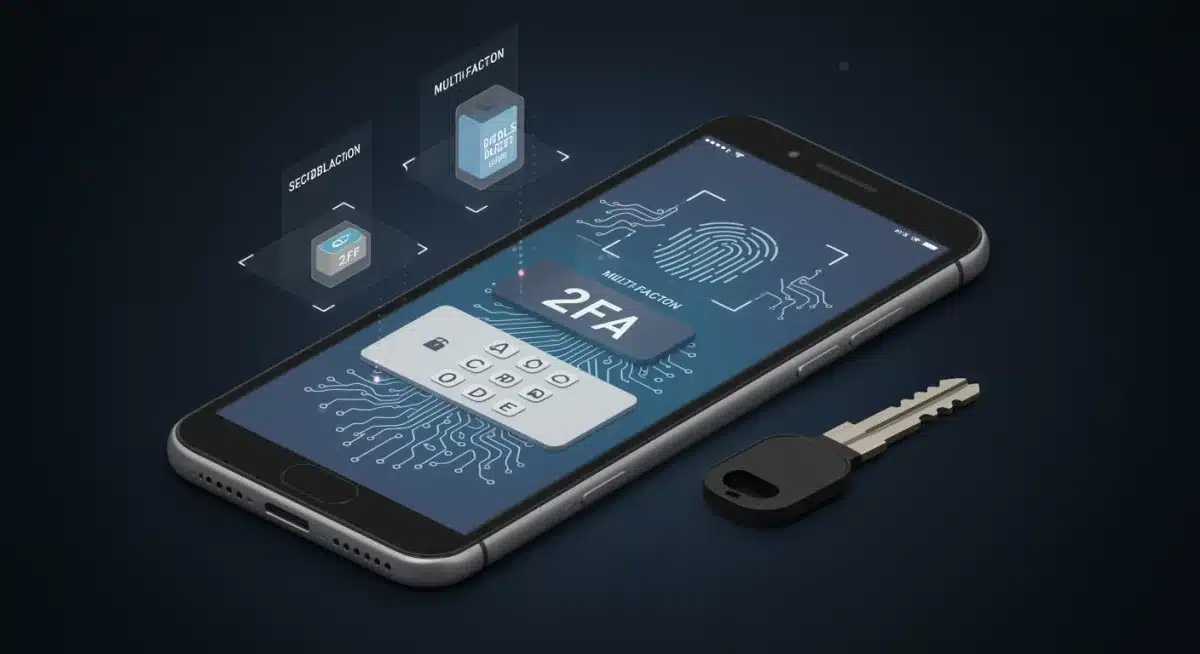
Your first line of defense against unauthorized access is strong authentication. Passwords alone are no longer enough in the face of sophisticated attacks. Multi-factor authentication (MFA) is non-negotiable for all crypto-related accounts.
- Hardware Security Keys (FIDO2/WebAuthn): Devices like YubiKey or Ledger Nano X provide the highest level of security for MFA. They physically verify your identity, making it nearly impossible for remote attackers to gain access even if they have your password.
- Authenticator Apps (TOTP): Apps like Google Authenticator or Authy generate time-based one-time passwords (TOTP), offering a stronger layer than SMS-based 2FA, which can be vulnerable to SIM-swapping attacks.
- Biometric Authentication: Where available, utilize fingerprint or facial recognition for added convenience and security on devices that support it for accessing crypto apps or wallets.
Always enable the strongest form of MFA available on every platform, from exchanges to email services. This simple step can deter a significant portion of opportunistic attacks.
Secure Wallet Management Strategies
The type of wallet you use and how you manage it directly impacts your security. Diversifying your storage methods and understanding their inherent risks is crucial.
Cold Storage vs. Hot Wallets:
- Cold Storage (Hardware Wallets): These are physical devices that store your private keys offline, making them immune to online hacking attempts. They are ideal for storing significant amounts of crypto.
- Hot Wallets (Software/Web Wallets): While convenient for frequent transactions, hot wallets are connected to the internet and thus more susceptible to online attacks. Only keep small amounts of crypto in hot wallets for daily use.
Regularly back up your seed phrases and store them securely offline, ideally in multiple physical locations. Never store your seed phrase digitally or share it with anyone.
Furthermore, consider using multi-signature wallets for shared funds or enhanced security, requiring multiple approvals for transactions. This adds another layer of protection against a single point of failure.
In essence, fortifying your digital defenses means adopting a proactive and layered security approach. By integrating strong authentication, secure wallet management, and continuous vigilance, US crypto enthusiasts can significantly reduce their attack surface and protect their valuable digital assets.
Recognizing and Avoiding Phishing Attempts in 2025
Phishing remains one of the most prevalent and effective methods for cybercriminals to compromise crypto accounts. As these attacks become more sophisticated, the ability to recognize and avoid them is a critical skill for every US crypto enthusiast. This section will equip you with the knowledge to identify common phishing tactics and develop a skeptical mindset.
The core of phishing is deception. Attackers impersonate trusted entities to trick you into revealing sensitive information or taking actions that compromise your security. Vigilance and a keen eye for detail are your best allies.
Common Phishing Vectors and Red Flags
Phishing attempts can come through various channels, each with its own set of red flags. Learning to spot these inconsistencies can save you from significant losses.
- Email Phishing: Look for generic greetings, suspicious sender addresses (even if the display name looks legitimate), poor grammar or spelling, and urgent, threatening, or too-good-to-be-true language. Hover over links to check the actual URL before clicking.
- SMS Phishing (Smishing): Be wary of unsolicited texts asking you to click a link, verify account details, or claim a prize. Scammers often use shortened URLs that mask the true destination.
- Voice Phishing (Vishing): Be suspicious of unexpected phone calls claiming to be from your bank, crypto exchange, or wallet provider asking for personal information or to install remote access software. Always verify the caller’s identity by calling back through an official number.
- Website Spoofing: Always double-check the URL of any crypto platform you visit. Phishing sites often have slight misspellings or use different top-level domains (e.g., .net instead of .com). Bookmark legitimate sites and use those bookmarks.
- Social Media Scams: Be cautious of DMs or posts offering giveaways, free crypto, or investment opportunities that seem too good to be true. Impersonators are rampant on platforms like X (formerly Twitter), Telegram, and Discord.
Remember, legitimate institutions will rarely ask for your private keys, seed phrase, or full password via email, SMS, or phone call. If in doubt, contact the institution directly using official contact information.
Developing a Skeptical Mindset
Beyond technical indicators, cultivating a healthy skepticism is perhaps the most powerful defense against phishing. Assume every unsolicited communication requesting sensitive information is a potential scam until proven otherwise.
Always take a moment to pause and critically evaluate the situation. Ask yourself: Is this request expected? Does it make logical sense? Is there an unusual sense of urgency? A quick verification through an official channel can prevent a costly mistake.
In summary, recognizing and avoiding phishing in 2025 demands constant vigilance and a critical approach to all digital communications. By understanding common tactics and fostering a skeptical mindset, US crypto enthusiasts can significantly reduce their exposure to these pervasive threats.
Combating Social Engineering: Human Vulnerabilities
While technology plays a crucial role in digital security, the human element remains the weakest link for many. Social engineering attacks prey on psychological vulnerabilities, manipulating individuals into making security errors. For US crypto enthusiasts, understanding these vulnerabilities and how to mitigate them is paramount to a comprehensive defense strategy.
These attacks are often meticulously planned, leveraging information gathered about you to create a believable and persuasive narrative. They bypass firewalls and encryption by targeting your trust and judgment.
Understanding Psychological Manipulation Tactics
Social engineers employ various psychological principles to achieve their goals. Recognizing these tactics can help you resist their influence.
- Authority: Posing as someone in a position of power or knowledge (e.g., a high-ranking executive, a tech support specialist) to induce compliance.
- Urgency/Scarcity: Creating a sense of immediate need or limited opportunity to pressure victims into quick decisions without critical thinking.
- Trust/Friendship: Building rapport or feigning friendship to gain confidence, often through prolonged interaction on social media or forums.
- Fear/Intimidation: Threatening negative consequences (e.g., account suspension, legal action) to coerce victims into action.
Attackers are skilled at exploiting emotions like fear, greed, curiosity, and helpfulness. Being aware of these emotional triggers can help you identify when you might be under a social engineering attack.
Best Practices for Personal Information Protection
Minimizing the information available to social engineers makes their job harder. Be mindful of what you share online and implement strict privacy settings.
- Limit Public Information: Review your social media profiles. Avoid posting personal details like your birthday, home address, pet names, or vacation plans, which can be used to answer security questions or build a convincing pretext.
- Be Wary of Unsolicited Contact: Treat all unexpected communications with suspicion, especially if they discuss your crypto holdings or financial details. Always verify the identity of the person contacting you through an independent, trusted source.
- Strong Password Hygiene: Use unique, complex passwords for all accounts. A password manager can help you manage these securely. Never reuse passwords across different platforms.
Education is a powerful deterrent. Regularly update yourself on new social engineering techniques and share this knowledge with your crypto-savvy network. A community that is well-informed is a community that is better protected.
In conclusion, combating social engineering requires a blend of psychological awareness and disciplined information hygiene. By understanding how attackers manipulate and by safeguarding your personal data, US crypto enthusiasts can significantly harden their defenses against these human-centric attacks, thus halving their overall vulnerability.
Secure Device and Network Practices for Crypto Users
Beyond individual awareness, the security of your devices and networks forms a critical layer of protection for your digital identity and crypto assets. A compromised device or an insecure network can serve as a gateway for attackers, regardless of how careful you are with your credentials. This section outlines essential practices for US crypto enthusiasts to maintain a secure digital environment.
Think of your devices as the entry points to your digital life. Ensuring their integrity and the security of your connection is fundamental to preventing unauthorized access.
Device Security: Keeping Your Endpoints Safe
Your computer and smartphone are often the primary tools you use to access crypto platforms. Securing them should be a top priority.
- Operating System and Software Updates: Always keep your operating system, web browsers, and all crypto-related applications updated. Updates often include critical security patches that fix newly discovered vulnerabilities.
- Antivirus and Anti-Malware Software: Install reputable antivirus and anti-malware software on all your devices. Configure them to run regular scans and keep their definitions updated.
- Full Disk Encryption: Enable full disk encryption (e.g., BitLocker for Windows, FileVault for macOS) on your computers and devices. This protects your data if your device is lost or stolen.
- Strong Device Passwords/Biometrics: Use strong, unique PINs or passwords for your devices, and enable biometric authentication where available.
- Isolate Crypto Activities: Consider using a dedicated, clean device (e.g., a separate laptop or a live USB operating system) solely for managing your cryptocurrency, minimizing exposure to other internet activities.
Regularly review the permissions granted to applications on your devices. Revoke access for any apps you no longer use or that have excessive permissions.
Network Security: Protecting Your Connection
The network you connect through can be a significant vulnerability if not properly secured. Public Wi-Fi, in particular, poses considerable risks.
- Virtual Private Network (VPN): Always use a trusted VPN, especially when connecting to public Wi-Fi networks. A VPN encrypts your internet traffic, preventing eavesdropping and data interception.
- Secure Home Wi-Fi: Ensure your home Wi-Fi network uses WPA3 or WPA2 encryption, has a strong, unique password, and change the default router login credentials. Disable WPS (Wi-Fi Protected Setup) and consider segmenting your network with a guest network for visitors.
- Firewall Protection: Enable the firewall on your operating system and router. A firewall monitors and controls incoming and outgoing network traffic, blocking unauthorized access.
Never conduct crypto transactions or log into sensitive accounts on unsecured public Wi-Fi networks. The risk of man-in-the-middle attacks is too high.
In conclusion, a secure digital environment is built on the foundation of diligent device and network practices. By maintaining updated software, employing robust antivirus solutions, and securing your network connections, US crypto enthusiasts can create a safer space for their digital assets, effectively halving their vulnerability to technical exploits.
Responding to and Recovering from a Crypto Security Breach
Despite all preventive measures, security breaches can occasionally occur. Knowing how to respond effectively and efficiently is crucial for minimizing damage and initiating recovery. For US crypto enthusiasts, a swift and informed response can be the difference between a minor setback and significant financial loss. This section provides a clear roadmap for action in the event of a security incident.
Preparation is key. Having a plan in place before an incident occurs will allow you to act decisively rather than react in panic.
Immediate Actions Post-Breach
Time is of the essence when a breach is suspected. Acting quickly can limit the scope of the damage.
- Isolate the Compromised Account/Device: If an exchange account is compromised, immediately attempt to change passwords and disable withdrawals. If a device is compromised, disconnect it from the internet.
- Change All Related Passwords: Change passwords for all crypto accounts, email addresses, and any other services that share credentials or are linked to the compromised account. Use strong, unique passwords for each.
- Notify Relevant Parties: Inform the affected crypto exchange, wallet provider, or financial institution immediately. They may have procedures in place to help secure your assets or track fraudulent transactions.
- Document Everything: Keep detailed records of the incident, including dates, times, screenshots of suspicious activity, and communications with platforms. This documentation will be vital for investigations and potential recovery efforts.
- Scan for Malware: Run comprehensive antivirus and anti-malware scans on all your devices to identify and remove any persistent threats.
Do not attempt to engage with the attacker. Focus on securing your remaining assets and identifying the extent of the compromise.
Recovery and Prevention of Future Incidents
After the immediate crisis has passed, the focus shifts to recovery and reinforcing your defenses to prevent future breaches.
- Review Transaction History: Carefully examine all transaction histories on your crypto accounts to identify any unauthorized transfers.
- Report to Authorities: Consider reporting the incident to law enforcement agencies like the FBI (via IC3) or the FTC, especially if significant funds were lost. While recovery isn’t guaranteed, your report helps track criminal activity.
- Post-Mortem Analysis: Understand how the breach occurred. Was it a phishing link? A weak password? A social engineering trick? Learning from the incident is crucial for improving your security protocols.
- Enhance Security Measures: Implement stronger MFA, consider hardware wallets for cold storage, and commit to regular security audits of your digital habits.
This process is not just about recovering assets but also about rebuilding trust in your digital environment and strengthening your resilience against future attacks.
In summary, a well-defined response and recovery plan is an indispensable part of a comprehensive crypto security strategy. By acting quickly, documenting thoroughly, and learning from incidents, US crypto enthusiasts can navigate breaches more effectively and emerge with reinforced defenses, further halving their vulnerability.
The Future of Crypto Security: Innovations and Best Practices for 2025+
As the crypto landscape continues to evolve, so too do the methods of digital protection. Looking beyond 2025, anticipating future security innovations and integrating new best practices will be crucial for US crypto enthusiasts to stay ahead of cybercriminals. This section explores emerging trends and proactive strategies that will define the next generation of crypto security.
The decentralized nature of blockchain inherently offers robust security, but the interfaces and human interactions with it remain vulnerable. Future innovations aim to bridge this gap with more integrated and user-friendly security solutions.
Emerging Security Technologies
Technological advancements are continuously being developed to enhance crypto security, moving towards more inherent and automated protection.
- Zero-Knowledge Proofs (ZKPs): These cryptographic protocols allow one party to prove to another that a statement is true, without revealing any information beyond the validity of the statement itself. ZKPs can enhance privacy and security in transactions and identity verification, reducing the amount of sensitive data exposed.
- Decentralized Identity (DID): DIDs aim to give users complete control over their digital identities, moving away from centralized identity providers. This can reduce the risk of large-scale data breaches and make identity theft harder.
- AI/ML-Powered Threat Detection: Artificial intelligence and machine learning are increasingly being used to detect unusual patterns in transactions and network activity, identifying potential phishing or social engineering attempts before they can cause harm.
- Quantum-Resistant Cryptography: While not an immediate threat, the development of quantum computers poses a long-term risk to current cryptographic standards. Research into quantum-resistant algorithms is ongoing, ensuring future protection.
These innovations promise to integrate security more deeply into the infrastructure of Web3, making it inherently safer for users.
Proactive Best Practices for the Future
Beyond adopting new technologies, maintaining a proactive and adaptive mindset will remain a cornerstone of effective crypto security.
Regularly audit your digital footprint and actively seek out new information on emerging threats and security solutions. Engage with reputable crypto security communities and forums to stay informed about the latest scams and protective measures. Consider investing in professional security audits for significant crypto holdings or for businesses operating in the Web3 space.
Furthermore, advocating for stronger regulatory frameworks and consumer protection within the US crypto industry can contribute to a safer environment for everyone. Collective action and shared knowledge are powerful tools against sophisticated cybercrime.
In conclusion, the future of crypto security for US enthusiasts lies in embracing technological innovation while diligently upholding proactive personal security practices. By staying informed about emerging threats and adopting advanced solutions, individuals can confidently navigate the evolving digital landscape, ensuring robust protection for their digital assets and identity for years to come.
| Key Security Area | Brief Description for 2025 |
|---|---|
| Advanced MFA | Utilize hardware keys and authenticator apps for all crypto accounts; avoid SMS 2FA due to SIM-swapping risks. |
| Phishing Awareness | Recognize sophisticated email, SMS, and website spoofing; verify all links and sender identities before acting. |
| Social Engineering Defense | Understand psychological manipulation tactics and limit public personal information to reduce attack surface. |
| Secure Environments | Maintain updated software, use strong antivirus, and secure networks (VPNs, strong Wi-Fi encryption) for all crypto activities. |
Frequently Asked Questions About Crypto Security
The most critical step is implementing multi-factor authentication (MFA) across all crypto-related accounts, prioritizing hardware security keys or authenticator apps over SMS-based options. This significantly reduces the risk of unauthorized access, even if your password is compromised, forming a robust barrier against cyber threats.
Always scrutinize the URL for subtle misspellings or unusual extensions. Hover over links to preview their destination without clicking. Be wary of urgent language, generic greetings, or requests for sensitive information like private keys. Legitimate platforms rarely ask for such details via email or unsolicited messages.
For significant holdings, use cold storage (hardware wallets) and keep only minimal funds in hot wallets for transactions. Securely back up your seed phrase offline in multiple physical locations. Regularly update wallet software and consider multi-signature wallets for shared or enhanced security, diversifying your storage methods.
Phishing typically involves deceptive links or websites, while social engineering manipulates human psychology to gain trust or coerce action. Your best defense is a skeptical mindset: question unsolicited requests, verify identities through official channels, and limit personal information shared online. Awareness of emotional triggers is also crucial.
Immediately isolate the compromised account/device, change all related passwords using unique, strong credentials, and notify the affected crypto exchange or wallet provider. Document everything, including dates and screenshots, and run comprehensive malware scans. Swift action minimizes potential losses and aids in recovery efforts.
Conclusion
The journey of a US crypto enthusiast in 2025 is marked by incredible innovation and significant security challenges. As this guide has outlined, protecting your digital identity against increasingly sophisticated phishing and social engineering attacks is not merely a recommendation but a fundamental requirement. By adopting a multi-layered security approach encompassing strong authentication, secure wallet management, vigilant threat recognition, robust device and network practices, and a clear incident response plan, individuals can significantly halve their vulnerability. Staying informed, proactive, and continuously adapting to the evolving threat landscape will empower crypto users to safeguard their assets and navigate the decentralized future with confidence.