DeFi 2.0 Protocols: Maximizing Yields in 2026 with New Liquidity Mining Strategies

The decentralized finance (DeFi) landscape is in a constant state of evolution, with innovations emerging at a rapid pace. As we look towards 2026, the discussion around DeFi 2.0 protocols and their potential to maximize yields through novel liquidity mining strategies has become more pertinent than ever. The initial wave of DeFi, often termed DeFi 1.0, laid the foundational blocks, introducing concepts like decentralized exchanges (DEXs), lending protocols, and basic yield farming. While revolutionary, DeFi 1.0 also presented challenges such as impermanent loss, unsustainable yield incentives, and capital inefficiency. Enter DeFi 2.0, a paradigm shift designed to address these limitations and usher in a new era of sustainable, capital-efficient, and user-friendly decentralized financial services. This article delves deep into the intricacies of DeFi 2.0, exploring how these advanced protocols are reshaping the investment landscape and offering unparalleled opportunities for maximizing DeFi 2.0 Yields in the coming years.
Understanding DeFi 2.0 requires a look back at its predecessor. DeFi 1.0 was characterized by liquidity mining programs that often relied on inflationary token emissions to attract liquidity providers (LPs). While effective in bootstrapping initial liquidity, this model frequently led to token price depreciation and a ‘farm and dump’ mentality, where LPs would sell their rewards, putting downward pressure on the native token’s value. Furthermore, LPs were exposed to impermanent loss, a significant risk when providing liquidity to volatile asset pairs. These issues highlighted the need for more robust and sustainable mechanisms.
DeFi 2.0 protocols aim to solve these problems by introducing a suite of innovative concepts. At its core, DeFi 2.0 focuses on protocol-owned liquidity (POL), bond mechanisms, and enhanced governance models, collectively designed to create a more resilient and profitable ecosystem for participants. The goal is not just to attract liquidity but to retain it, ensuring long-term sustainability and growth for the protocols themselves. This fundamental shift in philosophy is what makes DeFi 2.0 Yields so promising for the future.
The Core Innovations Driving DeFi 2.0 Yields
Several key innovations underpin the DeFi 2.0 movement, each contributing to improved capital efficiency, reduced risk, and ultimately, higher and more sustainable DeFi 2.0 Yields. These innovations represent a maturation of the decentralized finance space, moving beyond simple incentive structures to more complex and integrated financial engineering.
Protocol-Owned Liquidity (POL)
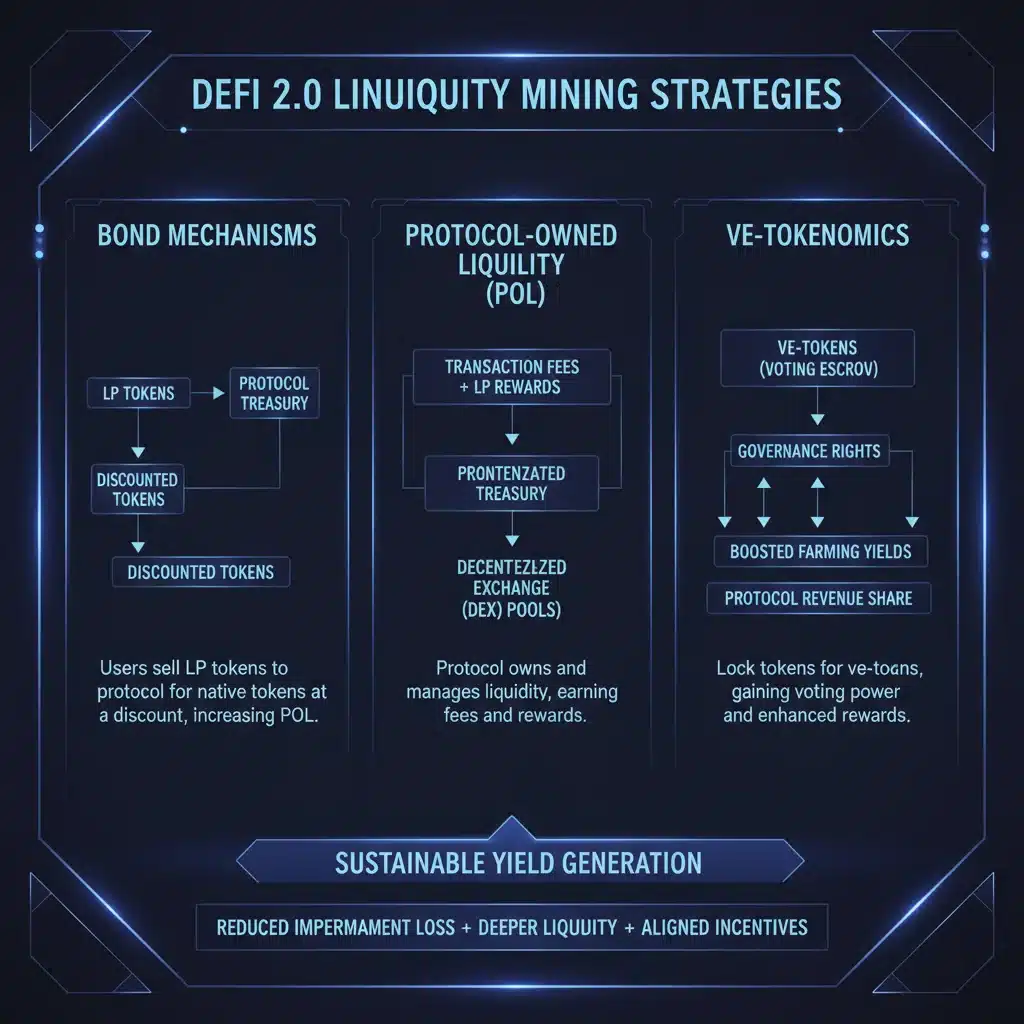
One of the most significant departures from DeFi 1.0 is the concept of Protocol-Owned Liquidity (POL). In DeFi 1.0, protocols rented liquidity from users, offering high APYs to incentivize LPs. This often resulted in mercenary capital, where LPs would migrate to the highest-yielding farm, leaving protocols vulnerable to liquidity drains. POL, pioneered by protocols like OlympusDAO, flips this model on its head. Instead of renting, protocols aim to own their liquidity. This is achieved through mechanisms like bonding, where users sell their LP tokens or other assets to the protocol in exchange for discounted native tokens that vest over time.
By owning its liquidity, a protocol gains several advantages. Firstly, it reduces reliance on external LPs, creating a more stable and predictable liquidity base. This stability is crucial for maintaining deep markets and minimizing slippage for traders. Secondly, the protocol earns trading fees from the liquidity it owns, generating a sustainable revenue stream that can be used to further develop the project, buy back tokens, or fund future initiatives. This self-sustaining economic model is a cornerstone of maximizing DeFi 2.0 Yields for the protocol and its long-term holders.
The benefits extend to users as well. While direct bonding might not offer the astronomical APYs seen in some DeFi 1.0 farms, the long-term value proposition is often stronger. Holders of POL-backed tokens benefit from the protocol’s increasing treasury and the stability it provides. This creates a more aligned incentive structure between the protocol and its community, fostering a sense of ownership and collective growth.
Bonding Mechanisms and Treasury Management
Bonding is the primary mechanism through which protocols acquire POL. Users can bond various assets, such as LP tokens, stablecoins, or even other governance tokens, in exchange for the protocol’s native token at a discount. These bonded tokens typically vest over a short period, preventing immediate sell-offs and ensuring a gradual release into the market. This mechanism allows protocols to strategically accumulate assets for their treasury, building a diversified portfolio that can back the native token’s value and provide long-term stability.
Effective treasury management is another critical component of DeFi 2.0. Protocols are no longer just about issuing tokens; they are becoming sophisticated decentralized autonomous organizations (DAOs) with significant treasuries. These treasuries are actively managed to generate yield, diversify holdings, and support the protocol’s ecosystem. This includes investing in other DeFi protocols, providing liquidity on various DEXs, or engaging in stablecoin farming. The revenue generated from these treasury activities can then be used to enhance DeFi 2.0 Yields for stakers and token holders, creating a virtuous cycle of growth.
ve-Tokenomics and Vote-Escrowed Models
Another powerful innovation gaining traction in DeFi 2.0 is the ve-tokenomics model, popularized by Curve Finance with its veCRV. This model involves locking up a protocol’s native token for a specified period (vote-escrowing) to gain enhanced governance rights and boosted rewards. The longer a user locks their tokens, the greater their voting power and the higher their yield boosts.
The ve-tokenomics model addresses the mercenary capital problem by incentivizing long-term commitment. Users who lock their tokens become more aligned with the protocol’s success, as their rewards and influence grow with the protocol’s value. This also creates a strong demand for the native token, as users need to acquire and lock it to maximize their earnings and participate meaningfully in governance. For protocols, this means more stable liquidity and a dedicated community, directly contributing to the sustainability of DeFi 2.0 Yields.
This model has been adopted by numerous protocols, creating a ‘Curve Wars’ phenomenon where protocols compete to accumulate veCRV (and similar tokens from other projects) to direct liquidity incentives to their own pools. This competition, while intense, ultimately benefits users by offering attractive yield opportunities and fostering innovation within the ecosystem.
New Liquidity Mining Strategies for Maximizing DeFi 2.0 Yields in 2026
As DeFi 2.0 continues to mature, new and sophisticated liquidity mining strategies are emerging, designed to optimize capital efficiency and generate sustainable DeFi 2.0 Yields. These strategies often combine the core innovations discussed above with advanced financial engineering techniques.
Concentrated Liquidity Provision
Building on the advancements of Uniswap V3, concentrated liquidity provision allows LPs to allocate their capital within specific price ranges, rather than across the entire price spectrum. This dramatically increases capital efficiency, as the liquidity is concentrated where most trading occurs. For LPs, this can lead to significantly higher trading fee earnings compared to traditional AMMs.
However, concentrated liquidity also comes with increased complexity and the need for active management. LPs must constantly monitor price movements and adjust their ranges to remain active and avoid impermanent loss. Protocols are developing automated strategies and third-party tools to help users manage their concentrated liquidity positions more effectively, making these higher DeFi 2.0 Yields more accessible.
Yield Aggregators and Vaults with Advanced Strategies
Yield aggregators and vaults have been a staple of DeFi for some time, but in DeFi 2.0, they are becoming increasingly sophisticated. These platforms automate the process of finding the highest yields across various protocols, often employing complex strategies like auto-compounding, flash loan arbitrage, and dynamic rebalancing. They pool user funds to deploy capital more efficiently and minimize gas fees, making high-yield strategies accessible even to smaller investors.
In 2026, we can expect these aggregators to integrate even more advanced DeFi 2.0-specific strategies, such as leveraging protocol-owned liquidity opportunities, optimizing ve-token allocations, and participating in sophisticated bonding mechanisms. This automation will be crucial for users looking to maximize their DeFi 2.0 Yields without constant manual intervention.
Structured Products and Derivatives in DeFi
The maturation of DeFi 2.0 is also paving the way for more complex financial products, including structured products and derivatives. These can offer new avenues for yield generation and risk management. For example, options protocols can allow users to sell covered calls or put options on their crypto assets to earn premium income. Interest rate swaps can enable users to lock in fixed rates on their lending or borrowing activities.
While these products introduce higher levels of complexity and risk, they also present opportunities for sophisticated investors to unlock new sources of DeFi 2.0 Yields. As the infrastructure for these products becomes more robust and user-friendly, they will likely play a more prominent role in the DeFi ecosystem.
Leveraged Yield Farming and Risk Management
Leveraged yield farming, while high-risk, remains a strategy for aggressive yield maximization. DeFi 2.0 protocols are not eliminating leverage but are providing more tools and transparency for managing its risks. This includes improved liquidation mechanisms, better oracle data, and more sophisticated risk assessment models. Protocols might also integrate with insurance solutions to mitigate specific risks associated with leverage.
For those comfortable with the inherent risks, leveraged strategies can amplify DeFi 2.0 Yields significantly. However, it is crucial to understand the liquidation thresholds and potential for rapid capital loss. Education and robust risk management tools will be paramount for safely engaging in these advanced strategies.
Challenges and Risks in the DeFi 2.0 Landscape
Despite the immense potential for maximizing DeFi 2.0 Yields, the landscape is not without its challenges and risks. Investors and users must remain vigilant and conduct thorough due diligence before committing capital.
Smart Contract Risks and Audits
The reliance on smart contracts is a double-edged sword. While they enable automation and trustlessness, vulnerabilities in their code can lead to significant losses. Exploits, bugs, and hacks remain a persistent threat in the DeFi space. Protocols must prioritize rigorous security audits by reputable firms, establish bug bounties, and implement robust emergency protocols. Users should always verify audit reports and understand the security posture of any protocol they interact with.
Impermanent Loss and Volatility
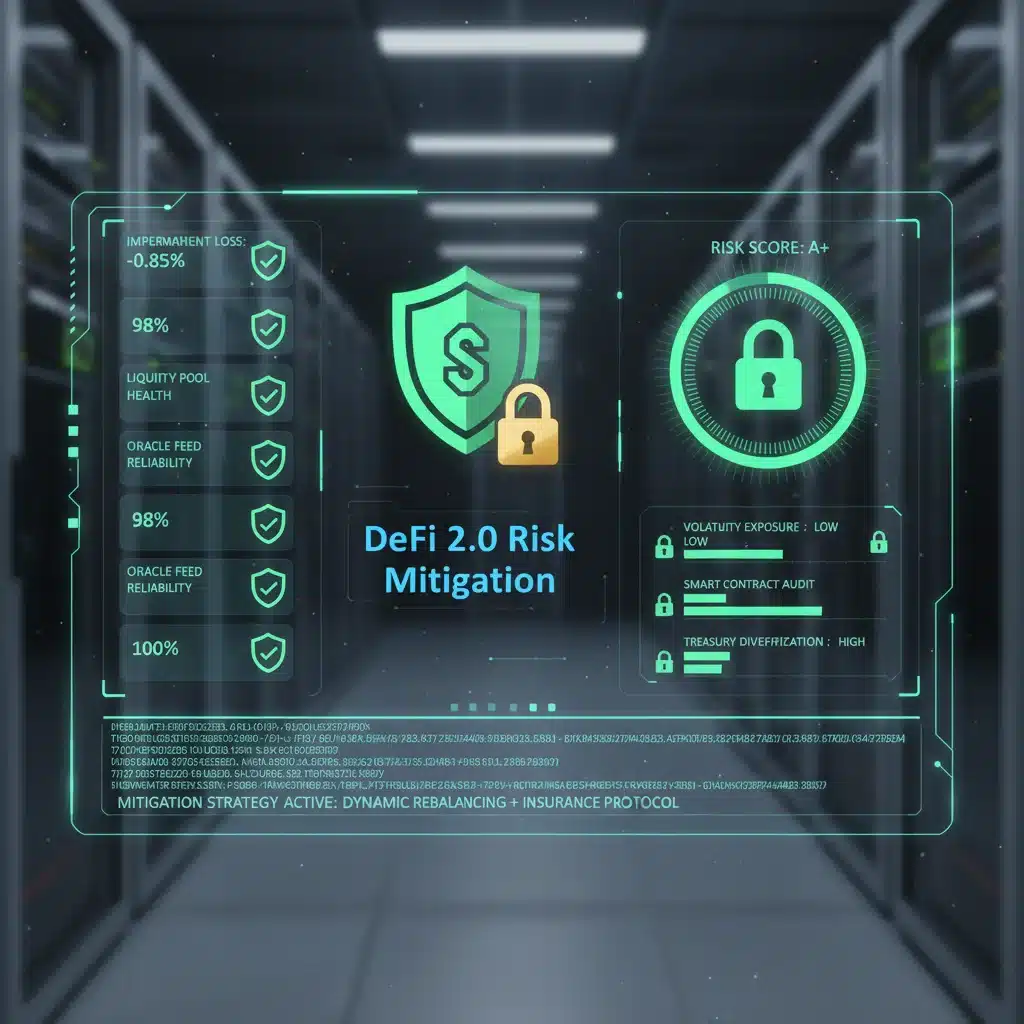
While DeFi 2.0 aims to mitigate impermanent loss through POL and other mechanisms, it is still a factor, especially for LPs in traditional AMMs or concentrated liquidity pools. The inherent volatility of crypto assets means that the value of LP tokens can diverge from the initial deposit, potentially leading to a net loss even when earning trading fees. Understanding and actively managing impermanent loss exposure is crucial for sustainable DeFi 2.0 Yields.
Regulatory Scrutiny
As DeFi grows, so does the attention from regulators worldwide. Uncertainty around regulatory frameworks can pose significant risks to protocols and users. Future regulations could impact how certain DeFi services operate, how tokens are classified, and how taxes are applied. Staying informed about the evolving regulatory landscape is vital for anyone participating in DeFi.
Economic Sustainability and Tokenomics
Even with innovations like POL and ve-tokenomics, the long-term economic sustainability of some DeFi 2.0 protocols remains a topic of debate. The design of tokenomics, including inflation rates, reward distribution, and value accrual mechanisms, must be carefully considered to avoid the pitfalls of unsustainable growth models seen in DeFi 1.0. Users should evaluate the underlying economics of a protocol to ensure that the promised DeFi 2.0 Yields are genuinely sustainable.
The Future of DeFi 2.0 and Maximizing Yields in 2026
Looking ahead to 2026, the DeFi 2.0 landscape is poised for continued growth and innovation. The focus will likely shift even further towards interoperability, institutional adoption, and the integration of real-world assets (RWAs) onto the blockchain. These trends will open up new avenues for maximizing DeFi 2.0 Yields.
Cross-Chain Interoperability
The current DeFi ecosystem is fragmented across multiple blockchains. Cross-chain interoperability solutions, such as bridges and Layer 0 protocols, will become increasingly sophisticated, allowing capital to flow seamlessly between different networks. This will unlock new liquidity pools and yield opportunities, as users will be able to access the best yields regardless of their initial chain. The ability to move assets efficiently will be a key driver for enhanced DeFi 2.0 Yields.
Institutional Adoption and Compliance
As the DeFi space matures, institutional participation is expected to increase significantly. This will necessitate the development of compliant DeFi solutions, including KYC/AML features, regulated stablecoins, and institutional-grade security. The influx of institutional capital will bring greater liquidity and stability, potentially leading to more robust and reliable DeFi 2.0 Yields, albeit potentially with lower average APYs than the highly speculative early days.
Real-World Assets (RWAs) in DeFi
The tokenization of real-world assets (RWAs) is another transformative trend. Bringing assets like real estate, commodities, and traditional financial instruments onto the blockchain will expand the total addressable market for DeFi. Protocols will emerge that allow users to lend against or earn yield on these tokenized RWAs, offering new and diversified sources of DeFi 2.0 Yields that are potentially less correlated with the volatility of native crypto assets.
Enhanced User Experience and Abstraction
For DeFi to achieve mass adoption, the user experience must become simpler and more intuitive. Abstraction layers that hide the underlying blockchain complexities, such as gas fees, wallet management, and cross-chain bridging, will be crucial. Wallets and platforms will act as smart portals, seamlessly connecting users to the best yield opportunities across various protocols without requiring deep technical knowledge. This ease of access will onboard more users, further cementing the role of DeFi 2.0 Yields in the broader financial landscape.
Strategies for Individuals to Maximize DeFi 2.0 Yields
For individual investors looking to capitalize on the opportunities presented by DeFi 2.0, a strategic approach is essential. Simply chasing the highest APYs without understanding the underlying mechanisms and risks can lead to significant losses.
Diversification Across Protocols and Strategies
Just as in traditional finance, diversification is key in DeFi. Instead of putting all your capital into a single protocol or strategy, spread your investments across multiple reputable DeFi 2.0 projects. This mitigates the risk associated with smart contract vulnerabilities or economic failures of a single protocol. Diversify across different types of yield generation, such as lending, staking, and liquidity provision, to balance risk and reward and optimize your overall DeFi 2.0 Yields.
Continuous Research and Due Diligence
The DeFi space evolves rapidly. What is cutting-edge today might be obsolete tomorrow. Continuous research and due diligence are non-negotiable. Stay updated on new protocols, understand their tokenomics, evaluate their security audits, and assess the experience and reputation of their development teams. Join community forums and discussion groups to gain insights and stay informed about potential risks and opportunities for maximizing DeFi 2.0 Yields.
Utilizing Yield Aggregators Wisely
Yield aggregators can be powerful tools, but they also introduce an additional layer of smart contract risk. Choose aggregators with a strong track record, extensive audits, and transparent fee structures. Understand the strategies they employ and ensure they align with your risk tolerance. While they automate yield optimization, it’s still your responsibility to understand where your funds are being deployed.
Understanding and Managing Risk Exposure
Before engaging in any DeFi 2.0 strategy, clearly define your risk tolerance. Understand the potential for impermanent loss, liquidation risks, and smart contract exploits. Only invest capital you can afford to lose. Consider using tools for tracking your portfolio, monitoring impermanent loss, and setting alerts for significant market movements. Proactive risk management is paramount for preserving capital while pursuing high DeFi 2.0 Yields.
Long-Term Mindset with a Focus on Sustainable Yields
The shift from DeFi 1.0 to DeFi 2.0 emphasizes sustainability over ephemeral high APYs. Adopt a long-term mindset, focusing on protocols that build genuine utility, possess robust tokenomics, and are actively accumulating protocol-owned liquidity. While short-term opportunities may arise, sustainable DeFi 2.0 Yields are more likely to come from projects with solid fundamentals and a clear vision for the future.
Conclusion
DeFi 2.0 protocols represent a significant leap forward in the evolution of decentralized finance. By addressing the limitations of DeFi 1.0 through innovations like Protocol-Owned Liquidity, bonding mechanisms, and ve-tokenomics, these protocols are building more resilient, capital-efficient, and sustainable ecosystems. As we move towards 2026, the opportunities to maximize DeFi 2.0 Yields will continue to grow, driven by advancements in concentrated liquidity, sophisticated yield aggregators, and the integration of real-world assets.
However, participants must navigate this exciting landscape with caution, understanding the inherent risks associated with smart contracts, market volatility, and regulatory uncertainty. By embracing continuous learning, thorough due diligence, strategic diversification, and a long-term perspective, investors can position themselves to effectively harness the power of DeFi 2.0 and achieve significant financial gains in the coming years. The future of finance is decentralized, and DeFi 2.0 is leading the charge towards a more equitable and efficient global financial system.