Gaming Altcoins 2026: Top 5 Projects for US Market Growth
The convergence of gaming and blockchain technology is not just a passing trend; it’s a paradigm shift reshaping how we interact with digital entertainment and ownership. As we look towards 2026, the landscape of gaming altcoins is poised for explosive growth, particularly within the discerning and rapidly expanding U.S. market. This article delves deep into the future of Web3 gaming, identifying five pivotal projects that exhibit significant potential for widespread adoption and substantial returns. Understanding these projects requires a nuanced appreciation of blockchain’s core tenets – decentralization, true ownership, and community governance – as applied to the interactive world of gaming.
The U.S. market, with its robust technological infrastructure, high consumer spending power, and increasing familiarity with cryptocurrencies, represents a critical battleground for gaming altcoins. Projects that can successfully navigate regulatory complexities, offer compelling user experiences, and demonstrate clear utility will be best positioned to capture a significant share of this lucrative market. Our selection criteria for these top 5 projects extend beyond mere hype; we focus on innovative technology, strong developer teams, engaged communities, tangible in-game assets, and a clear roadmap for future development. By 2026, these characteristics will be non-negotiable for any gaming altcoin aspiring to mainstream success.
The Rise of Web3 Gaming and Its Impact on Altcoins
Web3 gaming, often referred to as blockchain gaming or crypto gaming, represents the next evolutionary step in the gaming industry. Unlike traditional gaming models where players purchase licenses to play and own little to no in-game assets, Web3 gaming leverages blockchain to provide players with true ownership of their digital items, characters, and even virtual land. This fundamental shift is powered by Non-Fungible Tokens (NFTs) and decentralized ecosystems, creating economies where players can earn, trade, and even influence the development of their favorite games. The implications for gaming altcoins are profound, as these digital currencies often serve as the native tokens within these game ecosystems, facilitating transactions, governance, and rewards.
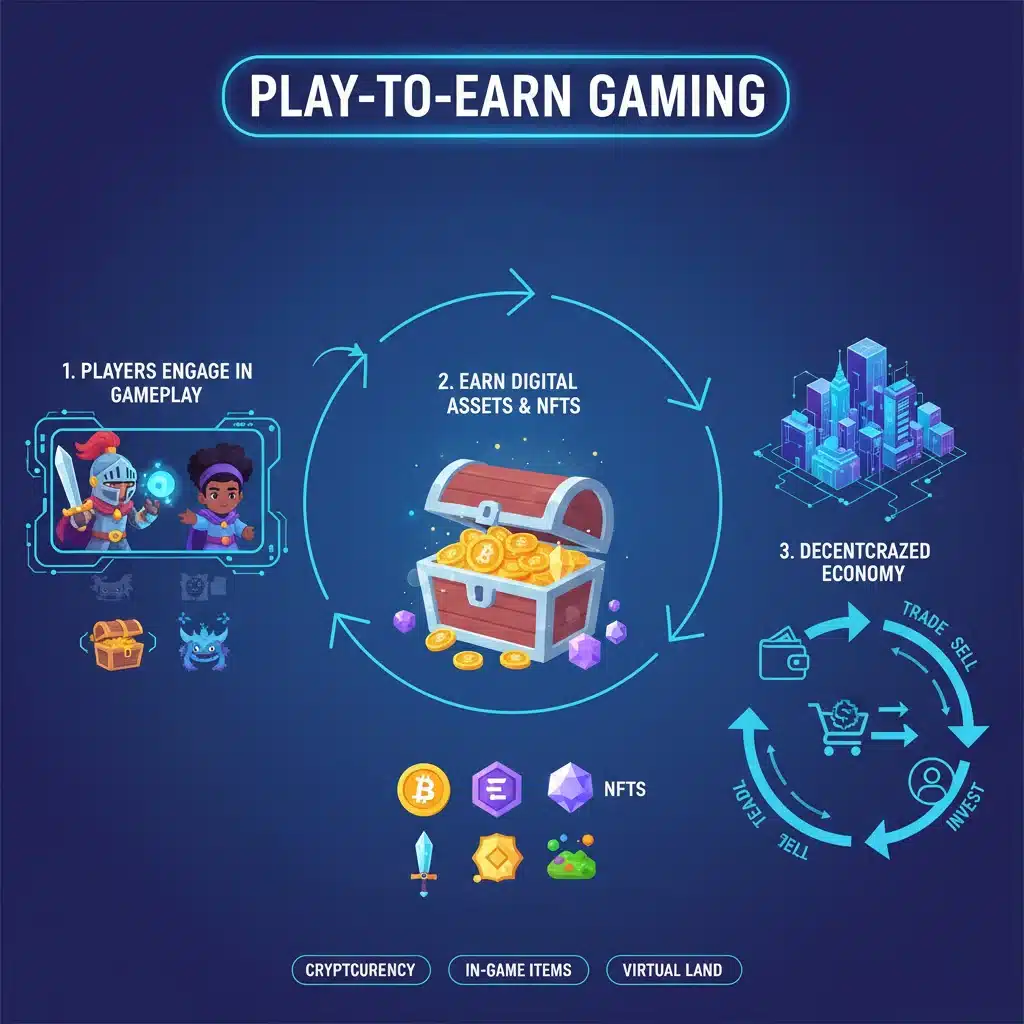
The play-to-earn (P2E) model, a cornerstone of Web3 gaming, allows players to earn cryptocurrencies or NFTs through gameplay, which can then be sold on secondary markets for real-world value. This economic incentive has attracted a new wave of players, particularly in regions where traditional economic opportunities may be limited. However, for the U.S. market, the appeal extends beyond pure economic gain. American gamers are increasingly seeking deeper engagement, community ownership, and innovative gameplay experiences that Web3 can uniquely offer. The challenge for gaming altcoins 2026 will be to balance these economic incentives with genuinely fun and engaging gameplay, moving beyond the ‘earn’ aspect to prioritize the ‘play’.
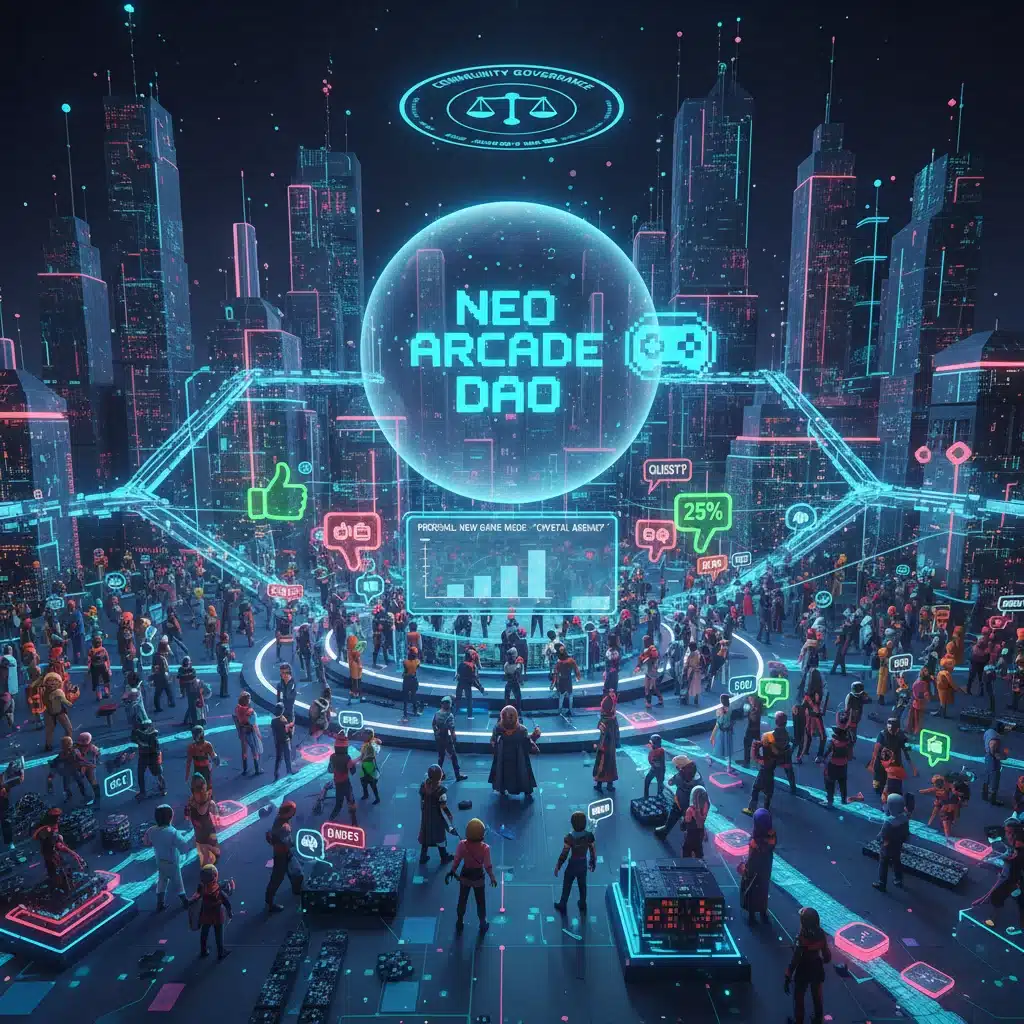
Furthermore, the concept of decentralization extends to game governance through Decentralized Autonomous Organizations (DAOs). Many Web3 gaming projects are transitioning towards or already employ DAOs, allowing token holders – often players and investors – to vote on key development decisions, game updates, and treasury management. This level of community involvement fosters a sense of ownership and loyalty that is rarely seen in traditional gaming, creating a powerful network effect that can drive the value of associated gaming altcoins. As the U.S. market matures, projects demonstrating robust DAO structures and transparent governance will likely gain significant traction.
Key Factors Driving Gaming Altcoin Growth in the US
Several critical factors are converging to propel the growth of gaming altcoins 2026 within the United States. Firstly, the increasing mainstream adoption of cryptocurrencies and blockchain technology. As more Americans become familiar with digital assets, the barrier to entry for Web3 gaming decreases. Secondly, the sheer size and influence of the U.S. gaming market. The U.S. is one of the largest gaming markets globally, with millions of avid gamers who are constantly seeking new experiences. Introducing innovative blockchain-powered games to this audience presents an enormous opportunity.
Thirdly, technological advancements are making Web3 games more accessible and enjoyable. Improved blockchain scalability, lower transaction fees, and more sophisticated game development tools are enabling developers to create higher-quality games with seamless user experiences. This addresses some of the early criticisms of blockchain games, such as high gas fees and clunky interfaces. Fourthly, institutional interest and investment are pouring into the Web3 gaming space. Venture capitalists, established gaming companies, and even traditional financial institutions are recognizing the long-term potential of this sector, providing crucial funding and validation for promising projects.
Lastly, the evolving regulatory landscape, while still complex, is slowly but surely providing more clarity for blockchain companies operating in the U.S. Projects that proactively engage with regulators and build compliant frameworks will undoubtedly gain a significant competitive advantage. For gaming altcoins to thrive, a clear path to legality and consumer protection is paramount. The projects we will examine have demonstrated an understanding of these dynamics and are strategically positioning themselves for success in this intricate environment.
Top 5 Gaming Altcoins to Watch in 2026 for US Market Potential
Identifying the gaming altcoins 2026 with the most significant U.S. market potential requires a blend of foresight, technological understanding, and market analysis. Our selections are based on a comprehensive evaluation of their underlying technology, development roadmap, community engagement, economic models, and their ability to appeal to a broad U.S. audience. Each project offers a unique value proposition that we believe will resonate strongly in the coming years.
1. Immutable X (IMX): Scaling the Future of NFT Gaming
Immutable X (IMX) stands out as a leading Layer 2 scaling solution for NFTs on Ethereum, specifically designed to address the challenges of high gas fees and slow transaction speeds that have plagued early blockchain games. By providing instant transaction confirmation, zero gas fees for minting and trading NFTs, and massive scalability while maintaining Ethereum’s security, Immutable X has positioned itself as a critical infrastructure provider for the next generation of Web3 games. Its robust technology makes it an attractive platform for developers looking to launch high-quality, economically viable games without burdening players with excessive transaction costs.
For the U.S. market, Immutable X’s appeal is multifaceted. Its focus on user experience – eliminating friction points like gas fees – is crucial for mainstream adoption. American gamers are accustomed to seamless digital experiences, and IMX directly addresses this expectation. Furthermore, a growing number of prominent Web3 games and marketplaces are building on Immutable X, including popular titles like Gods Unchained and Illuvium, which are gaining traction globally and beginning to penetrate the U.S. gaming consciousness. The IMX token itself plays a vital role in the ecosystem, used for transaction fees, staking, and governance, giving holders a direct stake in the platform’s success.
The roadmap for Immutable X includes continued expansion of its developer tools, partnerships with major gaming studios, and further enhancements to its scaling technology. As more games migrate to or launch on Immutable X, the demand for the IMX token is expected to increase, driven by its utility within a rapidly expanding ecosystem. Its strong technical foundation and strategic focus on developer and user experience make it a formidable contender among gaming altcoins 2026.
2. Axie Infinity (AXS): Evolving the Play-to-Earn Giant
Axie Infinity (AXS) was a pioneer in the play-to-earn movement, popularizing the concept of earning cryptocurrency through gaming. While it faced challenges during the bear market, its underlying vision of player-owned economies remains incredibly powerful. The project has been actively working on improving its game mechanics, introducing new features, and enhancing its scalability solutions through Ronin sidechain, demonstrating resilience and a commitment to long-term growth. The AXS token serves as the governance token for the Axie Infinity ecosystem, allowing holders to participate in key decisions and also used for staking and in-game payments.
Despite its past volatility, Axie Infinity continues to hold significant mindshare, and its established brand recognition could be a major asset in the U.S. market, especially as Web3 gaming education improves. The U.S. has a strong culture of competitive gaming, and Axie’s strategic gameplay, coupled with its economic incentives, could attract a dedicated player base. The team’s focus on community engagement and continuous development, including the upcoming Axie Origins and Land gameplay, suggests a renewed push for innovation and a broader appeal beyond its initial user base.
For gaming altcoins 2026, Axie Infinity’s ability to adapt and innovate will be key. If it can successfully re-engage its community, attract new players with enhanced gameplay, and further decentralize its ecosystem, AXS could experience a significant resurgence. Its proven track record, even with its ups and downs, provides a strong foundation for future growth and a potential to re-establish itself as a dominant force in the U.S. Web3 gaming scene.
3. The Sandbox (SAND): Building a Metaverse for the Masses
The Sandbox (SAND) is a decentralized virtual world where players can build, own, and monetize their gaming experiences using NFTs and its native SAND token. It distinguishes itself by offering a user-friendly platform for creating voxel-based assets and games, democratizing game development and allowing creators to retain ownership and earn revenue from their creations. The project has garnered significant attention for its numerous partnerships with major brands, celebrities, and intellectual properties, extending its reach far beyond the typical crypto enthusiast.
The concept of the metaverse is gaining considerable traction in the U.S., and The Sandbox is at the forefront of building an open, interoperable metaverse. Its appeal to the U.S. market lies in its creative possibilities and the ability for users to truly own their digital content. The partnerships with recognizable brands like Adidas, Snoop Dogg, and Warner Music Group provide familiar entry points for a mainstream audience, bridging the gap between traditional entertainment and Web3. The SAND token is essential for all transactions within The Sandbox ecosystem, including buying LAND, purchasing assets, and participating in governance.
As the metaverse narrative continues to evolve and mature, The Sandbox’s position as a leading decentralized platform for user-generated content makes it a compelling investment among gaming altcoins. Its ongoing development includes expanding its creator tools, enhancing social features, and fostering a vibrant community economy. By 2026, with continued brand integration and growing user adoption, SAND could become a cornerstone of the U.S. metaverse experience.
4. Enjin Coin (ENJ): The Veteran Powering Blockchain Gaming
Enjin Coin (ENJ) is one of the oldest and most established projects in the blockchain gaming space, providing a comprehensive suite of tools for developers to integrate NFTs and blockchain into their games. Enjin’s platform allows for the creation of unique digital assets, secure item trading, and the establishment of interconnected game economies. Its pioneering work in ERC-1155 tokens – a standard for fungible and non-fungible tokens – has been instrumental in shaping the NFT landscape.
Enjin’s long-standing presence and proven technology provide a strong foundation for its future growth in the U.S. market. Developers appreciate its robust SDKs and APIs, making it easier to onboard traditional game developers into the Web3 space. The ENJ token is used to “mint” new blockchain assets, giving them real-world value backed by the underlying ENJ. This unique “melting” mechanism ensures that every asset created on Enjin has inherent value, adding a layer of security and trust for players and investors.
With its focus on developer adoption and cross-game interoperability, Enjin is well-positioned to benefit from the increasing professionalization of Web3 game development. As more high-quality games are built using Enjin’s technology, the demand for ENJ will naturally increase. Its strategic partnerships and continuous innovation, including the development of Efinity, a parachain on Polkadot designed for NFTs, further solidify its potential as a key player among gaming altcoins 2026, especially in a market that values proven technology and reliability.
5. Gala (GALA): A Diverse Ecosystem of Blockchain Games
Gala (GALA) aims to build a decentralized gaming ecosystem where players have true ownership and influence over the games they play. Unlike platforms focused on a single game, Gala Games is developing an entire portfolio of blockchain-powered games across various genres, including role-playing, strategy, and casual games. This diversified approach mitigates risk and caters to a broader audience, which is a significant advantage in the competitive U.S. market. The GALA token is the native utility token of the Gala Games ecosystem, used for network fees, in-game purchases, and node operator rewards.
Gala’s strategy of offering a diverse range of high-quality games, coupled with its emphasis on community ownership through its founder’s nodes, resonates strongly with the principles of decentralization. For the U.S. market, this means a wider appeal to different gamer demographics, from hardcore enthusiasts to casual players. The project’s commitment to delivering genuinely fun and engaging games, rather than just focusing on the ‘earn’ aspect, is crucial for long-term retention and adoption. Their growing library of games, such as Town Star and Spider Tanks, are already attracting significant attention.
The roadmap for Gala includes continuous game development, expansion of its blockchain infrastructure, and further decentralization of its ecosystem. As more games launch and gain popularity, the utility and demand for the GALA token are expected to grow. Its multi-game approach and strong community focus make it a compelling choice for investors looking at gaming altcoins with significant potential for U.S. market penetration by 2026.
Challenges and Opportunities for Gaming Altcoins in the US
While the potential for gaming altcoins 2026 in the U.S. market is immense, several challenges must be addressed for these projects to achieve widespread success. Regulatory uncertainty remains a significant hurdle. The lack of clear and consistent regulations regarding cryptocurrencies and NFTs can deter institutional investment and make it difficult for projects to operate with confidence. Projects that proactively engage with regulators and prioritize compliance will be better positioned for long-term growth.
Another challenge is user experience. Early Web3 games often suffered from complex onboarding processes, clunky interfaces, and high transaction fees, which alienated mainstream gamers. For gaming altcoins to succeed in the U.S., they must offer seamless, intuitive experiences that are comparable to or even surpass traditional gaming. This includes abstracting away blockchain complexities for the average user, making it as easy to play a Web3 game as it is to play a traditional one.
Scalability is also a critical factor. As games attract millions of players, the underlying blockchain infrastructure must be able to handle a massive volume of transactions without compromising speed or security. Layer 2 solutions, like Immutable X, are crucial in addressing this, but continuous innovation in this area is necessary. Furthermore, the perception of blockchain games as mere ‘get-rich-quick’ schemes needs to be overcome. Projects must focus on delivering genuine entertainment value and compelling gameplay to attract and retain players, moving beyond the P2E narrative alone.
Despite these challenges, the opportunities are even greater. The U.S. market’s vast size and high disposable income present an unparalleled opportunity for gaming altcoins that can deliver on their promises. The growing acceptance of digital ownership, fueled by the broader NFT movement, creates a fertile ground for Web3 gaming. Moreover, the innovative potential of blockchain to introduce new gameplay mechanics, foster true player economies, and enable community-driven development offers a competitive edge that traditional gaming struggles to match.
As technology matures and regulatory clarity emerges, we can expect to see a significant influx of talent and investment into the Web3 gaming space. Major gaming studios are already exploring blockchain integration, and independent developers are leveraging these new tools to create groundbreaking experiences. The projects highlighted in this article are at the forefront of this revolution, strategically positioning themselves to capitalize on these opportunities and shape the future of gaming in the U.S.
Investment Considerations for Gaming Altcoins
Investing in gaming altcoins, like any cryptocurrency investment, carries inherent risks. However, for those with a long-term perspective and a thorough understanding of the underlying technology and market dynamics, the potential rewards can be substantial. When considering investments in gaming altcoins 2026, it is essential to conduct due diligence on several key areas.
Firstly, evaluate the team behind the project. Look for experienced developers, strong leadership, and a clear vision. A transparent and communicative team is often a good indicator of a project’s long-term viability. Secondly, assess the game itself. Is it fun? Does it offer innovative gameplay? Is there a sustainable economic model? A game that fails to attract and retain players will ultimately struggle, regardless of its blockchain integration.
Thirdly, analyze the tokenomics. Understand the utility of the token, its supply, distribution, and inflation mechanisms. A well-designed tokenomics model is crucial for long-term value appreciation. Fourthly, examine the community. A strong, engaged, and growing community is a powerful asset for any Web3 project, indicating organic adoption and support. Lastly, consider the broader market trends and regulatory environment. How well is the project positioned to navigate potential regulatory changes? Is it adaptable to evolving market demands?
Diversification is also a prudent strategy. Instead of putting all your resources into a single project, consider spreading your investment across several promising gaming altcoins. This approach helps mitigate risk and exposes you to multiple avenues of growth within the sector. As the Web3 gaming space is still relatively nascent, volatility should be expected, and a long-term investment horizon is generally recommended.
Conclusion: The Future is Play-to-Own
The journey towards 2026 promises to be a transformative period for the gaming industry, with gaming altcoins 2026 playing a central role in this evolution. The shift from traditional ‘play-to-play’ or ‘free-to-play’ models to ‘play-to-own’ and ‘play-and-earn’ is fundamentally altering the relationship between players, developers, and in-game assets. The U.S. market, with its immense potential and growing appetite for innovation, will be a key driver of this change.
The five projects highlighted – Immutable X (IMX), Axie Infinity (AXS), The Sandbox (SAND), Enjin Coin (ENJ), and Gala (GALA) – represent a diverse cross-section of the Web3 gaming landscape. They embody different approaches to solving key challenges, from scaling solutions and developer tools to metaverse creation and diversified game ecosystems. Each possesses unique strengths and a clear vision for capturing a significant share of the U.S. market by 2026.
As the technology matures, user experiences improve, and regulatory clarity emerges, we anticipate a surge in adoption of blockchain games. Investors and gamers alike should pay close attention to these projects and the broader trends shaping this exciting new frontier. The future of gaming is decentralized, player-owned, and incredibly promising, and these gaming altcoins are leading the charge into that future, particularly within the dynamic U.S. market.