Beyond ERC-20: New Token Standards for Smart Contracts in the U.S. 2026

The world of blockchain technology is in a constant state of flux, innovating at a pace that can be exhilarating yet challenging to keep up with. For years, the ERC-20 token standard has reigned supreme, serving as the foundational blueprint for fungible tokens on the Ethereum blockchain. Its simplicity, widespread adoption, and robust ecosystem have made it indispensable for countless projects, from stablecoins to utility tokens. However, as the blockchain landscape matures and the demands on decentralized applications (dApps) grow more sophisticated, the limitations of ERC-20 are becoming increasingly apparent.
Issues such as transaction fees, scalability bottlenecks, lack of native features for non-fungible assets, and complex upgrade mechanisms have spurred a wave of innovation. Developers and researchers are now actively exploring and implementing new token standards designed to address these challenges and unlock unprecedented functionalities. The U.S., a hub of technological advancement and blockchain investment, is at the forefront of this evolution, with many of these next-generation standards poised to redefine smart contract development by 2026.
This comprehensive article delves into six key new token standards that are set to move beyond the traditional ERC-20 paradigm. We will explore their unique features, the problems they aim to solve, and their potential impact on various sectors, particularly within the U.S. market. Understanding these emerging standards is crucial for anyone involved in blockchain development, investment, or simply interested in the future of decentralized finance and Web3.
Let’s embark on this journey to discover the future of tokenization.
The Evolution Beyond ERC-20: Why New Token Standards are Essential
Before diving into specific new token standards, it’s vital to understand the driving forces behind this evolution. ERC-20, while revolutionary, was primarily designed for simple, fungible tokens. This means each token is identical to another, like a dollar bill. However, the needs of the decentralized world have expanded dramatically. We now require tokens that can represent unique assets (digital art, real estate), tokens that can be fractionalized, tokens with built-in governance mechanisms, and tokens that can interact seamlessly across different blockchains.
Here are some of the key limitations of ERC-20 that new token standards aim to overcome:
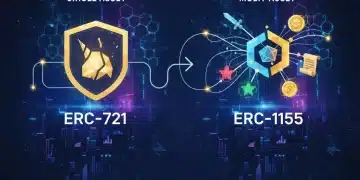
- Lack of Non-Fungibility: ERC-20 cannot natively represent unique items. This led to the creation of ERC-721 for Non-Fungible Tokens (NFTs), but even ERC-721 has its own limitations, particularly when dealing with semi-fungible assets or complex game items.
- High Gas Fees and Scalability: Ethereum’s proof-of-work consensus mechanism (soon to be proof-of-stake, but still facing scaling challenges) often leads to high transaction fees (gas) and network congestion. New standards often aim for more efficient operations or are designed for layer-2 solutions and other blockchains.
- Limited Functionality: ERC-20 tokens are relatively basic in their functionality, primarily supporting transfer and approval. Modern dApps require tokens with more intricate logic, such as built-in staking, voting, or royalty distribution mechanisms.
- Upgradeability Challenges: Once deployed, ERC-20 contracts are immutable, making upgrades difficult and often requiring the migration of tokens to a new contract, which can be costly and disruptive.
- Interoperability Issues: ERC-20 tokens are confined to the Ethereum ecosystem. The rise of multi-chain environments necessitates standards that facilitate seamless interaction and asset transfer across different blockchains.
- Security Concerns: While ERC-20 itself is secure, common vulnerabilities in implementations (e.g., reentrancy attacks, integer overflows) highlight the need for more robust and secure default patterns in new standards.
The quest for more efficient, versatile, and secure tokenization is pushing the boundaries of what’s possible. The U.S. regulatory landscape, while still evolving, is also influencing the design and adoption of these new token standards, particularly concerning compliance and investor protection.
1. ERC-777: Enhanced Fungible Tokens with Operator Functionality
While ERC-20 defined fungible tokens, ERC-777 emerged as an attempt to improve upon it, offering enhanced functionalities while maintaining backward compatibility. Although not as widely adopted as ERC-20, it represents a significant step towards more feature-rich fungible tokens.
Key Features of ERC-777:
- Hooks: ERC-777 introduces "hooks" (
tokensToSendandtokensReceived) that allow contracts to react to incoming or outgoing token transfers. This enables advanced functionalities like atomic swaps, automatic burning, or mandatory KYC checks during transfers, without modifying the core token contract. - Operators: It allows users to authorize "operators" to send tokens on their behalf. This is more flexible and secure than ERC-20’s
approve/transferFrommechanism, as operators can be configured with specific allowances and revoked more easily. This is particularly useful for decentralized exchanges or automated payment systems. - Backward Compatibility: ERC-777 is designed to be backward compatible with ERC-20, meaning existing ERC-20 contracts and infrastructure can largely interact with ERC-777 tokens. This eases adoption for developers.
- Rejection of Unsupported Contracts: The hooks feature also allows contracts to reject tokens if they don’t support the ERC-777 standard, preventing accidental token loss.
Impact and Use Cases in the U.S. by 2026:
ERC-777, or its conceptual successors, could see increased adoption in specialized financial applications within the U.S. Its hooks allow for complex compliance mechanisms to be built directly into the token transfer process, potentially aiding in regulatory adherence for security tokens or regulated stablecoins. The operator functionality could streamline operations for institutional players, allowing delegated management of assets under defined parameters. As the regulatory environment for digital assets solidifies in the U.S., standards offering built-in control and programmability will become increasingly valuable.
2. ERC-1155: The Multi-Token Standard for Efficiency and Flexibility
Developed by Enjin, ERC-1155 is a revolutionary standard that allows a single smart contract to manage multiple types of tokens, encompassing both fungible (like ERC-20) and non-fungible (like ERC-721) assets, as well as semi-fungible tokens. This "multi-token standard" significantly improves efficiency and flexibility.
Key Features of ERC-1155:
- Batch Operations: A single transaction can transfer multiple types of tokens to multiple recipients. This drastically reduces gas costs and network congestion compared to performing individual ERC-20 or ERC-721 transfers.
- Mixed Fungibility: A single contract can define fungible tokens (e.g., in-game currency), non-fungible tokens (e.g., unique digital swords), and even "semi-fungible" tokens (e.g., event tickets that are fungible before the event but non-fungible after redemption).
- ID-Based Token Management: Instead of separate contracts for each token type, ERC-1155 uses a unique ID for each token type within a single contract.
- Standardized Interface: It provides a standardized interface for querying balances and transferring tokens, simplifying development for wallets and marketplaces.
- Safe Transfer Mechanism: Includes a "safe transfer" function to prevent tokens from being accidentally sent to contracts that don’t know how to handle them.
Impact and Use Cases in the U.S. by 2026:
ERC-1155 is already gaining traction, especially in the gaming and metaverse sectors, but its potential extends far beyond. In the U.S., it could be transformative for:
- Digital Collectibles and NFTs: Offering a more efficient way to manage diverse collections, including editions of digital art or in-game assets.
- Supply Chain Management: Representing various components, certifications, and finished products within a single contract, improving traceability and reducing overhead.
- Ticketing and Event Management: Issuing different tiers of tickets (fungible) and then converting them to non-fungible redeemed tickets after entry.
- Decentralized Autonomous Organizations (DAOs): Managing various types of governance tokens, voting rights, and membership badges within one streamlined system.
The efficiency gains and versatility of ERC-1155 position it as a cornerstone for complex Web3 applications requiring a mix of token types, making it one of the most promising new token standards for adoption in the U.S. by 2026.
3. ERC-4626: Tokenized Vaults for DeFi Efficiency
ERC-4626, known as the "Tokenized Vault Standard," is a recent and highly impactful standard designed to optimize and standardize yield-bearing vaults in Decentralized Finance (DeFi). Before ERC-4626, every DeFi protocol implemented its yield-bearing vaults slightly differently, leading to integration complexities and increased audit risks.
Key Features of ERC-4626:
- Standardized Vault Interface: It provides a universal API for yield-bearing vaults, allowing users to deposit underlying tokens and receive shares representing their proportional ownership of the vault’s assets and accrued yield.
- Yield-Bearing Shares: The standard focuses on representing shares in a vault that automatically increase in value as the vault generates yield.
- Read-Only Functions: Includes methods to estimate deposits, withdrawals, and conversions between underlying assets and vault shares, simplifying external integrations.
- Increased Interoperability: By standardizing vault interactions, it makes it easier for aggregators, lenders, and other DeFi protocols to integrate with various yield strategies, reducing development time and potential errors.
- Reduced Audit Burden: A standardized interface means that once a vault adhering to ERC-4626 is audited, other protocols integrating with it can rely on that standard, potentially reducing the need for repeated, custom audits.
Impact and Use Cases in the U.S. by 2026:
ERC-4626 is a game-changer for the DeFi ecosystem, particularly as institutional interest in DeFi grows in the U.S. Its standardization brings a new level of professionalism and security to yield-generating strategies. We can expect to see it widely adopted in:
- DeFi Aggregators: Platforms that find the best yield opportunities across multiple protocols will benefit immensely from a unified vault interface.
- Institutional DeFi: As regulated entities enter the DeFi space, standardized and auditable components like ERC-4626 vaults will be crucial for compliance and risk management.
- Automated Investment Strategies: Bots and smart contracts can more easily interact with various yield protocols.
- Lending and Borrowing Protocols: Integrating yield-bearing assets as collateral or for interest generation becomes more seamless.
The efficiency and security enhancements brought by ERC-4626 make it a pivotal standard for the maturation of DeFi in the U.S., paving the way for more robust and interconnected financial applications. It exemplifies how new token standards are refining the core mechanisms of decentralized finance.
4. ERC-6551: Token Bound Accounts for Enhanced NFT Utility
ERC-6551, or "Token Bound Accounts" (TBAs), is a groundbreaking standard that allows any ERC-721 NFT to own assets, including other tokens (ERC-20, ERC-721, ERC-1155), and even execute smart contract code. Essentially, it gives NFTs their own wallet and identity on the blockchain.
Key Features of ERC-6551:
- NFTs as Wallets: Each ERC-721 NFT can be associated with its own smart contract account, allowing it to hold and manage other digital assets.
- Enhanced Composability: This dramatically increases the utility and composability of NFTs. An NFT can now be more than just a picture; it can be a container for other assets, a representation of a portfolio, or even an identity.
- On-Chain Identity: TBAs provide a persistent on-chain identity for NFTs, enabling them to accumulate history, achievements, and associated assets over time.
- Module-Based Functionality: TBAs are designed to be extensible through modules, allowing developers to add custom functionalities and interactions.
- Seamless Integration: It leverages existing ERC-721 infrastructure, making it relatively easy to implement for existing NFT projects.
Impact and Use Cases in the U.S. by 2026:
ERC-6551 is poised to unlock a new era of NFT utility, moving beyond speculative collectibles to truly functional digital assets. In the U.S., this could revolutionize:
- Gaming and Metaverse: In-game characters (NFTs) can own their equipment (other NFTs), currency (ERC-20), and even experience points.
- Digital Identity and Reputation: NFTs could serve as sovereign digital identities, accumulating credentials, certifications, and reputation scores.
- Fractionalized Real Estate/Assets: An NFT representing a physical asset could hold its fractionalized ownership tokens, making management more streamlined.
- Decentralized Autonomous Organizations (DAOs): NFTs could hold voting power, treasury allocations, or represent membership tiers with associated benefits.
- Enhanced Art and Collectibles: Digital art NFTs could hold royalties, provenance data, or even "companion" NFTs within their own account.
ERC-6551 transforms NFTs from static tokens into dynamic, interactive entities, fundamentally changing how we perceive and use digital ownership. Its potential for innovation makes it one of the most exciting new token standards to watch in the coming years.
5. ERC-721C: Conditional NFTs for Controlled Functionality
ERC-721C is a proposed standard that introduces "conditional" functionality to NFTs. It allows creators and platforms to define specific rules or conditions under which an NFT can be transferred or interact with other smart contracts. This adds a layer of programmable control that is not natively present in the basic ERC-721 standard.
Key Features of ERC-721C:
- Programmable Transfer Conditions: Creators can set rules such as "this NFT cannot be transferred for 30 days after minting," "this NFT can only be transferred to a wallet that has completed KYC," or "a royalty fee must be paid to a specific address upon transfer."
- On-Chain Enforcement: These conditions are enforced at the smart contract level, making them immutable and transparent.
- Dynamic Rules: While the core conditions are set, they can potentially interact with other smart contract states, allowing for dynamic rule changes based on external factors (e.g., a game progressing).
- Enhanced Creator Control: Provides creators with more tools to manage the lifecycle and secondary market behavior of their NFTs, addressing concerns about market manipulation or unauthorized transfers.
Impact and Use Cases in the U.S. by 2026:
ERC-721C holds significant promise for industries where control, compliance, and specific asset behaviors are critical. In the U.S., where regulatory clarity for NFTs is still developing, this standard could be instrumental in:
- Security Token Offerings (STOs): Enabling NFTs to represent regulated securities with built-in transfer restrictions (e.g., accredited investor checks, lock-up periods).
- Intellectual Property & Licensing: NFTs representing digital licenses could have conditions dictating usage rights, resale terms, or royalty distributions.
- Gaming & Digital Rights Management: Preventing immediate resale of newly acquired in-game items or enforcing specific usage rules for digital assets.
- Real Estate Tokenization: NFTs representing fractional ownership of real estate could have conditions tied to legal agreements or jurisdictional requirements.
- Compliance and Regulation: Offering a technical framework to embed regulatory requirements directly into the NFT itself, potentially easing the path for mainstream adoption of tokenized assets in regulated markets.
By providing greater control and programmability, ERC-721C transforms NFTs into more versatile and compliant digital assets, making it a crucial development among new token standards for regulated U.S. markets.
6. Account Abstraction (ERC-4337): The Future of Wallet Interaction
While not strictly a "token standard" in the traditional sense, Account Abstraction (ERC-4337) profoundly impacts how tokens are used and managed. It aims to make smart contract wallets indistinguishable from externally owned accounts (EOAs – typical private key wallets), enabling advanced features like gasless transactions, multi-signature capabilities by default, and social recovery.
Key Features of Account Abstraction (ERC-4337):
- Smart Contract Wallets as Primary Accounts: Allows users to interact with the blockchain directly through smart contract accounts without needing an EOA to initiate transactions.
- Gas Abstraction: Enables transaction fees to be paid in any ERC-20 token, or even by a third party (sponsors), removing the need for users to hold native blockchain currency (e.g., ETH) for gas.
- Batch Transactions: Multiple operations can be bundled into a single transaction, improving efficiency and user experience.
- Programmable Wallets: Wallets can be programmed with custom logic, such as multi-factor authentication, daily spending limits, or social recovery mechanisms.
- Improved Security: Features like multi-signature and programmable access controls can significantly enhance wallet security.
- Enhanced User Experience: Simplifies the onboarding process for new users by abstracting away complex blockchain concepts like gas and seed phrases.
Impact and Use Cases in the U.S. by 2026:
ERC-4337 is arguably one of the most critical developments for mainstream blockchain adoption. Its impact on how users interact with tokens and dApps will be immense, especially in the U.S. market, which has a strong focus on user experience and security:
- Mass Adoption of Web3: Simplifies the user experience, making crypto wallets as easy to use as traditional online banking apps, attracting a broader audience.
- Gaming and Consumer DApps: "Gasless" transactions paid by the game developer or in-game currency will be a game-changer for user engagement.
- Enterprise Blockchain Solutions: Companies can implement highly secure, policy-driven wallets for managing corporate assets.
- Decentralized Autonomous Organizations (DAOs): More sophisticated and secure treasury management and voting mechanisms.
- Financial Services: Enables more robust and compliant self-custody solutions with features like social recovery and spending limits, appealing to traditional financial institutions.
By abstracting away the complexities of blockchain transactions, ERC-4337 will make interacting with new token standards and existing ones far more accessible, accelerating the growth of the decentralized economy in the U.S.
The Broader Implications for Smart Contract Development in the U.S.
The emergence of these new token standards signifies a profound shift in smart contract development. Developers are no longer confined to the basic functionalities of ERC-20 or ERC-721 but can leverage a rich toolkit of specialized standards to build more complex, efficient, and user-friendly applications. This evolution has several significant implications for the U.S. blockchain ecosystem by 2026:
- Increased Innovation and Complexity: With more versatile token primitives, developers can design dApps that were previously impossible or impractical, leading to a surge in innovative solutions across various industries, from finance to entertainment.
- Improved User Experience: Standards like ERC-4337 will drastically lower the barrier to entry for mainstream users, fostering wider adoption of blockchain technology in everyday applications.
- Regulatory Adaptation: Some of these standards (e.g., ERC-777, ERC-721C) offer built-in mechanisms for compliance, which could be instrumental in navigating the evolving regulatory landscape in the U.S. This could facilitate the tokenization of regulated assets and services.
- Enhanced Security and Robustness: By standardizing common patterns (like ERC-4626 for vaults) and introducing advanced features (like ERC-4337 for wallets), the overall security and reliability of smart contract systems will improve, reducing vulnerabilities and risks.
- Economic Efficiency: Batch operations (ERC-1155) and gas abstraction (ERC-4337) lead to lower transaction costs and more efficient network usage, making decentralized applications more economically viable and scalable.
- Interoperability and Composability: The focus on modularity and standardized interfaces across these new token standards will enhance interoperability, allowing different protocols and applications to interact seamlessly and create powerful composite solutions.
The U.S. market, with its strong emphasis on technological leadership and financial innovation, is uniquely positioned to embrace and drive the adoption of these next-generation token standards. Universities are incorporating these concepts into their curricula, startups are building on these foundations, and established enterprises are exploring their potential for digital transformation.
Challenges and the Road Ahead
Despite the immense potential, the journey for these new token standards is not without challenges:
- Adoption Curve: Overcoming the network effect of established standards like ERC-20 requires significant developer buy-in and ecosystem support.
- Security Audits: New complexities always introduce new attack vectors. Thorough and continuous security audits are paramount.
- Tooling and Infrastructure: Wallets, exchanges, and block explorers need to update their infrastructure to fully support these new standards.
- Regulatory Clarity: The U.S. regulatory environment for digital assets is still fragmented. Clearer guidelines will significantly impact the adoption of standards that enable tokenized securities or regulated financial products.
However, the benefits far outweigh these challenges. The blockchain community is resilient and driven by continuous improvement. As we approach 2026, the U.S. will likely see a significant shift in smart contract development, moving towards these more sophisticated and versatile token standards.
Conclusion: The Future is Multi-Standard
The era of ERC-20 as the sole dominant token standard is drawing to a close. While it will undoubtedly remain relevant for many basic fungible token applications, the future of smart contract development in the U.S. and globally lies in a rich tapestry of specialized and interconnected new token standards. From the multi-asset capabilities of ERC-1155 to the compliance features of ERC-721C, the DeFi efficiency of ERC-4626, the enhanced NFT utility of ERC-6551, and the transformative user experience of ERC-4337, each standard addresses specific needs and unlocks new possibilities.
Developers, businesses, and investors in the U.S. who understand and proactively adopt these emerging standards will be best positioned to innovate, build robust applications, and capitalize on the rapidly expanding decentralized economy. The blockchain landscape of 2026 will be defined by its diversity, efficiency, and user-centric design, all powered by these cutting-edge token standards, propelling the U.S. to the forefront of Web3 innovation.