Quantum Computing Threats: Blockchain Security for US Crypto Holders by 2026

The digital financial landscape is evolving at an unprecedented pace, with cryptocurrencies and blockchain technology at its forefront. For US crypto holders, the allure of decentralized finance, secure transactions, and potential for significant returns is undeniable. However, lurking on the horizon is a technological marvel that could fundamentally reshape the very foundations of this digital ecosystem: quantum computing. While still in its nascent stages, the rapid advancements in quantum computing pose a significant, albeit future, threat to the cryptographic underpinnings of blockchain technology. This article will delve deep into what quantum computing means for blockchain security, specifically for US crypto holders, by the year 2026, offering recent updates and insider knowledge to help you navigate this complex and critical issue.
Quantum Computing Threats: Blockchain Security for US Crypto Holders by 2026
Understanding the Quantum Threat to Blockchain Security
At its core, blockchain technology relies on sophisticated cryptographic algorithms to secure transactions, verify identities, and maintain the integrity of its distributed ledger. These algorithms, primarily based on elliptical curve cryptography (ECC) for digital signatures and SHA-256 for hashing, are currently considered computationally infeasible to break using classical computers. This ‘computational infeasibility’ is the bedrock of blockchain security, ensuring that private keys remain private and transactions are immutable.
However, quantum computers operate on fundamentally different principles than classical computers. Utilizing phenomena like superposition and entanglement, they can perform certain computations exponentially faster. The primary concern for blockchain security stems from two specific quantum algorithms:
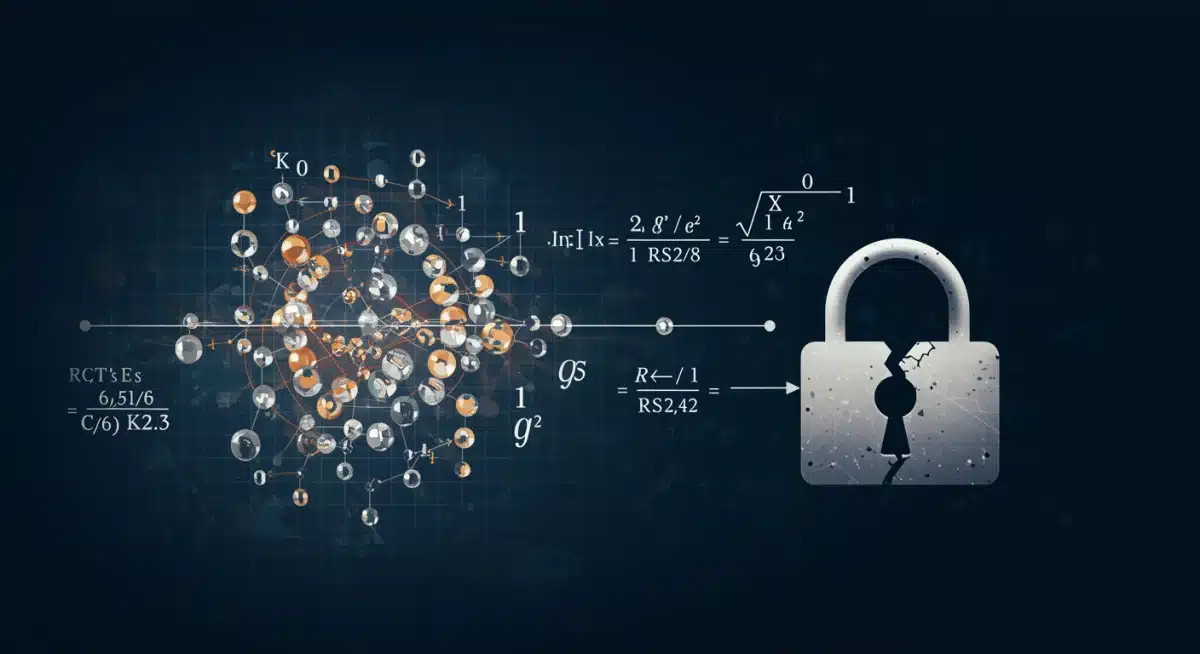
- Shor’s Algorithm: Developed by Peter Shor in 1994, this algorithm can efficiently factor large numbers. The security of many public-key cryptography systems, including RSA and ECC (which secure Bitcoin and Ethereum wallets), relies on the difficulty of factoring large numbers or solving the discrete logarithm problem. Shor’s algorithm, once implemented on a sufficiently powerful quantum computer, could break these cryptographic schemes, allowing an attacker to deduce private keys from public keys.
- Grover’s Algorithm: Developed by Lov Grover in 1996, this algorithm offers a quadratic speedup for searching unsorted databases. While not as devastating as Shor’s algorithm for public-key cryptography, it could significantly reduce the security of symmetric-key cryptography (like SHA-256, used in blockchain hashing) by effectively halving the key length. This means a 256-bit key would offer the security of a 128-bit key against a quantum attack, making brute-force attacks more feasible.
The consensus among cryptographers and quantum physicists is that Shor’s algorithm poses the most direct and immediate threat to the current cryptographic standards underpinning blockchain. If a sufficiently powerful quantum computer were to emerge, it could potentially:
- Steal Funds: By deriving private keys from public keys, an attacker could gain unauthorized access to cryptocurrency wallets and transfer funds. This is particularly concerning for ‘dormant’ wallets or those whose public keys are readily available on the blockchain.
- Forge Transactions: An attacker could create fraudulent digital signatures, allowing them to authorize transactions without the owner’s consent.
- Disrupt Consensus Mechanisms: While less direct, the ability to rapidly compute hashes could potentially impact proof-of-work (PoW) blockchains, although the economic incentives and distributed nature make this a more complex attack vector.
The 2026 Timeline: Why US Crypto Holders Need to Act Now
The year 2026 is not an arbitrary date. It represents a critical window identified by various experts and national security agencies as a potential inflection point for quantum computing capabilities. While a full-fledged, fault-tolerant quantum computer capable of running Shor’s algorithm on a large scale is still years away, significant progress is being made. Several factors contribute to this timeline:
- Rapid Technological Advancements: Governments and private companies worldwide are investing billions in quantum research. Breakthroughs in qubit stability, error correction, and quantum hardware are occurring regularly.
- NISQ Era and Beyond: We are currently in the Noisy Intermediate-Scale Quantum (NISQ) era, where quantum computers have tens to hundreds of qubits but are prone to errors. However, the path to fault-tolerant quantum computers is becoming clearer, with projections suggesting that the necessary number of logical qubits for breaking current cryptography could be achieved within the next decade.
- National Security Concerns: Nations are increasingly aware of the strategic implications of quantum supremacy. The race for quantum computing dominance is not just about scientific achievement but also about national security and economic power.
- Cryptographic Agility: The process of transitioning to new cryptographic standards, known as ‘cryptographic agility,’ is complex and time-consuming. It involves updating hardware, software, protocols, and educating users. This transition itself could take years, even after new standards are established.
For US crypto holders, this timeline means that complacency is not an option. While the immediate threat might not be today, the preparatory steps needed to mitigate future risks must begin now. Waiting until a quantum computer capable of breaking current encryption is fully operational would be too late, as the transition period itself presents vulnerabilities.
Recent Updates and Insider Knowledge
Government and Industry Initiatives
The United States government, through agencies like the National Institute of Standards and Technology (NIST), has been at the forefront of developing post-quantum cryptography (PQC) standards. NIST initiated a multi-year standardization process in 2016 to solicit, evaluate, and standardize quantum-resistant cryptographic algorithms. This process is crucial for providing the cryptographic primitives that will underpin future secure communication and digital transactions.
- NIST PQC Standardization: In July 2022, NIST announced the first four quantum-resistant cryptographic algorithms to be standardized: CRYSTALS-Kyber for key encapsulation and CRYSTALS-Dilithium, FALCON, and SPHINCS+ for digital signatures. These algorithms are designed to resist attacks from quantum computers while remaining efficient for classical computers. Further rounds of evaluation are ongoing for additional candidates. This is a monumental step, providing a concrete roadmap for developers to begin integrating quantum-resistant solutions.
- Executive Orders and Directives: The US government has issued several executive orders and directives emphasizing the importance of quantum-resistant cryptography for critical infrastructure and federal agencies. This top-down mandate signals the seriousness of the quantum threat and the commitment to a proactive transition.
- Private Sector Engagement: Major tech companies, including Google, IBM, Microsoft, and Amazon, are heavily invested in quantum computing research and PQC development. Many are actively participating in NIST’s standardization process and developing their own quantum-safe solutions. Their involvement ensures that PQC will be integrated into widely used software and cloud services.
Blockchain Community’s Response
The blockchain community is also aware of the quantum threat, though the level of urgency and implementation varies across different projects:
- Research and Development: Many blockchain projects are actively researching and experimenting with PQC algorithms. This includes exploring how to integrate new signature schemes and hash functions without compromising the decentralized nature or efficiency of their networks.
- Hard Forks and Upgrades: Implementing quantum-resistant cryptography will likely require significant protocol upgrades, potentially through hard forks, for existing blockchains. This is a complex undertaking that requires widespread community consensus and careful execution.
- New Quantum-Resistant Blockchains: Some newer blockchain projects are being designed from the ground up with quantum resistance in mind, incorporating PQC algorithms from their inception. These ‘quantum-safe’ blockchains aim to offer a future-proof alternative.
The ‘Harvest Now, Decrypt Later’ Threat
One particularly insidious aspect of the quantum threat is the ‘Harvest Now, Decrypt Later’ (HNDL) scenario. Malicious actors, including state-sponsored groups, could be currently collecting encrypted blockchain data (e.g., public keys and transaction details). While they cannot decrypt this data with classical computers today, they could store it, anticipating the advent of a sufficiently powerful quantum computer that would allow them to decrypt it in the future, thereby accessing private keys and stealing funds.
This scenario underscores the urgency for US crypto holders to adopt quantum-resistant measures sooner rather than later, especially for long-term holdings or assets associated with publicly known addresses.
Strategies for US Crypto Holders by 2026
Given the potential for quantum computing to impact blockchain security, US crypto holders should consider several proactive strategies to safeguard their assets:
1. Understand Your Exposure
Not all cryptocurrencies or blockchain applications are equally vulnerable. The primary threat lies in the cryptographic signatures used for transactions and wallet addresses. Understand which cryptographic primitives your preferred cryptocurrencies use (e.g., Bitcoin and Ethereum heavily rely on ECC).
Furthermore, consider the exposure of your public keys. If your public key has been used in a transaction, it is visible on the blockchain. An attacker could potentially ‘harvest’ this public key today and attempt to derive your private key with a future quantum computer. Wallets that generate new addresses for each transaction offer a degree of protection by limiting the exposure of a single public key after it has been used.
2. Monitor PQC Developments and Standards
Stay informed about the progress of NIST’s PQC standardization process and the adoption of these standards by major blockchain projects. The transition will not be instantaneous, and early adoption of quantum-resistant solutions will be key.
- Follow official announcements: Keep an eye on NIST’s official publications and the announcements from major blockchain foundations (e.g., Ethereum Foundation, Bitcoin Core developers) regarding PQC integration.
- Engage with the community: Participate in discussions within cryptocurrency communities and forums to understand how different projects are addressing the quantum threat.
3. Diversify and Consider Quantum-Resistant Options
As PQC solutions become available, consider diversifying your holdings into cryptocurrencies or platforms that explicitly integrate quantum-resistant cryptography. While still emerging, some projects are building quantum-safe features from the ground up.
If you hold significant assets in traditional cryptocurrencies, be prepared for potential hard forks or protocol upgrades that introduce quantum resistance. This might involve migrating your funds to new address formats or updated wallet software.
4. Practice Strong Operational Security (OpSec)
Even without quantum computers, robust OpSec is paramount. With the quantum threat looming, it becomes even more critical:
- Hardware Wallets: Continue to use reputable hardware wallets. While current hardware wallets may not be quantum-resistant, they offer superior protection against classical attacks and can be updated with new firmware to support PQC algorithms once available.
- Cold Storage: For long-term holdings, cold storage (offline wallets) remains the most secure option. This minimizes the exposure of your private keys to online threats.
- Regularly Update Software: Ensure your wallet software, operating systems, and other relevant applications are always up to date to benefit from the latest security patches and, eventually, PQC integrations.
- New Address Practices: For cryptocurrencies like Bitcoin, always generate a new address for receiving funds. While not a direct quantum defense, it limits the exposure of a single public key over time.
5. Prepare for Cryptographic Migrations
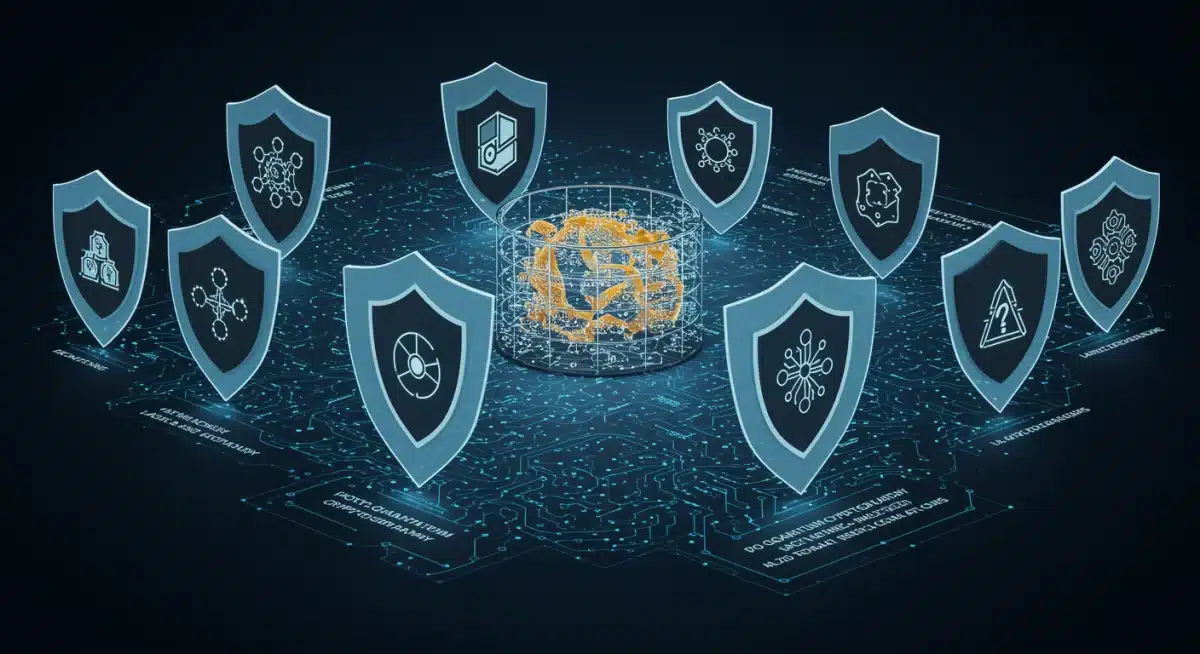
The transition to quantum-resistant cryptography will involve a significant ‘migration’ phase. This could mean:
- Generating New Keys: You may need to generate new private/public key pairs using PQC algorithms.
- Migrating Funds: Moving funds from old, quantum-vulnerable addresses to new, quantum-resistant addresses. This will be a critical step and will require careful attention to avoid errors or falling victim to scams.
- Software Updates: Ensuring your wallet and node software supports the new PQC standards.
Be wary of scams during this transition period. Always verify information from official sources and never share your private keys or seed phrases.
6. Advocate for Quantum-Resistant Solutions
As a crypto holder, your voice matters. Engage with the developers and communities of your preferred cryptocurrencies. Advocate for the prioritization and integration of quantum-resistant cryptography. The more demand there is, the faster these solutions will be implemented.
Challenges and Considerations
The transition to quantum-resistant blockchain security is not without its challenges:
- Performance Overhead: Many PQC algorithms are currently larger and slower than their classical counterparts. Integrating them into blockchain protocols without significantly impacting transaction throughput or increasing transaction fees is a major engineering challenge.
- Standardization and Interoperability: Ensuring that different blockchain networks and applications adopt compatible PQC standards is crucial for maintaining interoperability within the broader crypto ecosystem.
- Backward Compatibility: How to gracefully transition existing assets and transactions secured with classical cryptography to quantum-resistant schemes without losing access or creating vulnerabilities is a complex problem.
- User Education: A significant effort will be required to educate crypto holders about the quantum threat, the need for new security practices, and how to safely migrate their assets.
- Unknowns in Quantum Computing: While projections exist, the exact timeline and capabilities of future quantum computers remain somewhat uncertain. This makes precise planning difficult, necessitating a flexible and adaptable approach.
The Path Forward: A Resilient Blockchain Future
The prospect of quantum computers breaking current cryptographic standards can seem daunting, but it’s important to view this not as an existential threat to blockchain, but as an evolutionary challenge. Post-quantum cryptography is a robust field of research, and viable alternatives are emerging.
By 2026, we will likely see significant progress in the standardization and initial deployment of PQC solutions within various technological sectors, including elements of the blockchain ecosystem. For US crypto holders, the key is to remain informed, adopt best security practices, and be prepared to adapt as these quantum-resistant technologies mature and are integrated into the platforms they use.
The future of blockchain security in a quantum era depends on a collaborative effort between researchers, developers, policymakers, and users. By understanding the risks and embracing the solutions, US crypto holders can continue to participate securely in the decentralized future, even as the computational landscape undergoes a profound transformation.
Conclusion
Quantum computing represents a paradigm shift in computational power, with the potential to render current cryptographic standards obsolete. For US crypto holders, the year 2026 serves as a critical horizon, urging proactive measures to safeguard digital assets against potential quantum attacks. While the development of a ‘cryptographically relevant’ quantum computer is still some years away, the ‘Harvest Now, Decrypt Later’ threat necessitates immediate attention to security practices and an understanding of emerging post-quantum cryptography solutions.
By staying informed about NIST’s PQC standards, advocating for quantum-resistant blockchain implementations, practicing stringent operational security, and preparing for future cryptographic migrations, crypto holders can navigate this evolving landscape. The blockchain community is resilient, and with continued innovation and collaboration, a quantum-resistant future for decentralized finance is not only possible but increasingly within reach. The time to prepare is now, ensuring that the promise of blockchain technology remains secure for generations to come.