Web3 Decentralized Storage Solutions: A 2026 Deep Dive & Comparison

The digital age has ushered in an unprecedented explosion of data. From personal photos and videos to critical business documents and scientific research, the sheer volume of information being generated and stored is staggering. Traditionally, this data has resided in centralized servers and data centers, controlled by a handful of powerful corporations. However, as we accelerate towards 2026, a paradigm shift is underway, driven by the principles of Web3: decentralization, transparency, and user control. This deep dive explores the transformative landscape of Decentralized Storage Solutions, examining their core technologies, key players, and the profound implications for the future of data.
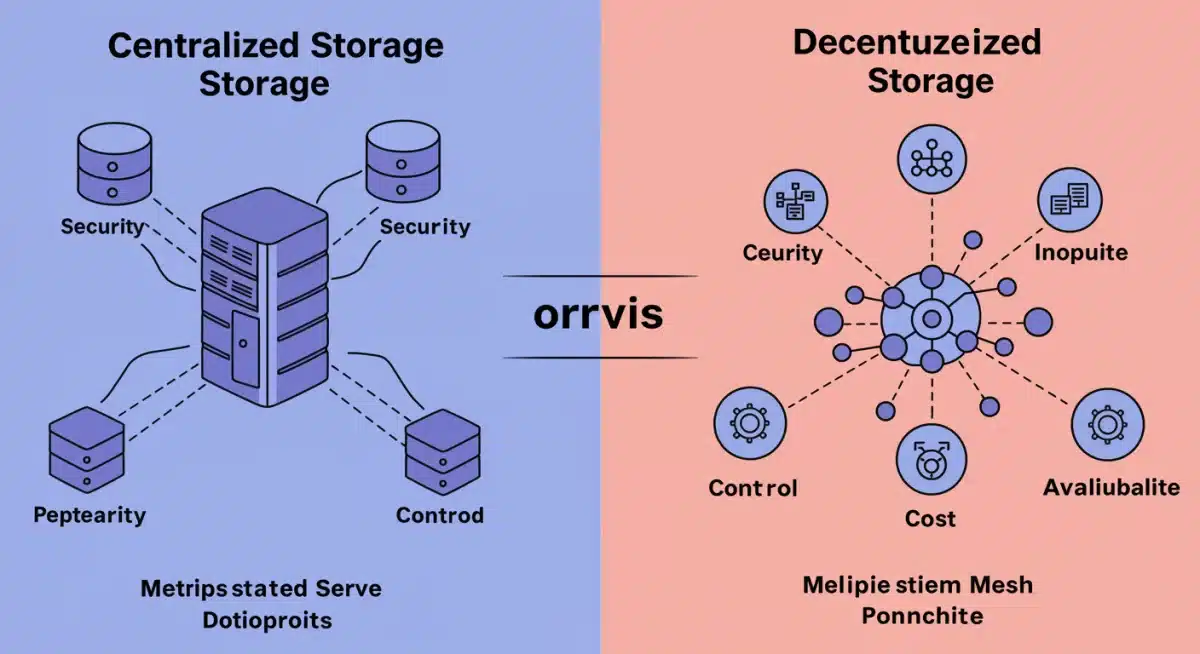
The concept of decentralized storage is not merely a technical upgrade; it represents a fundamental rethinking of how we interact with and secure our digital assets. Instead of entrusting our data to a single entity, decentralized systems distribute data across a global network of independent nodes, often leveraging blockchain technology to ensure integrity, availability, and censorship resistance. This approach promises enhanced security, greater resilience against outages and attacks, and a more equitable distribution of power over information.
As we peer into 2026, the adoption and maturation of Decentralized Storage Solutions are no longer theoretical. They are becoming a tangible reality, with significant investments, innovative projects, and a growing ecosystem of developers and users. This article will dissect the underlying mechanisms, evaluate the leading platforms, and project the trajectory of this vital Web3 infrastructure component.
Understanding the Core Principles of Decentralized Storage
At its heart, decentralized storage aims to eliminate single points of failure and central control. This is achieved through several key cryptographic and network design principles:
Data Sharding and Distribution
Unlike centralized systems where a file resides on one server (or a few mirrored copies in the same data center), decentralized storage breaks down files into smaller, encrypted pieces (shards). These shards are then distributed across numerous independent storage nodes globally. This sharding process ensures that no single node holds a complete, readable copy of the data, significantly enhancing security and privacy.
Encryption and Cryptographic Proofs
Before distribution, data is typically encrypted client-side, meaning only the data owner holds the decryption keys. Furthermore, cryptographic proofs (like Proof-of-Replication and Proof-of-Spacetime in Filecoin, or Proof-of-Access in Arweave) are used to verify that storage providers are genuinely storing the data and making it available over time. These proofs are often recorded on a blockchain, providing an immutable and verifiable record of storage agreements.
Redundancy and Fault Tolerance
To ensure data availability even if some nodes go offline, decentralized systems employ redundancy. Multiple copies of data shards are stored across different nodes. This replication, combined with error correction codes, allows data to be reconstructed even if a significant percentage of storage nodes become unavailable, making these systems highly resilient.
Censorship Resistance and Immutability
Because data is distributed and not controlled by a central authority, it becomes inherently censorship-resistant. No single entity can unilaterally delete or alter the data. Blockchain integration often provides immutability, meaning once data is stored, its record cannot be changed, which is crucial for archival purposes and ensuring data integrity.
Tokenomics and Incentives
Most Decentralized Storage Solutions utilize native cryptocurrencies (tokens) to incentivize participation. Storage providers are rewarded for allocating space and proving data availability, while users pay in these tokens for storage and retrieval. This creates a self-sustaining, permissionless marketplace for storage.
Key Players in the Decentralized Storage Ecosystem (2026 Perspective)
The landscape of Decentralized Storage Solutions is vibrant and competitive, with several projects vying for dominance. As we look to 2026, three platforms stand out for their technological innovation, adoption, and strategic positioning:
Filecoin (FIL): The Programmable Storage Layer for Web3
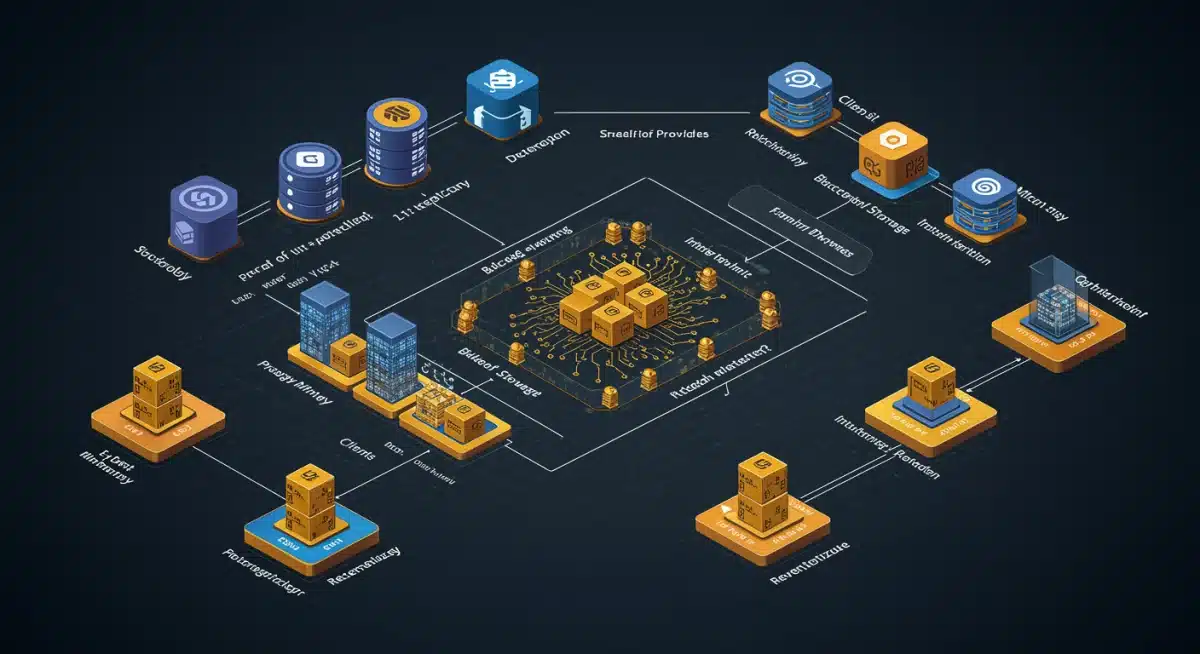
Filecoin, built on top of the InterPlanetary File System (IPFS), has emerged as a frontrunner in the decentralized storage space. By 2026, Filecoin is expected to have further solidified its position as a robust, open marketplace for data storage and retrieval. Its strength lies in its sophisticated cryptographic proofs (Proof-of-Replication and Proof-of-Spacetime) that ensure data integrity and availability. Storage providers (miners) earn FIL tokens for storing client data, while clients pay FIL for storage and retrieval.
2026 Outlook for Filecoin:
- Enterprise Adoption: Expect significant growth in enterprise-level data storage, particularly for large datasets, archival storage, and Web3 applications requiring verifiable data integrity.
- Interoperability: Increased integration with other Web3 protocols and layer-2 solutions, making Filecoin a seamless backend for various decentralized applications (dApps).
- Retrieval Market Improvements: Ongoing enhancements to the retrieval market will likely lead to faster and more reliable data access, a critical factor for mainstream adoption.
- Data Compute Integration: The convergence of storage and compute on Filecoin (e.g., through Filecoin Virtual Machine) will enable new functionalities, allowing computation directly on stored data without moving it, thus boosting efficiency and privacy.
Arweave (AR): Permanent and Immutable Storage
Arweave offers a unique value proposition: truly permanent data storage. Its ‘permaweb’ concept aims to store data forever, funded by a one-time upfront payment. This is achieved through a novel consensus mechanism called Proof-of-Access and a sustainable endowment model that ensures storage providers are incentivized indefinitely. By 2026, Arweave’s niche in immutable, archival storage will be even more pronounced.
2026 Outlook for Arweave:
- Archival Dominance: Arweave will likely become the go-to solution for digital archiving of historical records, cultural heritage, and critical scientific data where immutability is paramount.
- Decentralized Applications (dApps) and NFTs: Its permanent storage will be increasingly utilized by dApps and NFT projects that require their associated metadata and content to be truly immutable and accessible long-term.
- Scalability Improvements: Continued development will focus on scaling the network to accommodate the growing demand for permanent data, potentially through sharding or other layer-2 solutions.
- Ecosystem Growth: A flourishing ecosystem of applications built on the permaweb, ranging from decentralized social media to permanent publishing platforms.
Sia (SC): Affordable and Private Cloud Storage
Sia focuses on providing a decentralized, encrypted, and significantly cheaper alternative to traditional cloud storage providers. It allows users to rent out their unused hard drive space, creating a peer-to-peer storage network. By 2026, Sia will continue to appeal to users and businesses looking for highly private and cost-effective storage solutions.
2026 Outlook for Sia:
- Cost-Effectiveness: Sia’s competitive pricing model will continue to attract users looking to reduce their storage costs dramatically compared to centralized services.
- Privacy-Focused: Its strong emphasis on client-side encryption and distributed storage will make it a preferred choice for privacy-conscious individuals and organizations.
- Usability Enhancements: Ongoing efforts to improve user experience and simplify client software will be crucial for broader adoption, making decentralized storage more accessible to non-technical users.
- Developer Tools: Enhanced SDKs and APIs will facilitate easier integration of Sia into various applications, expanding its utility beyond simple file storage.
Emerging Trends and Technologies in Decentralized Storage (2026)
Beyond the established players, several trends and technological advancements are shaping the future of Decentralized Storage Solutions:
Hybrid Storage Models
The distinction between centralized and decentralized storage may blur further with the rise of hybrid models. These approaches could combine the speed and convenience of traditional cloud storage for frequently accessed data with the security and resilience of decentralized networks for archival or sensitive information. This offers a pragmatic path for enterprises to gradually transition to Web3 infrastructure.
Decentralized Identity and Access Management
As data becomes more distributed, managing access permissions securely and efficiently becomes paramount. Decentralized Identity (DID) solutions, combined with verifiable credentials, will play a crucial role in enabling fine-grained, self-sovereign control over who can access stored data, revolutionizing data privacy and ownership.
Compute-over-Data Architectures
The ability to perform computations directly on encrypted, distributed data without first moving it to a centralized location (as seen with Filecoin’s FVM) is a game-changer. This trend will enable privacy-preserving analytics, machine learning on sensitive datasets, and new forms of decentralized applications that are both data-intensive and privacy-focused. Expect significant advancements in homomorphic encryption and secure multi-party computation to facilitate this.
Interoperability Standards
The development of common standards and protocols for data storage, retrieval, and indexing across different decentralized networks will be critical. This interoperability will prevent vendor lock-in and foster a more cohesive and efficient Web3 data ecosystem, allowing applications to seamlessly utilize the best features of various Decentralized Storage Solutions.
Environmental Sustainability
As the world focuses on climate change, the energy consumption of blockchain and storage networks will come under scrutiny. By 2026, expect increased emphasis on energy-efficient consensus mechanisms and optimized hardware for storage providers, ensuring that decentralized storage is not only secure and robust but also environmentally responsible.
Challenges and Opportunities for Decentralized Storage in 2026
While the future of Decentralized Storage Solutions appears bright, several challenges must be addressed to achieve widespread adoption:
User Experience (UX) and Accessibility
Currently, interacting with decentralized storage can be complex for non-technical users. Simplifying interfaces, integrating with familiar tools, and providing seamless onboarding experiences will be crucial for attracting a broader audience. Wallets and dApp browsers will need to evolve to make these interactions intuitive.
Performance and Latency
For certain applications, the retrieval speed of decentralized storage can be slower than centralized alternatives. Ongoing research and development are focused on optimizing data retrieval mechanisms, improving network routing, and leveraging content delivery networks (CDNs) to reduce latency and enhance performance.
Regulatory Clarity
The regulatory landscape around cryptocurrencies and blockchain technology is still evolving. Clarity on data sovereignty, compliance (e.g., GDPR, CCPA), and legal frameworks for decentralized autonomous organizations (DAOs) governing these networks will be essential for institutional adoption.
Economic Viability and Stability
The token-based economies of these platforms need to remain stable and attractive for both storage providers and users. Managing token volatility, ensuring fair pricing, and preventing market manipulation are ongoing challenges that require robust economic models and governance.
Opportunities for Innovation
Despite these challenges, the opportunities presented by Decentralized Storage Solutions are immense:
- Data Sovereignty: Empowering individuals and organizations with true ownership and control over their data, free from corporate or governmental intermediaries.
- Enhanced Security: Reducing the risk of large-scale data breaches by eliminating central honey pots and leveraging advanced cryptography.
- Censorship Resistance: Providing a robust infrastructure for free speech, open access to information, and resistance against authoritarian control.
- Cost Efficiency: Potentially offering more competitive pricing models by leveraging a global marketplace of storage providers and reducing overheads associated with centralized infrastructure.
- New Business Models: Enabling novel applications and services built on verifiable, immutable, and distributed data, fostering a new wave of innovation in the digital economy.
The Role of IPFS in the Decentralized Storage Ecosystem
It’s impossible to discuss Decentralized Storage Solutions without mentioning the InterPlanetary File System (IPFS). While not a blockchain itself, IPFS is a peer-to-peer network protocol designed to store, address, and transfer data in a decentralized manner. Many decentralized storage projects, including Filecoin, leverage IPFS as their underlying content-addressing and data-transfer layer.
How IPFS Complements Decentralized Storage
- Content Addressing: Instead of location-based addressing (like traditional URLs), IPFS uses content addressing, where data is retrieved based on its cryptographic hash. This means you’re asking for ‘what’ rather than ‘where,’ making data more resilient and verifiable.
- Efficient Data Transfer: IPFS enables efficient peer-to-peer data transfer, allowing users to retrieve data from the closest available node, reducing latency and bandwidth usage.
- Building Block: IPFS acts as a foundational building block for many Web3 applications, providing a way to link and distribute content. Decentralized storage networks then layer on top of IPFS to provide persistent, incentivized storage for that content.
By 2026, the synergy between IPFS and various Decentralized Storage Solutions will be even more pronounced, forming a robust and interconnected Web3 data layer.
Conclusion: The Decentralized Data Revolution by 2026
The journey towards a fully decentralized web is complex, but the progress made by Decentralized Storage Solutions is undeniable. By 2026, these technologies will have matured significantly, moving beyond niche applications to become critical infrastructure for a wide range of industries and use cases. We will witness greater adoption by enterprises seeking enhanced security and data sovereignty, by creators demanding immutable content storage for NFTs and digital art, and by individuals valuing privacy and censorship resistance.
The comparison between Filecoin, Arweave, and Sia highlights the diverse approaches and specialized niches within this ecosystem. Filecoin is poised to be the versatile programmable storage layer, Arweave the guardian of digital permanence, and Sia the champion of affordable, private cloud alternatives. Together, and alongside other emerging solutions, they are building a more resilient, equitable, and user-centric internet.
The challenges of user experience, performance, and regulation remain, but the relentless pace of innovation in the Web3 space suggests that solutions are on the horizon. As we move closer to 2026, the promise of a decentralized internet, underpinned by robust and reliable Decentralized Storage Solutions, is not just a vision but an unfolding reality that will redefine our relationship with data forever.