Decentralized Identity in 2026: Enhancing Digital Security for US Web3
Decentralized identity in 2026 is revolutionizing digital security for US Web3 participants by granting individuals unprecedented control over their personal data, moving beyond traditional centralized authentication models to foster a more private and secure online environment.
As we navigate 2026, the landscape of online interactions for US Web3 participants is rapidly evolving, driven by transformative advancements in digital security. Central to these changes is the concept of decentralized identity in 2026: enhancing digital security for US Web3 participants, a paradigm shift promising greater control and privacy over personal data in an increasingly interconnected world.
the rise of self-sovereign identity in web3
The concept of self-sovereign identity (SSI) has moved from theoretical discussions to practical implementation within the Web3 ecosystem by 2026, especially for users in the United States. This shift empowers individuals to own and control their digital identities, rather than relying on centralized entities like social media platforms or government databases. The core principle is that users issue, manage, and verify their credentials directly, significantly reducing the risks associated with data breaches and identity theft that plague traditional systems.
SSI leverages blockchain technology to create an immutable and verifiable record of credentials, ensuring transparency and trust. This means that when a US Web3 participant needs to prove their age, professional qualifications, or residency, they can do so without exposing unnecessary personal information. This granular control over data sharing is a cornerstone of enhanced digital security.
understanding verifiable credentials
Verifiable Credentials (VCs) are digital proofs that can be cryptographically secured and verified. They are central to how self-sovereign identity functions in Web3. Issuers, like universities or employers, can issue VCs to holders, who then present them to verifiers. This process is entirely controlled by the holder, eliminating intermediaries and potential points of failure.
- Privacy by Design: VCs allow for selective disclosure, revealing only the necessary information.
- Tamper-Proof: Cryptographic signatures make VCs resistant to alteration.
- Global Interoperability: Standards bodies are ensuring VCs can be used across different platforms.
impact on user autonomy
The ability to manage one’s own digital identity fosters a new level of autonomy. For US Web3 participants, this translates into freedom from surveillance capitalism and the ability to engage in online activities without constantly fearing data exploitation. It’s about regaining ownership of one’s digital self in an age where personal data has become a valuable commodity. This autonomy is not just about privacy; it’s also about empowering individuals to participate in the digital economy on their own terms, fostering a more equitable and secure online environment.
In summary, the widespread adoption of self-sovereign identity and verifiable credentials by 2026 marks a pivotal moment in digital security, granting US Web3 participants unprecedented control and enhancing their overall online safety and privacy.
blockchain’s role in securing decentralized identity
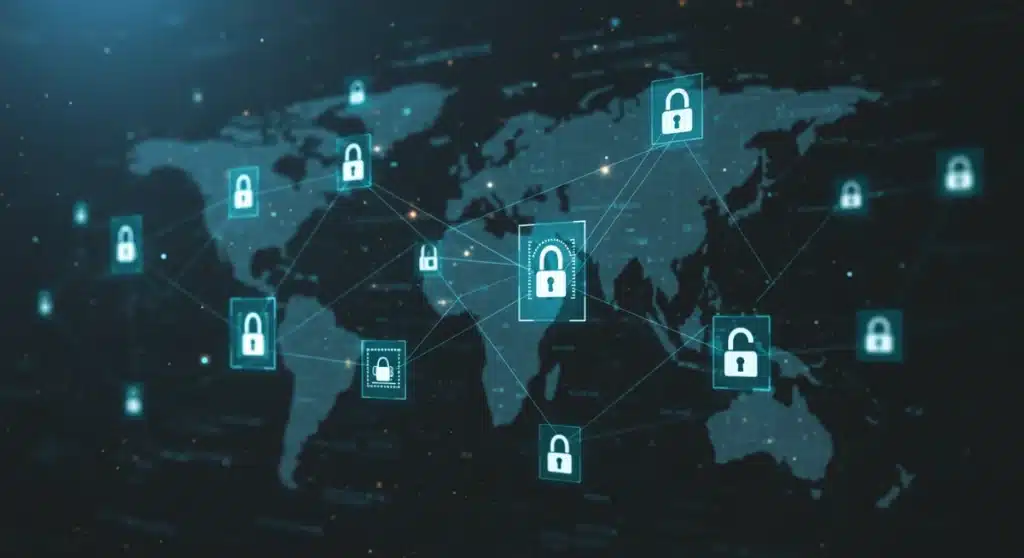
Blockchain technology is not merely a component of decentralized identity; it is the foundational layer that ensures its security and integrity. By 2026, various blockchain networks are supporting decentralized identity solutions, providing the immutable ledgers necessary for verifiable credentials and decentralized identifiers (DIDs). These distributed ledgers ensure that once a credential is issued and recorded, it cannot be altered or deleted, offering a level of trust and transparency unmatched by traditional identity systems.
The distributed nature of blockchain also means there is no single point of failure. Unlike centralized databases that are vulnerable to large-scale hacks, a decentralized network distributes data across many nodes, making it significantly harder for malicious actors to compromise the entire system. This inherent resilience is crucial for protecting sensitive identity information from cyber threats.
decentralized identifiers (DIDs) explained
Decentralized Identifiers (DIDs) are a new type of globally unique identifier that enables verifiable, decentralized digital identity. DIDs are designed to be resolvable on a decentralized network, like a blockchain, without requiring a centralized registry. Each DID is associated with a DID document, which contains cryptographic material, service endpoints, and other information used to enable interactions with the DID subject.
- Persistent and Portable: DIDs are user-controlled and can be moved across different platforms.
- Cryptographically Secure: Rely on public-key cryptography for authentication and integrity.
- Privacy-Preserving: Allow for selective disclosure of information, enhancing user privacy.
enhanced data integrity and immutability
The immutability of blockchain is perhaps its most significant contribution to decentralized identity. Every transaction and credential issuance is recorded as a block in a chain, cryptographically linked to the previous one. This creates an unchangeable history, ensuring that the integrity of identity data is maintained over time. For US Web3 participants, this means greater assurance that their credentials are authentic and have not been tampered with, fostering trust in digital interactions.
In essence, blockchain provides the secure, transparent, and resilient infrastructure upon which the entire decentralized identity framework is built, offering robust protection against fraud and unauthorized access for Web3 users.
regulatory landscape and adoption in the us
The regulatory environment surrounding decentralized identity in the US is rapidly evolving in 2026, reflecting a growing understanding of its potential benefits and challenges. Government agencies and industry bodies are actively exploring frameworks to support the secure and compliant adoption of decentralized identity solutions. This includes discussions around data privacy laws, interoperability standards, and consumer protection, aiming to create a balanced ecosystem that fosters innovation while safeguarding user rights.
Several states and federal initiatives are piloting decentralized identity systems for various applications, from digital driver’s licenses to secure access to government services. These early adoptions are providing valuable insights into the practical implementation and scalability of these technologies, paving the way for broader acceptance and integration into daily life for US citizens engaged with Web3.
government initiatives and pilot programs
Across the United States, various government entities are recognizing the efficiency and security benefits of decentralized identity. Pilot programs are underway in sectors such as healthcare, education, and public services, exploring how SSI can streamline processes and enhance data security. These initiatives often involve collaboration between technology providers, regulatory bodies, and academic institutions to develop robust and compliant solutions.
For example, some states are exploring digital verifiable credentials for professional licenses, allowing individuals to prove their qualifications instantly and securely without cumbersome paperwork. This not only improves efficiency but also reduces the potential for fraud, reinforcing the value proposition of decentralized identity.
industry standards and collaboration
To facilitate widespread adoption, industry collaboration on standards is paramount. Organizations like the Decentralized Identity Foundation (DIF) and the World Wide Web Consortium (W3C) are playing crucial roles in developing open standards for DIDs and Verifiable Credentials. These standards ensure interoperability across different platforms and providers, preventing vendor lock-in and promoting a more unified decentralized identity ecosystem.
The active participation of US-based tech companies and financial institutions in these standardization efforts highlights the country’s commitment to leading the way in this transformative technology. This collaborative approach is vital for building a secure and scalable infrastructure for decentralized identity in Web3.
Overall, the US regulatory landscape and increasing adoption rates demonstrate a clear trajectory towards integrating decentralized identity solutions, driven by both public and private sector recognition of their security and efficiency benefits.
enhanced privacy and data control for web3 participants
One of the most compelling advantages of decentralized identity in 2026: enhancing digital security for US Web3 participants is the profound shift it brings to privacy and data control. In traditional systems, users often surrender significant portions of their personal data to centralized entities, leading to concerns about privacy breaches, data exploitation, and targeted advertising. Decentralized identity fundamentally alters this dynamic by placing the individual at the center of their data ecosystem.
With SSI, US Web3 participants can selectively disclose only the necessary information for a given interaction, a concept known as “minimal disclosure.” For instance, instead of sharing their full birth date to prove they are over 21, they can simply present a verifiable credential that confirms their age eligibility without revealing the exact date. This granular control significantly reduces the digital footprint and minimizes exposure to potential privacy risks.
minimal disclosure and zero-knowledge proofs
Techniques like Zero-Knowledge Proofs (ZKPs) are becoming increasingly sophisticated and integrated into decentralized identity systems by 2026. ZKPs allow one party to prove that they possess certain information without revealing the information itself. This is a game-changer for privacy, as it enables secure authentication and verification without compromising sensitive data.
- Age Verification: Prove you are over 18 without revealing your birth date.
- Credit Score: Confirm you meet a financial requirement without disclosing your actual score.
- Membership Status: Verify belonging to a group without revealing group specifics.
reducing the risk of data breaches
By decentralizing identity data and minimizing its storage on centralized servers, the attack surface for cybercriminals is drastically reduced. There’s no single honeypot of personal information for hackers to target. Instead, individual users maintain control of their data, and credentials are cryptographically secured. This distributed approach significantly mitigates the risk of large-scale data breaches that have plagued traditional identity management systems in the past.
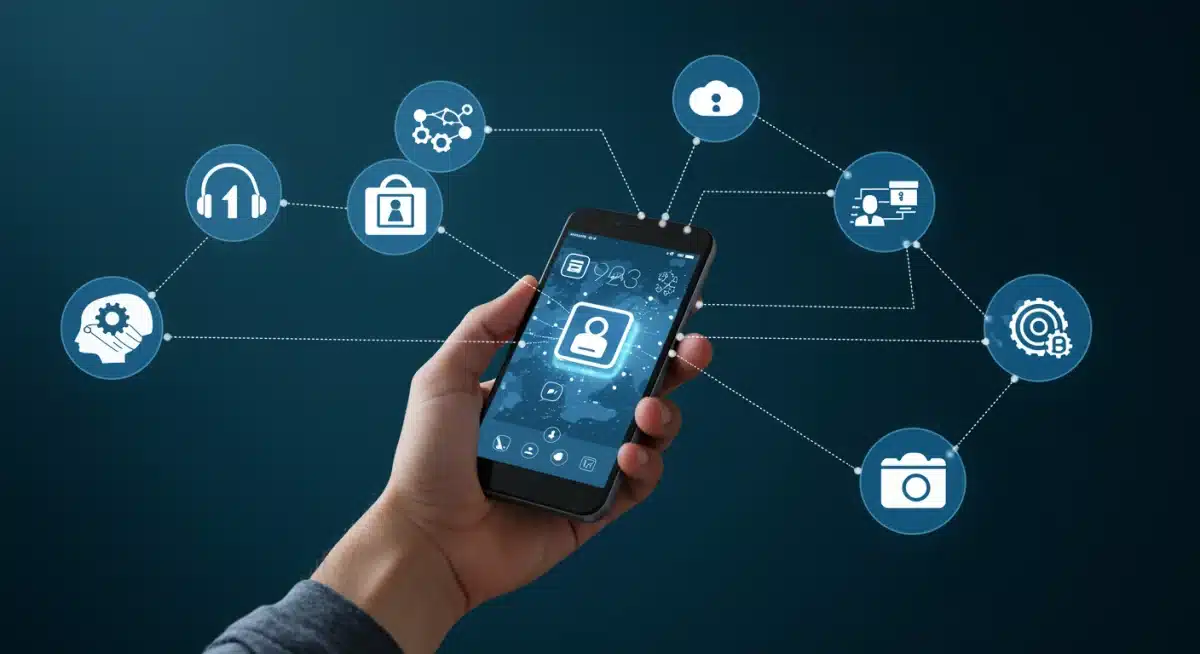
The ability to control what information is shared, when it is shared, and with whom, empowers US Web3 participants to navigate the digital world with greater confidence and security, making their online interactions more private and less susceptible to exploitation.
challenges and considerations for widespread adoption
While the benefits of decentralized identity are clear, several challenges and considerations need addressing for truly widespread adoption in the US Web3 space by 2026. These include achieving true interoperability across diverse blockchain platforms, ensuring user-friendly interfaces for non-technical users, and navigating the complex legal and regulatory landscape. Overcoming these hurdles is crucial for decentralized identity to move beyond early adopters and become a mainstream solution for digital security.
Another significant challenge lies in the education and awareness of the general public. Understanding the nuances of self-sovereign identity, verifiable credentials, and blockchain technology requires a learning curve. For decentralized identity to succeed, there must be concerted efforts to simplify its concepts and demonstrate its tangible benefits to everyday users, not just Web3 enthusiasts.
interoperability and standardization hurdles
The Web3 ecosystem is diverse, with numerous blockchain networks and identity protocols. Ensuring seamless interoperability between these disparate systems is a complex task. Without universal standards, fragmented identity solutions could emerge, hindering the user experience and limiting the scalability of decentralized identity. Efforts by organizations like the W3C and DIF are critical in establishing common frameworks, but their widespread implementation remains an ongoing process.
- Technical Complexity: Integrating various protocols and blockchain architectures.
- Governance Models: Aligning different governance structures across ecosystems.
- Developer Adoption: Encouraging developers to build on open, interoperable standards.
user experience and accessibility
For decentralized identity to gain mass appeal, the user experience must be intuitive and accessible. Current solutions can sometimes be complex, requiring users to manage cryptographic keys and understand blockchain concepts. Simplifying the onboarding process, developing user-friendly identity wallets, and providing clear educational resources are essential to lower the barrier to entry for the average US Web3 participant.
Poor user experience can quickly deter adoption, regardless of how secure or private a technology is. Therefore, significant investment in UX/UI design and educational outreach is needed to make decentralized identity a practical reality for everyone.
Addressing these challenges proactively will be key to unlocking the full potential of decentralized identity and ensuring its successful integration into the digital lives of US Web3 participants.
the future outlook: decentralized identity and web3 evolution
Looking ahead to the remainder of 2026 and beyond, the trajectory of decentralized identity is intrinsically linked to the broader evolution of Web3. As the decentralized web matures, so too will the sophistication and integration of SSI solutions. We can anticipate a future where decentralized identity is not just an alternative but the default mechanism for digital authentication and verification, fundamentally transforming how US Web3 participants interact online and manage their digital lives.
The convergence of advanced cryptography, greater regulatory clarity, and user-centric design will accelerate this evolution. Imagine a world where logging into any Web3 application or service requires only a secure, privacy-preserving credential from your digital wallet, eliminating passwords and the constant worry of data breaches. This vision is rapidly becoming a reality, cementing decentralized identity’s role as a cornerstone of the secure and private internet of tomorrow.
integration with emerging web3 technologies
Decentralized identity will play a critical role in enabling other emerging Web3 technologies. For example, in the metaverse, SSI will allow users to carry their digital personas and assets across different virtual worlds securely and seamlessly. In DeFi (Decentralized Finance), it will enable reputation-based lending and compliance without compromising individual privacy, facilitating a more inclusive and secure financial system.
- Metaverse Avatars: Securely link digital identity to virtual representations.
- DeFi Reputation: Build verifiable credit scores without centralized intermediaries.
- DAO Governance: Authenticate participation in decentralized autonomous organizations.
a paradigm shift in digital trust
Ultimately, decentralized identity represents a fundamental paradigm shift in how we establish and maintain trust in the digital realm. By empowering individuals with control over their data and identity, it moves away from a system of institutional trust to one built on cryptographic proof and personal sovereignty. This shift is not just about security; it’s about fostering a more equitable, transparent, and resilient internet for US Web3 participants and the global community alike.
The future of Web3 is inherently tied to the success of decentralized identity, paving the way for a more secure, private, and user-centric digital experience that empowers individuals rather than exploiting them.
| Key Aspect | Brief Description |
|---|---|
| Self-Sovereign Identity (SSI) | Users own and control their digital identities, reducing reliance on centralized entities and enhancing privacy. |
| Verifiable Credentials (VCs) | Cryptographically secured digital proofs for selective data disclosure, ensuring tamper-proof verification. |
| Blockchain Foundation | Provides immutable ledgers for DIDs and VCs, ensuring security, integrity, and resilience against attacks. |
| Privacy and Control | Enables minimal data disclosure and zero-knowledge proofs, significantly reducing privacy risks for users. |
frequently asked questions about decentralized identity
Decentralized identity (DID) allows individuals to control their digital identities and data without central authorities. In Web3 by 2026, it’s crucial for enhancing security, privacy, and user autonomy, moving beyond vulnerable centralized systems to a more robust, user-centric online experience.
VCs improve digital security by providing cryptographically secured and tamper-proof digital proofs of claims. They enable selective disclosure, meaning users only share necessary information, significantly reducing exposure to data breaches and enhancing privacy in Web3 interactions.
Blockchain serves as the foundational, immutable ledger for decentralized identifiers (DIDs) and VCs. Its distributed nature ensures data integrity, resilience against attacks, and eliminates single points of failure, making identity data highly secure and trustworthy in the Web3 ecosystem.
Yes, while promising, challenges include navigating evolving data privacy laws, ensuring interoperability across diverse platforms, and establishing clear legal frameworks. US regulatory bodies are actively working on standards and pilot programs to address these complexities and foster broader adoption.
Decentralized identity will profoundly enhance user privacy by enabling minimal data disclosure and leveraging zero-knowledge proofs. Users gain granular control over their personal information, reducing their digital footprint and protecting them from data exploitation and unwanted surveillance in Web3.
conclusion
In conclusion, decentralized identity in 2026: enhancing digital security for US Web3 participants is not just a technological upgrade; it represents a fundamental shift towards a more secure, private, and user-centric internet. By empowering individuals with ownership and control over their digital identities through self-sovereign identity and verifiable credentials, supported by the robust security of blockchain, the Web3 ecosystem is significantly mitigating traditional risks associated with data privacy and online fraud. While challenges in interoperability, user adoption, and regulatory alignment persist, the trajectory clearly points towards decentralized identity becoming the standard for digital trust and interaction, fostering a safer and more equitable digital future for all US Web3 participants.