Upgrade Legacy Smart Contracts: A 3-Month Roadmap for U.S. Businesses

In the rapidly evolving digital landscape, smart contracts have emerged as a cornerstone of decentralized applications and blockchain technology. For many U.S. businesses, adopting smart contracts early on provided a competitive edge, streamlining operations, and reducing intermediaries. However, as technology advances at an unprecedented pace, these early implementations, often referred to as legacy smart contracts, are increasingly facing challenges. These challenges range from security vulnerabilities to inefficiencies, and even compliance issues with new regulations. The imperative to upgrade legacy smart contracts is no longer a futuristic consideration but a pressing need for businesses aiming to maintain their integrity, security, and operational excellence in the U.S. market and beyond.
The year 2026 is rapidly approaching, and with it, the expectation of even more sophisticated cyber threats and stricter regulatory frameworks. U.S. businesses that fail to proactively address their legacy smart contract infrastructure risk significant financial losses, reputational damage, and operational disruptions. This comprehensive guide outlines a pragmatic 3-month roadmap designed to help U.S. businesses effectively upgrade their legacy smart contracts, ensuring enhanced security, improved efficiency, and future-proofing their blockchain investments. Our focus is on providing actionable steps and strategic insights to navigate this critical transition seamlessly.
Understanding the Need to Upgrade Legacy Smart Contracts
Before diving into the roadmap, it’s crucial to understand why upgrading legacy smart contracts is not merely an option but a necessity. The blockchain ecosystem is dynamic, with new protocols, programming languages, and security best practices emerging constantly. Legacy smart contracts, often developed years ago, may not adhere to current standards, leaving them susceptible to a host of problems.
Security Vulnerabilities
One of the most critical reasons to upgrade is security. Early smart contracts were often deployed without the benefit of extensive security audits or battle-tested design patterns. This has led to numerous high-profile exploits, resulting in millions of dollars in losses. Common vulnerabilities in older contracts include reentrancy attacks, integer overflows/underflows, denial-of-service (DoS) attacks, and logic errors that can be exploited by malicious actors. As the sophistication of attackers grows, these vulnerabilities become more pronounced, making older contracts easy targets. Upgrading allows businesses to implement the latest security measures, incorporate formal verification, and utilize secure coding practices to mitigate these risks.
Performance and Efficiency Limitations
Early blockchain networks and smart contract platforms often had limitations in terms of transaction throughput, gas costs, and execution speed. Legacy smart contracts might be designed in ways that are inefficient for today’s more scalable and optimized blockchain environments. For example, older contracts might consume excessive gas (transaction fees) or execute slowly, impacting user experience and increasing operational costs. Modern smart contract development focuses on gas optimization, efficient data structures, and modular design, leading to significantly better performance and lower operational overhead. An upgrade can translate into substantial cost savings and improved user satisfaction.
Lack of New Features and Interoperability
The blockchain space is constantly innovating, with new features like cross-chain compatibility, advanced DeFi functionalities, and improved governance mechanisms becoming standard. Legacy smart contracts often lack these capabilities, limiting a business’s ability to integrate with newer protocols or offer competitive services. Upgrading provides an opportunity to incorporate these modern features, expanding the utility and reach of the smart contract. This also includes improved interoperability, allowing contracts to interact seamlessly with other blockchain networks and decentralized applications, which is increasingly vital in a multi-chain world.
Regulatory and Compliance Challenges
The regulatory landscape for blockchain and smart contracts is still evolving, particularly in the U.S. New guidelines and legal precedents are continually being set for areas like data privacy, financial regulations, and consumer protection. Legacy smart contracts might not be designed with these emerging compliance requirements in mind, potentially exposing businesses to legal risks and penalties. An upgrade allows for the integration of compliance features, such as identity verification (KYC), anti-money laundering (AML) checks, and mechanisms for data immutability or revocability where legally required, ensuring that the business remains on the right side of the law.
Maintainability and Developer Support
As programming languages and development tools evolve, maintaining older smart contracts can become increasingly difficult. Developers skilled in deprecated versions of Solidity or other contract languages might be harder to find, and supporting older codebases can be resource-intensive. Upgrading to newer standards ensures access to a larger pool of developers, better documentation, and more robust development tools, making future maintenance and enhancements smoother and more cost-effective.
The 3-Month Roadmap for U.S. Businesses
This roadmap is structured into three distinct phases, each focusing on critical aspects of the upgrade process. While the timeline is aggressive, it is achievable with dedicated resources and a clear strategy. The goal is to complete the core upgrade process within three months, setting the stage for continuous improvement and innovation.
Month 1: Assessment and Planning – Laying the Foundation
The first month is dedicated to a thorough understanding of the existing infrastructure and meticulous planning for the upgrade. This phase is crucial for identifying potential challenges and defining the scope of work.
Week 1: Comprehensive Audit of Existing Smart Contracts
Begin with a detailed audit of all existing legacy smart contracts. This involves:
- Code Review: Engage experienced blockchain security auditors to conduct a line-by-line review of your smart contract code. Identify known vulnerabilities (e.g., reentrancy, integer overflows, access control issues), inefficient gas usage patterns, and potential logic flaws.
- Dependency Mapping: Understand all external contracts, libraries, and oracles that your legacy contracts interact with. Assess their security posture and compatibility with potential upgrades.
- Functionality Mapping: Document every function and its intended behavior within the legacy contracts. This creates a baseline for verifying the new contract’s functionality.
- Performance Analysis: Analyze historical transaction data to identify performance bottlenecks, high gas consumption areas, and user experience issues related to the current contracts.
Deliverable: A comprehensive audit report detailing vulnerabilities, inefficiencies, and functional specifications of existing contracts.
Week 2: Defining Upgrade Objectives and Scope
Based on the audit findings, articulate clear objectives for the upgrade. This includes:
- Security Enhancements: Specify which vulnerabilities will be addressed and what new security features (e.g., multi-signature capabilities, time-locks, upgradeability patterns) will be implemented.
- Efficiency Improvements: Define targets for gas cost reduction, transaction speed, and overall performance.
- New Feature Integration: List any new functionalities or integrations (e.g., cross-chain bridges, advanced DeFi mechanisms, improved governance) that the upgraded contracts will support.
- Compliance Requirements: Identify specific regulatory requirements that the new contracts must meet, particularly for U.S. operations.
- Scope Definition: Clearly define which contracts will be upgraded, whether it’s a full migration, a partial upgrade, or a phased rollout.
Deliverable: A detailed project scope document with clear, measurable objectives.
Week 3: Technology Stack Selection and Architectural Design
This week focuses on choosing the right technologies and designing the architecture for your upgraded smart contracts.
- Blockchain Platform: Confirm if you will remain on the current blockchain or explore migration to a more suitable platform (e.g., Ethereum Layer 2, Polygon, Avalanche, Solana) based on scalability, cost, and security needs.
- Programming Language & Frameworks: Select the most appropriate programming language (likely a newer version of Solidity) and development frameworks (e.g., Hardhat, Foundry, Truffle) that offer robust testing, deployment, and security features.
- Upgradeability Patterns: Choose a suitable upgradeability pattern (e.g., proxy patterns like UUPS or Transparent Proxies) to ensure future flexibility without redeploying the entire contract.
- New Architecture Design: Design the architecture of the new smart contracts, focusing on modularity, testability, and adherence to best practices for security and efficiency.
Deliverable: Architectural design document, technology stack choices, and high-level upgradeability strategy.
Week 4: Team Assembly and Resource Allocation
Assemble the core team responsible for the upgrade and allocate necessary resources.
- Internal Team: Identify internal stakeholders, including blockchain developers, security experts, legal counsel, and project managers.
- External Expertise: Consider engaging external blockchain development firms or security auditors specializing in smart contract upgrades, especially if internal expertise is limited.
- Tooling and Infrastructure: Set up the development environment, testing frameworks, and deployment pipelines.
Deliverable: Project team roster, clear roles and responsibilities, and confirmed access to all necessary tools and resources.

Month 2: Development and Robust Testing – Building the Future
Month two is the core development phase, where the new smart contracts are built and subjected to rigorous testing to ensure their integrity and functionality.
Weeks 5-6: Smart Contract Development and Implementation
This two-week period is dedicated to writing and implementing the new smart contract code based on the architectural design and defined objectives.
- Secure Coding Practices: Adhere strictly to secure coding guidelines from organizations like OWASP and industry best practices for blockchain development.
- Modularity: Develop contracts with modularity in mind, breaking down complex logic into smaller, reusable, and testable components.
- Gas Optimization: Implement gas-efficient coding patterns to minimize transaction costs.
- Documentation: Maintain thorough inline documentation and external documentation for all new contracts and functions.
Deliverable: Draft versions of the new smart contract code.
Weeks 7-8: Extensive Testing and Quality Assurance
Testing is paramount in smart contract development. This phase involves multiple layers of testing to identify and rectify any bugs or vulnerabilities.
- Unit Testing: Write comprehensive unit tests for each function and component of the new contracts.
- Integration Testing: Test how different components of the new contracts interact with each other and with external dependencies (e.g., oracles, other contracts).
- Fuzz Testing: Employ fuzzing tools to test contract behavior with unexpected or malformed inputs, uncovering edge cases and vulnerabilities.
- Property-Based Testing: Use tools that generate random inputs to test contract properties against predefined invariants.
- Formal Verification: For critical components, consider using formal verification tools to mathematically prove the correctness of the code against specifications. This is a highly specialized area and may require external experts.
- Gas Cost Analysis: Conduct detailed analysis to ensure gas costs are within acceptable limits and meet efficiency objectives.
Deliverable: Comprehensive test reports, identified bugs, and initial bug fixes.
Month 3: Deployment and Post-Upgrade Management – Securing the Transition
The final month focuses on the careful deployment of the upgraded contracts and establishing robust post-upgrade management protocols.
Week 9: Independent Security Audit and Bug Bounty Program
Before deployment, an independent security audit is non-negotiable. This provides an unbiased assessment of the new contracts.
- Third-Party Audit: Engage a reputable, independent blockchain security firm to conduct a final, comprehensive audit of the newly developed smart contracts.
- Bug Bounty Program: Launch a private or public bug bounty program to incentivize ethical hackers to find vulnerabilities in exchange for rewards. This adds another layer of security validation.
Deliverable: Final audit report, resolution of identified critical vulnerabilities, and launched bug bounty program.
Week 10: Migration Strategy and Data Transfer Planning
Planning the migration of data and state from legacy contracts to new ones is a delicate process that requires precision.
- Migration Script Development: Develop and rigorously test scripts for transferring critical data (e.g., token balances, user data, ownership records) from the old contracts to the new ones.
- Snapshotting: Plan for taking a snapshot of the legacy contract state immediately before migration to ensure data integrity.
- Rollback Plan: Develop a comprehensive rollback strategy in case unforeseen issues arise during migration.
- Communication Plan: Prepare clear communication to inform users and stakeholders about the impending upgrade and any potential service interruptions.
Deliverable: Detailed migration plan, tested migration scripts, and communication strategy.
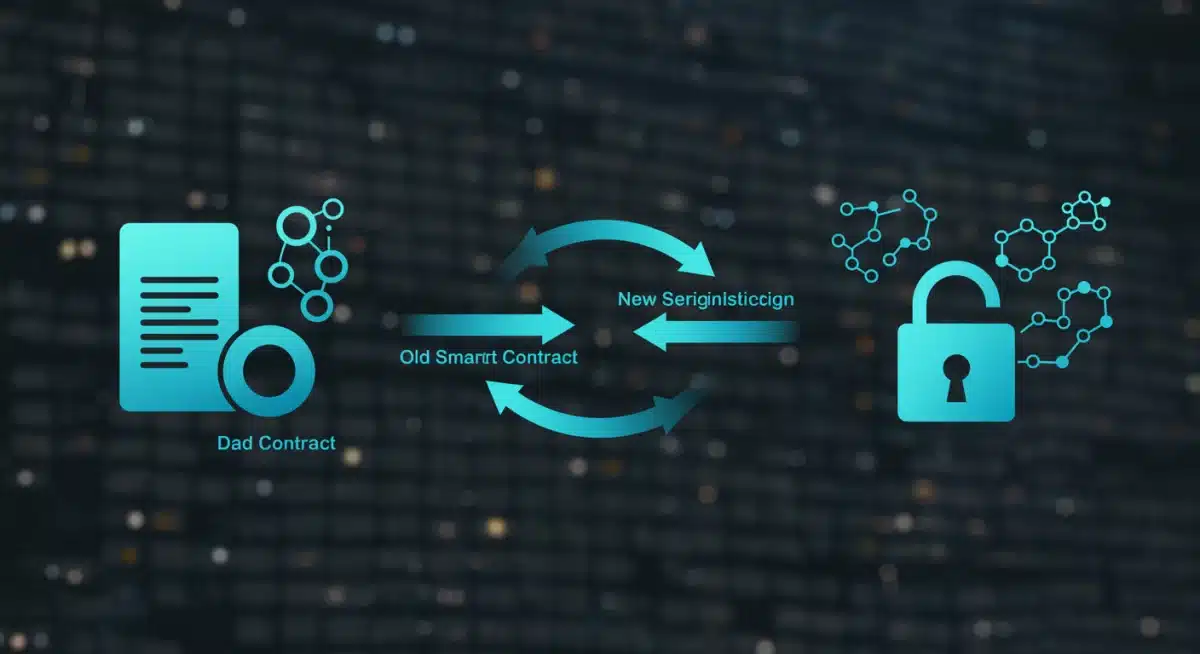
Week 11: Phased Deployment and Go-Live
The actual deployment should be a carefully orchestrated event, often following a phased approach.
- Staging Environment Deployment: Deploy the new contracts to a testnet or a staging environment that mirrors the production environment. Conduct final end-to-end tests.
- Limited Production Rollout (if applicable): For critical systems, consider a phased rollout, deploying to a small segment of users or a less critical part of the system first.
- Full Production Deployment: Execute the migration scripts and deploy the new smart contracts to the mainnet. Monitor closely during and immediately after deployment.
- Decommissioning Legacy Contracts: Once the new contracts are fully operational and verified, consider decommissioning or freezing the legacy contracts to prevent further interaction.
Deliverable: Successfully deployed new smart contracts and a fully functional system.
Week 12: Post-Upgrade Monitoring and Continuous Improvement
Deployment is not the end of the process; continuous monitoring and improvement are essential.
- Real-time Monitoring: Implement robust monitoring tools to track contract performance, transaction anomalies, and potential security threats in real-time.
- Incident Response Plan: Have a clear incident response plan in place for any post-deployment issues.
- Performance Analytics: Collect and analyze data on gas usage, transaction speed, and user interactions to identify areas for further optimization.
- Regular Audits: Schedule periodic security audits and code reviews for the new contracts to ensure they remain secure and up-to-date.
- Community Feedback: Engage with your user community to gather feedback and address any concerns promptly.
Deliverable: Established monitoring systems, incident response protocols, and a plan for ongoing maintenance and future enhancements.
Key Considerations for U.S. Businesses
Beyond the technical roadmap, U.S. businesses must also consider several strategic and operational factors unique to their operating environment.
Regulatory Compliance Landscape
The U.S. regulatory landscape for blockchain and smart contracts is complex and fragmented across federal and state levels. Businesses must stay abreast of developments from agencies like the SEC, CFTC, FinCEN, and OFAC. Legal counsel specializing in blockchain law is indispensable to ensure the upgraded smart contracts comply with relevant securities laws, anti-money laundering (AML) regulations, and data privacy mandates.
Data Privacy and Security
With regulations like CCPA and potential federal privacy laws, ensuring data privacy within smart contract operations is crucial. Businesses must design contracts that handle personal identifiable information (PII) securely, potentially utilizing zero-knowledge proofs or other privacy-enhancing technologies where appropriate, or ensuring that PII is never stored directly on-chain if not absolutely necessary.
Intellectual Property Protection
For businesses deploying proprietary smart contract logic, protecting intellectual property is vital. This may involve careful licensing agreements for open-source components, or even exploring patent protection for novel smart contract designs, though this is a complex and evolving area.
Talent Acquisition and Retention
The demand for skilled blockchain developers and security experts is high. U.S. businesses need to invest in training existing staff or strategically recruit top talent to manage and maintain their smart contract infrastructure effectively. Partnerships with specialized blockchain development firms can also bridge skill gaps.
Risk Management and Insurance
Despite best efforts, smart contract vulnerabilities can still emerge. Businesses should integrate smart contract risk into their overall enterprise risk management framework. Exploring specialized blockchain insurance policies, which are beginning to emerge, can provide a layer of financial protection against potential exploits.
Conclusion: Future-Proofing Your Digital Assets
Upgrading legacy smart contracts is a critical strategic initiative for U.S. businesses looking to remain competitive, secure, and compliant in the evolving blockchain economy. This 3-month roadmap provides a structured, actionable approach to navigate this complex process, transforming potential liabilities into robust, efficient, and future-ready digital assets. By committing to this proactive upgrade, businesses can significantly enhance their security posture, unlock new efficiencies, integrate innovative features, and confidently meet regulatory demands by 2026.
The journey from legacy to cutting-edge smart contracts requires dedication, expertise, and a meticulous approach. However, the benefits – increased trust, reduced operational costs, expanded capabilities, and peace of mind – far outweigh the investment. U.S. businesses that embrace this transformation will not only safeguard their existing blockchain investments but also position themselves at the forefront of the decentralized future, ready to capitalize on the next wave of innovation.