Web3 Interoperability 2026: Bridging Blockchains for US Growth
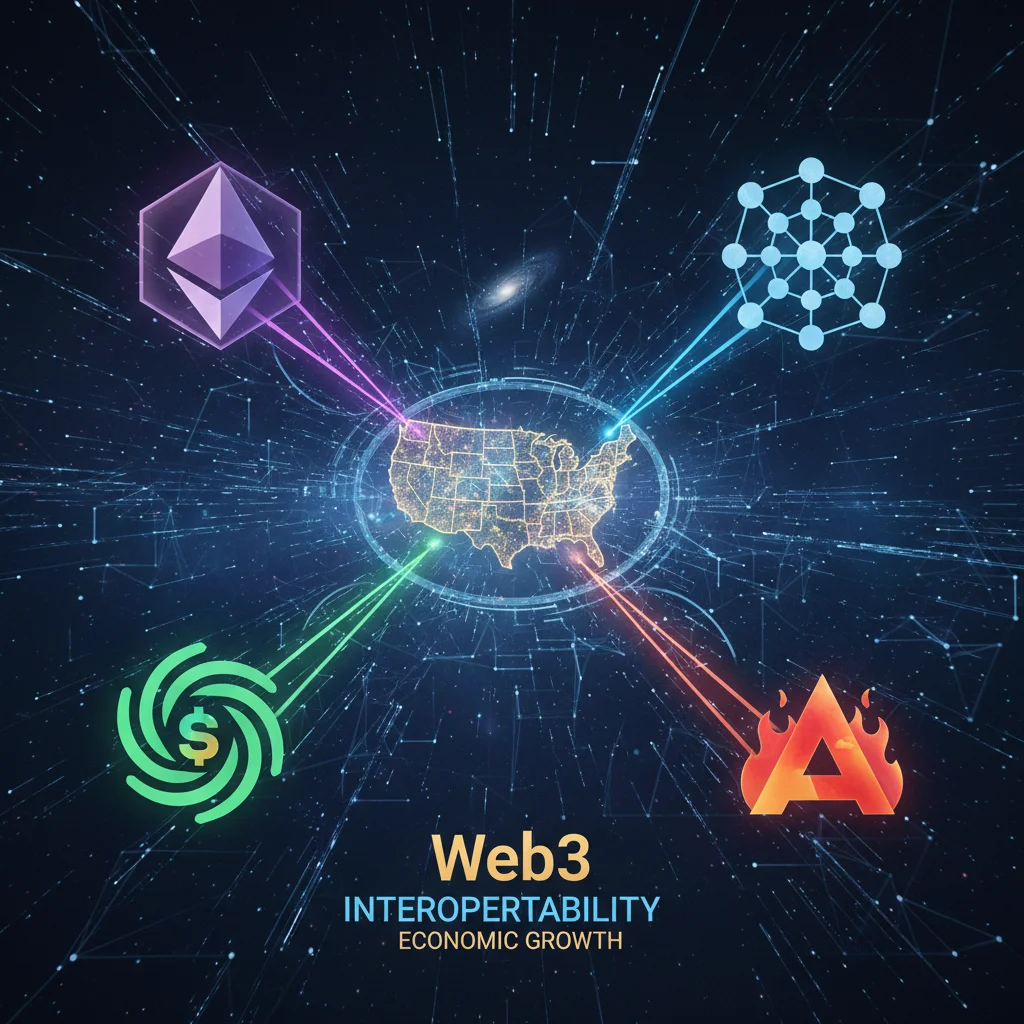
The digital frontier of Web3 is rapidly expanding, promising a decentralized, user-centric internet. However, a significant hurdle remains: the fragmented nature of blockchain ecosystems. As we look towards 2026, the imperative for robust Web3 Interoperability Solutions becomes clearer than ever, especially for fostering seamless growth within the United States. This article delves into the critical need for bridging major blockchains like Ethereum, Solana, Polkadot, and Avalanche, exploring the technologies, challenges, and immense potential this interconnected future holds.
Imagine a digital world where assets, data, and identities flow freely between different blockchain networks, unhindered by technical boundaries. This is the promise of Web3 interoperability – a vision that, if realized, will unlock unprecedented innovation, efficiency, and user adoption. The US, with its vibrant tech landscape and growing regulatory clarity, stands to benefit immensely from such a unified Web3 ecosystem.
The Current State of Blockchain Fragmentation
Today’s blockchain landscape is characterized by a multitude of independent networks, each with its own unique architecture, consensus mechanisms, and programming languages. While this diversity fosters innovation, it also creates silos. A token issued on Ethereum cannot natively be used on Solana, nor can a smart contract on Avalanche directly interact with data on Polkadot without specialized mechanisms. This fragmentation leads to:
- Limited Liquidity: Assets are trapped within their native chains, hindering efficient capital allocation.
- Poor User Experience: Users often need to navigate complex bridging processes, manage multiple wallets, and incur additional fees.
- Hindered Innovation: Developers are restricted to building within single ecosystems, limiting the scope and potential of decentralized applications (dApps).
- Increased Security Risks: Centralized bridges, while functional, introduce single points of failure and attract malicious actors.
These challenges underscore the urgent need for advanced Web3 Interoperability Solutions. Without them, the full potential of Web3 – particularly in a dynamic market like the US – will remain largely untapped.
Defining Web3 Interoperability: More Than Just Bridges
At its core, Web3 interoperability refers to the ability of different blockchain networks to communicate, share data, and transfer assets in a secure and trustless manner. It’s not just about moving tokens from one chain to another; it’s about enabling a seamless exchange of complex information, smart contract calls, and even identity verification across disparate protocols. This goes beyond simple "bridges" and encompasses a broader range of technologies and philosophies.
Key Components of Interoperability:
- Cross-Chain Communication Protocols: These are the underlying frameworks that enable different blockchains to understand each other’s messages.
- Asset Transfer Mechanisms: Solutions for securely moving tokens and NFTs between chains without losing value or authenticity.
- Shared State and Logic: More advanced forms of interoperability that allow smart contracts on one chain to access and react to the state or execution of smart contracts on another.
- Identity and Data Oracles: Ensuring that verifiable credentials and real-world data can be securely brought onto and shared across various blockchains.
Achieving true interoperability is a monumental task, but the progress made in recent years, especially with key players like Ethereum, Solana, Polkadot, and Avalanche, paints an optimistic picture for 2026.
Bridging the Giants: Ethereum, Solana, Polkadot, and Avalanche
These four blockchains represent a significant portion of the Web3 ecosystem, each bringing unique strengths and communities. Their successful interoperability is paramount for a thriving US Web3 landscape.
Ethereum: The Foundation of DeFi and NFTs
As the pioneering smart contract platform, Ethereum remains the bedrock of decentralized finance (DeFi) and non-fungible tokens (NFTs). Its vast developer community and battle-tested security make it indispensable. However, its scalability limitations and high gas fees have led to the rise of alternative Layer 1s and Layer 2 solutions. Interoperability with Ethereum primarily focuses on:
- Layer 2 Scaling Solutions: Rollups (Optimistic and ZK-Rollups) like Arbitrum, Optimism, zkSync, and StarkNet are critical for scaling Ethereum and improving transaction throughput. These are inherently interoperable with Ethereum’s mainnet.
- Cross-Chain Bridges: Solutions like Wormhole, Synapse, and Multichain enable assets to move between Ethereum and other EVM-compatible chains or even non-EVM chains. The focus here is on increasing security and decentralization of these bridges.
- Shared Security Mechanisms: Projects exploring shared security models where other chains can leverage Ethereum’s robust security guarantees.
Solana: Speed and Scalability
Solana has garnered significant attention for its high throughput and low transaction costs, making it a favorite for high-frequency applications, gaming, and certain DeFi protocols. Its unique architecture, including Proof of History, allows for unparalleled speed. Integrating Solana into a broader interoperable Web3 involves:
- Wormhole Bridge: A prominent solution for connecting Solana with Ethereum, BSC, Terra (historically), and other networks, allowing for asset transfers and cross-chain messaging. Enhancements in its security and decentralization are ongoing.
- Native Integrations: Direct integrations with dApps and protocols that wish to leverage Solana’s speed while maintaining connections to other ecosystems.
- Cross-Chain Development Kits (CDKs): Tools that allow developers to build applications that can seamlessly interact with Solana from other chains.
Polkadot: The "Blockchain of Blockchains"
Polkadot was designed from the ground up with interoperability in mind. Its relay chain architecture connects specialized parachains, allowing them to communicate and share security. This inherent design makes Polkadot a powerful hub for Web3 Interoperability Solutions.
- Parachains and XCM (Cross-Consensus Message Format): Parachains are independent blockchains connected to Polkadot’s relay chain, benefiting from its shared security. XCM is Polkadot’s native language for cross-chain communication, enabling complex interactions between parachains and eventually external chains via bridges.
- Bridges to External Networks: Projects like Snowbridge (connecting Polkadot to Ethereum) are crucial for linking Polkadot’s ecosystem with the wider blockchain world.
- Shared Security Model: Polkadot’s unique shared security model, where parachains derive security from the relay chain, offers a robust framework for secure cross-chain operations.
Avalanche: Subnets and Custom Chains
Avalanche distinguishes itself with its subnet architecture, allowing anyone to launch custom, application-specific blockchains that benefit from Avalanche’s core security. This flexibility makes Avalanche a strong contender for enterprise and specialized Web3 applications. Interoperability for Avalanche primarily revolves around:
- Subnet-to-Subnet Communication: As more subnets launch, seamless communication between them becomes vital for a cohesive Avalanche ecosystem.
- Avalanche Bridge (AB): A robust bridge connecting Avalanche’s C-Chain (EVM-compatible) with Ethereum, facilitating asset transfers. Continuous improvements are focused on speed and cost-efficiency.
- Cross-Chain Contract Calls: Enabling smart contracts on Avalanche to initiate actions or retrieve data from other chains, expanding the utility of dApps.
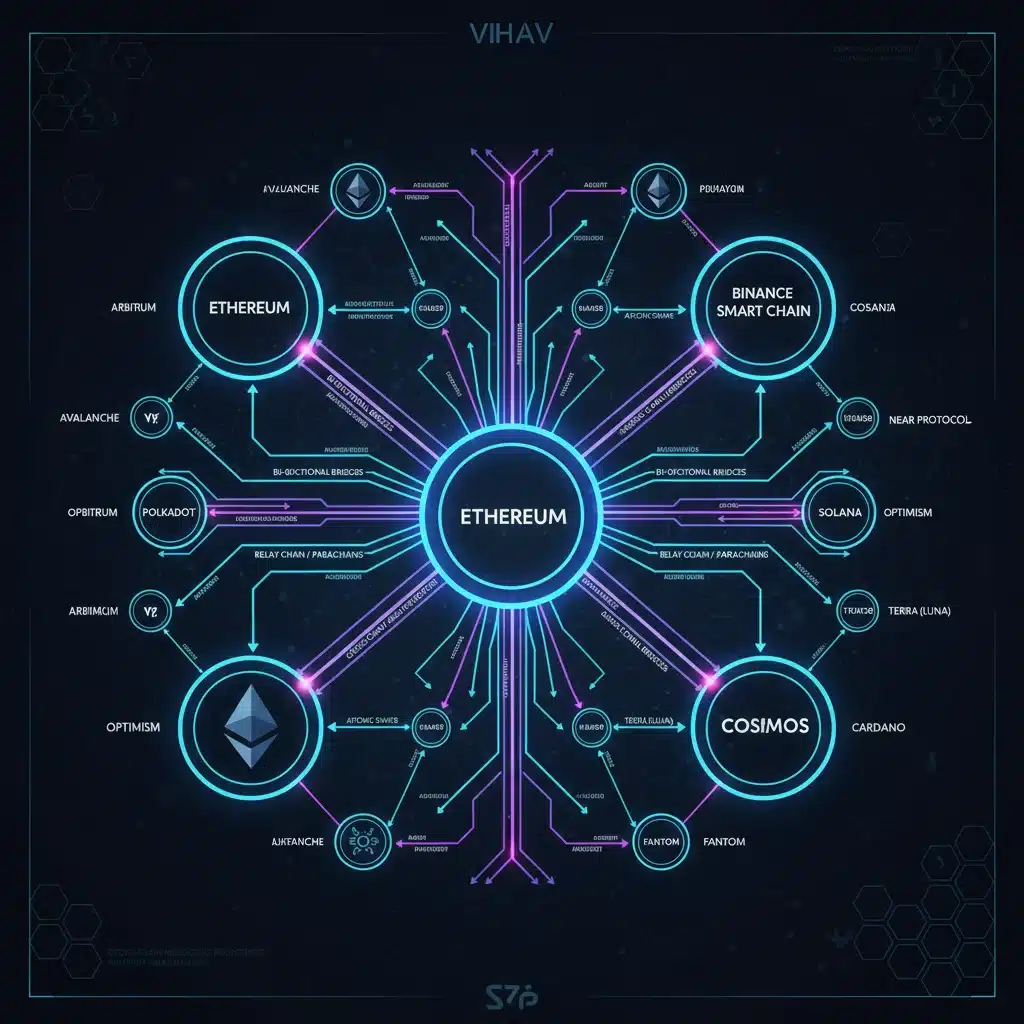
Key Technologies Driving Web3 Interoperability in 2026
The landscape of interoperability is evolving rapidly, with several technologies poised to become central to achieving a truly connected Web3.
1. Atomic Swaps and Hash Time-Locked Contracts (HTLCs)
These allow for the direct exchange of cryptocurrencies between different blockchains without the need for a trusted third party. While effective for simple token swaps, their complexity increases with more intricate transactions. Advances in HTLCs and similar cryptographic primitives will make them more versatile for diverse Web3 Interoperability Solutions.
2. Cross-Chain Messaging Protocols
Beyond simple asset transfers, the ability for chains to send arbitrary messages to each other is crucial. Protocols like LayerZero, Wormhole’s generic message passing, and Polkadot’s XCM are leading the charge. These protocols enable:
- Remote Contract Calls: A dApp on one chain can trigger a function on a smart contract on another chain.
- Shared State Updates: Information about user identities, game states, or governance decisions can be synchronized across networks.
- Unified User Experience: Users can interact with dApps across multiple chains from a single interface.
3. Zero-Knowledge Proofs (ZKPs) for Trustless Bridges
ZKPs are a game-changer for bridge security. By allowing one party to prove to another that a statement is true, without revealing any additional information, ZKPs can enable trustless verification of cross-chain transactions. This significantly reduces the reliance on external validators or multi-sig schemes, making bridges more secure and decentralized. Projects are actively researching and implementing ZKP-based bridges for enhanced Web3 Interoperability Solutions.
4. Decentralized Identity (DID) and Verifiable Credentials (VCs)
Interoperability extends beyond assets and data to include identities. DIDs and VCs allow users to own and control their digital identities, which can then be securely presented and verified across different blockchains and applications. This is vital for a seamless Web3 experience, enabling:
- Cross-Chain KYC/AML: Streamlined regulatory compliance without repetitive verification.
- Reputation Systems: User reputation earned on one platform can be recognized and utilized on another.
- Personalized dApp Experiences: Applications can tailor experiences based on verifiable attributes without accessing raw personal data.
5. Inter-Blockchain Communication (IBC) Protocol
While primarily associated with the Cosmos ecosystem, IBC is a generalized protocol for arbitrary message passing between heterogeneous blockchains. Its modular design and robust security model make it a strong candidate for broader adoption as a foundational layer for Web3 Interoperability Solutions, potentially extending beyond the Cosmos network to connect with other major chains via adaptors.
Challenges on the Path to Seamless Interoperability
Despite the technological advancements, several significant challenges must be addressed for Web3 interoperability to reach its full potential by 2026.
1. Security Risks and Exploits
Cross-chain bridges have been a primary target for hackers, resulting in billions of dollars lost. The complexity of managing state across different chains, cryptographic vulnerabilities, and human errors in smart contract deployment pose ongoing threats. Developing truly secure and resilient Web3 Interoperability Solutions is paramount.
2. Scalability and Efficiency
While interoperability aims to improve efficiency, the mechanisms themselves can introduce overhead. Processing cross-chain transactions, validating proofs, and maintaining synchronized states can be computationally intensive, potentially leading to increased latency and costs if not optimized.
3. Standardization and Protocol Compatibility
The lack of universal standards for blockchain communication makes it challenging to build truly generalized interoperability solutions. Different chains use different data formats, cryptographic primitives, and consensus rules. Efforts towards standardization, similar to how TCP/IP unified the internet, are crucial.
4. Governance and Decentralization
Many existing interoperability solutions rely on centralized or semi-decentralized multisignature committees for validation. Achieving truly decentralized and community-governed interoperability protocols is essential to align with the core ethos of Web3 and reduce single points of failure.
5. Regulatory Uncertainty in the US
The regulatory landscape for crypto and blockchain in the US is still evolving. Interoperability solutions, particularly those involving asset transfers and complex financial instruments, could face scrutiny regarding money laundering, sanctions compliance, and securities laws. Clearer regulatory guidance will be vital for widespread adoption and development.
The US Ecosystem: A Prime Beneficiary of Interoperability
The United States stands to gain significantly from robust Web3 Interoperability Solutions. A seamlessly connected blockchain landscape can foster innovation across various sectors:
- DeFi Innovation: Increased liquidity, capital efficiency, and the ability to create more complex financial products that leverage assets and protocols across multiple chains. This could solidify the US’s position as a global DeFi hub.
- Enterprise Adoption: Corporations can build private or consortium blockchains that seamlessly interact with public networks for supply chain management, digital identity, and tokenized assets, without being locked into a single vendor.
- Gaming and Metaverse: Cross-chain asset ownership (NFTs) and shared game states will enable truly immersive and persistent virtual worlds where digital assets have utility across different platforms.
- Data Management and AI: Secure and verifiable data sharing across different blockchain networks can fuel advancements in AI and data analytics, particularly in sensitive sectors like healthcare and finance.
- Government and Public Services: Potential for more efficient, transparent, and secure digital public services, from verifiable credentials to voting systems.
The ability to fluidly move value and data will attract more developers, entrepreneurs, and investors to the US Web3 space, driving job creation and economic growth.

Future Outlook: 2026 and Beyond
By 2026, we anticipate a significant maturation of Web3 Interoperability Solutions. While a single "internet of blockchains" might still be a distant goal, we expect:
- More Robust and Secure Bridges: Enhanced security models, possibly leveraging ZKPs and decentralized validator sets, will reduce the risk of exploits.
- Widespread Adoption of Cross-Chain Messaging: Protocols enabling generalized message passing will become standard, allowing for more complex dApp interactions across chains.
- Emergence of "Super-chains" or Aggregators: Platforms that abstract away the underlying blockchain complexities, allowing users to interact with a unified interface that routes transactions across various networks.
- Improved Developer Tooling: Easier-to-use SDKs and APIs will empower developers to build cross-chain applications with less friction.
- Regulatory Clarity: The US regulatory environment will likely provide more definitive frameworks, fostering confidence and enabling institutional participation in interoperable Web3.
The convergence of technological innovation and clearer regulatory landscapes will create a fertile ground for Web3 to flourish. The US, with its strong emphasis on innovation and robust capital markets, is uniquely positioned to lead this charge, provided it embraces and actively supports the development of these crucial interoperability layers.
Conclusion: Towards a Unified Web3 Future
The journey towards a truly interoperable Web3 is complex and multifaceted, but the rewards are immense. By 2026, the progress in Web3 Interoperability Solutions, particularly in bridging major blockchains like Ethereum, Solana, Polkadot, and Avalanche, will be instrumental in unlocking the next wave of innovation and growth within the US ecosystem. From enhancing DeFi liquidity to enabling seamless metaverse experiences and driving enterprise adoption, interoperability is the key to a more connected, efficient, and user-friendly decentralized internet.
The challenges of security, scalability, and standardization are significant, but ongoing research and collaborative development efforts are steadily overcoming them. As these solutions mature, we will witness a paradigm shift, moving from a fragmented collection of blockchains to a cohesive, interconnected Web3 that delivers on its promise of a decentralized and open digital future. The US has a critical role to play in championing this vision, ensuring that its regulatory and technological frameworks support the evolution towards a seamlessly interoperable Web3 landscape.