Solana Ecosystem Updates 2026: U.S. Investor’s Guide
Unpacking the Latest Solana Ecosystem Updates: What U.S. Investors Need to Know for 2026
The cryptocurrency landscape is ever-evolving, and few platforms exemplify this dynamism more than Solana. As we approach 2026, U.S. investors are keenly observing the Solana ecosystem, seeking to understand its trajectory, potential, and the myriad of opportunities it presents. Solana, often lauded for its high throughput and low transaction costs, has carved a significant niche in the blockchain space. This comprehensive guide will delve deep into the critical Solana ecosystem updates, providing U.S. investors with the knowledge necessary to navigate this exciting, yet complex, environment.
Understanding the Solana ecosystem in 2026 requires a multi-faceted approach, encompassing technological advancements, the burgeoning decentralized finance (DeFi) and non-fungible token (NFT) sectors, and the ever-present shadow of regulatory developments, particularly within the United States. Our aim is to equip you with a holistic perspective, enabling informed investment decisions.
The Technological Backbone: Solana’s Core Advancements for 2026
At its heart, Solana’s appeal lies in its innovative technological architecture. The platform’s ability to process tens of thousands of transactions per second (TPS) while maintaining incredibly low fees is a testament to its unique consensus mechanism and design. For U.S. investors, understanding these core advancements is paramount to grasping the network’s long-term viability and competitive edge in the crowded blockchain market.
Proof-of-History (PoH) and Beyond
Solana’s Proof-of-History (PoH), a cryptographic clock that orders transactions, remains a cornerstone of its scalability. However, as we look to 2026, the Solana ecosystem is not resting on its laurels. Developers are continuously refining and optimizing the underlying protocol. Expect significant improvements in:
- Network Stability and Uptime: Past incidents of network outages have been a concern. Significant investments and architectural changes are being implemented to enhance resilience, making the Solana ecosystem more robust and reliable for critical applications. This includes advanced sharding solutions and improved validator infrastructure.
- Transaction Finality and Latency: While already fast, further optimizations in transaction finality and reduced latency are on the roadmap. This will be crucial for real-time applications, gaming, and high-frequency trading platforms built on Solana.
- Interoperability Solutions: The future of blockchain is undeniably multi-chain. The Solana ecosystem is actively pursuing enhanced interoperability solutions, allowing seamless communication and asset transfer with other major blockchains. This includes advancements in bridges and cross-chain messaging protocols, expanding Solana’s reach and utility.
- Developer Tooling and Experience: A thriving ecosystem relies on a strong developer community. Solana is continually investing in improving its developer tools, SDKs, and documentation, making it easier for new projects to launch and scale on the platform. This focus on developer experience is a key indicator of sustainable growth for the Solana ecosystem.
Firedancer: A Game-Changer for Solana’s Scalability
One of the most anticipated technological developments within the Solana ecosystem is the integration of Firedancer. Developed by Jump Crypto, Firedancer is a new validator client designed to significantly boost Solana’s transaction processing capabilities and overall network efficiency. For U.S. investors, Firedancer represents a critical upgrade that could solidify Solana’s position as a leading high-performance blockchain. Its potential impact includes:
- Exponential Transaction Throughput: Firedancer aims to dramatically increase the number of transactions Solana can handle per second, potentially reaching millions. This would unlock new possibilities for enterprise-level applications and mass adoption.
- Enhanced Decentralization and Resilience: By offering an alternative validator client, Firedancer contributes to the decentralization of the network. If one client experiences issues, others can continue to operate, improving overall network resilience.
- Reduced Hardware Requirements for Validators: Optimizations in Firedancer could potentially lower the hardware requirements for running a Solana validator, encouraging broader participation and further decentralization.
The successful deployment and adoption of Firedancer will be a key milestone for the Solana ecosystem in 2026, and U.S. investors should closely monitor its progress.
DeFi on Solana: A Maturing Landscape for U.S. Investors
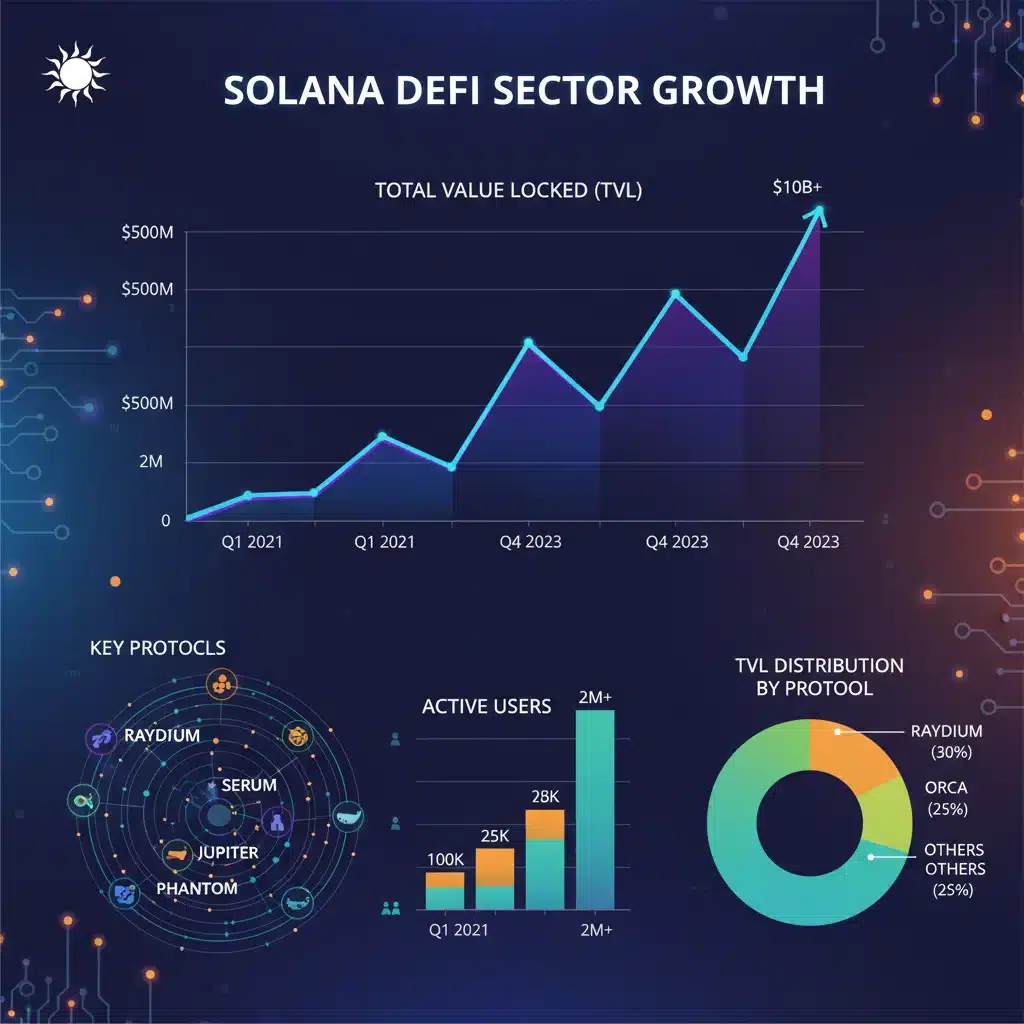
Decentralized Finance (DeFi) has been a significant driver of blockchain adoption, and the Solana ecosystem has emerged as a formidable player in this space. Its speed and low costs make it an attractive platform for a wide array of DeFi applications, from lending and borrowing to decentralized exchanges (DEXs) and stablecoins. For U.S. investors, the DeFi landscape on Solana presents both immense opportunities and unique risks.
Key DeFi Protocols and Growth Areas
In 2026, expect continued innovation and growth across various DeFi sub-sectors within the Solana ecosystem:
- Decentralized Exchanges (DEXs): Platforms like Raydium, Orca, and Serum (reimagined) continue to evolve, offering improved liquidity, advanced trading features, and seamless user experiences. The focus will be on deeper liquidity pools and competitive trading fees.
- Lending and Borrowing Protocols: Solend, Marginfi, and similar platforms will likely see increased adoption as the demand for decentralized credit and leverage grows. New features such as isolated lending pools and enhanced risk management tools are anticipated.
- Liquid Staking Derivatives (LSDs): LSDs allow users to stake their SOL tokens while retaining liquidity, enabling them to participate in other DeFi activities. This sector is expected to expand significantly, offering more options and better yields.
- Real-World Assets (RWAs) Tokenization: The tokenization of real-world assets on Solana could be a major trend by 2026. This includes everything from real estate and commodities to intellectual property, bridging traditional finance with the blockchain.
- Yield Aggregators and Portfolio Management Tools: As the Solana ecosystem matures, more sophisticated tools for yield optimization and portfolio management will emerge, catering to both retail and institutional investors.
Challenges and Opportunities in Solana DeFi for U.S. Investors
While the prospects are bright, U.S. investors must also consider the inherent challenges of the Solana DeFi space:
- Smart Contract Risk: Despite rigorous audits, smart contract vulnerabilities remain a concern across all blockchain platforms. Diversification and thorough due diligence are crucial.
- Impermanent Loss: For those providing liquidity to DEXs, impermanent loss is a constant risk, especially in volatile markets. Understanding and mitigating this risk is essential.
- Regulatory Uncertainty: The regulatory environment for DeFi in the U.S. is still evolving. Upcoming regulations could impact how U.S. investors interact with DeFi protocols on Solana.
Despite these challenges, the Solana ecosystem’s commitment to innovation and scalability positions its DeFi sector for continued growth, offering U.S. investors diverse opportunities for yield generation and capital appreciation.
NFTs and Gaming on Solana: A Cultural and Economic Powerhouse
The Solana ecosystem has also become a vibrant hub for Non-Fungible Tokens (NFTs) and blockchain gaming. Its low transaction costs and high speed make it an ideal platform for minting, trading, and interacting with digital collectibles and immersive gaming experiences. For U.S. investors, this sector represents a significant cultural and economic shift, with potential for substantial returns.
The Evolution of NFTs on Solana
By 2026, the Solana NFT landscape is expected to evolve beyond simple profile picture (PFP) collections:
- Utility-Driven NFTs: NFTs with tangible utility, such as access passes to exclusive communities, in-game assets, and fractionalized real-world assets, will gain prominence.
- Dynamic NFTs: NFTs that can change based on external data or owner interactions will become more common, adding a new layer of complexity and engagement.
- Institutional Adoption of NFTs: Major brands and corporations are increasingly exploring NFTs for loyalty programs, digital merchandise, and brand engagement. Solana’s efficiency makes it an attractive platform for these large-scale initiatives.
- Creator Economy Integration: The Solana ecosystem will likely see deeper integration with the creator economy, empowering artists, musicians, and content creators to monetize their work directly through NFTs.
Blockchain Gaming: A New Frontier
Solana’s technical capabilities are particularly well-suited for blockchain gaming, where high transaction throughput and low latency are critical. In 2026, expect to see:
- More Sophisticated Play-to-Earn (P2E) Models: The P2E model will continue to mature, with a greater focus on sustainable in-game economies and engaging gameplay.
- AAA-Quality Blockchain Games: As the technology improves, more traditional game developers will enter the blockchain space, bringing higher production values and more complex gaming experiences to Solana.
- Interoperable Game Assets: The ability to use in-game assets across different games and metaverses will become a key feature, enhancing the value proposition for gamers and investors alike.
U.S. investors looking at the NFT and gaming sectors within the Solana ecosystem should focus on projects with strong communities, clear utility, and sustainable economic models.
Regulatory Landscape in the U.S.: Navigating the Legal Currents for Solana
Perhaps the most significant factor influencing U.S. investor participation in the Solana ecosystem by 2026 is the evolving regulatory landscape. Clarity from regulatory bodies like the SEC, CFTC, and FinCEN will profoundly impact how Solana-based assets are classified, traded, and taxed. For U.S. investors, staying abreast of these developments is not merely advisable, but essential.
Key Regulatory Considerations for Solana in the U.S.
Several areas of regulation will be particularly pertinent:
- Asset Classification: The ongoing debate over whether cryptocurrencies, including SOL and various tokens within the Solana ecosystem, should be classified as securities or commodities will have far-reaching implications. A clear classification would provide much-needed certainty for exchanges and investors.
- Stablecoin Regulation: Stablecoins play a crucial role in DeFi. The U.S. is moving towards comprehensive regulation for stablecoin issuers, which will affect how stablecoins operate on Solana and their accessibility to U.S. users.
- DeFi and KYC/AML: The application of Know Your Customer (KYC) and Anti-Money Laundering (AML) regulations to decentralized protocols remains a complex issue. U.S. regulators are likely to push for greater compliance within the DeFi space, which could lead to changes in how certain Solana DeFi protocols operate for U.S. users.
- Taxation of Digital Assets: The IRS continues to refine its guidance on the taxation of cryptocurrencies and NFTs. U.S. investors must understand their tax obligations for capital gains, income from staking and DeFi activities, and NFT transactions within the Solana ecosystem.
- Consumer Protection: Regulators are increasingly focused on consumer protection in the crypto space. This could lead to new requirements for disclosures, risk warnings, and investor education for platforms and projects operating on Solana.
Potential Scenarios and Their Impact on Solana
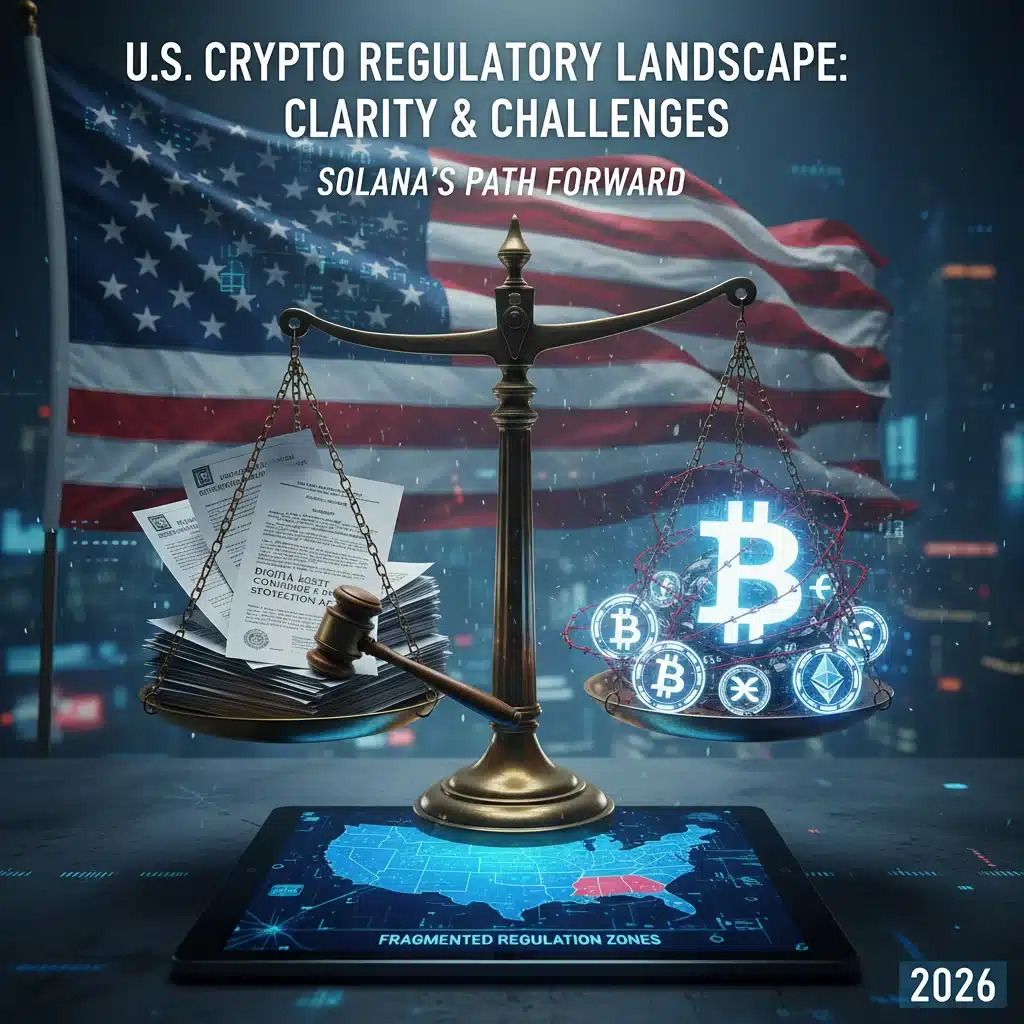
- Favorable Regulatory Framework: Should the U.S. adopt a clear and supportive regulatory framework, it could unlock a wave of institutional investment and foster mainstream adoption of the Solana ecosystem. This would legitimize the space and reduce perceived risks.
- Restrictive Regulations: Conversely, overly restrictive regulations could stifle innovation and limit U.S. investor participation in certain aspects of the Solana ecosystem, potentially pushing activity offshore.
- Fragmented Regulation: A patchwork of state-by-state regulations could create complexity and compliance challenges for projects and investors alike.
U.S. investors should closely follow legislative developments and engage with reputable legal and financial advisors to navigate the evolving regulatory currents impacting the Solana ecosystem in 2026.
Investment Opportunities and Risks in the Solana Ecosystem for U.S. Investors
The Solana ecosystem, with its rapid growth and technological prowess, presents a compelling investment thesis for U.S. investors. However, like all emerging technologies, it comes with its own set of risks. A balanced perspective is crucial for making informed decisions.
Opportunities
- Native Token (SOL) Appreciation: As the Solana ecosystem expands and adoption grows, the demand for the native SOL token (used for transaction fees, staking, and governance) could increase, potentially leading to price appreciation.
- DeFi Protocol Exposure: Investing in promising DeFi protocols built on Solana can offer opportunities for high yields through lending, liquidity provision, and staking.
- NFT Market Participation: Strategic investments in high-potential NFT collections or platforms within the Solana ecosystem could yield significant returns, especially as the utility and institutional adoption of NFTs grow.
- Ecosystem Projects: Beyond SOL, there are numerous innovative projects building on Solana, ranging from gaming and metaverse initiatives to decentralized social media and enterprise solutions. Early investment in these projects could offer substantial upside.
- Developer Activity and Innovation: A vibrant developer community signals a healthy and growing ecosystem. Increased developer activity on Solana is a strong indicator of future innovation and value creation.
Risks
- Market Volatility: The cryptocurrency market is inherently volatile. Prices can fluctuate dramatically, and investors should be prepared for significant drawdowns.
- Technological Risks: While Solana is robust, network outages, bugs, or security vulnerabilities remain a possibility, which could impact user trust and asset values.
- Competition: Solana faces stiff competition from other Layer 1 blockchains like Ethereum, Avalanche, and Polygon, each vying for market share and developer talent.
- Regulatory Headwinds: As discussed, unfavorable regulatory developments in the U.S. could significantly impact the Solana ecosystem and investor access.
- Liquidity Risks: Some smaller projects within the Solana ecosystem may suffer from low liquidity, making it difficult to buy or sell assets without impacting their price.
U.S. investors should conduct thorough due diligence, understand their risk tolerance, and consider diversifying their portfolios when investing in the Solana ecosystem.
The Road Ahead: Solana’s Vision for 2026 and Beyond
The Solana ecosystem is not just focused on incremental improvements; it has a bold vision for the future. By 2026, the platform aims to be a cornerstone of Web3, powering everything from global payment systems to decentralized social networks and immersive metaverse experiences. This ambitious outlook is underpinned by a continuous drive for innovation, scalability, and user adoption.
Key Pillars of Solana’s Future Growth
- Mass Adoption and User Experience: A primary goal for Solana is to onboard millions of new users into Web3. This involves simplifying user interfaces, improving wallet experiences, and making blockchain technology seamless and invisible to the average consumer.
- Enterprise Solutions: Solana is actively pursuing partnerships with enterprises to leverage its high-performance blockchain for supply chain management, data verification, and other business applications.
- Sustainable Economic Model: The Solana ecosystem is committed to fostering a sustainable economic model that rewards validators, developers, and users, ensuring long-term health and growth.
- Global Reach and Accessibility: While this guide focuses on U.S. investors, Solana’s vision is global. Efforts to expand its reach in emerging markets and provide accessible financial services to the unbanked will continue.
Conclusion: Solana Ecosystem 2026 – A Landscape of Opportunity and Evolution
As U.S. investors look towards 2026, the Solana ecosystem stands out as a dynamic and rapidly evolving blockchain platform. Its technological advancements, particularly with developments like Firedancer, promise unprecedented scalability and performance. The burgeoning DeFi and NFT sectors offer diverse investment opportunities, while the evolving regulatory landscape demands careful attention and strategic planning.
Investing in the Solana ecosystem requires a keen understanding of both its immense potential and inherent risks. By staying informed about technological upgrades, monitoring regulatory shifts, and conducting thorough due diligence on individual projects, U.S. investors can position themselves to capitalize on the growth of this innovative blockchain. The journey with Solana is one of continuous learning and adaptation, but for those willing to engage, the rewards in 2026 and beyond could be substantial. The Solana ecosystem is not just building a blockchain; it’s building the future of decentralized applications and finance.