Future-Proofing Your Portfolio: Top Altcoins for 2026 Stability
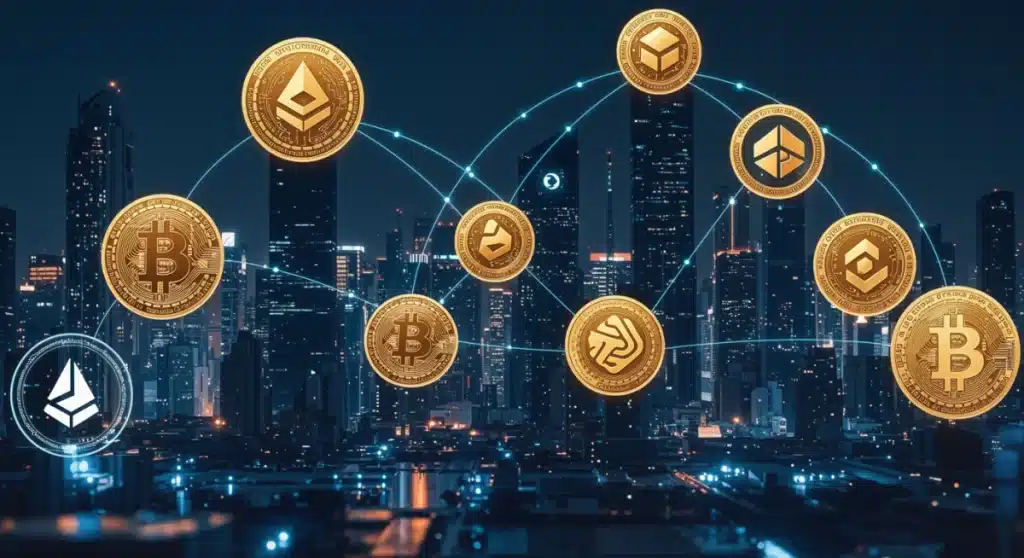
Investing in altcoins with strong decentralized governance is crucial for long-term portfolio stability and growth, offering resilience against market volatility and promoting community-driven development in the evolving crypto landscape.
As the cryptocurrency market continues its dynamic evolution, smart investors are seeking more than just speculative gains; they’re looking for projects with intrinsic value and sustainable growth. This focus leads us to explore how to best future-proof your portfolio, specifically by examining altcoins with strong decentralized governance models for long-term stability in 2026. Understanding these foundational elements is key to navigating the complexities of the digital asset space and securing your financial future.
The imperative of decentralized governance in altcoins
Decentralized governance stands as a cornerstone of the blockchain ethos, representing a fundamental shift from traditional, centralized decision-making structures. In the realm of altcoins, this model empowers token holders to directly influence a project’s direction, protocol upgrades, and treasury management. This collective ownership fosters transparency, reduces single points of failure, and enhances the overall resilience of a network.
The significance of decentralized governance cannot be overstated, especially when considering long-term investment horizons. Projects with robust governance frameworks are inherently more adaptable and sustainable, as they can evolve in response to community needs and market changes without relying on a single entity. This democratic approach ensures that development aligns with the best interests of its users and stakeholders, cultivating a vibrant and engaged ecosystem.
Why governance matters for stability
- Community-driven evolution: Decentralized governance allows for continuous improvement and innovation, as proposals are crowdsourced and vetted by the community.
- Reduced censorship risk: No single authority can unilaterally alter the protocol or censor transactions, enhancing security and trust.
- Alignment of incentives: Token holders are motivated to act in the best interest of the project, as their investments are directly tied to its success.
- Transparency and auditability: All governance decisions and treasury movements are typically recorded on-chain, providing full transparency.
Ultimately, a strong decentralized governance model transforms an altcoin from a mere digital asset into a self-sustaining, community-led organization, making it a more attractive and stable long-term investment. This framework is vital for building trust and ensuring that projects can withstand future challenges and opportunities in the crypto space.
Evaluating governance models: what to look for
When assessing altcoins for their decentralized governance strengths, several critical factors come into play. It’s not enough for a project to simply claim decentralization; the underlying mechanisms and community engagement are what truly define a robust governance model. Investors should delve into the specifics of how decisions are made, who holds power, and the historical effectiveness of the system.
A truly decentralized governance system should exhibit a high degree of participation, transparent voting processes, and clear pathways for proposing and implementing changes. The distribution of voting power is particularly crucial; a handful of large holders dominating decisions can undermine the very essence of decentralization. Therefore, understanding the tokenomics and how governance tokens are allocated is paramount.
Key indicators of strong governance
- Token distribution: A broad distribution of governance tokens prevents centralization of power.
- Active participation: A high percentage of token holders actively engaging in voting and proposal submission indicates a healthy, engaged community.
- Transparent proposal process: Clear, publicly accessible procedures for proposing and discussing changes.
- On-chain voting: Decisions are recorded and executed on the blockchain, ensuring immutability and transparency.
- Treasury management: A decentralized treasury controlled by the community, with transparent spending proposals.
By meticulously evaluating these aspects, investors can discern which altcoins truly embody decentralized governance, thereby offering greater long-term stability and resilience against market manipulation or single-point failures. This due diligence is essential for constructing a robust, future-proof portfolio.
Altcoin spotlight: MakerDAO (MKR) and its governance
MakerDAO stands out as a pioneering force in decentralized finance (DeFi), renowned for its stablecoin DAI and its sophisticated governance mechanism. The MKR token holders are the backbone of the Maker Protocol, responsible for managing the stability of DAI, adjusting risk parameters, and guiding the overall evolution of the ecosystem. This hands-on approach to governance has cemented MakerDAO’s reputation as a highly secure and community-driven project.
The governance process in MakerDAO is comprehensive, involving several stages from proposal submission to executive voting. This multi-layered system ensures that decisions are thoroughly debated and scrutinized before implementation, prioritizing the long-term health and stability of the protocol. Such a rigorous framework makes MakerDAO an exemplary model for decentralized governance in the altcoin space.
MakerDAO’s governance strengths
- Risk parameter adjustments: MKR holders vote on crucial parameters like interest rates and collateralization ratios for DAI, directly impacting its stability.
- Protocol upgrades: All major changes to the Maker Protocol require approval from MKR token holders, ensuring community consensus.
- Emergency shutdown mechanism: A unique feature allowing MKR holders to activate an emergency shutdown to protect the system in extreme circumstances.
- Decentralized oracle management: Governance oversees the network of decentralized oracles that feed price data into the system, critical for DAI’s peg.
The active and engaged community surrounding MakerDAO, coupled with its transparent and robust governance structure, positions MKR as a strong contender for long-term portfolio stability. Its proven track record in navigating market volatility and adapting to new challenges underscores the power of true decentralized control.
Altcoin spotlight: Aave (AAVE) and its community-led future
Aave has emerged as a leading decentralized lending and borrowing protocol, revolutionizing how users interact with financial services in Web3. Its governance model, powered by the AAVE token, empowers community members to shape the protocol’s future. This includes voting on new asset listings, risk parameters, fee structures, and protocol upgrades, ensuring that Aave remains responsive to the needs of its diverse user base.
The Aave governance framework is designed for efficiency and broad participation, allowing both large and small token holders to contribute to the decision-making process. The continuous evolution of the protocol, driven by community proposals and votes, is a testament to the strength and adaptability of its decentralized governance. This forward-thinking approach positions Aave as a project with significant long-term potential.
Aave’s governance advantages
- Protocol parameter adjustments: AAVE holders vote on critical operational parameters, such as loan-to-value ratios and liquidation thresholds.
- New asset listings: The community decides which new cryptocurrencies can be used as collateral or borrowed on the platform, expanding its utility.
- Fee structure modifications: Changes to lending and borrowing fees are determined by governance, ensuring fairness and competitiveness.
- Treasury management: Community proposals dictate how the protocol’s treasury funds are utilized for development and ecosystem growth.
Aave’s commitment to decentralized governance fosters a resilient and innovative ecosystem, where collective intelligence drives its progress. This community-led development model makes AAVE an attractive option for investors seeking long-term stability and a stake in the future of decentralized finance. The protocol’s ability to adapt and innovate through governance is a key strength.
Altcoin spotlight: Compound (COMP) and its governance token
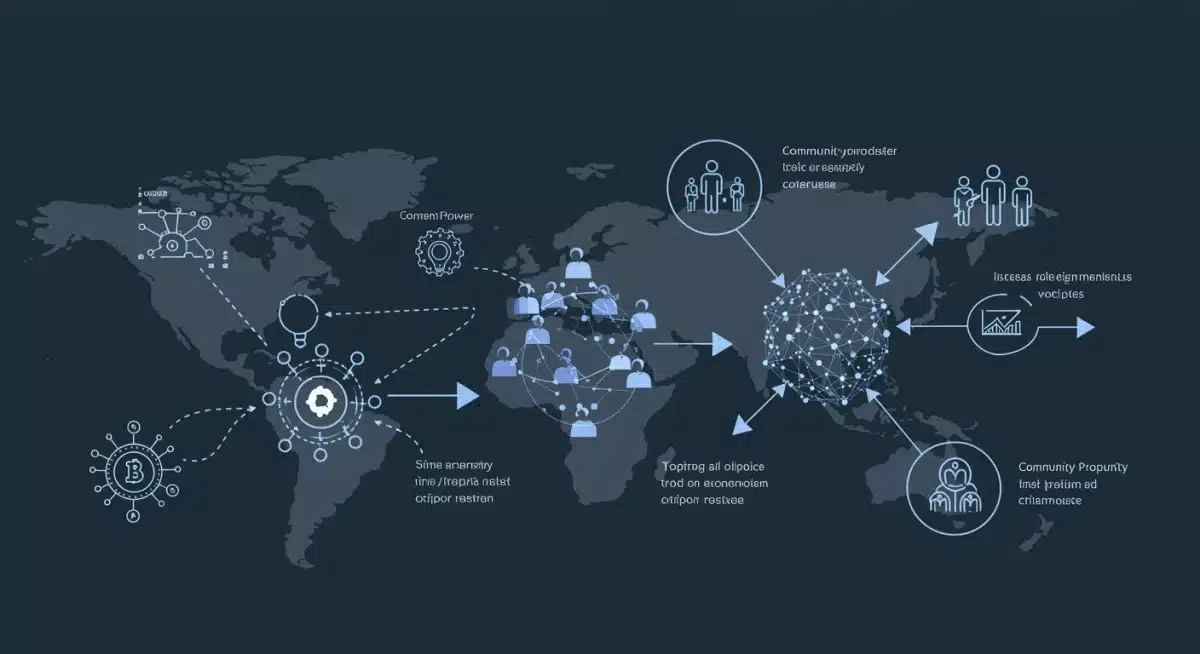
Compound is another foundational lending protocol in the DeFi space, distinguished by its unique approach to decentralized governance through the COMP token. COMP holders possess the exclusive right to propose, debate, and vote on all significant changes to the Compound protocol. This includes everything from supported assets and collateral factors to interest rate models and new system features. The active participation of its community is central to Compound’s ongoing success and security.
The governance process in Compound is streamlined yet robust, allowing for efficient decision-making while maintaining decentralization. This balance ensures that the protocol can evolve effectively without succumbing to the pitfalls of centralized control. The transparent nature of its on-chain governance further builds trust and confidence among its users and investors.
Compound’s governance highlights
- Protocol upgrades: Any enhancements or modifications to the Compound protocol are subject to a community vote, ensuring broad consensus.
- Supported assets: COMP holders decide which new cryptocurrencies can be integrated into the platform for lending and borrowing.
- Risk management: Adjustments to risk parameters, such as liquidation incentives and reserve factors, are governed by the community.
- Grant proposals: The allocation of funds for ecosystem development and community initiatives is managed through governance.
The strong emphasis on community ownership and control within Compound’s governance model makes COMP a compelling asset for those prioritizing long-term stability and decentralized decision-making. Its proven track record in secure and reliable lending operations, guided by its token holders, solidifies its position as a key player in the DeFi ecosystem.
Altcoin spotlight: Uniswap (UNI) for decentralized exchange governance
Uniswap stands as the undisputed leader in decentralized exchange (DEX) volume, pioneering automated market maker (AMM) technology. Its governance token, UNI, grants holders significant power over the protocol’s future. This includes directing the use of the Uniswap treasury, influencing protocol fees, and voting on major upgrades to the platform. UNI’s governance model is designed to foster a truly community-led and developer-friendly ecosystem.
The decentralized nature of Uniswap’s governance ensures that the platform remains censorship-resistant and evolves in a manner that benefits its users and liquidity providers. The ability for token holders to propose and implement changes directly on-chain is a powerful demonstration of true decentralization, making Uniswap a robust choice for long-term investment. Its commitment to open-source development and community input is a key differentiator.
Uniswap’s governance strengths
- Treasury allocation: UNI holders decide how the substantial Uniswap treasury is utilized, funding grants, development, and community initiatives.
- Protocol fee adjustments: The community can vote on changes to the trading fees, balancing revenue generation with user incentives.
- Smart contract upgrades: Major updates to the Uniswap smart contracts require governance approval, ensuring security and consensus.
- Community grants: UNI holders can fund projects and initiatives that contribute to the growth and decentralization of the Uniswap ecosystem.
The active engagement of the Uniswap community, combined with a transparent and effective governance framework, positions UNI as a strong asset for a future-proof portfolio. Its role as a cornerstone of the DeFi landscape, continually refined by its token holders, provides a compelling case for its long-term stability and growth potential.
Altcoin spotlight: Arbitrum (ARB) and Optimism (OP) for layer 2 governance
Layer 2 scaling solutions like Arbitrum (ARB) and Optimism (OP) are crucial for the scalability and efficiency of the Ethereum ecosystem. Both projects have embraced decentralized governance to guide their development and ensure their long-term viability. Their respective governance tokens, ARB and OP, empower their communities to oversee protocol upgrades, treasury management, and ecosystem growth initiatives.
The governance models of Arbitrum and Optimism are particularly important given their role in enhancing transaction speed and reducing costs on Ethereum. Decentralized control ensures that these vital infrastructure components remain neutral, censorship-resistant, and responsive to the needs of the broader blockchain community. This commitment to decentralization is a strong indicator of their potential for sustained stability and growth.
Layer 2 governance benefits
- Protocol development: Token holders vote on technical upgrades and new features for their respective layer 2 networks, optimizing performance.
- Grant programs: Governance oversees the allocation of funds to developers and projects building on Arbitrum and Optimism, fostering innovation.
- Fee structure adjustments: Community input helps determine the economic parameters of the layer 2s, balancing sustainability with user affordability.
- Interoperability decisions: Governance can guide decisions related to bridging and interoperability with other blockchain networks.
Both ARB and OP represent compelling investment opportunities for those looking to diversify into projects that are critical for the future scalability of Web3. Their decentralized governance models ensure that their development is aligned with community interests, providing a strong foundation for long-term stability and growth in the rapidly evolving blockchain landscape.
| Key Concept | Brief Description |
|---|---|
| Decentralized Governance | Community-driven decision-making in crypto projects, enhancing transparency and resilience. |
| Long-Term Stability | Achieved through robust governance, adaptability, and community alignment, crucial for future-proofing portfolios. |
| Key Altcoin Examples | MakerDAO, Aave, Compound, Uniswap, Arbitrum, Optimism demonstrate strong governance models. |
| Investment Strategy | Focus on projects with active participation, transparent processes, and broad token distribution. |
Frequently asked questions about decentralized governance
Decentralized governance refers to a system where decision-making power over a blockchain project is distributed among its token holders, rather than concentrated in a central authority. Participants propose, debate, and vote on changes, ensuring the protocol evolves in a community-driven manner, enhancing transparency and resistance to censorship.
Strong decentralized governance ensures a project’s adaptability and resilience. By allowing the community to steer development and manage risks, it reduces reliance on a single team, fosters alignment of incentives, and promotes continuous innovation, all of which contribute significantly to long-term stability and growth.
To evaluate, look for broad token distribution, high voter participation, transparent proposal processes, and on-chain voting. Investigate the project’s history of governance decisions, treasury management, and how effectively the community has addressed challenges and implemented upgrades. Active, informed communities are key.
Yes, potential risks include low voter turnout, which can lead to decisions by a small minority, or the concentration of voting power among large token holders (whale dominance). Additionally, complex proposals might be difficult for all community members to fully understand, leading to uninformed votes. These are ongoing challenges.
Leading altcoins with strong decentralized governance for 2026 include MakerDAO (MKR), Aave (AAVE), Compound (COMP), Uniswap (UNI), Arbitrum (ARB), and Optimism (OP). These projects demonstrate robust, community-driven frameworks that are crucial for their sustained growth and stability in the evolving crypto landscape.
Conclusion
In the dynamic and often unpredictable world of cryptocurrencies, building a resilient portfolio demands a strategic approach that extends beyond mere speculation. Focusing on altcoins with strong decentralized governance models offers a pathway to long-term stability and sustainable growth. Projects like MakerDAO, Aave, Compound, Uniswap, Arbitrum, and Optimism exemplify the power of community-driven development, transparency, and adaptability. By empowering their token holders to shape their futures, these altcoins are not only fostering robust ecosystems but also providing investors with a greater sense of security and a stake in the decentralized future. As we look towards 2026 and beyond, prioritizing decentralized governance will undoubtedly be a cornerstone of intelligent crypto investing.