Decoding EVM Upgrades: 3 Critical Smart Contract Security Patches for 2026 Mandates in the U.S.
The decentralized landscape is evolving at an unprecedented pace, and with this rapid innovation comes the critical need for robust security. As we inch closer to 2026, the United States is poised to introduce significant mandates aimed at bolstering the security of blockchain-based applications, particularly those operating on the Ethereum Virtual Machine (EVM). These upcoming regulations will place a strong emphasis on addressing common yet devastating vulnerabilities in smart contracts. For developers, project managers, and investors in the DeFi space, understanding and implementing these necessary EVM security patches is not just good practice; it will soon be a legal imperative.
The EVM, as the computational engine behind Ethereum and numerous other blockchains, is the bedrock upon which a vast ecosystem of smart contracts and decentralized applications (dApps) is built. Its power lies in its Turing completeness, allowing for complex logic and interactions. However, this complexity also introduces potential attack vectors if not meticulously secured. The 2026 mandates are a proactive step to mitigate systemic risks, moving the industry towards a more secure and trustworthy future. This comprehensive guide will delve into three critical smart contract security patches that will be central to these mandates: reentrancy attack prevention, robust access control implementation, and integer overflow/underflow protection. We will explore what these vulnerabilities entail, their historical impact, and the practical steps required to ensure compliance and safeguard your digital assets.
The Imperative for EVM Security Patches: Understanding the 2026 Mandates
The blockchain industry, while revolutionary, has been plagued by high-profile security breaches, often resulting in the loss of millions, if not billions, of dollars. These incidents have highlighted a significant gap in security standards and practices across the decentralized ecosystem. Regulators, recognizing the growing importance and integration of blockchain technology into the broader financial and technological infrastructure, are now stepping in to establish baseline security requirements. The 2026 mandates in the U.S. are expected to be a landmark effort to standardize and enforce higher security protocols for smart contracts, particularly those interacting with significant financial value or sensitive data.
These mandates will likely draw inspiration from existing cybersecurity frameworks but will be tailored to the unique challenges of blockchain and smart contract development. The focus will be on preventing known attack vectors that have historically caused substantial damage. Non-compliance could result in severe penalties, reputational damage, and exclusion from operating within regulated financial systems. Therefore, proactive adoption of these EVM security patches is not merely about adhering to future laws; it’s about ensuring the long-term viability and trustworthiness of your projects.
The core philosophy behind these mandates is to foster a more secure and resilient decentralized economy. By addressing fundamental vulnerabilities, the aim is to protect users, promote institutional adoption, and reduce systemic risks. This isn’t just about patching code; it’s about embedding a security-first mindset into the entire development lifecycle of smart contracts. Developers will need to be proficient in identifying, preventing, and mitigating these risks, making continuous education and adherence to best practices paramount.
1. Reentrancy Attack Prevention: A Top Priority for EVM Security
What is a Reentrancy Attack?
A reentrancy attack is a critical vulnerability where an external contract call can "re-enter" the calling contract before the first function execution is complete, often leading to repeated withdrawals or manipulation of state. The most infamous example is the 2016 DAO hack, which resulted in the loss of over $50 million worth of Ether and ultimately led to the hard fork of the Ethereum blockchain. This incident underscored the devastating potential of reentrancy and its importance in any discussion of EVM security patches.
In essence, a malicious contract can call a vulnerable contract’s withdrawal function, and before the vulnerable contract updates its balance, the malicious contract calls the withdrawal function again, and again, siphoning funds until the vulnerable contract’s balance is depleted. This is possible because the external call is made before the state change (reducing the balance) is finalized.
How to Implement Reentrancy Protection (2026 Mandate Focus)
The 2026 mandates will undoubtedly require stringent measures against reentrancy. Here are the primary strategies:
- Checks-Effects-Interactions Pattern: This is the golden rule for preventing reentrancy. It dictates that you should perform all checks (e.g., `require` statements), then make all state changes (e.g., updating balances), and only then interact with other contracts or external addresses. By updating the balance *before* sending Ether, you ensure that even if the external call re-enters, the attacker will see an updated (lower) balance, preventing further withdrawals.
- Using a Reentrancy Guard: Libraries like OpenZeppelin’s `ReentrancyGuard` provide a simple and effective mutex (mutual exclusion) mechanism. By adding the `nonReentrant` modifier to functions that make external calls, you ensure that a function cannot be called again if it’s already in the midst of execution. This is a highly recommended and straightforward EVM security patch.
- Limiting External Calls: Where possible, minimize direct external calls, especially within functions that handle significant value transfers. If external calls are unavoidable, treat them with extreme caution and apply the Checks-Effects-Interactions pattern rigorously.
- `transfer()` and `send()` vs. `call()`: While `transfer()` and `send()` have been deprecated for general use due to their fixed gas limit (2300 gas), which can cause issues with contract interactions, their fixed gas limit *did* prevent reentrancy by not providing enough gas for a malicious contract to execute a callback. However, the modern best practice is to use `call()` with the Checks-Effects-Interactions pattern and/or a reentrancy guard. If you must use `call()`, ensure you implement robust reentrancy protection.
Adhering to these practices will be fundamental for compliance. Projects will likely need to demonstrate that their contracts have been audited for reentrancy vulnerabilities and that appropriate safeguards are in place. Automated analysis tools and manual code reviews will play a crucial role in verifying these EVM security patches.
2. Robust Access Control: Defining Permissions for Enhanced Security
The Importance of Proper Access Control
Access control is paramount in traditional software systems, and it’s even more critical in the immutable world of smart contracts. Improper access control can allow unauthorized users to execute sensitive functions, modify critical state variables, or even drain funds. Examples include allowing anyone to pause a contract, upgrade its logic, or withdraw administrator-only funds. The absence of strict access control is a common oversight that leads to significant security incidents, making it a key area for future EVM security patches.
In decentralized applications, defining who can do what is fundamental to maintaining the integrity and security of the system. Without proper access control, the immutability of smart contracts can become a double-edged sword, as an unauthorized change can be irreversible and catastrophic.
Implementing Secure Access Control (2026 Mandate Focus)
The 2026 mandates will likely necessitate clear, auditable access control mechanisms. Key strategies include:
- Ownership Patterns: The simplest form of access control is the "owner" pattern, where a single address (the deployer) has special privileges. OpenZeppelin’s `Ownable` contract is a widely used and battle-tested implementation. Functions that should only be callable by the owner are marked with the `onlyOwner` modifier. While simple, single points of failure can be a risk, so consider more decentralized approaches for critical systems.
- Role-Based Access Control (RBAC): For more complex applications, RBAC is superior. Instead of a single owner, multiple roles (e.g., "minter," "pauser," "governor") can be defined, and addresses can be granted specific roles. OpenZeppelin’s `AccessControl` contract provides a robust framework for this. This allows for fine-grained permissions and distributes power, reducing reliance on a single entity.
- Multi-signature Wallets: For highly sensitive operations (e.g., upgrading core contract logic, withdrawing large sums), requiring multiple approvals via a multi-signature (multisig) wallet (like Gnosis Safe) is a gold standard. This prevents any single compromised key from leading to a catastrophic event and adds an extra layer of human review. The 2026 mandates will very likely push for multisig requirements for critical administrative functions.
- Timelocks: A timelock contract introduces a delay between when a governance decision is made and when it can be executed. This provides a crucial window for users or other stakeholders to react to potentially malicious or erroneous proposed changes. Timelocks are an excellent defense mechanism, especially for upgradeable contracts or those controlling large treasuries.
- Principle of Least Privilege: Grant only the minimum necessary permissions to each role or address. Avoid giving unnecessary `owner` privileges to accounts that only need to perform specific, limited actions. This minimizes the attack surface.
- External Audit and Formal Verification: Due to the critical nature of access control, independent security audits and formal verification methods will be crucial to ensure no unintended pathways exist for unauthorized access.
Implementing robust access control is not just about preventing malicious attacks; it’s also about establishing clear governance and operational procedures within a decentralized system. The mandates will likely require comprehensive documentation of access control policies and demonstrable proof of their effective implementation as part of the necessary EVM security patches.
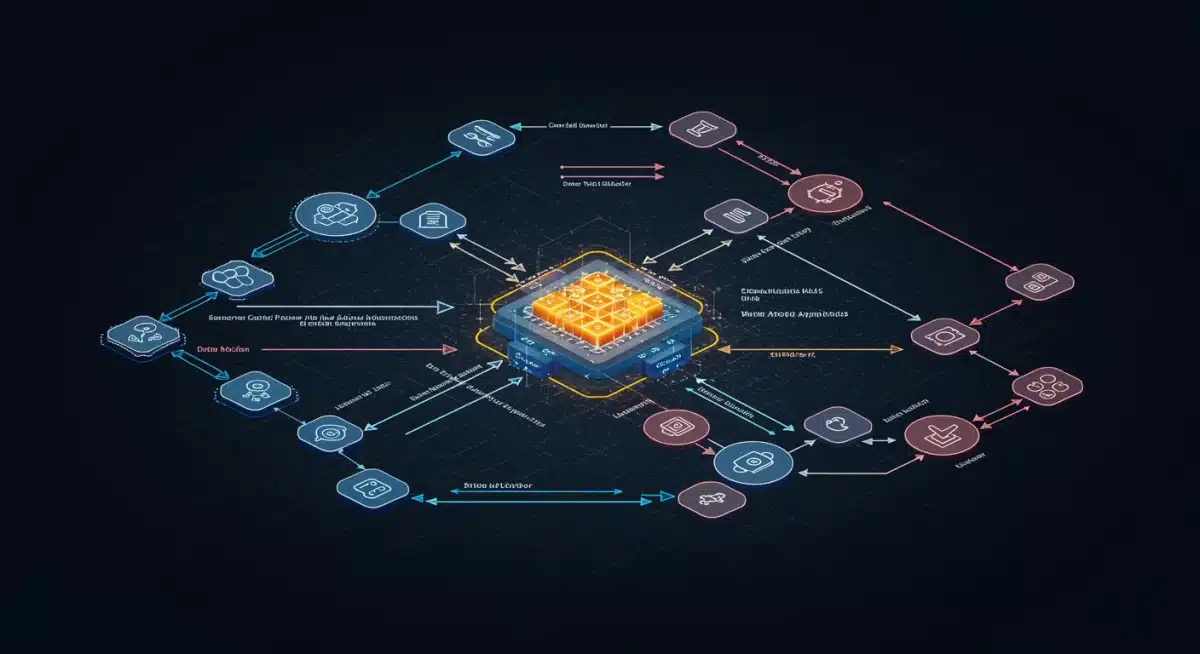
3. Integer Overflow and Underflow Protection: Guarding Against Numerical Exploits
Understanding Integer Overflows and Underflows
Integer overflow and underflow vulnerabilities arise when arithmetic operations produce results that exceed the maximum or fall below the minimum value that a data type can hold. In Solidity, prior to version 0.8.0, unsigned integers would "wrap around." For instance, if a `uint8` (which can hold values from 0 to 255) is incremented from 255, it would become 0 (overflow). Similarly, if it’s decremented from 0, it would become 255 (underflow).
This "wrapping" behavior can be exploited by attackers to manipulate balances, bypass checks, or trigger unintended logic. A classic example involves an attacker causing an underflow in their balance to make it appear as a huge positive number, allowing them to withdraw more funds than they actually possess. This vulnerability was famously exploited in several early DeFi protocols, leading to significant financial losses. Addressing this is a foundational aspect of EVM security patches.
Strategies for Integer Overflow/Underflow Protection (2026 Mandate Focus)
The good news is that Solidity versions 0.8.0 and later automatically revert on integer overflow and underflow, making this particular vulnerability much easier to mitigate for new projects. However, for legacy contracts or those using older Solidity versions, explicit measures are crucial:
- Upgrade to Solidity 0.8.0+: This is the most straightforward and highly recommended solution for new and upgradeable contracts. By default, arithmetic operations in Solidity 0.8.0 and higher will revert if an overflow or underflow occurs, eliminating the "wrapping" behavior. This automatic protection is a significant EVM security patch.
- Use SafeMath Library (for older Solidity versions): For contracts written in Solidity versions older than 0.8.0, libraries like OpenZeppelin’s `SafeMath` are indispensable. `SafeMath` provides functions for addition, subtraction, multiplication, and division that explicitly check for overflows and underflows and revert if they occur. Migrating to `SafeMath` functions for all arithmetic operations is a critical step for older codebases.
- Careful Type Selection: Always choose integer types that can accommodate the expected range of values. While Solidity 0.8.0+ provides protection, it’s still good practice to use appropriately sized types to prevent unexpected reverts and minimize gas costs.
- Thorough Testing: Implement comprehensive unit tests and fuzz testing to identify potential edge cases where arithmetic operations might lead to overflows or underflows, especially in complex calculations involving multiple variables.
- Audits and Static Analysis: Professional security audits and static analysis tools are effective at identifying areas where integer vulnerabilities might still exist, particularly in older or highly complex code.
The 2026 mandates will likely require projects to demonstrate that their contracts are immune to integer overflow/underflow attacks, either through the use of modern Solidity versions or by explicit implementation of safe arithmetic libraries. This ensures that fundamental numerical integrity is maintained, protecting against a class of exploits that can undermine the very foundation of financial logic in smart contracts.
Beyond the Big Three: Other Essential EVM Security Considerations for 2026
While reentrancy, access control, and integer overflow/underflow protection are three critical areas, the 2026 mandates will undoubtedly encompass a broader spectrum of security best practices. Developers and project teams should also prepare for scrutiny on:
- Front-running and Sandwich Attacks: Mechanisms to mitigate these DeFi-specific attacks, which exploit transaction ordering, will become increasingly important. Solutions often involve sophisticated transaction routing, batching, or commit-reveal schemes.
- Flash Loan Attacks: While flash loans themselves are legitimate, their misuse to manipulate prices or drain liquidity pools has been a recurring issue. Protocols will need to demonstrate resilience against such manipulations, perhaps through time-weighted average price (TWAP) or oracle-based price feeds.
- Oracle Manipulation: The reliability of external data feeds (oracles) is crucial. Mandates may require robust, decentralized oracle solutions and mechanisms to detect and prevent data manipulation.
- Denial-of-Service (DoS) Attacks: Contracts must be designed to be resilient against DoS attacks, where attackers can prevent legitimate users from interacting with the contract, often by exhausting gas limits or exploiting inefficient loops.
- Event Logging and Monitoring: Comprehensive event logging for all critical operations will be vital for auditability and incident response. Real-time monitoring for suspicious activity might also become a requirement.
- Upgradeability and Proxies: For upgradeable contracts, the security of the proxy pattern itself, along with the process for proposing and executing upgrades (often involving timelocks and multisigs), will be a major focus. Flaws in upgrade mechanisms can be as catastrophic as flaws in the core logic.
- Gas Optimization and Limits: While not directly a security vulnerability, inefficient gas usage can lead to DoS attacks or make contracts prohibitively expensive to use. Efficient code is often more secure code.
- External Library and Dependency Security: Just as in traditional software, vulnerabilities in external libraries or dependencies used by smart contracts can compromise the entire system. Due diligence and regular security reviews of all dependencies will be expected.
- Emergency Procedures: Clear, audited emergency procedures, such as pause functions or circuit breakers, to mitigate ongoing attacks or critical bugs will likely be part of compliance requirements. These mechanisms must themselves be secured by robust access control.
The overarching theme for the 2026 mandates is a holistic approach to security, moving beyond reactive patching to proactive, design-level security considerations. This means integrating security throughout the entire smart contract development lifecycle, from initial design to deployment and ongoing maintenance.
The Path to Compliance: Tools and Best Practices for EVM Security Patches
Achieving compliance with the upcoming 2026 mandates will require a multi-faceted approach. Here are key tools and best practices:
- Continuous Learning and Education: The blockchain security landscape is dynamic. Developers must continuously educate themselves on new attack vectors and mitigation techniques. Industry certifications and regular workshops will be invaluable.
- Static Analysis Tools: Tools like Slither, Mythril, and Securify can automatically scan your Solidity code for common vulnerabilities, including reentrancy, access control issues, and integer overflows. Integrating these into your CI/CD pipeline is crucial.
- Dynamic Analysis (Fuzzing): Fuzzing tools (e.g., Echidna, Foundry’s Fuzzing) can test your contract with a wide range of inputs to uncover unexpected behaviors and edge cases that might lead to exploits.
- Unit and Integration Testing: Comprehensive test suites that cover all possible execution paths and edge cases are foundational. Ensure your tests explicitly target known vulnerabilities.
- Professional Security Audits: Independent third-party security audits are a non-negotiable step for any production-grade smart contract. Auditors bring specialized expertise to identify subtle vulnerabilities that automated tools might miss. The 2026 mandates will almost certainly require documented audit reports for critical contracts.
- Formal Verification: For extremely high-value or safety-critical contracts, formal verification techniques can mathematically prove the correctness of certain properties, offering the highest level of assurance.
- Bug Bounty Programs: Incentivizing white-hat hackers to find bugs before malicious actors do is a cost-effective way to enhance security. Platforms like Immunefi or HackerOne offer structured bug bounty programs.
- Decentralized Governance and Community Oversight: For truly decentralized projects, involving the community in security reviews and governance decisions can add another layer of scrutiny and resilience.
- Version Control and Immutable Deployment: Always use version control for your smart contract code. Once deployed, the contract’s code is immutable, so ensuring the deployed version matches the audited version is critical.
- Incident Response Plan: Develop a clear incident response plan for security breaches, including communication protocols, mitigation steps (e.g., pause functions), and recovery strategies.
By integrating these tools and best practices, projects can build a strong security posture that not only complies with future 2026 mandates but also earns the trust of users and investors. The emphasis on robust EVM security patches is a commitment to the long-term health and stability of the decentralized ecosystem.
Conclusion: Securing the Future of Decentralized Applications with EVM Security Patches
The journey towards a more secure and regulated blockchain ecosystem is well underway, with the 2026 mandates in the U.S. serving as a significant milestone. The focus on fundamental vulnerabilities like reentrancy, access control, and integer overflow/underflow is not arbitrary; these have been the vectors for some of the most damaging attacks in blockchain history. By proactively implementing the necessary EVM security patches and adopting a security-first development philosophy, projects can not only achieve compliance but also build more resilient, trustworthy, and sustainable decentralized applications.
The future of DeFi and Web3 hinges on trust, and trust is built on security. As the regulatory landscape matures, those who embrace and prioritize robust security measures will be best positioned to thrive. This means continuous vigilance, adherence to best practices, leveraging advanced security tools, and fostering a culture of security within development teams. The 2026 mandates are not just hurdles to overcome; they are catalysts for a stronger, safer, and more reliable decentralized future. Prepare now, and secure your place in the evolving digital economy.