Institutional Altcoin Adoption: Future Valuation Impacts

The Profound Impact of Institutional Altcoin Adoption on Valuations: What to Expect Over the Next 24 Months
The cryptocurrency landscape is constantly evolving, and one of the most significant shifts in recent years has been the increasing interest and involvement of institutional investors. While Bitcoin has traditionally been the primary focus for these large players, the spotlight is now rapidly expanding to include a diverse array of altcoins. This phenomenon, often referred to as institutional altcoin adoption, is poised to reshape the market significantly. Understanding its implications is crucial for anyone involved in the digital asset space, as it could lead to unprecedented changes in altcoin valuations over the next 24 months.
Understanding Institutional Altcoin Adoption: A Paradigm Shift
For years, institutional investors largely steered clear of altcoins, viewing them as too volatile, illiquid, or lacking clear regulatory frameworks. Bitcoin, with its larger market cap, longer track record, and relatively clearer regulatory stance in some jurisdictions, served as the entry point for many. However, as the digital asset ecosystem matured, so too did the understanding and infrastructure surrounding altcoins. The sheer innovation happening within decentralized finance (DeFi), non-fungible tokens (NFTs), metaverse projects, and various Layer 1 and Layer 2 solutions has become too compelling for institutions to ignore. This growing interest marks a significant paradigm shift, moving beyond mere speculation to a more fundamental belief in the underlying technology and use cases of these alternative cryptocurrencies.
Institutional altcoin adoption isn’t just about buying and holding; it encompasses a broader range of activities. This includes:
- Direct Investment: Hedge funds, asset managers, and even corporate treasuries allocating capital directly into altcoins.
- Product Development: Creating investment vehicles like altcoin-specific ETFs, trusts, and structured products.
- Venture Capital: Funding promising altcoin projects and blockchain startups.
- Infrastructure Development: Building out custody solutions, trading platforms, and prime brokerage services tailored for altcoins.
- Integration into Traditional Finance: Incorporating blockchain technology and digital assets into existing financial systems and services.
The implications of this multi-faceted approach to institutional altcoin adoption are profound. It suggests a deeper, more entrenched integration of these digital assets into the global financial system, moving them further away from the fringes and into the mainstream.
Drivers Behind the Surge in Institutional Interest
Several key factors are fueling the increased institutional interest in altcoins:
Maturing Market Infrastructure
The development of robust and secure infrastructure has been paramount. Custody solutions from reputable providers, advanced trading platforms offering deep liquidity for a wider range of altcoins, and clearer pathways for institutional-sized transactions have significantly reduced the operational risks previously associated with these assets. Institutions now have the tools and services they need to manage altcoin portfolios effectively and securely, addressing a major hurdle that once deterred them.
Regulatory Clarity and Evolution
While still evolving, the regulatory landscape for cryptocurrencies, including altcoins, is becoming clearer in several key jurisdictions. The approval of Bitcoin ETFs, for instance, has set a precedent and opened the door for similar products for other digital assets. As regulators gain a better understanding of the technology and its potential, more tailored frameworks are emerging, providing institutions with the confidence to participate. The expectation of further regulatory clarity around specific altcoins, particularly those with strong fundamental use cases, is a powerful draw for institutional capital.
Innovation and Real-World Use Cases
Beyond speculative trading, many altcoins power innovative technologies with significant real-world applications. DeFi protocols are recreating traditional financial services in a decentralized manner, offering new avenues for lending, borrowing, and trading. NFTs are revolutionizing ownership and digital identity. Layer 2 solutions are scaling blockchain networks, making them more efficient and cost-effective. Institutions are recognizing the long-term disruptive potential of these technologies and are keen to invest in the foundational assets that power them. The utility-driven aspect of many altcoins is a strong argument for their inclusion in diversified institutional portfolios.
Diversification and Alpha Opportunities
In a world of low-yield traditional assets, institutions are constantly seeking new sources of alpha (returns above a benchmark) and diversification. Altcoins, with their often uncorrelated price movements to traditional markets and even Bitcoin, present a compelling opportunity. Their potential for exponential growth, albeit with higher risk, offers the kind of upside potential that can significantly boost portfolio performance. This search for uncorrelated assets and high-growth opportunities is a primary motivator for sophisticated institutional investors.
Inflationary Hedges and Macroeconomic Tailwinds
Against a backdrop of rising inflation concerns and macroeconomic uncertainty, digital assets, including certain altcoins, are increasingly viewed as potential hedges against traditional currency debasement. While Bitcoin often takes the lead in this narrative, altcoins with strong tokenomics and limited supply can also play a role in institutional strategies aimed at preserving purchasing power. The broader macroeconomic environment continues to push institutions towards alternative asset classes, and altcoins are a natural fit for a portion of that allocation.
Expected Impact on Altcoin Valuations Over the Next 24 Months
The influx of institutional capital into the altcoin market is not merely a quantitative change; it represents a qualitative shift that will likely have several profound effects on valuations over the coming two years.
Increased Liquidity and Reduced Volatility
One of the immediate impacts of institutional altcoin adoption will be a significant increase in market liquidity. Large orders from institutions can be absorbed more easily, reducing price slippage and making markets more efficient. Over time, this increased liquidity, coupled with the more stable, long-term holding strategies often employed by institutions, could lead to a reduction in the extreme volatility that has historically characterized the altcoin market. While altcoins will likely remain more volatile than traditional assets, institutional participation could smooth out some of the wilder price swings, making them more attractive to an even broader range of investors.
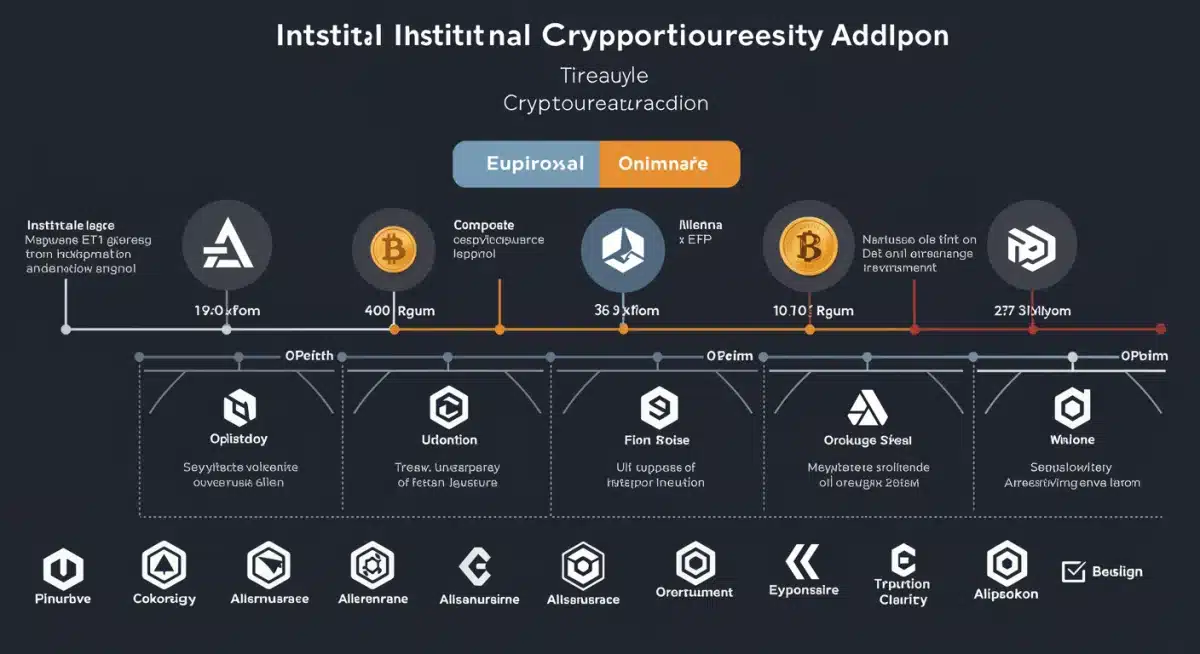
Higher Valuations and Sustainable Growth
Institutional capital typically operates on a much larger scale than retail investment. Even a small allocation from a large institutional fund can represent a substantial inflow of capital into a relatively smaller altcoin market. This increased demand, coupled with often limited supplies of many altcoins, will inevitably push valuations higher. Furthermore, institutions tend to have longer investment horizons, meaning their capital is less likely to be withdrawn during short-term market corrections. This ‘sticky’ capital can contribute to more sustainable growth trajectories for favored altcoins, moving them beyond cyclical boom-and-bust patterns.
Enhanced Credibility and Mainstream Acceptance
When reputable institutions invest in altcoins, it confers a level of legitimacy and credibility that significantly impacts public perception. This stamp of approval can attract even more retail investors and further bridge the gap between traditional finance and the crypto world. As altcoins become more accepted within institutional portfolios, they gain mainstream recognition, which can lead to increased utility, partnerships, and broader ecosystem development, all of which positively feedback into their valuations.
Differentiation and Focus on Fundamentals
Institutions conduct extensive due diligence. Their investment decisions are typically based on deep analysis of an altcoin’s underlying technology, team, tokenomics, use case, community, and competitive landscape. This rigorous approach will likely lead to a greater differentiation among altcoins. Projects with strong fundamentals, clear roadmaps, and demonstrable utility will attract the lion’s share of institutional capital, potentially leaving projects with weaker foundations or questionable use cases struggling to gain traction. This shift could lead to a more meritocratic market where value is increasingly tied to actual innovation and adoption, rather than pure speculation.
Emergence of New Investment Products
As institutional demand for altcoins grows, so too will the array of investment products available. We can expect to see more altcoin-specific ETFs, mutual funds, and structured products emerge, offering traditional investors regulated and familiar ways to gain exposure. These products will further democratize access to altcoins for a broader investor base, funneling even more capital into the market and supporting higher valuations.
Key Altcoin Sectors to Watch
While institutional altcoin adoption will likely impact the entire market, certain sectors are particularly well-positioned to benefit:
Decentralized Finance (DeFi) Protocols
DeFi is a natural fit for institutions looking for yield-generating opportunities, new financial primitives, and exposure to a decentralized financial system. Projects offering robust lending, borrowing, and exchange services, coupled with strong security audits and clear regulatory pathways, will be highly attractive. The potential for higher yields compared to traditional finance is a significant draw.
Layer 1 and Layer 2 Scaling Solutions
The foundational blockchains (Layer 1s) and their scaling solutions (Layer 2s) are critical infrastructure for the entire crypto ecosystem. Institutions will seek exposure to networks that demonstrate scalability, security, decentralization, and a thriving developer ecosystem. Investing in these foundational layers is akin to investing in the internet infrastructure during its early days, providing exposure to the entire growth of the digital economy built upon them.
Real-World Asset (RWA) Tokenization
The tokenization of real-world assets – from real estate to commodities and intellectual property – is a burgeoning sector with immense institutional appeal. This bridges the gap between traditional finance and blockchain, offering new efficiencies, liquidity, and fractional ownership opportunities. Institutions are keenly interested in platforms and protocols that facilitate the compliant and secure tokenization of these assets, recognizing the massive market potential.
Enterprise Blockchain Solutions
While often less visible to retail investors, enterprise-focused blockchain projects are gaining significant traction. These are solutions designed to improve supply chains, data management, and inter-company transactions for large corporations. Institutions may invest directly in the underlying tokens of these networks or in the companies developing them, betting on their long-term integration into global business operations.
Gaming and Metaverse Projects
While still nascent, the gaming and metaverse sectors powered by blockchain technology represent a massive growth opportunity. Institutions with a long-term vision are beginning to explore investments in foundational metaverse platforms, gaming studios utilizing NFTs, and infrastructure projects supporting these virtual economies. The potential for entirely new digital economies and entertainment paradigms is a powerful lure.
Challenges and Considerations
Despite the optimistic outlook for institutional altcoin adoption, several challenges and considerations remain:
Regulatory Uncertainty
While improving, regulatory clarity is not uniform globally. Different jurisdictions have varying approaches to classifying and regulating altcoins, which can create complexities for institutions operating internationally. A sudden adverse regulatory shift in a major market could temper institutional enthusiasm.
Security Risks and Hacks
The crypto space, particularly the altcoin sector, is still prone to security breaches, hacks, and exploits. Institutions require robust security protocols and insurance to protect their assets. Continued advancements in blockchain security and auditing will be crucial to sustain institutional confidence.
Market Manipulation and Illiquidity
While institutional involvement is expected to increase liquidity, some smaller altcoins may still suffer from low liquidity, making them susceptible to price manipulation. Institutions will likely favor altcoins with sufficient market depth to execute large trades without significant market impact.
Technological Complexity and Education
The sheer number and technical diversity of altcoins can be overwhelming. Institutions require significant internal expertise or reliable external partners to properly evaluate and manage these assets. Ongoing education and simplification of blockchain technology will be essential for broader adoption.
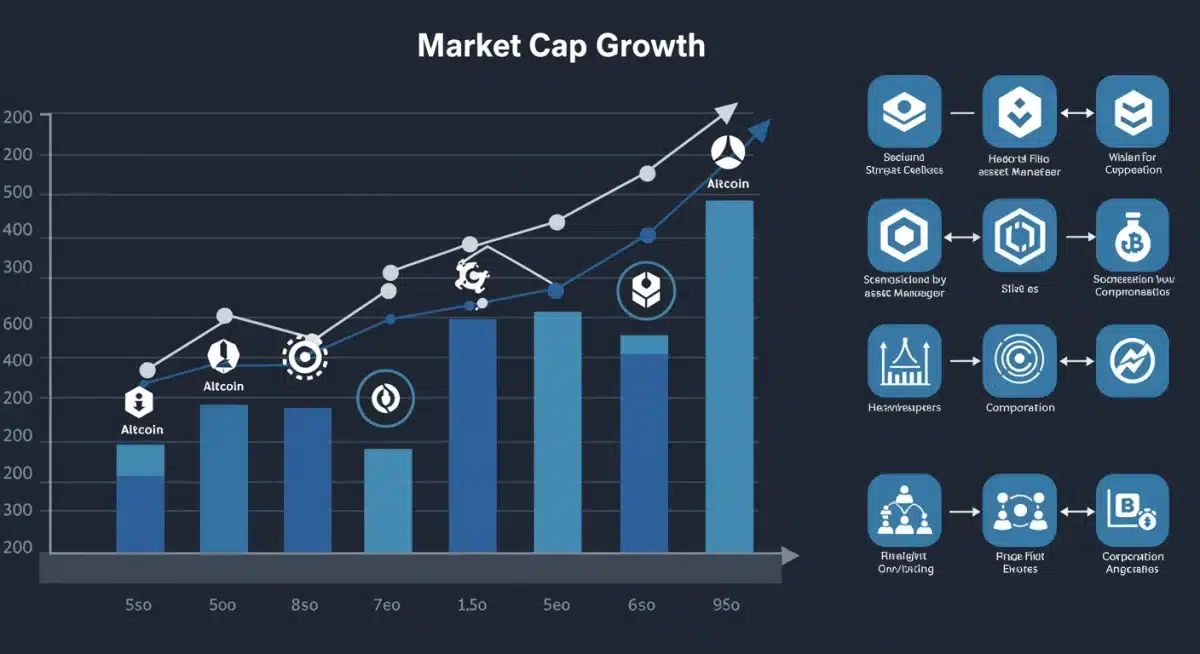
The Next 24 Months: A Transformative Period
Over the next 24 months, the impact of institutional altcoin adoption is expected to be transformative. We will likely witness a period of significant capital inflow, leading to:
- Increased Market Capitalization: The overall market cap of altcoins will grow substantially as institutional funds enter the space.
- Wider Price Spreads Between Quality and Speculation: Well-vetted projects with strong fundamentals will see disproportionate gains compared to speculative, less-developed altcoins.
- Greater Stability: While volatility won’t disappear, the presence of long-term institutional holders will likely contribute to more stable price action over extended periods.
- Mainstream Financial Integration: Altcoins will become more commonplace in financial news, investment portfolios, and perhaps even integrated into traditional payment systems or financial products.
- Regulatory Framework Maturation: The increased institutional presence will likely accelerate the development of more comprehensive and adaptable regulatory frameworks, providing further clarity and reducing systemic risks.
This period will not be without its bumps. Market corrections, regulatory crackdowns, or unforeseen technological issues could temporarily dampen enthusiasm. However, the underlying trend of institutions seeking exposure to innovative digital assets appears robust. The long-term narrative of diversification, technological disruption, and the search for alpha will continue to drive this trend.
Conclusion
The trajectory of altcoin valuations over the next 24 months is inextricably linked to the ongoing and accelerating trend of institutional altcoin adoption. As traditional finance continues its inexorable march into the digital asset space, altcoins are moving beyond the realm of niche speculation to become a legitimate and increasingly significant asset class. Institutions are bringing not just capital, but also credibility, infrastructure, and a long-term investment horizon that can fundamentally alter the market dynamics.
Investors – both institutional and retail – who understand these underlying forces and position themselves strategically will be best placed to capitalize on what promises to be a truly transformative period for altcoins. The next two years are set to be a defining chapter in the story of digital assets, with institutional involvement acting as a powerful catalyst for growth and maturation across the entire altcoin ecosystem.