Optimizing Gas Fees: Smart Contract Strategies for 2025
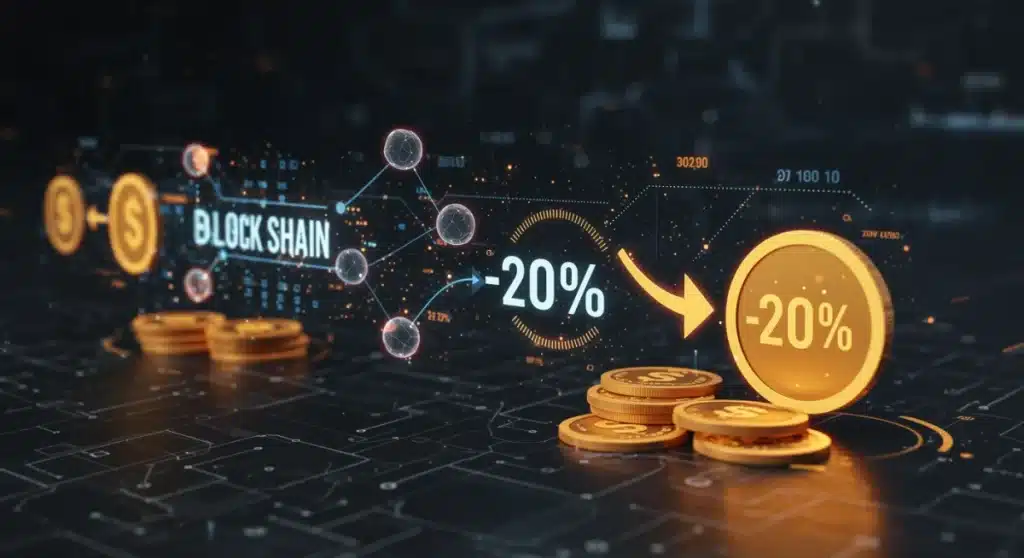
Optimizing gas fees is essential for smart contract deployment and execution, with advanced strategies projected to reduce transaction costs by up to 20% by 2025 through a combination of efficient coding, Layer 2 solutions, and protocol innovation.
In the rapidly evolving landscape of Web3, the cost of executing transactions on blockchain networks, commonly known as gas fees, remains a significant hurdle for developers and users alike. The quest for optimizing gas fees has become paramount, particularly for smart contract operations, with projections indicating that advanced strategies could lead to a reduction of up to 20% in transaction costs by 2025, profoundly impacting financial viability and user experience.
Understanding the Gas Fee Dilemma in Smart Contracts
Gas fees are the lifeblood of blockchain networks, compensating miners or validators for the computational effort required to process and validate transactions. For smart contracts, these fees can escalate quickly, especially during periods of high network congestion. This section delves into the fundamental mechanics of gas fees and their direct impact on the operational costs of decentralized applications (dApps).
The core problem lies in the variable nature of gas prices, which fluctuate based on network demand and supply. A complex smart contract with numerous operations will naturally consume more gas units. When network traffic is high, the price per gas unit also rises, leading to exorbitant transaction costs. This unpredictability makes budgeting for dApp development and user interaction particularly challenging.
The Mechanics of Gas Calculation
Gas calculation involves two primary components: the gas limit and the gas price. The gas limit is the maximum amount of gas a user is willing to spend on a transaction, while the gas price is the cost per unit of gas, typically denominated in Gwei. The total transaction cost is simply the gas limit multiplied by the gas price.
- Gas Limit: Represents the maximum computational steps allowed for a transaction. Setting it too low can result in transaction failure, while setting it too high wastes capital.
- Gas Price: Dictated by network demand; users bid for faster inclusion of their transactions into a block.
- Total Cost: Gas Limit x Gas Price.
Understanding these components is the first step toward effective optimization. Developers must carefully estimate the gas requirements of their smart contracts and design them to be as efficient as possible. This foundational knowledge is critical for any strategy aimed at reducing the financial burden of blockchain interactions.
Efficient Smart Contract Design and Coding Practices
The most direct approach to reducing gas fees begins at the design and coding phase of smart contracts. Writing lean, efficient code can significantly lower the computational resources required for execution, thereby reducing gas consumption. This section explores specific coding practices and design patterns that contribute to lower transaction costs.
Optimizing smart contract code is not merely about writing fewer lines, but rather about choosing the most gas-efficient operations and data structures. Every operation, from storage reads and writes to function calls and loop iterations, consumes a certain amount of gas. Developers must be meticulous in their choices to minimize this consumption.
Minimizing Storage Operations
Storage operations (SSTORE and SLOAD) are among the most expensive on the Ethereum Virtual Machine (EVM). Reducing the number of times data is written to or read from storage can yield substantial gas savings.
- Packing Storage Variables: Grouping variables of smaller sizes into a single storage slot can reduce the number of SSTORE operations.
- Using Memory vs. Storage: Whenever possible, perform computations in memory (calldata, memory) rather than storing intermediate results on-chain.
- Event Logging: Use events to log data that doesn’t need to be stored on-chain, as logging is significantly cheaper than storage.
Another crucial aspect is avoiding redundant calculations. If a value is computed multiple times, consider caching it or refactoring the logic to compute it only once. Similarly, unnecessary external calls can be costly; ensure that external interactions are absolutely essential and batched where possible.
By focusing on these design principles and coding practices, developers can lay a strong foundation for gas-efficient smart contracts, making their dApps more economically viable and attractive to users. This proactive approach significantly contributes to the overarching goal of optimizing gas fees.
Leveraging Layer 2 Scaling Solutions for Cost Reduction
While efficient coding helps, the inherent limitations of Layer 1 blockchains often necessitate external scaling solutions. Layer 2 networks offer a powerful avenue for significantly reducing gas fees by offloading a substantial portion of transactions from the main chain. This section examines how Layer 2 solutions contribute to cost-effectiveness and their projected impact by 2025.
Layer 2 solutions operate on top of a base blockchain, processing transactions faster and cheaper before settling them on the main chain. This approach alleviates congestion on Layer 1, leading to lower gas prices for all participants. The adoption of these technologies is accelerating, with many prominent dApps migrating to Layer 2 platforms.
Types of Layer 2 Solutions
Several types of Layer 2 solutions exist, each with its own trade-offs regarding security, decentralization, and scalability.
- Rollups (Optimistic and ZK-Rollups): These bundle hundreds of transactions off-chain into a single transaction that is then submitted to the Layer 1 chain. This significantly reduces the gas cost per transaction.
- State Channels: Allow participants to conduct multiple transactions off-chain, with only the opening and closing of the channel being recorded on the main chain.
- Sidechains: Independent blockchains with their own consensus mechanisms, connected to the main chain via a two-way peg.
Optimistic Rollups, like Arbitrum and Optimism, and ZK-Rollups, such as zkSync and StarkNet, are particularly promising. ZK-Rollups, in particular, offer superior security guarantees as they use cryptographic proofs to verify the correctness of off-chain computations, eliminating the need for a challenge period.
The widespread integration of Layer 2 solutions is expected to be a major driver in achieving the projected 20% reduction in gas fees by 2025. By moving the bulk of transaction processing off-chain, these technologies make dApps more accessible and affordable, fostering greater adoption and innovation within the Web3 ecosystem.
Advanced Data Structures and Compression Techniques
Beyond basic coding efficiency, advanced techniques involving data structures and compression can play a pivotal role in further optimizing gas fees. By minimizing the amount of data stored on-chain or processed by smart contracts, developers can unlock additional cost savings. This section explores innovative methods for data handling within the blockchain context.
Every byte of data stored on a blockchain costs gas. Therefore, clever use of data structures and compression algorithms can significantly impact transaction expenses. The goal is to represent information as compactly as possible without compromising functionality or security.
Merkle Trees for Verification
Merkle trees are a powerful cryptographic tool that allows for efficient verification of large datasets. Instead of storing all data on-chain, only the Merkle root is stored, and individual data points can be proven to be part of the dataset by providing a Merkle proof.
- Off-chain Data Storage: Store large datasets off-chain and only commit their Merkle root to the smart contract.
- Efficient Verification: Users can prove inclusion of specific data points with a small Merkle proof, reducing on-chain data processing.
- Gas Savings: Drastically cuts down on storage and computation costs associated with verifying data.
Another technique involves compacting data before storing it on-chain. This could include using bitmasks to represent multiple boolean flags or encoding numerical values more efficiently. While these methods might add complexity to the smart contract code, the gas savings can be substantial, especially for dApps dealing with large volumes of data or frequent storage operations.
By embracing these advanced data management strategies, developers can push the boundaries of gas efficiency, ensuring that smart contracts remain economically viable even as they handle increasingly complex operations and larger datasets. This focus on data optimization is a key component of a comprehensive gas fee reduction strategy.
Gas-Efficient Proxy Patterns and Upgradeability
The design of upgradeable smart contracts through proxy patterns can also contribute to gas efficiency, particularly in the long run. While initial deployment might involve slightly higher costs, the ability to upgrade logic without redeploying the entire contract can save significant gas and resources over time. This section explores how proxy patterns facilitate cost-effective smart contract management.
Traditional smart contracts are immutable once deployed. Any bug fix or feature addition necessitates deploying a new contract and migrating data, which is both expensive in gas and disruptive to users. Proxy patterns offer a solution by separating the contract’s logic from its state, allowing the logic to be upgraded.
How Proxy Patterns Work
A proxy contract acts as a permanent entry point, holding the contract’s state, while delegating calls to an implementation contract that contains the actual logic. When an upgrade is needed, a new implementation contract is deployed, and the proxy is simply pointed to the new address.
- Reduced Redeployment Costs: Only the logic contract needs to be redeployed, not the state-holding proxy.
- Data Persistence: User data and contract state remain intact throughout upgrades.
- Flexibility: Allows for continuous improvements and bug fixes without costly migrations.
Furthermore, well-designed proxy patterns can incorporate gas-efficient mechanisms for managing access control and upgrade procedures. For instance, using a multi-signature wallet for upgrade permissions adds a layer of security while ensuring that upgrades are deliberate and controlled. The long-term gas savings from avoiding full contract redeployments and data migrations can be substantial, making proxy patterns an important consideration for sustainable dApp development.
By carefully implementing gas-efficient proxy patterns, developers can future-proof their smart contracts, reducing the total cost of ownership and maintenance over the lifespan of their dApps. This strategic approach is vital for achieving significant financial impact through optimizing gas fees.
Future Trends: EIPs and Protocol-Level Optimizations
Looking ahead to 2025, a significant portion of gas fee optimization will come from protocol-level improvements and Ethereum Improvement Proposals (EIPs). These changes to the underlying blockchain protocol can introduce fundamental shifts in how gas is consumed and priced. This section anticipates future trends and their potential to further reduce transaction costs.
The Ethereum community is continuously working on enhancing the network’s scalability and efficiency. EIPs are proposals that specify new standards, processes, or improvements for the Ethereum blockchain. Several EIPs are specifically aimed at reducing gas costs or making gas consumption more predictable.
Key EIPs and Their Impact
EIP-1559, implemented with the London hard fork, already revolutionized Ethereum’s fee market by introducing a base fee and a tip, making gas prices more predictable. Future EIPs are expected to build upon this foundation.
- EIP-4844 (Proto-Danksharding): This EIP aims to introduce ‘blob’ transactions, which are significantly cheaper for Layer 2 rollups to post data to the mainnet. This will directly reduce the cost of using Layer 2 solutions.
- Verkle Trees: A proposed upgrade to Ethereum’s state tree, offering more efficient state storage and retrieval, which could indirectly lead to lower gas costs for certain operations.
- Account Abstraction (EIP-4337): While primarily focused on improving user experience, account abstraction can enable more gas-efficient smart contract wallets and batch transactions more effectively.
These protocol-level changes are critical because they address the root causes of high gas fees at the network layer, rather than solely relying on application-level optimizations. The combined effect of these EIPs, alongside the continued maturation of Layer 2 solutions and diligent smart contract coding, is projected to deliver the promised 20% reduction in gas fees by 2025.
Developers and users alike should stay informed about these protocol upgrades, as they will fundamentally alter the economics of interacting with smart contracts. Embracing these advancements will be key to fully realizing the potential for optimizing gas fees.
| Key Optimization Strategy | Brief Description |
|---|---|
| Efficient Code Design | Minimizing storage operations and optimizing logic within smart contracts. |
| Layer 2 Scaling | Utilizing rollups and sidechains to process transactions off-chain, reducing mainnet congestion. |
| Advanced Data Structures | Employing Merkle trees and data compression to reduce on-chain storage and verification costs. |
| Protocol-Level Upgrades | Benefiting from EIPs like EIP-4844 and Verkle Trees for fundamental gas cost reductions. |
Frequently Asked Questions About Gas Fee Optimization
Gas fees are the transaction costs paid to network validators for processing and executing operations on a blockchain, such as deploying or interacting with smart contracts. They compensate for the computational resources used and fluctuate based on network demand and the complexity of the operation.
Efficient coding reduces gas costs by minimizing storage operations, avoiding redundant calculations, and utilizing gas-efficient data types and structures. By writing lean and optimized code, developers decrease the computational effort required, directly lowering the gas consumption per transaction.
Layer 2 solutions, such as rollups, process transactions off the main blockchain, bundling them into a single, cheaper transaction on Layer 1. This significantly reduces network congestion and the overall cost per transaction, making dApps more scalable and affordable for users.
Yes, upcoming Ethereum Improvement Proposals (EIPs) like EIP-4844 (Proto-Danksharding) and the potential adoption of Verkle Trees are designed to fundamentally reduce gas costs. These changes will make data storage and transaction processing on the mainnet more efficient, benefiting Layer 2s and overall network usage.
Optimizing gas fees through advanced strategies is projected to reduce transaction costs by up to 20% by 2025. This financial impact will make decentralized applications more accessible, foster greater adoption, and enable more complex and innovative smart contract functionalities that were previously cost-prohibitive.
Conclusion
The journey towards effectively optimizing gas fees in smart contracts is a multi-faceted endeavor, requiring a blend of diligent coding practices, strategic adoption of Layer 2 solutions, and an understanding of ongoing protocol-level advancements. As the Web3 ecosystem matures, the projected 20% reduction in transaction costs by 2025 is not merely an optimistic forecast but a tangible goal achievable through concerted efforts across the development community. By embracing these advanced strategies, developers can build more sustainable, accessible, and financially viable decentralized applications, ultimately driving the broader adoption and innovation of blockchain technology.