Implementing Self-Executing Smart Contracts: U.S. Business Guide 2025

This article serves as a practical, step-by-step guide for U.S. businesses navigating the complex landscape of self-executing smart contract implementation in 2025, focusing on actionable solutions and critical considerations.
Are you a U.S. business leader or innovator considering how to leverage the power of blockchain for operational efficiency and trust? The concept of smart contract implementation is rapidly moving from theoretical discussion to practical application, offering unprecedented opportunities to automate agreements, reduce intermediaries, and enhance transparency. As we approach 2025, understanding the nuances of integrating these self-executing agreements into your existing frameworks is not just an advantage; it’s becoming a necessity for competitive edge.
Understanding Self-Executing Smart Contracts
Self-executing smart contracts are digital agreements stored on a blockchain, programmed to automatically execute predefined terms and conditions when specific criteria are met. Unlike traditional contracts, they operate without the need for intermediaries, reducing costs, delays, and the potential for human error or manipulation. For U.S. businesses, this technology represents a paradigm shift in how agreements are formed, managed, and enforced across various sectors.
The core principle behind smart contracts lies in their immutability and transparency, characteristics inherited from the underlying blockchain technology. Once deployed, the code cannot be altered, and all transactions are publicly verifiable, fostering a high degree of trust among participants. This makes them particularly appealing for supply chain management, real estate, financial services, and intellectual property rights.
How Smart Contracts Function
At their heart, smart contracts are simply lines of code that run on a decentralized network. They follow an “if-then” logic, meaning that if a certain condition is met, then a specific action is automatically triggered. This automation is what gives them their “self-executing” nature.
- Pre-defined Conditions: Parties agree on specific conditions that must be met for the contract to execute.
- Automated Execution: Once conditions are verified, the contract automatically performs the agreed-upon action.
- Immutability: The executed transaction is recorded on the blockchain and cannot be changed.
- Transparency: All participants can view the contract’s code and execution history.
Understanding these foundational elements is crucial before embarking on any smart contract implementation project. It lays the groundwork for identifying suitable use cases within your business and appreciating the transformative potential this technology holds.
Legal Framework and Compliance in the U.S.
Navigating the legal landscape for smart contracts in the U.S. is paramount for successful implementation. While the technology offers efficiency, it also introduces new legal considerations regarding enforceability, jurisdiction, and regulatory compliance. Businesses must ensure their smart contracts align with existing laws and anticipate evolving regulations.
Currently, there isn’t a single, unified federal law specifically governing smart contracts. Instead, various state laws and existing federal regulations, such as the Uniform Electronic Transactions Act (UETA) and the Electronic Signatures in Global and National Commerce Act (ESIGN Act), provide some guidance on the validity of electronic records and signatures, which can extend to smart contracts. However, the unique self-executing nature of smart contracts poses novel challenges.
Key Legal Considerations for U.S. Businesses
Businesses contemplating smart contract implementation need to engage legal counsel with expertise in blockchain and emerging technologies. Proactive legal review can prevent costly disputes and ensure compliance.
- Enforceability: Determining if a smart contract can be legally enforced in a court of law, especially when disputes arise from code errors or unforeseen circumstances.
- Jurisdiction: Identifying which state or federal laws apply when parties to a smart contract are geographically dispersed or operating across different jurisdictions.
- Consumer Protection: Ensuring smart contracts do not violate consumer protection laws, particularly concerning transparency and data privacy.
- Regulatory Compliance: Adhering to industry-specific regulations, such as those from the SEC, CFTC, or state financial regulators, especially if the smart contract involves financial instruments or securities.
The absence of explicit federal legislation means businesses must remain vigilant and adaptable. Consulting with legal experts specializing in blockchain law is not just advisable; it’s a critical step in de-risking your smart contract implementation strategy.
Identifying Suitable Business Use Cases
Not every business process is an ideal candidate for smart contract automation. Successful smart contract implementation begins with identifying specific use cases where the technology can deliver tangible value, such as increased efficiency, reduced costs, or enhanced security. This requires a thorough analysis of existing workflows and pain points.
Focus on areas characterized by repetitive tasks, multiple intermediaries, high transaction volumes, or a strong need for transparency and trust. These are typically the low-hanging fruit where smart contracts can make the most significant impact. Avoid trying to shoehorn smart contracts into processes that are inherently fluid, require significant human discretion, or are already highly optimized.
Promising Sectors for Smart Contract Adoption
Several industries in the U.S. are already exploring or actively deploying smart contracts due to their inherent characteristics:
- Supply Chain Management: Automating payments upon delivery verification, tracking goods, and managing inventory.
- Real Estate: Streamlining property title transfers, escrow services, and rental agreements.
- Financial Services: Facilitating automated loans, insurance claims processing, and derivatives trading.
- Healthcare: Managing patient data access, insurance claims, and medical supply tracking with enhanced privacy.
- Intellectual Property: Timestamping creations, managing royalties, and enforcing licensing agreements.
By carefully evaluating your operational needs against the capabilities of smart contracts, businesses can pinpoint the most impactful areas for initial implementation, setting the stage for broader adoption and innovation.
Technical Development and Platform Selection
Once suitable use cases are identified, the next critical phase involves the technical development of smart contracts and selecting the appropriate blockchain platform. This requires a strong understanding of blockchain technology, programming languages, and security best practices. The choice of platform significantly impacts scalability, cost, and functionality.
Ethereum remains the most popular platform for smart contract development due to its robust ecosystem, established developer tools, and the widely used Solidity programming language. However, other platforms like Binance Smart Chain, Polygon, Solana, and Avalanche offer alternative benefits, including higher transaction speeds, lower fees, or specialized features. The ideal platform depends on the specific requirements of your project.
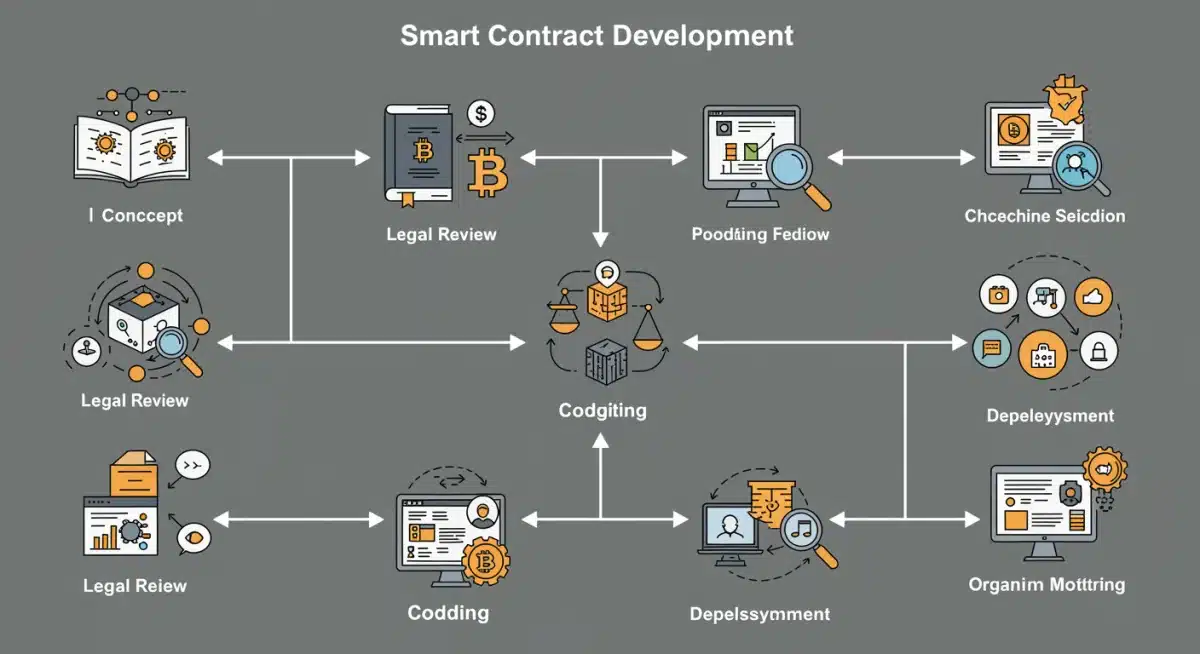
The development process itself typically involves writing the contract code, rigorous testing, and deployment to the chosen blockchain. Security audits are non-negotiable to identify and rectify vulnerabilities before deployment.
Key Steps in Technical Implementation
A structured approach to technical development ensures a robust and secure smart contract implementation.
- Platform Selection: Evaluate blockchain platforms based on scalability, security, cost, and community support.
- Smart Contract Design: Translate legal terms into precise, unambiguous code logic.
- Coding: Write the smart contract using appropriate programming languages (e.g., Solidity, Rust).
- Testing: Conduct extensive unit, integration, and security testing to identify bugs and vulnerabilities.
- Auditing: Engage third-party security auditors to review the code for potential exploits and compliance issues.
- Deployment: Deploy the audited smart contract to the chosen blockchain network.
Investing in skilled developers and comprehensive security measures during this phase is crucial. A poorly coded or insecure smart contract can lead to significant financial losses and reputational damage. This technical foundation is what truly brings the smart contract to life, ensuring its reliability and security.
Integration with Existing Business Systems
A standalone smart contract offers limited value. For true operational impact, successful smart contract implementation requires seamless integration with a business’s existing enterprise resource planning (ERP) systems, customer relationship management (CRM) platforms, and other legacy software. This integration allows smart contracts to pull necessary data for execution and push results back into relevant systems.
The challenge often lies in bridging the gap between decentralized blockchain environments and centralized traditional IT infrastructure. This typically involves developing custom APIs (Application Programming Interfaces) or utilizing middleware solutions that can facilitate secure and efficient data exchange. Data integrity and security during this integration phase are paramount to prevent vulnerabilities.
Strategies for Effective Integration
Careful planning and execution are essential when integrating smart contracts into your current technology stack.
- API Development: Create secure APIs to enable communication between smart contracts and legacy systems.
- Middleware Solutions: Employ specialized middleware to abstract blockchain complexities and streamline integration.
- Data Oracles: Utilize oracles to securely feed real-world data (e.g., commodity prices, weather conditions) into smart contracts.
- Security Protocols: Implement robust security measures for all data transfer points to protect sensitive information.
- Scalability Planning: Ensure the integration strategy can scale as smart contract usage grows within the organization.
Effective integration not only maximizes the benefits of smart contracts but also minimizes disruption to ongoing business operations, allowing for a smoother transition to a more automated and transparent ecosystem. This ensures that the smart contract isn’t an isolated component but a fully integrated part of the business’s digital infrastructure.
Ongoing Management, Monitoring, and Updates
The lifecycle of a smart contract doesn’t end at deployment. Effective smart contract implementation includes robust strategies for ongoing management, continuous monitoring, and the ability to handle necessary updates or modifications, even with their immutable nature. While smart contracts themselves cannot be directly altered post-deployment, mechanisms exist to manage their behavior and adapt to changing conditions.
This phase is crucial for maintaining the long-term viability and security of your smart contract solutions. Regular monitoring helps detect anomalous behavior, potential vulnerabilities, or performance issues. Furthermore, businesses must plan for scenarios where contract terms need to evolve or where external factors necessitate changes in how the contract interacts with other systems.
Best Practices for Post-Deployment Management
To ensure the sustained success of your smart contract initiatives, consider these key practices:
- Continuous Monitoring: Implement tools to track contract execution, gas usage, and security events in real-time.
- Version Control: Plan for deploying new versions of smart contracts to address bugs, enhance features, or adapt to legal changes. This often involves creating new contracts and migrating assets or references.
- Emergency Response Protocols: Establish clear procedures for responding to security breaches or critical failures, including potential kill switches or pause functionalities where ethically and legally permissible.
- Legal Review Cycle: Periodically review the legal implications of deployed contracts in light of evolving U.S. regulations and case law.
- Auditing and Re-auditing: Conduct regular security audits, especially after significant updates or integrations, to maintain a high level of security assurance.
Proactive management and a clear strategy for updates ensure that your smart contracts remain secure, compliant, and aligned with your business objectives in the long run. This holistic approach safeguards your investment and ensures the technology continues to deliver value.
Future Outlook and Strategic Adoption for U.S. Businesses
As we look beyond 2025, the trajectory for smart contract implementation in U.S. businesses points towards increasingly sophisticated applications and broader adoption. The maturation of blockchain technology, coupled with clearer regulatory frameworks, will unlock new opportunities for automation and decentralized operations. Businesses that strategically embrace this evolution now will be best positioned for future success.
The future will likely see more interoperable smart contracts, capable of interacting across different blockchain networks and with traditional systems more seamlessly. Advanced smart contracts, potentially leveraging artificial intelligence and machine learning for more complex decision-making, are also on the horizon. This evolution demands a forward-thinking approach from U.S. enterprises.
Strategic Considerations for Long-Term Growth
To prepare for the future, U.S. businesses should focus on:
- Talent Development: Invest in training existing staff or hiring new talent with expertise in blockchain development, legal tech, and cybersecurity.
- Pilot Programs: Continue to experiment with pilot projects to gain experience and identify new use cases without committing excessive resources.
- Industry Collaboration: Participate in industry consortia and working groups to share best practices and influence regulatory development.
- Regulatory Engagement: Stay informed about legislative changes and actively engage with policymakers to shape a favorable regulatory environment.
- Ethical AI Integration: Explore the ethical implications and governance models for integrating AI with smart contracts.
By adopting a strategic, long-term perspective on smart contracts, U.S. businesses can not only enhance their current operations but also innovate new business models and services, securing a resilient and competitive future in the digital economy.
| Key Implementation Step | Brief Description |
|---|---|
| Legal Due Diligence | Ensure smart contracts comply with U.S. federal and state laws, including enforceability and regulatory adherence, engaging specialized legal counsel. |
| Technical Development | Select appropriate blockchain platforms, code smart contracts, conduct rigorous testing, and perform independent security audits before deployment. |
| System Integration | Seamlessly connect smart contracts with existing ERP/CRM systems using APIs or middleware for efficient data exchange and operational flow. |
| Ongoing Management | Implement continuous monitoring, plan for version updates, and establish emergency response protocols to maintain security and relevance. |
Frequently Asked Questions About Smart Contract Implementation
For U.S. businesses, smart contracts offer enhanced efficiency through automation, reduced operational costs by eliminating intermediaries, increased transparency and trust due to blockchain’s immutable ledger, and improved security against fraud and manipulation. They streamline processes across various sectors from finance to supply chain.
The legal enforceability of smart contracts in the U.S. is evolving. While no federal law specifically governs them, existing electronic transaction laws (like UETA and ESIGN Act) can apply. Some states have passed legislation recognizing their legal validity. Engagement with legal counsel is crucial to ensure compliance and enforceability.
Industries poised for significant benefits include supply chain management for automated tracking and payments, financial services for loans and insurance, real estate for property transfers, and intellectual property for royalty management. Any sector with repetitive, high-value transactions and a need for trust can benefit.
Key technical skills include proficiency in blockchain programming languages like Solidity or Rust, a deep understanding of blockchain architecture, cryptography, and secure coding practices. Expertise in API development for integration with existing systems and knowledge of security auditing is also essential for robust deployment.
Ensuring smart contract security involves rigorous testing, independent third-party security audits, implementing secure coding standards, and establishing continuous monitoring post-deployment. Planning for potential vulnerabilities and having emergency response protocols, such as pause functionalities, are also crucial steps to mitigate risks effectively.
Conclusion
The journey of smart contract implementation for U.S. businesses in 2025 is multifaceted, yet incredibly promising. From understanding the foundational technology and navigating complex legal terrain to meticulous technical development, seamless system integration, and proactive ongoing management, each step is vital. By adopting a strategic and informed approach, businesses can unlock the transformative potential of self-executing agreements, driving unprecedented efficiencies, enhancing trust, and positioning themselves at the forefront of digital innovation. The future of business is increasingly automated and decentralized, and smart contracts are undoubtedly a cornerstone of this evolution.