SEC Guidelines: Smart Contract Impact Q1 2025 for US Developers

New SEC guidelines for Q1 2025 will significantly reshape smart contract development in the U.S., demanding enhanced compliance protocols, robust security measures, and innovative approaches from developers navigating the evolving regulatory landscape.
The landscape of blockchain technology is constantly evolving, and with it, the regulatory frameworks attempting to govern its burgeoning applications. For U.S. developers, understanding SEC smart contract guidelines for Q1 2025 is not just beneficial, but absolutely critical. These recent updates promise to introduce significant shifts, impacting everything from design principles to deployment strategies and ongoing operational considerations for decentralized applications.
Understanding the New Regulatory Landscape
The Securities and Exchange Commission (SEC) has consistently signaled its intent to bring clarity and oversight to the digital asset space. The anticipated guidelines for Q1 2025 are a direct manifestation of this commitment, aiming to address perceived gaps in existing regulations concerning smart contracts. These updates are not merely technical adjustments; they represent a fundamental re-evaluation of how digital assets and their underlying technologies are classified and treated under U.S. securities law. Developers must grasp the nuances of these changes to avoid potential legal pitfalls and ensure their projects remain viable.
Historically, the SEC has applied the ‘Howey Test’ to determine if a digital asset constitutes a security. With smart contracts, this classification becomes more complex, as their programmable nature can blur lines between utility and investment. The new guidelines are expected to provide more specific criteria, particularly for smart contracts that facilitate fundraising, yield generation, or fractional ownership of assets. This increased specificity will require developers to engage with legal counsel early in the design phase, integrating compliance considerations from the ground up rather than as an afterthought.
Key Areas of SEC Focus
- Token Classification: Clearer definitions for when a token linked to a smart contract is considered a security.
- Decentralization Thresholds: Guidance on what level of decentralization might exempt a project from certain securities regulations.
- Disclosure Requirements: Enhanced obligations for projects to provide transparent information to potential investors and users.
In essence, the regulatory environment is maturing, and developers must adapt their practices accordingly. This involves not only understanding the letter of the law but also the spirit behind it: investor protection and market integrity. Ignoring these forthcoming guidelines could lead to significant legal challenges, fines, or even the cessation of projects, making proactive engagement with the new rules paramount for any U.S.-based smart contract developer.
The overarching goal of these new regulations is to foster a more secure and transparent digital asset market. For developers, this means a shift towards greater accountability and a need to demonstrate a clear understanding of how their smart contracts interact with financial instruments and investor expectations. The early adoption of compliance-centric design will be a competitive advantage.
Implications for Smart Contract Design and Architecture
The new SEC guidelines for Q1 2025 will undoubtedly exert a profound influence on how smart contracts are designed and architected. Developers will need to move beyond purely functional considerations and integrate regulatory compliance deeply into their technical specifications. This includes considerations for immutability, upgradeability, and the handling of sensitive data, all under the watchful eye of evolving legal interpretations. The emphasis will shift towards creating contracts that are not only efficient and secure but also auditable and amenable to regulatory scrutiny.
One critical area of impact will be the design of governance mechanisms within decentralized autonomous organizations (DAOs) and other smart contract-driven entities. If a smart contract is deemed to be issuing a security, the governance structure around it may need to comply with specific disclosure and voting requirements. This could necessitate more robust on-chain identity verification, enhanced transparency in voting processes, and even mechanisms for regulatory intervention in extreme cases, challenging the traditional ethos of pure decentralization.
Architectural Adjustments for Compliance
- Modular Design: Facilitating easier audits and potential upgrades to comply with future regulatory changes.
- Oracle Integration: Ensuring data feeds used by smart contracts are reliable and sourced from verifiable, compliant providers.
- Access Control: Implementing granular access controls to manage who can initiate, pause, or modify contract functions, especially for sensitive operations.
Furthermore, the guidelines may necessitate a re-evaluation of how smart contracts interact with off-chain assets and traditional financial systems. Bridging mechanisms, often reliant on smart contracts, will likely face increased scrutiny regarding their security, transparency, and the legal frameworks governing the underlying assets. Developers will need to build these bridges with an acute awareness of cross-jurisdictional financial regulations, especially when dealing with tokenized securities or real-world assets. The complexity of these integrations will demand a higher level of technical and legal expertise from development teams.
Ultimately, smart contract architecture will need to become more resilient to regulatory shifts. This might involve building in mechanisms for parameter adjustments, emergency shutdowns, or even the ability to fork a contract in response to a legal mandate. The goal is to create systems that are adaptable without compromising their core principles of trust and automation, a delicate balance developers will need to master.
Enhanced Security and Auditing Requirements
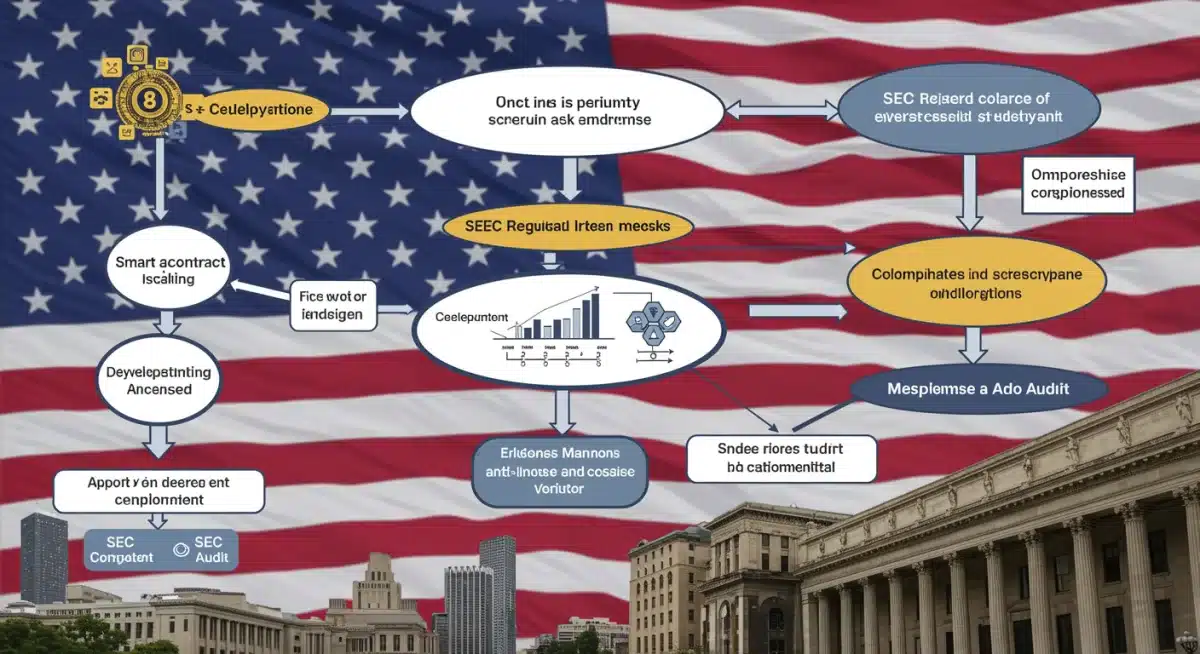
With increased regulatory scrutiny comes an inevitable demand for enhanced security and more rigorous auditing processes for smart contracts. The SEC’s focus on investor protection means that vulnerabilities that could lead to financial losses will be viewed with extreme gravity. For Q1 2025, U.S. developers can expect guidelines that emphasize thorough pre-deployment audits, continuous monitoring, and clear incident response plans for smart contract vulnerabilities. This elevates security from a best practice to a regulatory imperative.
The scope of these audits will likely expand beyond traditional code reviews to include economic security analyses, formal verification, and even simulations of potential attack vectors. Projects that fail to demonstrate robust security measures, or that experience significant exploits due to negligence, could face severe penalties. This necessitates a significant investment in security expertise and tools, alongside a culture of proactive risk management throughout the development lifecycle. Developers must consider not just the technical flaws but also the potential for social engineering or oracle manipulation.
Critical Security Considerations
- Third-Party Audits: Mandatory engagement with reputable, independent security auditors before deployment.
- Bug Bounty Programs: Encouragement or requirement for ongoing bug bounty programs to identify and fix vulnerabilities.
- Continuous Monitoring: Implementation of tools and processes for real-time monitoring of contract activity and potential exploits.
Furthermore, the new guidelines may introduce requirements for developers to clearly communicate the risks associated with smart contract usage to end-users. This could involve standardized risk disclosures, user-friendly explanations of contract functionalities, and warnings about the experimental nature of certain decentralized applications. Transparency regarding potential vulnerabilities and the limitations of smart contract technology will become crucial. This shift aims to empower users to make informed decisions and reduces the likelihood of regulatory action stemming from misunderstood risks.
In conclusion, the focus on security will not just be about preventing hacks but also about building trust and ensuring accountability. Developers will need to adopt a ‘security-first’ mindset, embedding robust testing, auditing, and monitoring practices into every stage of their smart contract development process, thereby building more resilient and regulator-friendly systems.
Data Privacy and AML Compliance in Decentralized Applications
The intersection of smart contracts, data privacy, and Anti-Money Laundering (AML) regulations presents a complex challenge that the new SEC guidelines for Q1 2025 are expected to address. While blockchain’s pseudonymous nature offers a degree of privacy, the immutability of data on-chain can create issues when personal identifiable information (PII) is inadvertently recorded. Developers will need to navigate this delicate balance, ensuring compliance with data protection laws like GDPR (where applicable) and U.S. privacy statutes, even within decentralized environments.
For AML compliance, smart contracts that facilitate financial transactions or asset transfers will face heightened scrutiny. The SEC, in conjunction with FinCEN, will likely push for mechanisms that allow for transaction tracing and, in certain circumstances, user identification. This could mean a move towards ‘permissioned’ smart contracts or the integration of Know Your Customer (KYC) protocols at various points within a decentralized application’s user journey. The challenge for developers lies in implementing these centralized compliance requirements without undermining the core tenets of decentralization and user privacy that many blockchain projects champion.
Compliance Mechanisms for Data and AML
- Zero-Knowledge Proofs (ZKPs): Utilizing ZKPs to verify information without revealing the underlying data, balancing privacy with compliance.
- Decentralized Identifiers (DIDs): Integrating DID solutions to manage user identities in a privacy-preserving yet verifiable manner.
- Sanctions Screening Oracles: Employing oracles that check addresses against sanctions lists to prevent illicit transactions.
The guidelines may also introduce requirements for data governance within smart contract ecosystems. This includes defining who has control over data, how it can be accessed, and mechanisms for data deletion or modification if required by privacy laws. For developers, this necessitates building smart contracts with careful consideration of data lifecycle management, potentially incorporating off-chain data storage solutions or cryptographic techniques to protect sensitive information while maintaining transparency for compliance purposes.
In conclusion, the balance between decentralization, privacy, and regulatory compliance will be a defining feature of smart contract development in Q1 2025. Developers must embrace innovative cryptographic solutions and thoughtful architectural choices to meet evolving data privacy and AML standards, ensuring their applications are both compliant and user-centric.
The Role of Legal Counsel and Compliance Teams
As the SEC’s guidelines for smart contracts become more defined in Q1 2025, the role of legal counsel and dedicated compliance teams will transition from advisory to indispensable. Developers and project teams, particularly in the U.S., can no longer afford to view legal input as an optional extra. Instead, legal and compliance expertise must be integrated into every phase of the smart contract development lifecycle, from initial concept to ongoing operation. This proactive engagement is crucial for mitigating risks and ensuring long-term project viability.
Legal teams will be instrumental in interpreting the complex regulatory language and translating it into actionable technical requirements. They will help assess whether a smart contract or associated token falls under securities law, guide the structuring of token sales, and ensure proper disclosures are made. For developers, this means fostering closer collaboration with legal professionals, perhaps even embedding legal experts within their development sprints to provide real-time guidance on design choices that have regulatory implications.
Integrating Legal Expertise
- Early Legal Review: Conducting legal assessments during the conceptualization phase of any smart contract project.
- Compliance by Design: Working with legal teams to bake regulatory requirements directly into smart contract code and operational procedures.
- Ongoing Regulatory Monitoring: Establishing processes to continuously track regulatory updates and adapt smart contracts accordingly.
Furthermore, the establishment of dedicated compliance teams, or the allocation of specific compliance responsibilities within existing teams, will become increasingly common. These teams will be responsible for internal audits, maintaining records of compliance efforts, and acting as a liaison with regulatory bodies. Their expertise will be vital in developing internal policies and procedures that reflect the new SEC guidelines, ensuring that all aspects of a smart contract project adhere to legal standards. This includes preparing for potential regulatory inquiries and demonstrating a robust framework for ethical operations.
In summary, the evolving regulatory landscape demands a holistic approach to smart contract development, one where legal and compliance considerations are as fundamental as technical ones. Developers who proactively engage with legal counsel and build strong internal compliance capabilities will be better positioned to navigate the complexities of Q1 2025 and beyond, fostering innovation within a secure and regulated environment.
Future-Proofing Smart Contract Development
Given the dynamic nature of cryptocurrency regulation, future-proofing smart contract development against anticipated and unforeseen SEC guidelines for Q1 2025 is paramount for U.S. developers. This involves building adaptable, resilient, and transparent systems that can evolve without requiring complete overhauls. The emphasis shifts from merely meeting current compliance needs to anticipating future regulatory trends and embedding flexibility into the core design of decentralized applications.
One key strategy for future-proofing is to adopt modular development practices. By breaking down smart contracts into smaller, interchangeable components, developers can more easily update specific modules to comply with new regulations without affecting the entire system. This also facilitates easier auditing and bug fixing, which are critical for maintaining regulatory favor. Furthermore, designing contracts with upgradeability features, such as proxy patterns, allows for the deployment of new logic while preserving the contract’s address and state, providing a crucial mechanism for adaptation.
Strategies for Adaptability
- Upgradeability Mechanisms: Implementing proxy contracts or similar patterns to allow for logic updates.
- Parameterization: Designing contracts with configurable parameters that can be adjusted through governance or authorized entities.
- Decentralized Governance: Establishing robust on-chain governance models that can collectively decide on and implement necessary changes.
Another crucial aspect of future-proofing involves robust documentation and transparency. Comprehensive documentation of a smart contract’s design choices, security measures, and compliance considerations can significantly aid in demonstrating good faith and due diligence to regulators. This includes clear explanations of how data is handled, how funds are managed, and the mechanisms for dispute resolution. Providing easily accessible and understandable information about the contract’s functionality and risks will foster greater trust from both users and regulatory bodies, reducing the likelihood of adverse actions.
Ultimately, future-proofing smart contract development is about building sustainable ecosystems. This means fostering a culture of continuous learning, engaging with regulatory bodies, and contributing to the development of industry best practices. By embracing adaptability, transparency, and a proactive approach to compliance, U.S. developers can ensure their smart contract projects remain relevant and compliant in an ever-changing regulatory landscape, well beyond Q1 2025.
Navigating Innovation and Compliance Challenges
The new SEC guidelines for Q1 2025 present both significant challenges and unique opportunities for innovation within the smart contract development space for U.S. developers. The tension between fostering groundbreaking decentralized technologies and ensuring compliance with traditional financial regulations will be a defining characteristic of this period. Developers must find creative ways to build innovative solutions that also adhere to a stricter regulatory framework, without stifling the very essence of blockchain’s disruptive potential.
One primary challenge lies in the inherent conflict between decentralization and the need for identifiable accountability that regulators often demand. Smart contracts are designed to operate autonomously, often without central points of control. However, regulatory bodies typically require identifiable entities to hold accountable in cases of non-compliance or fraud. Developers will need to innovate by designing hybrid models that can offer sufficient decentralization for censorship resistance and immutability, while also providing mechanisms for legal recourse or oversight when necessary. This could involve multi-signature schemes or decentralized dispute resolution systems with legal enforceability.
Balancing Innovation and Regulation
- Regulatory Sandboxes: Actively participating in regulatory sandboxes to test innovative solutions under controlled environments.
- Cross-Chain Compliance: Developing solutions that can maintain compliance across different blockchain networks and jurisdictions.
- Education and Advocacy: Engaging with regulators to educate them on blockchain capabilities and advocate for sensible policies.
Furthermore, the increased compliance burden could disproportionately affect smaller development teams and startups, potentially concentrating innovation within larger, well-funded entities. To counteract this, open-source compliance tools and standardized regulatory frameworks could emerge, providing accessible resources for all developers. This would democratize compliance, allowing a broader range of innovators to participate in the smart contract space without being overwhelmed by legal complexities. The community’s ability to self-regulate and establish industry best practices will also play a crucial role in shaping future regulatory approaches.
In conclusion, navigating the balance between innovation and compliance will require a nuanced and collaborative approach. U.S. developers must embrace these challenges as opportunities to build more robust, secure, and legally sound smart contract applications. By proactively engaging with the regulatory environment, leveraging new technologies for compliance, and fostering community-driven standards, the smart contract ecosystem can continue to thrive and deliver on its promise of a more efficient and transparent digital future, even under increased SEC scrutiny.
| Key Aspect | Description of Impact |
|---|---|
| Regulatory Clarity | New SEC guidelines offer clearer definitions for smart contract classification and securities status. |
| Design Adaptation | Requires smart contract architectures to integrate compliance, modularity, and upgradeability for Q1 2025. |
| Security & Auditing | Increased demand for rigorous security audits, continuous monitoring, and transparent risk disclosures. |
| Legal & Compliance | Elevated importance of legal counsel and dedicated compliance teams throughout the development lifecycle. |
Frequently Asked Questions About SEC Smart Contract Guidelines
The SEC’s primary goals are to enhance investor protection, ensure market integrity, and provide clearer regulatory frameworks for digital assets and smart contracts. They aim to classify tokens more precisely and mandate greater transparency from projects operating in the U.S. market.
Existing smart contracts may need to undergo compliance reviews and potentially require modifications or upgrades to align with the new regulations. Projects might need to implement new disclosure mechanisms, adjust governance structures, or enhance security features to meet updated standards.
The SEC is expected to provide clearer thresholds for what constitutes sufficient decentralization to potentially exempt a project from certain securities regulations. Developers must carefully design their projects to demonstrate genuine decentralization, often balancing it with accountability requirements.
Absolutely. The new guidelines make legal counsel and compliance expertise indispensable. Developers will need to collaborate closely with legal professionals from the conceptualization phase to ensure ‘compliance by design’ and navigate the complexities of regulatory interpretation effectively.
Future-proofing involves adopting modular design, implementing upgradeability mechanisms, and establishing robust decentralized governance. Continuous monitoring of regulatory changes, comprehensive documentation, and proactive engagement with the community are also key strategies for long-term compliance and adaptability.
Conclusion
The impending SEC guidelines for Q1 2025 mark a pivotal moment for smart contract development in the U.S. While they introduce layers of complexity and demand significant adaptation from developers, they also present an opportunity to build a more secure, transparent, and resilient decentralized ecosystem. By embracing a proactive approach to compliance, integrating legal expertise from the outset, prioritizing robust security, and designing for future adaptability, U.S. developers can not only navigate this evolving regulatory landscape successfully but also lead the way in establishing new standards for responsible innovation in Web3.