Under-the-Radar Altcoins: Q2 2025 US Trader Brief
This brief provides US traders with a focused analysis on identifying high-potential, under-the-radar altcoins that could yield a 50% upside in Q2 2025, leveraging strategic research and market insights.
For US traders navigating the dynamic cryptocurrency landscape, the pursuit of undervalued assets with substantial growth prospects remains a core objective. Identifying under-the-radar altcoins with 50% upside potential: A Q2 2025 Research Brief for US Traders delves into the methodologies and critical factors necessary to uncover these hidden gems before they enter the mainstream spotlight. This briefing aims to equip you with the insights needed to make informed decisions in a market brimming with innovation and opportunity.
Understanding the Q2 2025 Market Landscape for Altcoins
As we approach Q2 2025, the cryptocurrency market continues its evolution, shaped by macroeconomic shifts, regulatory developments, and technological advancements. Understanding this broader context is paramount for identifying altcoins that are poised for significant growth. The US market, in particular, is influenced by specific regulatory clarity and institutional adoption trends, which can either propel or hinder certain projects.
The sentiment in Q2 2025 is likely to be a mix of cautious optimism. While Bitcoin’s halving events often set the stage for broader market rallies, altcoins typically follow with a lag. This period often presents unique opportunities for projects with strong fundamentals and innovative solutions to gain traction. Traders must look beyond the immediate hype and assess the long-term viability and utility of an altcoin.
Key Macro Factors Influencing Altcoin Performance
Several overarching economic and political factors will undoubtedly play a role in altcoin performance during Q2 2025. Interest rate decisions by the Federal Reserve, global inflation rates, and geopolitical stability all contribute to investor risk appetite. A more stable economic outlook generally encourages greater investment into speculative assets like altcoins.
- Regulatory Environment: Evolving US crypto regulations will significantly impact project viability and investor confidence. Clarity can attract institutional capital.
- Technological Innovation: Breakthroughs in blockchain scalability, interoperability, and security will drive demand for specific altcoins.
- Institutional Adoption: Increased participation from traditional finance institutions can validate projects and inject substantial liquidity.
- Decentralized Finance (DeFi) Growth: The expansion of DeFi protocols continues to create new use cases and demand for underlying tokens.
In conclusion, the Q2 2025 market landscape for altcoins is complex, requiring a nuanced understanding of both micro and macro economic indicators. Traders should prioritize projects that demonstrate resilience against potential headwinds and possess strong growth catalysts.
Methodology for Identifying High-Potential Altcoins
Uncovering altcoins with 50% upside potential demands a disciplined and multi-faceted research methodology. It’s not merely about chasing the next trending coin; it’s about deep fundamental analysis, understanding market dynamics, and recognizing early indicators of growth. Our approach prioritizes projects that exhibit real-world utility, strong development teams, and active communities.
A crucial first step involves sifting through the vast number of available altcoins to narrow down a manageable list for in-depth analysis. This initial screening process often involves looking at market capitalization, trading volume, and initial project whitepapers. We aim to identify projects that are not yet fully priced in by the broader market but possess the underlying strength to justify future appreciation.
Fundamental Analysis: Beyond the Hype
True potential lies in a project’s fundamentals. This means scrutinizing the technology, the problem it solves, and the competitive landscape. A strong fundamental analysis helps differentiate between fleeting trends and sustainable innovations.
- Technological Innovation: Does the project offer a novel solution or a significant improvement over existing technologies?
- Use Case and Market Fit: Is there a clear demand for the project’s services or products? Does it address a real-world problem?
- Development Team and Advisors: Evaluate the team’s experience, track record, and the expertise of their advisors.
- Tokenomics: Analyze the token distribution, vesting schedules, and inflation mechanisms to understand potential selling pressure.
Furthermore, assessing the project’s roadmap and its ability to meet milestones is essential. A well-defined and executed roadmap indicates a committed team and a clear vision. Without a solid foundation, even the most innovative ideas can falter.
Community and Ecosystem Engagement
The strength of an altcoin project is often reflected in its community and ecosystem. A vibrant, engaged community can drive adoption, provide valuable feedback, and contribute to the project’s decentralized governance. Active developer communities signify ongoing innovation and security enhancements.
Monitoring social media sentiment, developer activity on platforms like GitHub, and participation in governance forums can provide early signals of a project’s health. A growing ecosystem of dApps, integrations, and partnerships also indicates increasing utility and network effects. These elements collectively contribute to a project’s resilience and its potential for sustained growth.
In essence, a robust methodology combines rigorous fundamental analysis with an keen eye on community and market sentiment. This holistic approach significantly enhances the chances of discovering those elusive under-the-radar altcoins.
Technical Indicators and Chart Patterns for Entry Points
While fundamental analysis identifies strong projects, technical analysis helps pinpoint optimal entry points for US traders aiming for that 50% upside. Understanding key technical indicators and recognizing specific chart patterns can provide a significant edge in timing your investments. It’s about combining the ‘what’ with the ‘when’.
We focus on indicators that signal accumulation phases, breakouts from consolidation patterns, and confirmation of upward momentum. Avoid chasing pumps; instead, look for evidence of smart money entering a position before the broader market catches on. Volume analysis is particularly crucial here, as it can confirm the strength behind price movements.
Key Technical Indicators to Monitor
Several technical indicators consistently prove useful in identifying potential breakouts and confirming trends. These tools, when used in conjunction, can offer a clearer picture of market sentiment and future price direction.
- Relative Strength Index (RSI): Look for altcoins that are oversold or showing bullish divergence, indicating potential reversals.
- Moving Averages (MAs): Crossovers of short-term MAs above long-term MAs (e.g., 50-day above 200-day) often signal bullish trends.
- Volume: Significant spikes in trading volume accompanying price increases can confirm strong buying pressure.
- Bollinger Bands: Price movements near the lower band, especially with a tightening of the bands, can suggest a potential breakout.
Furthermore, understanding support and resistance levels is critical. These are price points where an asset tends to stop falling and start rising (support) or stop rising and start falling (resistance). Identifying these levels can help set realistic price targets and stop-loss orders.
Recognizing Bullish Chart Patterns
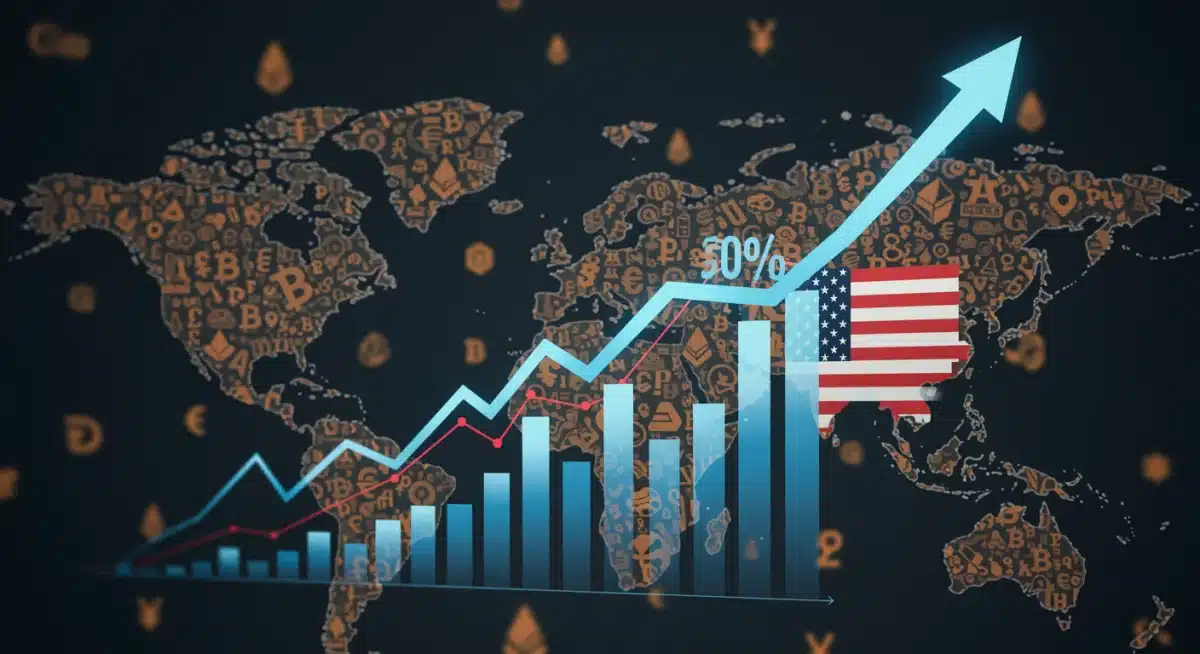
Certain chart patterns frequently precede significant upward price movements. Learning to identify these patterns can give traders an early indication of potential breakouts. These patterns reflect the psychology of market participants and often lead to predictable outcomes.
Examples include inverse head and shoulders, cup and handle, and various triangle patterns. A breakout from a prolonged consolidation, especially on increasing volume, is a strong signal. The key is to confirm these patterns with other technical indicators and not rely on a single signal. False breakouts are common, and proper risk management is essential.
In summary, integrating technical analysis into your research framework provides a robust method for timing your entry into under-the-radar altcoins. This blend of fundamental strength and technical confirmation significantly enhances the probability of achieving that 50% upside.
Risk Management and Portfolio Allocation Strategies
Investing in under-the-radar altcoins, while offering substantial upside, inherently carries higher risks. A well-defined risk management strategy and thoughtful portfolio allocation are not just advisable; they are absolutely essential for protecting capital and ensuring sustainable growth. For US traders, this includes understanding regulatory nuances that might affect specific assets.
Never allocate more capital than you can comfortably afford to lose, especially in speculative altcoins. Diversification across multiple promising projects, rather than concentrating all capital into one, is a fundamental principle. This strategy helps mitigate the impact if one particular project underperforms or fails.
Diversification and Position Sizing
Effective diversification goes beyond simply buying different altcoins; it involves spreading risk across various sectors within the crypto space (e.g., DeFi, NFTs, Layer 1s, gaming) and different market capitalizations. Position sizing, or determining how much to invest in each asset, is equally critical.
- Limit Exposure: Cap the percentage of your total portfolio allocated to any single altcoin, especially high-risk, low market cap projects.
- Sector Diversity: Invest in altcoins from different blockchain categories to avoid concentration risk.
- Market Cap Blending: Combine investments in established altcoins with smaller, high-potential projects.
- Staggered Entries: Consider dollar-cost averaging into positions rather than a single large purchase, to smooth out volatility.
Furthermore, regularly rebalancing your portfolio helps maintain your desired risk profile. As certain assets grow, they might take up a larger percentage of your portfolio than initially intended, increasing your overall risk exposure. Rebalancing helps bring these allocations back into line.
Setting Stop-Losses and Take-Profit Targets
Defining clear exit strategies before entering a trade is a cornerstone of responsible risk management. This includes setting both stop-loss orders to limit potential losses and take-profit targets to secure gains.
A stop-loss order automatically sells your asset if it drops to a predetermined price, preventing catastrophic losses. Conversely, a take-profit order executes a sale when the asset reaches a specific price target, ensuring you lock in your desired returns. For a 50% upside target, consider partial profit-taking at intermediate milestones to reduce risk and secure some capital.
By diligently implementing these risk management and portfolio allocation strategies, US traders can navigate the volatile altcoin market with greater confidence, safeguarding their investments while pursuing significant growth opportunities.
Case Studies: Exemplary Altcoins with Potential for Q2 2025
To illustrate our methodology, let’s consider hypothetical examples of altcoins that might fit the ‘under-the-radar’ profile with 50% upside potential for Q2 2025. These are not direct financial recommendations but rather illustrations of the types of projects that warrant deeper investigation based on our outlined criteria. We look for projects solving genuine problems, exhibiting strong technical foundations, and showing early signs of community adoption.
The selection process for such case studies involves a rigorous filter, focusing on projects that have demonstrated consistent development, clear communication, and a growing ecosystem. Their current market valuation should not yet fully reflect their long-term potential, creating the opportunity for significant gains.
Project A: Decentralized Data Solutions
Imagine a project focused on decentralized data storage and retrieval, addressing critical issues of data privacy and censorship resistance. Its technology offers a compelling alternative to centralized cloud providers, with a unique consensus mechanism that incentivizes long-term data hosting.
The team comprises seasoned engineers and cryptographers from reputable tech firms, and their roadmap for Q2 2025 includes a major mainnet upgrade and partnerships with several Web2 companies looking to transition to decentralized infrastructure. Its tokenomics are designed to reward network participants and ensure long-term sustainability, with a clear deflationary mechanism. The community is active, and developer contributions are steadily increasing, signaling strong organic growth.
Project B: Niche DeFi Protocol
Consider a DeFi protocol specializing in an underserved niche within decentralized lending or derivatives. This project utilizes novel smart contract architecture to offer highly efficient and secure financial services tailored to a specific segment of the market that traditional DeFi has largely overlooked.
Its Q2 2025 plans include expanding its offerings to new blockchain networks via cross-chain bridges and launching a significant liquidity mining program to attract more users. The team has a background in traditional finance and blockchain development, bringing a blend of industry expertise. The token has a clear utility within the protocol, with staking and governance features that incentivize holding, while its market cap remains relatively low compared to its potential total value locked (TVL) growth.
These hypothetical case studies underscore the importance of a comprehensive approach. Identifying such projects requires patience, diligent research, and a commitment to understanding the underlying technology and market dynamics, rather than simply following trends.
Regulatory Outlook and Compliance for US Traders in Q2 2025
For US traders, the regulatory landscape is a critical component of any investment strategy, especially when dealing with under-the-radar altcoins. Q2 2025 is expected to bring further clarity, or perhaps new complexities, to how cryptocurrencies are classified and regulated. Staying informed about these developments is not just about compliance; it’s about mitigating legal risks and understanding how regulatory shifts can impact market sentiment and asset valuations.
The Securities and Exchange Commission (SEC) and the Commodity Futures Trading Commission (CFTC) continue to play significant roles in shaping the regulatory framework. Their actions, along with potential legislative efforts, can reclassify certain tokens, affecting their tradability and the platforms on which they can be accessed by US citizens.
Navigating SEC and CFTC Guidelines
The distinction between a security and a commodity is paramount. Tokens deemed securities by the SEC face stricter registration and disclosure requirements, which can limit their availability on certain exchanges and affect their liquidity. Traders must assess the likelihood of an altcoin falling under security classification based on the Howey Test criteria.
- Howey Test Analysis: Understand if an altcoin’s structure and offering might classify it as an investment contract.
- Exchange Compliance: Prioritize trading on US-regulated exchanges that adhere to local compliance standards for listed assets.
- Tax Implications: Be aware of evolving IRS guidance on cryptocurrency taxation, including capital gains and income reporting.
- State-Specific Regulations: Some states have their own unique cryptocurrency regulations that can impact trading activities.
Furthermore, anti-money laundering (AML) and know-your-customer (KYC) requirements are becoming increasingly stringent across the board. Traders should expect and comply with these measures to ensure they are operating within legal boundaries.
Impact of Potential Legislation
Beyond agency actions, the possibility of new federal legislation specifically addressing cryptocurrencies remains. Such legislation could provide a more unified and comprehensive framework, potentially reducing uncertainty but also introducing new restrictions or requirements. Traders should monitor legislative proposals and their potential passage closely.
The overarching goal for US traders should be to operate within a compliant framework, minimizing exposure to projects that operate in regulatory gray areas or are at high risk of enforcement actions. This proactive approach to understanding the regulatory landscape is crucial for long-term success in the altcoin market.
In conclusion, the regulatory environment in Q2 2025 will be a significant determinant of altcoin market dynamics for US traders. A thorough understanding of compliance requirements and active monitoring of legislative developments are indispensable for navigating this complex terrain successfully.
The Future of Altcoins Beyond Q2 2025: Long-Term Outlook
While our immediate focus is on Q2 2025, a prudent US trader also considers the long-term trajectory of the altcoin market. The projects identified as having 50% upside potential for the near term are often those with robust foundations that could offer sustained growth well beyond a single quarter. Understanding the broader trends shaping the future of Web3 and blockchain technology provides context for these shorter-term opportunities.
The continuous evolution of blockchain technology, coupled with increasing mainstream adoption, suggests a promising future for altcoins that solve real-world problems and contribute meaningfully to the decentralized ecosystem. We anticipate further integration of blockchain into various industries, from supply chain management to digital identity, creating new avenues for altcoin utility and value.
Emerging Trends Shaping the Altcoin Space
Several key trends are poised to redefine the altcoin landscape in the coming years. These developments offer insights into where long-term value might accrue and which types of projects are best positioned for enduring success.
- Interoperability Solutions: Projects that facilitate seamless communication and asset transfer between different blockchains will become increasingly vital.
- Zero-Knowledge Proofs (ZKPs): Advances in privacy-preserving technologies will drive demand for ZKP-focused altcoins.
- Decentralized Physical Infrastructure Networks (DePIN): The tokenization of real-world infrastructure could unlock significant value.
- AI Integration: Altcoins leveraging AI for enhanced functionality, security, or data analysis will gain traction.
These trends highlight a shift towards more sophisticated, utility-driven blockchain applications. Projects that can effectively capitalize on these emerging areas, demonstrating both technical prowess and market adoption, are likely to be the long-term winners.
The Maturation of the Cryptocurrency Ecosystem
The overall cryptocurrency ecosystem is maturing, moving beyond speculative trading to embrace more institutional and enterprise-level applications. This maturation brings with it increased stability, greater regulatory clarity, and a broader understanding of blockchain’s transformative potential.
As the industry evolves, the distinction between legitimate, value-driven projects and speculative ventures will become even clearer. Altcoins that prioritize security, scalability, and genuine utility are best positioned to thrive in this maturing environment. For US traders, maintaining a long-term perspective, even when pursuing short-term gains, is crucial for sustained success.
Ultimately, the future of altcoins is bright for projects that innovate, adapt, and build sustainable ecosystems. Identifying these projects early, even with a Q2 2025 focus, can set the stage for significant long-term investment returns.
| Key Point | Brief Description |
|---|---|
| Market Landscape Q2 2025 | Macroeconomic factors and regulatory shifts will influence altcoin performance; focus on projects with strong fundamentals. |
| Identification Methodology | Combine fundamental analysis (tech, team, tokenomics) with community engagement to find undervalued projects. |
| Risk Management | Diversify portfolios, set stop-losses, and define take-profit targets to protect capital in volatile markets. |
| Regulatory Compliance | Stay informed on SEC/CFTC guidelines and potential legislation to ensure compliant trading for US investors. |
Frequently Asked Questions About Altcoin Investing
Under-the-radar altcoins typically have lower market capitalization, less media coverage, and are not yet widely adopted by institutional investors. They often possess strong fundamentals and innovative technology but are still in earlier stages of market recognition, offering higher growth potential.
Risk mitigation involves thorough due diligence, diversifying investments across various projects and sectors, and strictly adhering to position sizing. Implementing stop-loss orders and setting realistic take-profit targets are also crucial for managing potential losses and securing gains.
Technical indicators like RSI, moving averages, and volume analysis help traders identify optimal entry points by signaling accumulation phases, potential breakouts from consolidation, and confirming upward momentum, thus improving timing for investments.
US traders face a complex and evolving regulatory environment, with classifications by the SEC and CFTC heavily impacting legal tradability and exchange access. Compliance helps avoid legal issues, ensures platform access, and mitigates risks associated with regulatory enforcement actions.
Beyond Q2 2025, investors should monitor trends such as interoperability solutions, zero-knowledge proofs (ZKPs), Decentralized Physical Infrastructure Networks (DePIN), and AI integration. These areas are expected to drive significant innovation and value in the broader Web3 ecosystem.
Conclusion
The pursuit of under-the-radar altcoins with 50% upside potential for Q2 2025 represents an exciting, yet challenging, endeavor for US traders. Success hinges on a comprehensive strategy that interweaves diligent market analysis, robust fundamental and technical research, and stringent risk management. As the cryptocurrency landscape continues to mature, those who prioritize understanding both the innovative technology and the evolving regulatory environment will be best positioned to capitalize on emerging opportunities. By adhering to the principles outlined in this brief, US traders can navigate the volatility, mitigate potential pitfalls, and uncover the next generation of high-growth digital assets, laying the groundwork for sustained portfolio appreciation.