Web3 Gaming Q4 2026 Outlook: Beyond Play-to-Earn Hype
The landscape of digital entertainment is constantly evolving, and few sectors exemplify this dynamism as profoundly as Web3 gaming. As we approach Q4 2026, the initial fervor surrounding play-to-earn (P2E) models has matured, giving way to a more nuanced understanding of what truly constitutes sustainable value and engaging experiences within the blockchain ecosystem. This comprehensive Web3 Gaming Outlook delves deep into the anticipated trends, technological advancements, and strategic shifts that will define the latter part of 2026, moving beyond speculative hype to identify genuine opportunities for players, developers, and investors alike.
The journey of Web3 gaming has been a rollercoaster. Early adopters were drawn by the promise of financial rewards, often overshadowing the core gaming experience. This led to a boom-and-bust cycle for many projects, with unsustainable tokenomics and rudimentary gameplay failing to retain users in the long run. However, the past few years have seen a significant pivot. Developers are now focusing on creating truly immersive and fun games that happen to leverage blockchain technology, rather than the other way around. This fundamental shift is crucial for the long-term viability and mass adoption of the sector.
Our Web3 Gaming Outlook for Q4 2026 suggests a period of consolidation and innovation. We expect to see a clear delineation between projects that prioritize speculative earning and those that build robust, entertaining gaming experiences with integrated economic systems. The market will likely reward the latter, fostering an environment where player ownership, verifiable digital assets, and decentralized governance enhance, rather than dictate, the gaming experience. This article will explore these themes in detail, providing insights into where the industry is headed and how stakeholders can best navigate this exciting, yet complex, domain.
The Evolution of Play-to-Earn: From Speculation to Sustained Engagement
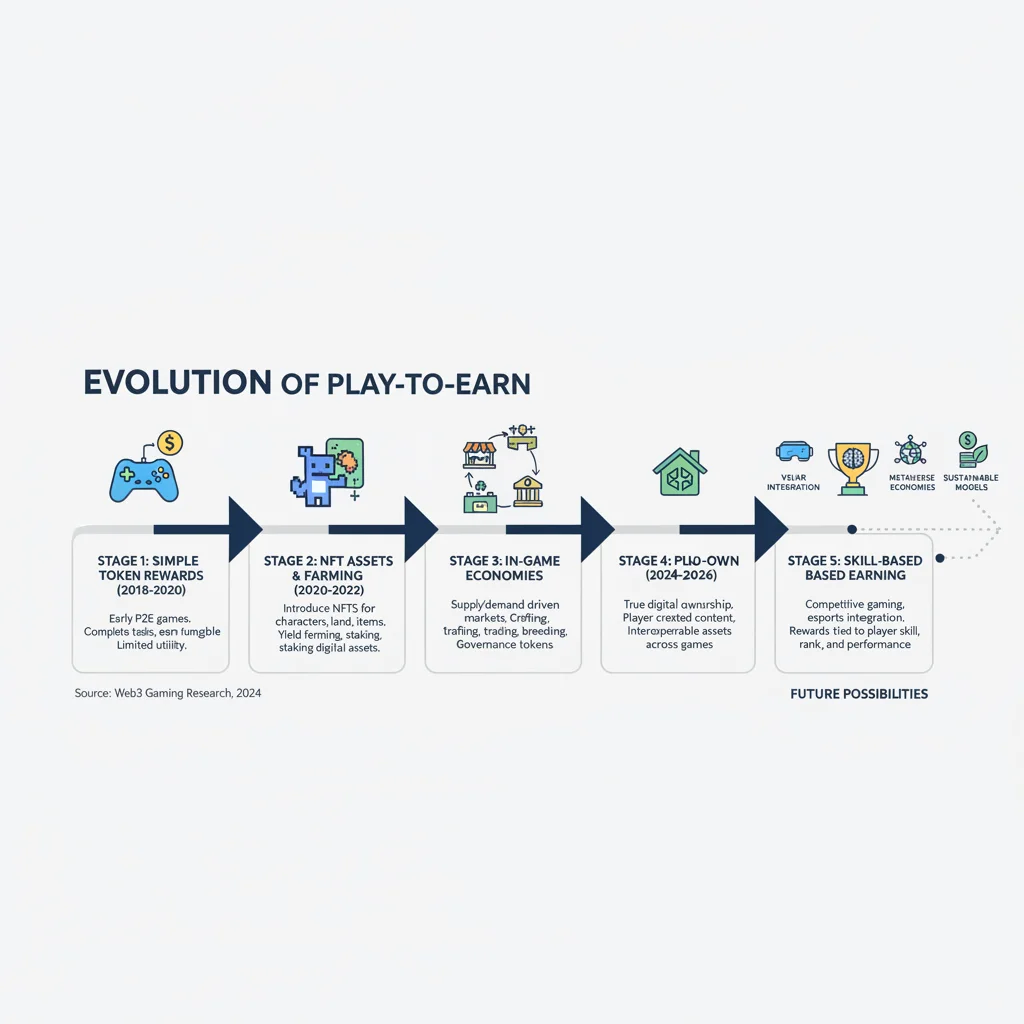
The term ‘play-to-earn’ has been both a blessing and a curse for Web3 gaming. While it successfully attracted initial attention and capital, it also set expectations that were often unrealistic and led to models that were economically fragile. By Q4 2026, the P2E paradigm will have undergone a significant metamorphosis. Purely extractive P2E models, where the primary motivation is financial gain derived from new player investment, will largely be relegated to the past. Instead, we anticipate the rise of ‘play-and-own’ or ‘play-and-earn’ models that emphasize genuine value creation through gameplay, skill, and creative contribution.
What does this mean in practice? It means that the earning potential will be more intrinsically linked to the game’s core mechanics and the player’s engagement with the ecosystem. For instance, skilled players might earn valuable in-game assets through competitive play, which they can then trade or use to enhance their experience. Content creators within the game might be rewarded for developing popular user-generated content (UGC), fostering a vibrant creator economy. This shift moves the focus from simply ‘earning’ tokens to ‘owning’ valuable, verifiable assets and ‘contributing’ to a thriving digital world.
The sustainability of these new models will depend heavily on robust in-game economies. This involves careful tokenomics design, balancing inflation and deflation, and ensuring that the value derived from playing is tied to real utility or demand within the game or broader Web3 ecosystem. Projects that can strike this balance will be the ones that thrive. Our Web3 Gaming Outlook highlights that games offering deep, rewarding gameplay loops combined with meaningful ownership will attract and retain a dedicated player base, proving that the ‘fun’ factor is paramount.
Furthermore, we expect more sophisticated approaches to player incentives. Instead of direct token handouts, games will likely integrate mechanisms such as fractional ownership of game assets, revenue sharing from in-game activities, or even decentralized autonomous organization (DAO) governance participation that grants players a real say in the game’s development and future. This empowers players beyond mere consumers, transforming them into genuine stakeholders. The success stories of Q4 2026 will undoubtedly be those that have mastered the art of integrating economic incentives seamlessly into compelling gameplay, rather than as an afterthought.
Technological Underpinnings: Scalability, Interoperability, and Enhanced User Experience
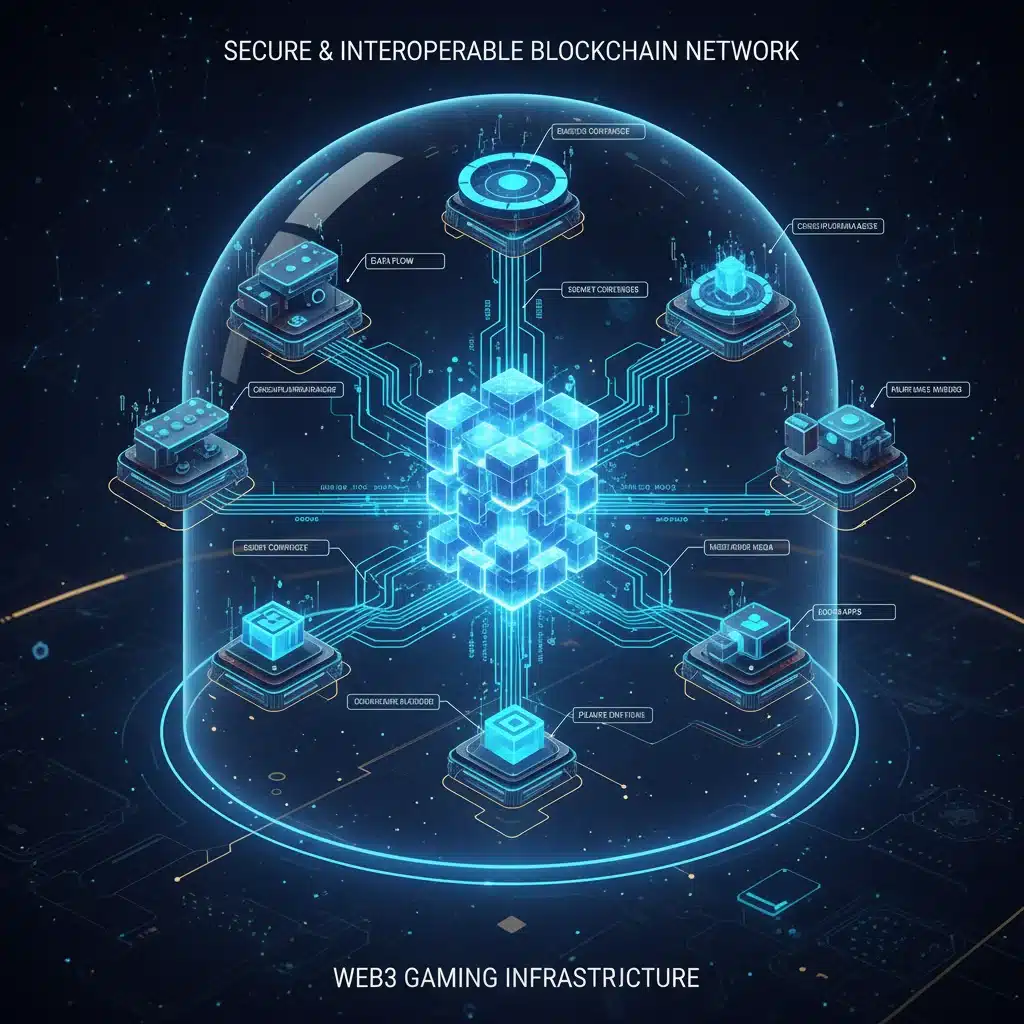
The technological backbone of Web3 gaming is constantly strengthening. By Q4 2026, many of the performance bottlenecks that plagued earlier blockchain games will have been significantly mitigated. Layer 2 scaling solutions, such as rollups (optimistic and zero-knowledge), will be more mature and widely adopted, enabling faster, cheaper, and more frequent in-game transactions without compromising security. This improved infrastructure is critical for supporting the high transaction volumes and low latency required for immersive gaming experiences.
Interoperability will also be a key focus in our Web3 Gaming Outlook. The ability for assets and even player identities to move seamlessly across different games and blockchain ecosystems is a powerful vision that will begin to materialize more concretely. Cross-chain bridges will become more robust and user-friendly, allowing players to utilize their NFTs and tokens in a variety of contexts. This not only enhances the utility of digital assets but also fosters a more interconnected and expansive metaverse, where player investments are not siloed within a single game.
Furthermore, advancements in non-fungible token (NFT) technology will go beyond simple collectibles. We anticipate dynamic NFTs that can evolve based on player actions or in-game events, adding depth and personalization to digital assets. Fractionalized NFTs will also gain traction, making high-value assets more accessible and enabling new forms of collective ownership and investment within games. This innovation will unlock new design possibilities for game developers and new economic models for players.
Another critical area of development is the user experience (UX). Early Web3 games often presented significant barriers to entry, requiring players to navigate complex wallet setups, understand gas fees, and manage private keys. By Q4 2026, we expect a significant simplification of these processes. Wallet solutions will be more integrated and intuitive, perhaps even abstracted away from the user’s direct interaction. On-ramps and off-ramps for fiat currency will be smoother, making it easier for mainstream gamers to participate without needing deep crypto knowledge. This focus on seamless UX is paramount for achieving mass adoption and bringing Web3 gaming to a broader audience.
Cloud gaming integration with Web3 elements will also likely see increased exploration. Combining the accessibility of cloud platforms with the ownership benefits of blockchain could create powerful new gaming paradigms, allowing players to access high-fidelity Web3 games on a multitude of devices without hefty hardware requirements. This convergence of technologies will be a significant driver of innovation in the coming years, shaping the future of the Web3 Gaming Outlook for beyond 2026.
Investment Trends and Market Dynamics
The investment landscape for Web3 gaming is maturing rapidly. While early investments were often speculative bets on nascent technologies, Q4 2026 will see a greater emphasis on due diligence, sustainable business models, and proven execution. Venture capitalists and institutional investors will be looking for projects with strong development teams, compelling game design, clear paths to profitability, and robust community engagement. The days of funding projects solely on a whitepaper and tokenomics promise are largely over.
We anticipate a shift towards investment in infrastructure projects that support the broader Web3 gaming ecosystem. This includes scaling solutions, middleware, developer tools, and platforms that facilitate interoperability. Investing in these foundational layers provides a more stable and less volatile return than direct investment in individual game titles, which carry higher inherent risks. This strategic shift reflects a maturing industry seeking to build solid foundations for long-term growth.
Mergers and acquisitions (M&A) activity within the Web3 gaming space might also pick up as larger traditional gaming companies look to acquire promising blockchain studios or integrate Web3 capabilities into their existing portfolios. This convergence of traditional and decentralized gaming will bring significant capital, expertise, and player bases into the Web3 fold, accelerating its growth and legitimization. Our Web3 Gaming Outlook predicts that strategic partnerships between Web2 giants and Web3 innovators will be crucial for unlocking new market segments.
Furthermore, the regulatory environment will play an increasingly important role. As governments and financial bodies develop clearer frameworks for digital assets and blockchain applications, this will provide greater certainty for investors and developers. Projects that proactively navigate regulatory complexities and build compliant solutions will gain a significant competitive advantage. The clarity offered by evolving regulations will reduce perceived risks, encouraging greater institutional participation and fostering a more stable market.
The focus for investors will move from short-term token flips to long-term value creation. This means evaluating projects based on their ability to build sustainable player bases, generate recurring revenue, and create genuine intellectual property that can extend beyond a single game. Projects demonstrating strong governance models, transparent development roadmaps, and active community participation will be particularly attractive. This disciplined approach to investment will be a hallmark of the Q4 2026 Web3 gaming market.
Key Trends and Opportunities in Q4 2026
User-Generated Content (UGC) as a Core Driver
The power of user-generated content (UGC) is undeniable in traditional gaming, from Minecraft to Roblox. In Web3 gaming, this concept is supercharged by true ownership. By Q4 2026, platforms that empower players to create, own, and monetize their own in-game assets, levels, and experiences will be major growth areas. This not only provides endless content for players but also creates a vibrant creator economy where community members are directly rewarded for their contributions. Imagine a world where players can design unique NFT skins, build custom game modes, or even craft entire mini-games, and then earn a share of the revenue generated from their creations. This decentralized creative economy is a cornerstone of the future Web3 Gaming Outlook.
Emergence of AAA-Quality Web3 Titles
While many early Web3 games were independent or experimental, Q4 2026 is likely to see the release of more AAA-quality titles that genuinely compete with traditional gaming experiences in terms of graphics, gameplay depth, and narrative. These games will leverage blockchain technology in subtle yet meaningful ways, often focusing on provable ownership of rare items, transparent in-game economies, or community-driven development. The success of these titles will be crucial for attracting mainstream gamers who prioritize high production values and engaging gameplay over speculative earning potential.
Guilds and Decentralized Autonomous Organizations (DAOs)
Gaming guilds have evolved significantly, moving from simple communities to sophisticated organizations that manage large portfolios of game assets, provide scholarships to new players, and collectively govern game ecosystems. By Q4 2026, DAOs will play an even more prominent role, allowing communities of players and stakeholders to collectively make decisions about game development, treasury management, and even asset allocation. This democratization of game governance empowers players and fosters a stronger sense of community ownership, aligning incentives between developers and players.
Focus on Digital Identity and Reputation
Beyond owning assets, the concept of a persistent digital identity and reputation across different Web3 games and metaverse experiences will gain traction. Soulbound tokens (SBTs) or similar non-transferable NFTs could be used to represent achievements, skill levels, or community contributions, building a verifiable on-chain reputation for players. This could unlock new forms of social interaction, competitive play, and personalized experiences within the Web3 gaming universe, adding a layer of depth to the player’s digital persona.
Bridging Web2 and Web3 Gaming
Instead of a complete overhaul, many traditional Web2 games will explore integrating Web3 elements in a thoughtful manner. This could involve using NFTs for cosmetic items, implementing blockchain for verifiable competitive rankings, or experimenting with player-owned economies for specific game modes. This hybrid approach allows established games to tap into the benefits of blockchain without alienating their existing player base, serving as a crucial bridge for mass adoption. Our Web3 Gaming Outlook underscores the importance of these transitional strategies.
Challenges and Risks
Despite the optimistic outlook, Web3 gaming in Q4 2026 will still face significant challenges. Regulatory uncertainty remains a concern, particularly regarding the classification of in-game tokens and NFTs. Security risks, including smart contract vulnerabilities and wallet hacks, continue to pose threats to player assets. Furthermore, the industry must overcome the lingering perception of Web3 games as scams or financially driven endeavors, a perception often fueled by past failures and speculative bubbles. Educating the mainstream audience about the genuine benefits and innovations of blockchain gaming will be an ongoing effort.
Another challenge is the need for sustainable economic models. Many game economies are still experimental, and finding the right balance between rewarding players and maintaining long-term game health is a complex task. Over-inflation of in-game tokens or an oversupply of NFTs can quickly devalue assets, leading to player dissatisfaction and ecosystem collapse. Continuous innovation in tokenomics and economic design will be crucial for long-term success, requiring sophisticated understanding of both game design and macroeconomic principles.
Finally, competition from traditional gaming remains fierce. Web3 games must not only offer the unique benefits of blockchain but also deliver compelling gameplay that rivals the best titles from established studios. The focus must remain on creating truly fun and engaging experiences first, with blockchain adding an extra layer of value, rather than being the sole selling point. Overcoming these hurdles will define the true winners in the Web3 gaming space as we move into and beyond Q4 2026.
Conclusion: A Maturing Ecosystem Focused on Value and Fun
The Web3 Gaming Outlook for Q4 2026 paints a picture of a maturing industry, one that is learning from its past mistakes and building a more sustainable future. The initial ‘play-to-earn’ hype has given way to a more pragmatic approach, emphasizing ‘play-and-own’ models that integrate economic incentives seamlessly into engaging gameplay. Technological advancements in scalability and interoperability are paving the way for more sophisticated and accessible experiences, while a more discerning investment landscape is favoring projects with strong fundamentals and long-term vision.
Opportunities abound for players seeking genuine ownership and meaningful participation, for developers building innovative new experiences, and for investors looking for sustainable growth. The sector is moving beyond speculative bubbles, focusing on user-generated content, AAA-quality titles, and the powerful synergy of guilds and DAOs. While challenges remain, particularly around regulation and economic sustainability, the trajectory is clear: Web3 gaming is evolving into a legitimate and transformative force within the entertainment industry.
As we head into the final quarter of 2026, the projects that prioritize fun, foster community, and build robust, player-centric economies will be the ones that not only survive but thrive. The future of Web3 gaming is not just about earning; it’s about playing, owning, creating, and truly belonging to digital worlds that offer unprecedented levels of immersion and empowerment. This evolution marks a significant milestone in the journey towards a truly decentralized and player-owned metaverse.