Beyond Ethereum: Top 5 Altcoin Ecosystems for US Adoption 2025
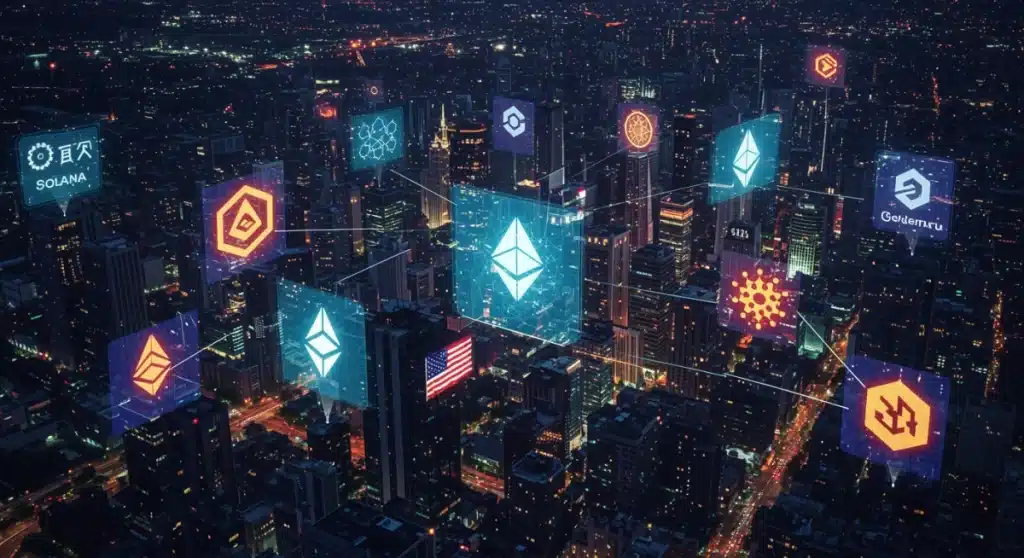
As the cryptocurrency market matures, identifying the next altcoin ecosystems US adoption beyond Ethereum that are positioned for significant growth and widespread adoption within the United States by 2025 is paramount for forward-thinking investors and developers.
The cryptocurrency world is constantly evolving, with new innovations challenging established norms. While Ethereum has long been the undisputed king of smart contract platforms, the demand for scalable, efficient, and cost-effective alternatives is growing. This article delves into the exciting prospect of identifying the next 5 major altcoin ecosystems US adoption for significant growth within the United States by 2025, exploring the technological advancements and strategic positioning that could propel them to the forefront of the digital economy.
The Evolving Landscape of Altcoin Ecosystems
The digital asset space is far from static. Ethereum’s pioneering role in smart contracts and decentralized applications (dApps) cannot be overstated, yet its success has also highlighted inherent limitations, particularly concerning scalability and transaction fees. These challenges have paved the way for a new generation of altcoin ecosystems, each vying to offer superior performance and a more developer-friendly environment. Understanding this shift is key to anticipating future adoption trends.
As the US regulatory environment slowly but surely clarifies, projects that offer robust technology, strong community support, and clear use cases are best positioned for mainstream acceptance. We are moving beyond speculative assets towards foundational technologies that can power real-world applications and services.
Scalability and Transaction Efficiency
One of the primary drivers for new altcoin ecosystems is the need for enhanced scalability. Ethereum, in its current form, often struggles with network congestion during periods of high demand, leading to slow transaction times and prohibitively high gas fees. This bottleneck severely limits its potential for widespread commercial and consumer adoption.
- High Transaction Throughput: Modern altcoin ecosystems aim for thousands, or even tens of thousands, of transactions per second (TPS).
- Low Transaction Costs: Reduced fees make micro-transactions and frequent interactions economically viable for users and businesses.
- Instant Finality: Quicker confirmation of transactions improves user experience and enables real-time applications.
Developer Experience and Ecosystem Growth
Beyond raw technical specifications, the vibrancy of an altcoin ecosystem heavily relies on its developer community and the ease with which new projects can be built and deployed. Platforms offering comprehensive developer tools, extensive documentation, and strong community support tend to attract more talent and innovation.
In conclusion, the competitive landscape of altcoin ecosystems is defined by a race to deliver superior technological foundations that address Ethereum’s current limitations, coupled with a focus on fostering a thriving, accessible developer community. These factors will be critical in determining which platforms gain significant traction in the US market.
Solana: A High-Performance Contender
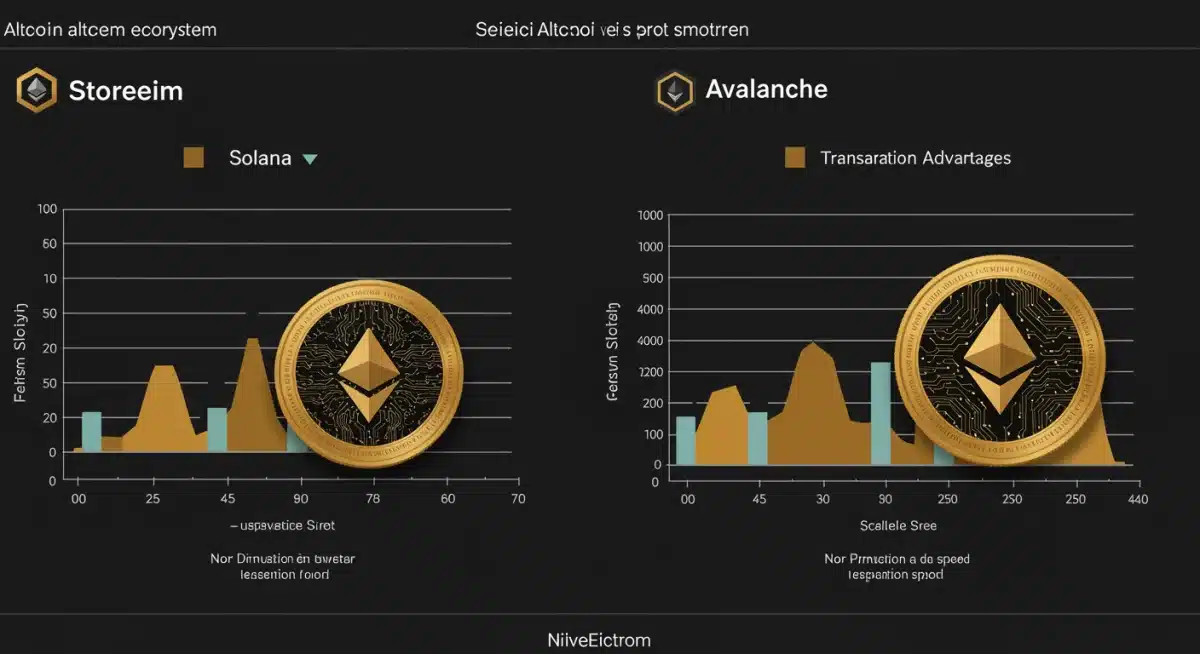
Solana has rapidly emerged as a leading contender in the blockchain space, often touted as a direct competitor to Ethereum due to its impressive transaction speeds and low costs. Its unique Proof-of-History (PoH) consensus mechanism, combined with Proof-of-Stake (PoS), allows for unparalleled throughput, making it highly attractive for dApps requiring high performance, such as decentralized finance (DeFi) and gaming.
The ecosystem has seen significant growth in non-fungible tokens (NFTs) and Web3 gaming, attracting a diverse range of developers and users. Its robust infrastructure offers a compelling alternative for projects seeking to avoid Ethereum’s gas fee volatility and network congestion.
Technological Edge and Use Cases
Solana’s architecture is designed for scale. Its ability to process tens of thousands of transactions per second positions it favorably for applications that demand instant settlement and high data throughput. This makes it particularly appealing for sectors like payments, high-frequency trading, and complex decentralized applications.
- Proof-of-History: A cryptographic clock that establishes a verifiable order of events, enabling high transaction speeds.
- Scalable dApps: Supports a wide array of decentralized applications, from DeFi protocols to social media platforms.
- Growing NFT Market: A vibrant marketplace for digital collectibles and generative art, drawing in new users.
Challenges and Future Outlook
Despite its technological prowess, Solana has faced challenges, including occasional network outages. Addressing these stability concerns will be crucial for its long-term viability and broader US adoption. However, its committed development team and strong community signal a promising future.
Solana’s commitment to continuous improvement and its ability to attract significant developer talent suggest it will remain a powerful force in the altcoin space, potentially capturing a substantial share of the US market as more enterprises and consumers seek efficient blockchain solutions.
Avalanche: Interoperability and Subnets
Avalanche stands out with its innovative subnet architecture and focus on interoperability, offering a highly customizable and scalable platform for dApps. Unlike a single blockchain, Avalanche allows anyone to launch custom, application-specific blockchains called subnets, each with its own consensus rules and tokenomics. This flexibility fosters a diverse ecosystem capable of supporting a wide range of use cases, from enterprise solutions to sophisticated DeFi protocols.
Its compatibility with the Ethereum Virtual Machine (EVM) makes it easy for developers to migrate existing Ethereum dApps, significantly lowering the barrier to entry and accelerating ecosystem growth. This strategic compatibility is a major advantage for attracting developers and users already familiar with Ethereum’s tooling.
Subnet Architecture for Custom Solutions
The subnet model is a game-changer for scalability and customization. Each subnet can be designed to meet specific application requirements, ensuring that high-demand dApps don’t congest the entire network. This modular approach enhances both security and performance.
- Application-Specific Blockchains: Tailored environments for specific dApps, optimizing performance.
- Customizable Rules: Subnets can define their own tokenomics, validators, and security parameters.
- EVM Compatibility: Seamless migration for Ethereum-based projects, fostering rapid expansion.
Strategic Partnerships and Enterprise Adoption
Avalanche has actively pursued partnerships with various enterprises and institutions, positioning itself as a blockchain solution for real-world business needs. Its focus on regulatory compliance and robust security features makes it an attractive option for traditional finance and large organizations looking to leverage blockchain technology.
The ability to create private subnets with permissioned access further enhances its appeal for institutional adoption, ensuring data privacy and compliance. This dual approach of catering to both public and private blockchain needs could significantly boost its US adoption rates.
In summary, Avalanche’s unique subnet architecture, strong EVM compatibility, and strategic focus on institutional partnerships make it a formidable player. These attributes position it well to capture a significant portion of the US market seeking scalable, customizable, and enterprise-grade blockchain solutions.
Polkadot: The Interoperable Web3 Foundation
Polkadot is designed to be a foundational layer for Web3, offering a multi-chain framework that enables different blockchains to communicate and transfer data and assets seamlessly. Its core innovation lies in its Relay Chain, which provides shared security to a network of parachains (individual blockchains) that can be optimized for specific functions. This interoperability is crucial for a future where diverse blockchains need to interact effortlessly.
The vision of Polkadot is to create a truly decentralized and interconnected internet, where specialized blockchains can work together to provide a robust and efficient platform for various applications. This approach addresses the fragmentation often seen in the current blockchain landscape.
Parachains and Shared Security
The parachain model allows for parallel processing of transactions, significantly boosting the network’s overall scalability. Each parachain can have its own unique design and functionality, while still benefiting from the robust security provided by the Relay Chain.
- Shared Security Model: Parachains inherit the security of the Relay Chain, reducing individual security burdens.
- Customizable Parachains: Developers can build specialized blockchains tailored to specific use cases.
- Cross-Chain Communication: Enables seamless transfer of data and assets between different parachains.
Governance and Decentralization
Polkadot features an advanced on-chain governance system, allowing token holders to vote on network upgrades and proposals. This decentralized governance model ensures that the network evolves in a way that reflects the will of its community, fostering long-term sustainability and resilience.
The ability for the community to actively participate in the network’s direction is a powerful draw for users and developers who value true decentralization and community ownership. This democratic framework could be a key factor in its widespread US adoption.
Ultimately, Polkadot’s vision of an interoperable, secure, and decentralized Web3 foundation, powered by its innovative parachain architecture and robust governance, positions it as a critical infrastructure project. Its potential for connecting disparate blockchains will be vital for the future of the digital economy, driving US adoption.
Cosmos: The Internet of Blockchains
Cosmos aims to solve the scalability and interoperability issues plaguing the blockchain industry by creating an ‘Internet of Blockchains.’ It provides a framework for building independent, interoperable blockchains, known as Zones, that can communicate with each other through the Inter-Blockchain Communication (IBC) protocol. This allows for a highly flexible and interconnected ecosystem where diverse applications can thrive.
The Cosmos SDK makes it relatively easy for developers to build custom blockchains from scratch, giving them full control over their network’s design and functionality. This flexibility is a significant advantage for projects with unique requirements that might not fit neatly into existing smart contract platforms.
The Cosmos SDK and IBC Protocol
The Cosmos SDK is a modular framework that simplifies the process of building custom blockchains. Developers can choose from a library of pre-built modules or create their own, accelerating development time and reducing complexity. The IBC protocol then enables these independent blockchains to communicate and exchange value securely.
- Modular Blockchain Development: Simplifies the creation of custom blockchains with the Cosmos SDK.
- Inter-Blockchain Communication: Enables secure and reliable data and asset transfer between Zones.
- Sovereign Blockchains: Each Zone maintains its own sovereignty and governance.
Empowering Application-Specific Chains
Cosmos champions the idea of application-specific blockchains, arguing that a single chain cannot efficiently serve all possible use cases. By allowing projects to launch their own optimized chains, Cosmos enables higher performance, better security, and greater customization for specialized applications, from DeFi to social media.
This approach attracts projects that require a high degree of control over their blockchain environment, fostering innovation in niche areas. As more specialized applications emerge, Cosmos’s framework becomes increasingly valuable for US developers and enterprises.
In conclusion, Cosmos’s vision of an ‘Internet of Blockchains,’ powered by the Cosmos SDK and the IBC protocol, provides a compelling solution to the industry’s interoperability and scalability challenges. Its focus on enabling application-specific chains positions it as a crucial infrastructure for the next wave of decentralized applications, driving significant US adoption.
Near Protocol: Sharding for Mass Adoption
Near Protocol is a layer-one blockchain designed for usability and scalability, aiming to make Web3 development and usage accessible to everyone. It employs a unique sharding approach called ‘Nightshade’ to achieve massive scalability without compromising security or decentralization. This allows the network to process a high volume of transactions efficiently, making it suitable for mainstream applications.
Near’s strong emphasis on developer-friendliness, with human-readable account names and a focus on familiar programming languages, aims to lower the barrier to entry for Web2 developers transitioning to Web3. This strategic focus on usability could be a key differentiator in attracting widespread US adoption.
Nightshade Sharding and Scalability
Nightshade sharding allows Near to dynamically adapt its capacity based on demand, ensuring consistent performance even during peak usage. This innovative approach to scalability addresses one of the most significant hurdles for widespread blockchain adoption, offering a robust foundation for future growth.
- Dynamic Sharding: Adapts network capacity to handle varying transaction loads efficiently.
- High Throughput: Capable of processing a large number of transactions per second.
- Low Latency: Ensures fast transaction finality, enhancing user experience.
Usability and Developer Experience
Near Protocol prioritizes user and developer experience, offering features like human-readable account IDs (e.g., ‘yourname.near’) and abstracting away complex blockchain concepts. This focus on ease of use is critical for attracting a broader audience beyond crypto natives, including mainstream consumers and traditional developers.
Its support for popular programming languages like Rust and AssemblyScript further lowers the entry barrier, making it easier for developers to build dApps on the platform. This commitment to accessibility could significantly accelerate its adoption within the US market.
Ultimately, Near Protocol’s innovative sharding technology and unwavering commitment to usability and developer experience position it as a strong contender for mass adoption. By making Web3 more accessible, Near could unlock significant growth in the US, attracting both users and developers seeking a seamless blockchain experience.
| Ecosystem | Key Advantage for US Adoption |
|---|---|
| Solana | High transaction speed and low costs, ideal for DeFi and gaming. |
| Avalanche | Customizable subnets and EVM compatibility for enterprise solutions. |
| Polkadot | Interoperable multi-chain framework for Web3, shared security. |
| Cosmos | ‘Internet of Blockchains’ with IBC for highly flexible, custom chains. |
Frequently Asked Questions About Altcoin Adoption
Altcoin ecosystems are moving beyond Ethereum primarily due to its scalability limitations and high transaction fees. As demand for decentralized applications grows, developers and users seek platforms that offer faster transaction speeds, lower costs, and more efficient processing to support widespread adoption and real-world utility.
Suitability for US adoption hinges on several factors: robust technology, clear use cases, strong developer community, regulatory clarity, and enterprise appeal. Platforms offering high scalability, security, and interoperability, along with user-friendly interfaces, are more likely to gain traction among US consumers and businesses.
Solana addresses scalability through its unique Proof-of-History (PoH) consensus mechanism, combined with Proof-of-Stake. This allows it to achieve significantly higher transaction throughput and lower fees than Ethereum’s current architecture. PoH creates a verifiable order of events, enabling parallel transaction processing and faster finality.
Subnets are crucial to Avalanche’s adoption strategy, allowing anyone to launch custom, application-specific blockchains. This provides immense flexibility, scalability, and customization for diverse use cases, from enterprise solutions to DeFi. Subnets ensure that high-demand applications do not congest the main network, improving overall performance.
Interoperability is vital for future altcoin ecosystems because it enables different blockchains to communicate and transfer assets seamlessly. This breaks down silos, fosters a more connected Web3, and allows for complex applications that leverage the strengths of multiple chains, driving efficiency and broader adoption across the digital economy.
Conclusion
The cryptocurrency landscape is rapidly evolving, with several innovative altcoin ecosystems emerging to challenge Ethereum’s dominance by addressing critical issues such as scalability, cost, and interoperability. Solana, Avalanche, Polkadot, Cosmos, and Near Protocol each offer unique technological advancements and strategic approaches that position them for significant US adoption by 2025. Their focus on high performance, customizable solutions, cross-chain communication, and user-friendly development environments highlights a maturing market driven by real-world utility. As the US market continues to embrace decentralized technologies, these platforms are poised to play a pivotal role in shaping the future of Web3, offering diverse opportunities for developers, businesses, and everyday users alike.