2026 US Crypto Regulations: Impact on Decentralized Altcoins
Understanding the 2026 Regulatory Shifts Impacting Decentralized Altcoin Projects in the US
The cryptocurrency landscape is perpetually in flux, a dynamic environment where technological innovation constantly pushes the boundaries of existing legal frameworks. As we approach 2026, the United States is poised for significant regulatory shifts that promise to redefine the operational parameters for decentralized altcoin projects. These impending 2026 US Crypto Regulations are not merely a minor adjustment; they represent a potential paradigm shift, demanding a proactive and informed response from developers, investors, and users alike. The stakes are incredibly high, with the future of decentralized finance (DeFi) and the broader altcoin ecosystem hanging in the balance. Understanding these regulatory nuances is not just about compliance; it’s about strategic foresight and ensuring the long-term viability and growth of these innovative projects.
For years, the decentralized nature of altcoins has presented a unique challenge to traditional regulatory bodies. Their lack of a central authority, often global distribution, and reliance on smart contracts have made them difficult to categorize and govern under existing securities, commodities, or banking laws. However, as the crypto market has matured and its influence on global finance has grown, regulators have intensified their focus on establishing clear guidelines. The year 2026 is emerging as a critical juncture, with various legislative proposals, agency pronouncements, and executive orders coalescing into a more comprehensive regulatory framework. This article aims to dissect these anticipated changes, exploring their potential impact on decentralized altcoin projects, from development and fundraising to trading and user interaction. We will examine the forces driving these regulations, the specific areas likely to be affected, and strategies for navigating this evolving legal terrain.
The Driving Forces Behind the 2026 US Crypto Regulations
Several powerful forces are converging to shape the upcoming 2026 US Crypto Regulations. At the forefront is the increasing mainstream adoption of cryptocurrencies. What was once a niche interest for tech enthusiasts has now become a significant asset class, attracting institutional investors, major corporations, and a growing segment of the general public. This increased participation brings with it concerns about investor protection, market integrity, and systemic risk. Regulators, particularly those tasked with safeguarding financial markets, feel an imperative to establish rules that prevent fraud, manipulation, and illicit activities.
Another key driver is national security and financial stability. The decentralized and often pseudonymous nature of cryptocurrencies has raised concerns about their potential use in money laundering, terrorist financing, and sanctions evasion. Governments worldwide, including the US, are keen to close any loopholes that could be exploited by malicious actors. The rise of stablecoins, which peg their value to fiat currencies, has also brought them under intense scrutiny, with authorities concerned about their potential to disrupt traditional banking systems and monetary policy if not properly regulated.
Furthermore, global regulatory harmonization efforts play a significant role. As cryptocurrency is inherently borderless, individual countries realize the limitations of unilateral regulation. International bodies and forums, such as the Financial Stability Board (FSB) and the G7/G20, are actively discussing common standards and approaches to crypto regulation. The US, as a leading global financial power, is often at the forefront of these discussions and is expected to align its domestic policies with broader international consensus where possible. This push for global cooperation aims to prevent regulatory arbitrage and create a more level playing field for crypto businesses operating across different jurisdictions.
Technological advancements within the crypto space itself also influence regulatory thinking. The continuous evolution of DeFi protocols, NFTs, DAOs, and other innovations presents new challenges and opportunities. Regulators are often playing catch-up, attempting to fit novel technologies into existing legal categories or devising entirely new ones. The dynamic nature of blockchain technology means that any regulatory framework must be flexible enough to adapt to future innovations while providing sufficient clarity and certainty for market participants. The year 2026 is anticipated to be a milestone in this ongoing effort to strike a balance between fostering innovation and mitigating risks.
Categorization Conundrums: Securities, Commodities, or Something Else?
One of the most significant challenges for decentralized altcoin projects under the forthcoming 2026 US Crypto Regulations will be their legal classification. The US regulatory landscape is bifurcated, with the Securities and Exchange Commission (SEC) overseeing securities and the Commodity Futures Trading Commission (CFTC) regulating commodities. The distinction is crucial, as it dictates which set of rules and compliance obligations apply to a particular digital asset.
For many altcoins, particularly those launched through initial coin offerings (ICOs) or with features that resemble traditional investments, the SEC has often asserted jurisdiction, deeming them unregistered securities. The ‘Howey Test,’ derived from a 1946 Supreme Court case, remains the primary legal standard for determining what constitutes an investment contract. If an altcoin is deemed a security, it would be subject to stringent registration, disclosure, and reporting requirements, which can be onerous and costly for decentralized projects designed for broad community participation rather than centralized corporate structure.
Conversely, if an altcoin is classified as a commodity, it would fall under the CFTC’s purview. The CFTC has historically viewed Bitcoin and Ethereum as commodities. This classification generally entails fewer regulatory burdens compared to securities, primarily focusing on preventing fraud and manipulation in futures markets. However, the line between a security and a commodity is often blurry, especially for newer, more complex altcoins with varying degrees of decentralization, utility, and governance models.
The 2026 US Crypto Regulations are expected to bring greater clarity to this categorization conundrum. This could manifest as new legislation specifically defining digital assets, or through enhanced guidance from regulatory bodies. There’s also a possibility of a new regulatory body or a joint mandate between existing agencies to oversee this hybrid asset class. The implications for decentralized altcoins are profound: a security classification could stifle innovation due to compliance costs, while a commodity classification might offer more operational freedom. Projects will need to meticulously analyze their tokenomics, governance structure, and intended use cases to anticipate and adapt to these classifications.
Impact on Decentralized Finance (DeFi) Protocols
Decentralized Finance (DeFi) protocols, which form a significant portion of the altcoin ecosystem, are particularly vulnerable to the upcoming 2026 US Crypto Regulations. DeFi aims to replicate traditional financial services—like lending, borrowing, trading, and insurance—on blockchain, often without intermediaries. This lack of centralized control, while a core tenet of decentralization, presents a major challenge for regulators accustomed to holding identifiable entities accountable.
One primary concern for regulators is the potential for DeFi protocols to facilitate illicit financial activities. Anti-Money Laundering (AML) and Know Your Customer (KYC) requirements, standard in traditional finance, are challenging to implement in truly decentralized systems where users interact directly with smart contracts. The 2026 regulations are likely to push for mechanisms to identify participants, even if indirectly, or impose liability on developers, front-end providers, or even liquidity providers. This could necessitate significant architectural changes for existing DeFi protocols, potentially compromising their decentralized ethos.
Furthermore, consumer protection is a significant focus. The inherent risks in DeFi, such as smart contract vulnerabilities, impermanent loss, and oracle manipulation, often leave users with little recourse when things go wrong. Regulators may demand greater transparency, auditing requirements, and perhaps even insurance mechanisms for DeFi protocols. This could also extend to requiring specific disclosures about the risks involved, potentially impacting how these protocols are marketed and accessed by US citizens.
The classification of DeFi tokens (e.g., governance tokens, liquidity provider tokens) will also be critical. If many are deemed securities, the entire DeFi ecosystem could face a compliance bottleneck. The regulations might also address the ‘unhosted wallet’ debate, potentially imposing reporting requirements on transactions involving self-custodied digital assets, which are fundamental to DeFi. The challenge for regulators will be to balance risk mitigation with fostering innovation, as overly stringent rules could drive DeFi development offshore or into shadow markets, undermining the very goals of regulation.
Challenges for Decentralized Autonomous Organizations (DAOs)
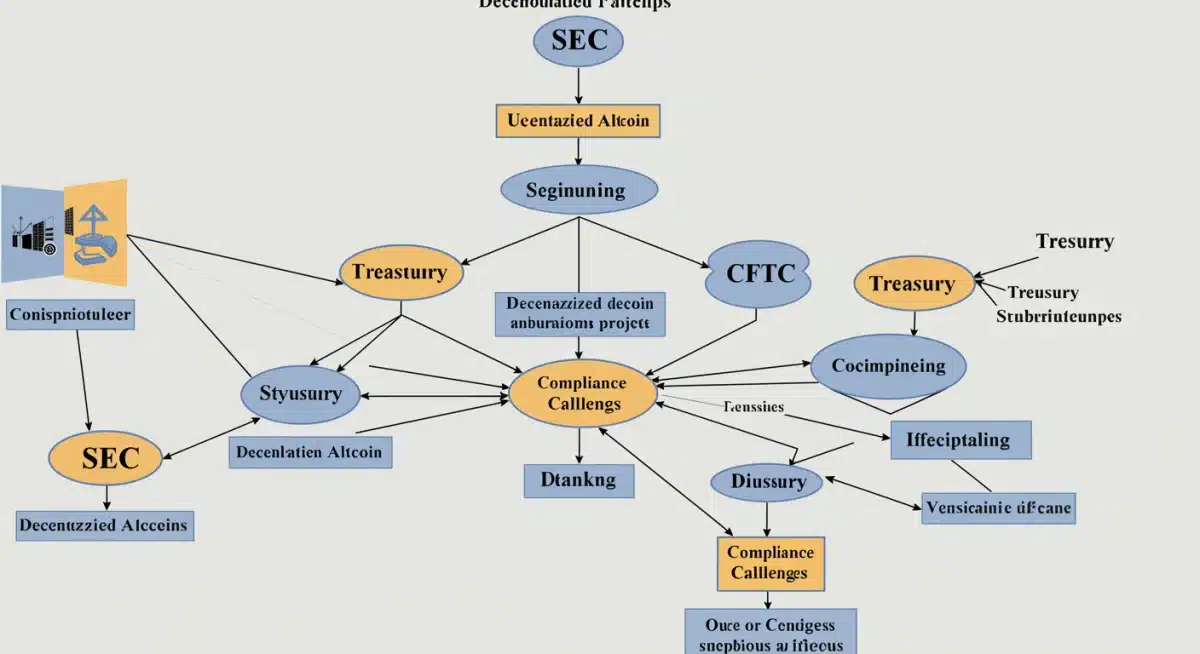
Decentralized Autonomous Organizations (DAOs) represent another frontier that will be significantly impacted by the 2026 US Crypto Regulations. DAOs are internet-native organizations collectively owned and managed by their members, often using tokens for voting on proposals. Their decentralized governance structure, lack of traditional legal entity status, and global membership pose unique regulatory dilemmas.
The primary challenge for DAOs is legal accountability. In the absence of a central authority or a recognized legal entity, who is liable when a DAO’s activities violate regulations? Regulators are grappling with how to assign responsibility for compliance with securities laws, consumer protection, and anti-money laundering statutes. The 2026 regulations might explore various approaches, such as treating certain DAOs as partnerships, corporations, or even unincorporated associations, each carrying different legal implications for their members and treasury.
Another major concern is the potential for DAOs to be used to circumvent existing laws. If a DAO effectively operates as a collective investment scheme or offers services typically provided by regulated financial institutions, regulators will seek to apply relevant rules. This could mean that DAO governance tokens are deemed securities, requiring registration and ongoing disclosure. Furthermore, proposals within DAOs that pertain to financial activities, such as allocating treasury funds or developing new protocols, might also come under regulatory scrutiny.
The 2026 US Crypto Regulations could also introduce specific requirements for DAO transparency, voting mechanisms, and dispute resolution. While some states like Wyoming have begun exploring legal frameworks for DAOs, a comprehensive federal approach is still nascent. Projects will need to consider how to structure their DAOs to minimize regulatory risk, potentially by incorporating legal wrappers, implementing robust governance frameworks, and designing their tokens to avoid security classification. The goal will be to maintain decentralization while providing sufficient legal clarity and accountability to satisfy regulatory demands.
Implications for Altcoin Development and Innovation
The impending 2026 US Crypto Regulations will undoubtedly have significant implications for the development and innovation cycles of decentralized altcoin projects. While some fear that increased regulation could stifle creativity, others argue that clear rules can foster a more stable and mature ecosystem, attracting greater institutional capital and mainstream adoption.
One immediate impact could be a shift towards ‘regulation-friendly’ design. Developers might prioritize building protocols with built-in compliance features, such as optional KYC modules for certain interactions or mechanisms for reporting suspicious activities. Projects may also focus on creating utility tokens that clearly differentiate themselves from securities, emphasizing their functional use within an ecosystem rather than their investment potential. This could lead to a proliferation of innovative use cases that are less susceptible to securities classification.
However, the increased burden of compliance, including legal costs, auditing requirements, and potential licensing, could disproportionately affect smaller, independent altcoin projects. Startups with limited resources might struggle to navigate complex legal frameworks, potentially leading to consolidation within the industry or a migration of talent and innovation to more permissive jurisdictions. This is a critical concern for those who believe that broad decentralization and open-source development are vital for the crypto space’s long-term health.
On the flip side, regulatory clarity could unlock new avenues for innovation. With a predictable legal environment, traditional financial institutions and large technology companies may feel more comfortable entering the crypto space, bringing with them significant resources and expertise. This could lead to the development of new hybrid models that blend decentralized technology with regulated financial services, expanding the reach and utility of altcoins. The challenge for policymakers will be to craft regulations that protect consumers and maintain financial stability without inadvertently stifling the very innovation that makes the crypto space so transformative.
Strategies for Navigating the Evolving Regulatory Landscape
For decentralized altcoin projects, proactive engagement and strategic planning are paramount in navigating the forthcoming 2026 US Crypto Regulations. Ignoring these shifts is not an option; instead, projects must adopt a multi-faceted approach to ensure their long-term viability and success in the US market.
Firstly, legal counsel specializing in blockchain and cryptocurrency law will become indispensable. Projects should seek expert advice early and continuously to understand the evolving regulatory interpretations and how they apply to their specific tokenomics, governance structure, and operational model. This includes conducting thorough legal assessments to determine potential classifications (e.g., security vs. commodity) and identifying areas of high regulatory risk. Adjusting token distribution models, governance mechanisms, and even the geographic focus of marketing efforts might be necessary to mitigate these risks.
Secondly, embracing transparency and robust internal controls will be crucial. Even if a project aims for maximum decentralization, demonstrating a commitment to ethical practices, security, and responsible financial conduct can be beneficial. This might involve implementing clear disclosure policies for users, undergoing independent smart contract audits, and developing mechanisms for community-driven dispute resolution. For projects with any centralized components, establishing strong AML/KYC procedures, even if voluntary, can signal a proactive approach to regulatory concerns.
Thirdly, engaging with policymakers and industry associations can provide valuable insights and a platform for advocacy. By participating in discussions, submitting comments on proposed rules, and educating lawmakers about the unique aspects of decentralized technologies, projects can help shape the regulatory narrative. Collaborative efforts within the industry to develop self-regulatory best practices can also demonstrate a commitment to responsible innovation and potentially influence the direction of future regulations.
Finally, global diversification might become a more attractive strategy. While the US market is significant, exploring and building a presence in jurisdictions with more favorable or clearer regulatory environments could offer a hedge against overly restrictive domestic policies. This doesn’t mean abandoning the US, but rather building resilience through a diversified operational and user base. The ability to adapt quickly, iterate on governance models, and remain agile in response to regulatory changes will be a defining characteristic of successful decentralized altcoin projects in the post-2026 era.
The Role of Self-Regulation and Industry Standards

As the 2026 US Crypto Regulations take shape, the role of self-regulation and the development of industry-wide standards will become increasingly important. While government oversight is inevitable, the crypto community has a unique opportunity to contribute to a regulatory framework that is both effective and innovation-friendly. By taking proactive steps, the industry can demonstrate its maturity and commitment to responsible growth, potentially influencing the scope and nature of official regulations.
Industry associations and consortia can play a pivotal role in this regard. By bringing together diverse stakeholders—developers, investors, academics, and legal experts—these groups can collaboratively define best practices for various aspects of decentralized altcoin projects. This could include standards for smart contract security audits, responsible tokenomics design, transparent governance models for DAOs, and guidelines for investor protection that go beyond minimum legal requirements. Such self-imposed standards can serve as a blueprint for regulators, showing that the industry is capable of policing itself and addressing key concerns.
Furthermore, the development of open-source compliance tools and frameworks can help decentralized projects meet regulatory demands without compromising their core principles. This might involve creating privacy-preserving KYC solutions, on-chain identity verification systems, or decentralized dispute resolution mechanisms that leverage blockchain technology itself. The goal is to embed compliance into the very fabric of decentralized protocols, making it an inherent feature rather than an external imposition.
The success of self-regulation depends on broad adoption and enforcement within the crypto community. Projects that adhere to high standards of transparency, security, and ethical conduct can gain a competitive advantage, earning trust from both users and regulators. This collective effort to raise the bar can demonstrate to policymakers that the industry is serious about mitigating risks, potentially leading to more nuanced and less prescriptive regulations. The alternative—a fragmented industry unable to agree on common standards—could invite more heavy-handed intervention from regulators, potentially stifling innovation and growth.
Looking Beyond 2026: The Long-Term Outlook
While the focus is currently on the anticipated 2026 US Crypto Regulations, it’s crucial to consider the long-term outlook for decentralized altcoin projects. Regulatory evolution is not a one-time event; it’s an ongoing process that will continue to adapt as technology advances and market dynamics shift. The initial framework established by 2026 will likely serve as a foundation upon which future regulations will be built.
In the long term, we can expect a continued push for global regulatory harmonization. As cross-border crypto transactions become even more prevalent, international cooperation will be essential to prevent regulatory arbitrage and ensure a consistent approach to consumer protection and financial stability. This could lead to the development of global standards for digital assets, potentially simplifying compliance for projects operating in multiple jurisdictions.
Technological innovation will also continue to challenge and shape regulation. New cryptographic techniques, advancements in zero-knowledge proofs, and novel consensus mechanisms will constantly push the boundaries of what’s possible in the decentralized space. Regulators will need to remain agile and open to understanding these new technologies, adapting their frameworks to foster innovation while managing emerging risks. This will require ongoing dialogue between the industry and policymakers, ensuring that regulations are technologically informed and future-proof.
Ultimately, the long-term success of decentralized altcoin projects in a regulated environment will depend on their ability to demonstrate tangible societal value. Projects that solve real-world problems, enhance financial inclusion, improve efficiency, and contribute to economic growth will likely find more favor with regulators. The narrative will shift from simply being ‘decentralized’ to being ‘responsibly decentralized’—meaning projects that can balance innovation with robust security, transparency, and accountability. The post-2026 era will likely be characterized by a more mature crypto industry, where clear rules, responsible innovation, and a strong commitment to user protection drive sustainable growth.
Conclusion: Navigating the New Regulatory Frontier
The upcoming 2026 US Crypto Regulations represent a pivotal moment for decentralized altcoin projects. Far from being a mere footnote in the annals of crypto history, these anticipated shifts will fundamentally alter the operational landscape, demanding a comprehensive and strategic response from all participants. From navigating complex categorization conundrums to addressing the unique challenges of DeFi protocols and DAOs, the road ahead is filled with both potential pitfalls and unprecedented opportunities.
Projects that embrace transparency, seek expert legal guidance, engage proactively with policymakers, and commit to developing robust, regulation-aware solutions will be best positioned to thrive. The era of regulatory ambiguity is steadily drawing to a close, making way for a more defined, albeit complex, legal environment. While the prospect of increased oversight may initially seem daunting, it also holds the promise of greater mainstream adoption, institutional confidence, and ultimately, a more stable and resilient crypto ecosystem.
The future of decentralized altcoins in the US will not be determined solely by technological prowess but equally by their ability to adapt and integrate within evolving legal and financial frameworks. By understanding the driving forces behind these regulations, anticipating their impact, and actively contributing to the development of sensible standards, the decentralized altcoin community can not only survive but flourish in this new regulatory frontier. The journey to 2026 is a call to action, urging all stakeholders to prepare for a new chapter in the history of digital assets, one defined by both innovation and responsible governance.