Metaverse Interoperability 2026: Top Platforms Compared for Seamless Asset Transfer
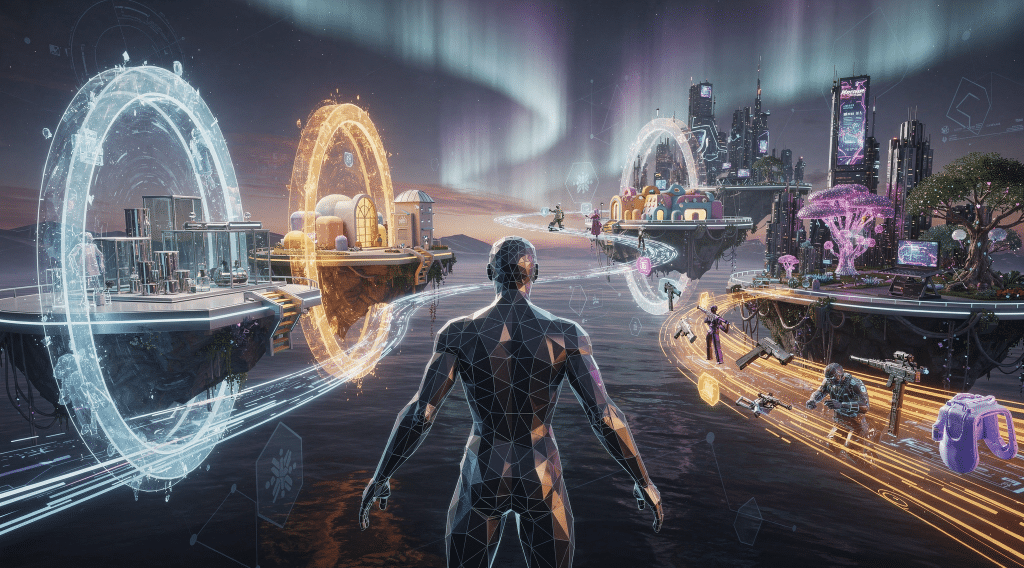
The metaverse, once a distant sci-fi concept, is rapidly materializing into a tangible digital reality. As we hurtle towards 2026, the promise of a truly interconnected virtual universe hinges on one crucial element: metaverse interoperability 2026. This isn’t just about moving your avatar from one virtual world to another; it’s about the seamless transfer of digital assets, identities, and experiences across disparate platforms. Without robust interoperability, the metaverse risks becoming a collection of siloed, proprietary ecosystems, severely limiting its potential and user adoption.
The vision for metaverse interoperability 2026 is ambitious. Imagine purchasing a unique NFT sword in one game and being able to wield it in another, or owning a digital fashion item that can be worn by your avatar across multiple social platforms. This level of fluidity requires standardized protocols, open-source development, and a collaborative spirit among competing entities. The challenges are immense, ranging from technical hurdles in data exchange and blockchain integration to complex legal and economic considerations around digital ownership and intellectual property. However, the potential rewards – a richer, more expansive, and truly user-centric digital experience – are too great to ignore.
In this comprehensive analysis, we will delve into the projected landscape of metaverse interoperability 2026, examining the technological advancements and strategic initiatives that are shaping its future. We will compare the top three platforms that are leading the charge in developing and implementing interoperable solutions, evaluating their strengths, weaknesses, and their potential to deliver on the promise of a truly connected metaverse. Our focus will be on their approaches to seamless asset transfer, user identity management, and overall ecosystem design, providing a clear picture of what users and developers can expect in the coming years.
The Imperative of Metaverse Interoperability 2026
Why is metaverse interoperability 2026 such a critical topic? The answer lies in the very definition of a ‘metaverse’ as a persistent, shared, 3D virtual space. If every virtual experience exists as an island, then we are not building a metaverse; we are simply creating a multitude of disconnected virtual worlds. True interoperability is the bridge that connects these islands, transforming them into a cohesive digital continent. It’s the difference between having a collection of separate applications on your computer and having a unified operating system where files and functionalities can be shared across programs.
From a user perspective, the benefits are clear. Imagine investing significant time and money into developing your digital identity, acquiring unique NFTs, and building virtual properties. Without interoperability, these investments are locked within a single platform. If that platform loses popularity or shuts down, your digital assets and identity could be lost or rendered useless. Metaverse interoperability 2026 aims to mitigate this risk, empowering users with true ownership and portability of their digital lives.
For developers and creators, interoperability unlocks a vast new market. Instead of building for a single platform, they can create assets and experiences that are accessible across a wider ecosystem, increasing their reach and potential for monetization. This fosters innovation, encourages diverse content creation, and ultimately drives the growth of the entire metaverse economy. The ability to leverage existing digital assets across new experiences reduces development costs and accelerates content creation, leading to a richer and more dynamic virtual landscape.
Economically, metaverse interoperability 2026 is poised to create entirely new markets and business models. The seamless flow of digital assets, from virtual real estate to unique collectibles and functional tools, will fuel a vibrant secondary market. This fluidity will enhance the value proposition of digital assets, as their utility extends beyond a single platform. Furthermore, it encourages competition and innovation among platforms, as they strive to offer the most compelling experiences and integrate with the broadest range of external services.
Defining Interoperability in the Metaverse Context
Before diving into specific platforms, it’s crucial to define what we mean by interoperability in the context of the metaverse. It’s not a monolithic concept but rather a multi-layered challenge encompassing several key areas:
- Asset Interoperability: This is arguably the most talked-about aspect. It refers to the ability to transfer digital assets (NFTs, cryptocurrencies, virtual items, etc.) from one metaverse platform to another while retaining their functionality, ownership, and value. This requires standardized token formats, cross-chain bridges, and robust smart contract capabilities.
- Identity Interoperability: Users should ideally have a persistent digital identity that transcends individual platforms. This means their avatar, reputation, achievements, and social graph should be portable. Decentralized identity solutions (DIDs) and verifiable credentials are key to achieving this.
- Data Interoperability: Beyond assets and identity, the underlying data – user actions, environmental states, game logic – needs to be transferable and understandable across platforms. This is a complex area, often requiring common data schemas and API standards.
- Experience Interoperability: The ultimate goal is for users to seamlessly transition between different virtual experiences without feeling a jarring discontinuity. This involves consistent user interfaces, shared spatial anchors, and the ability to carry context and progress across varied environments.
- Protocol and Standard Interoperability: At the foundational level, this involves common communication protocols, rendering standards, and programming interfaces that allow different metaverse components to "speak the same language."
Achieving all these layers of interoperability by metaverse interoperability 2026 is a monumental task, but significant progress is being made. The platforms we will examine are each tackling these challenges with varying degrees of success and different strategic priorities.
Key Technologies Driving Metaverse Interoperability 2026
Several foundational technologies are indispensable for realizing metaverse interoperability 2026. Understanding these is key to appreciating the capabilities and challenges of the leading platforms:
- Blockchain Technology: At the heart of most interoperable metaverse solutions lies blockchain. It provides a decentralized, immutable ledger for recording ownership of digital assets (NFTs), managing identities, and executing smart contracts. Public blockchains like Ethereum, Polygon, Solana, and others are crucial for ensuring transparency and security in asset transfer.
- Non-Fungible Tokens (NFTs): NFTs are the digital "containers" for unique assets in the metaverse. Their standardized nature (e.g., ERC-721, ERC-1155) makes them ideal for cross-platform transfer, provided the receiving platform can interpret and render them correctly.
- Cross-Chain Bridges: These are protocols that allow assets and data to be transferred between different blockchain networks. Given that various metaverse platforms might operate on different blockchains, bridges are essential for true asset interoperability.
- Decentralized Identifiers (DIDs) and Verifiable Credentials (VCs): DIDs offer a user-centric approach to digital identity, allowing individuals to control their personal data and present verifiable credentials (e.g., proof of ownership, age verification) across platforms without relying on a central authority.
- Open Standards and APIs: Collaborative efforts to establish open standards for 3D content, avatar rendering, data formats (e.g., glTF for 3D models), and APIs are vital. These allow different platforms to understand and display content created elsewhere.
- Edge Computing and 5G: While not directly interoperability technologies, these are crucial for the performance and accessibility of a truly interconnected metaverse. Low latency and high bandwidth are necessary for seamless transitions and rich, real-time experiences across diverse virtual environments.
Comparing Top 3 Platforms for Metaverse Interoperability 2026
By 2026, several platforms will have emerged as frontrunners in the race for metaverse interoperability. While the landscape is constantly evolving, we can project the influence of some key players based on their current trajectory, technological investments, and community engagement. For this analysis, we’ll focus on three illustrative examples that represent different approaches to achieving metaverse interoperability 2026: The Sandbox, Decentraland, and a hypothetical "Open Metaverse Alliance" (OMA) initiative, representing a more collaborative, protocol-centric approach.
Platform 1: The Sandbox (Focused on User-Generated Content and NFTs)
The Sandbox has positioned itself as a leading decentralized virtual world built on the Ethereum blockchain, emphasizing user-generated content (UGC) and NFT ownership. Its approach to metaverse interoperability 2026 is primarily centered around:
- Asset Interoperability: The Sandbox utilizes ERC-721 and ERC-1155 standards for its LAND parcels and ASSETs (voxel-based NFTs). By 2026, their focus will likely be on strengthening cross-chain bridges to allow these ASSETs to be used in other compatible virtual environments or gaming platforms. They are actively pursuing partnerships and integrations with other blockchain games and platforms to enable the transfer and utility of their NFTs beyond their native ecosystem. The challenge here lies in ensuring the visual and functional fidelity of voxel-based assets when transferred to platforms with different rendering engines or asset specifications.
- Identity Interoperability: While The Sandbox currently uses standard wallet-based authentication, by 2026, we expect to see deeper integration with decentralized identity (DID) solutions. This would allow users to carry their reputation, achievements, and unique avatar customizations more seamlessly across other metaverse experiences that support these DID standards. Their partnerships are crucial here, as a shared identity layer requires broad adoption.
- Data and Experience Interoperability: This is a more complex area for The Sandbox. While their VoxEdit and Game Maker tools allow for extensive UGC creation, sharing complex game logic or interactive experiences directly with fundamentally different platforms remains a significant hurdle. Their interoperability efforts will likely focus on asset portability and shared identity, rather than deep, real-time experiential transfers. However, the open-source nature of some of their tools and their embrace of standard blockchain protocols lay a foundation for future data exchange.
- Strengths for Metaverse Interoperability 2026: Strong NFT ecosystem, established user base, robust creator tools, and a clear vision for decentralized ownership. Their focus on open standards around NFTs provides a solid base for asset interoperability.
- Weaknesses for Metaverse Interoperability 2026: Reliance on Ethereum’s scalability (though sidechains and L2 solutions mitigate this), potential for fragmentation if too many disparate standards emerge, and the inherent complexity of true experience interoperability for their UGC-driven model.
Platform 2: Decentraland (Pioneering Decentralized Governance and Open Standards)
Decentraland, another prominent decentralized virtual world on Ethereum, emphasizes community governance and open-source development. Its vision for metaverse interoperability 2026 is deeply rooted in its philosophical commitment to decentralization and open standards:
- Asset Interoperability: Like The Sandbox, Decentraland leverages ERC-721 (for LAND) and ERC-1155 (for wearables and other items). Their commitment to open standards means that their digital assets are inherently designed for external interpretation. By 2026, Decentraland is likely to be a key proponent of common NFT standards and potentially even a "meta-protocol" for asset metadata, making it easier for other platforms to understand and display Decentraland assets. Cross-chain bridges will also be fundamental to their strategy, allowing for movement of MANA and NFTs to other blockchain environments.
- Identity Interoperability: Decentraland’s use of Ethereum addresses as a primary identifier provides a foundational layer for decentralized identity. Their DAO structure also allows for community-driven decisions on identity standards. By 2026, expect them to actively integrate with emerging DID frameworks, allowing users to port their avatars, social connections, and reputation scores (earned through participation in the DAO or in-world activities) to other compatible metaverse spaces.
- Data and Experience Interoperability: Decentraland’s open-source client and SDK are significant advantages. This transparency allows other developers to understand how content is rendered and interacted with, paving the way for more direct data exchange and even embedding Decentraland experiences within other applications. While full experience interoperability (e.g., seamless transition between complex game states) remains a long-term goal, their focus on open APIs and data schemas will accelerate this. They are more likely to support "federated" experiences where components of Decentraland can be accessed or mirrored elsewhere.
- Strengths for Metaverse Interoperability 2026: Strong commitment to decentralization and open-source principles, active DAO governance, established NFT ecosystem, and a focus on community-driven standards. Their open nature makes integration with other platforms more straightforward from a technical standpoint.
- Weaknesses for Metaverse Interoperability 2026: Scalability challenges inherent to Ethereum (though L2 solutions are being adopted), potential for fragmentation if too many disparate standards emerge, and the difficulty of enforcing consistent experiences across radically different rendering engines.
Platform 3: Open Metaverse Alliance (OMA) Initiatives (Protocol-Centric and Collaborative)
Instead of a single platform, this category represents a consortium of companies, developers, and organizations working collaboratively to establish universal standards and protocols for the metaverse. While not a "platform" in the traditional sense, these initiatives are crucial for truly achieving metaverse interoperability 2026 at a foundational level. Examples include organizations like the Metaverse Standards Forum, Web3 Foundation, and various blockchain interoperability projects.
- Asset Interoperability: OMA initiatives focus on creating common standards for NFT metadata, asset rendering specifications (e.g., universal 3D file formats like glTF 2.0 with extensions for metaverse-specific properties), and cross-chain communication protocols. Their goal is to ensure that an asset created on one blockchain or platform can be recognized, validated, and displayed correctly on any other compliant platform. They are less about building a specific virtual world and more about building the "internet of virtual worlds."
- Identity Interoperability: A core mission of OMA initiatives is to develop and promote decentralized identity (DID) standards (e.g., W3C DIDs) that allow users to own and control their digital identities, reputations, and credentials across the entire metaverse. This involves working on specifications for verifiable credentials and secure, privacy-preserving identity management systems.
- Data and Experience Interoperability: This is where OMA initiatives shine. They aim to define common APIs, data schemas, and communication protocols for real-time data exchange, shared spatial coordinates, and even standardized physics engines. The idea is to allow for the seamless streaming of virtual environments and interactions between different "metaverse clients" or platforms. This is the most ambitious aspect, aiming for true "teleportation" between experiences.
- Strengths for Metaverse Interoperability 2026: Focus on universal standards, collaborative approach, potential for broad adoption, and addressing interoperability at the fundamental protocol level. These initiatives are essential for preventing vendor lock-in and fostering an open ecosystem.
- Weaknesses for Metaverse Interoperability 2026: Slower development cycles due to consensus requirements, potential for competing standards, challenges in gaining widespread adoption from proprietary platforms, and the difficulty of implementing theoretical standards in practical, high-performance metaverse environments.
The Challenges and Opportunities for Metaverse Interoperability 2026
While the vision for metaverse interoperability 2026 is compelling, numerous challenges stand in the way of its full realization:
- Technical Complexity: Integrating disparate systems with different underlying technologies, rendering engines, and data structures is incredibly complex. Ensuring consistent performance, security, and visual fidelity across platforms is a major hurdle.
- Scalability: The sheer volume of data and real-time interactions required for a truly interoperable metaverse demands highly scalable blockchain solutions and networking infrastructure.
- Security and Trust: Transferring valuable digital assets and sensitive identity information across platforms requires robust security measures and a high degree of trust in the underlying protocols and bridges. Exploits in cross-chain bridges have highlighted these risks.
- Economic and Business Models: How do platforms monetize an interoperable metaverse? Who benefits from asset transfers? These questions are still being ironed out, and business incentives will play a significant role in dictating the pace and scope of interoperability.
- Governance and Standardization: Establishing universal standards requires broad consensus among competing entities, which can be a slow and arduous process. There’s also the risk of multiple, incompatible standards emerging.
- Legal and Regulatory Frameworks: The legal landscape for digital assets, virtual ownership, and cross-border transactions in the metaverse is still nascent. Clear regulations are needed to provide certainty and protect users.
Despite these challenges, the opportunities presented by metaverse interoperability 2026 are transformative. It promises a digital economy that is more vibrant, diverse, and resilient. It empowers users with greater control over their digital lives and assets, fostering a sense of true ownership and agency. For businesses, it opens up new avenues for innovation, collaboration, and market expansion, creating a rich ecosystem of interconnected services and experiences.
Future Outlook: Beyond Metaverse Interoperability 2026
Looking beyond metaverse interoperability 2026, the trajectory is towards an even more deeply integrated and intelligent virtual universe. We can anticipate advancements in:
- AI-Powered Interoperability: Artificial intelligence will play an increasing role in translating assets, identities, and experiences between platforms, dynamically adapting content to fit different rendering environments and user preferences.
- Semantic Web Integration: The metaverse will likely leverage semantic web technologies to create a more intelligent and understandable web of data, allowing for richer contextual interoperability beyond simple asset transfer.
- Quantum Computing’s Impact: While still nascent, quantum computing could eventually offer unprecedented processing power for complex interoperability challenges, potentially enabling instantaneous, secure, and highly complex data transfers across vast metaverse networks.
- Hyper-Personalized Experiences: With robust identity and data interoperability, metaverses will be able to offer hyper-personalized experiences that adapt to a user’s preferences, history, and digital assets across all platforms.
- Real-World – Metaverse Interoperability: The lines between the physical and digital will continue to blur, with augmented reality (AR) and mixed reality (MR) devices enabling seamless interaction between real-world objects and their digital counterparts, further extending the concept of interoperability.
The journey to a fully interoperable metaverse is a marathon, not a sprint. By 2026, we will likely see significant milestones achieved, primarily in asset and identity portability across a growing number of platforms. The collaborative efforts of open metaverse initiatives, coupled with the strategic integrations by leading platforms like The Sandbox and Decentraland, will lay the groundwork for a truly interconnected digital future.
Conclusion
The concept of metaverse interoperability 2026 is not merely a technical aspiration; it is the cornerstone upon which a truly open, inclusive, and expansive metaverse will be built. Our comparison of platforms like The Sandbox, Decentraland, and the overarching Open Metaverse Alliance initiatives highlights the diverse strategies being employed to tackle this monumental challenge. While each approach has its strengths and weaknesses, the collective momentum towards standardization, decentralized ownership, and seamless asset transfer is undeniable.
By 2026, we anticipate a landscape where users will experience a significantly higher degree of freedom in moving their digital assets and identities across a growing number of virtual worlds. While perfect, instantaneous experience interoperability may still be some years away, the foundational layers for asset and identity portability will be firmly in place. This evolution will not only enrich user experiences but also foster an unprecedented wave of creativity, innovation, and economic opportunity within the digital realm.
The future of the metaverse is intrinsically linked to its ability to connect – to bridge the gaps between platforms, communities, and digital realities. As we look ahead, the progress made in achieving metaverse interoperability 2026 will serve as a critical benchmark for the long-term success and widespread adoption of this transformative technology. The journey is complex, but the destination – a truly unified digital universe – promises to redefine our interactions with technology and each other.