Unlocking Hidden Value: 3 Altcoin Projects with Breakthroughs in 2026

Three specific altcoin projects are demonstrating significant under-the-radar technological breakthroughs in early 2026, poised to redefine efficiency, security, and scalability within the broader blockchain ecosystem.
In the dynamic world of digital assets, identifying projects with genuine innovation before they hit mainstream attention is key. This article delves into Unlocking Hidden Value: 3 Altcoin Projects with Under-the-Radar Technological Breakthroughs in Early 2026, offering a glimpse into the future of decentralized technology and potential investment opportunities.
The evolving landscape of altcoin innovation
The cryptocurrency market has always been a hotbed of innovation, with altcoins consistently pushing the boundaries of what’s possible beyond Bitcoin’s foundational design. Early 2026 is no exception, bringing forth a new wave of technological advancements that promise to reshape various sectors of the digital economy.
These breakthroughs often go unnoticed by the casual observer, buried within whitepapers and technical forums, yet they hold the potential to unlock immense value. Understanding these underlying technologies is crucial for anyone looking to navigate the complexities of the crypto space and identify truly disruptive projects.
The continuous development cycle in altcoins means that yesterday’s cutting-edge can quickly become today’s standard. Projects that stand out are those that not only solve existing problems but also anticipate future needs, building robust and scalable solutions.
Ultimately, the evolution of altcoin innovation is a testament to the decentralized ethos, where communities and developers collaborate globally to create a more efficient, secure, and equitable digital future. Keeping an eye on these developments is essential for staying ahead of the curve.
Project 1: QuantumLedger’s post-quantum cryptography integration
Our first spotlight project, QuantumLedger, is making significant waves with its proactive integration of post-quantum cryptography. As quantum computing advances, the cryptographic security of many existing blockchain networks could theoretically be compromised, posing a substantial future threat.
QuantumLedger addresses this head-on by implementing advanced encryption protocols designed to withstand quantum attacks. This forward-thinking approach positions it as a pioneer in digital security, ensuring the long-term integrity and confidentiality of its transactions and data.
Securing the future of blockchain
The core innovation lies in QuantumLedger’s hybrid cryptographic model, which combines classical and quantum-resistant algorithms. This dual-layer security ensures that even if classical encryption methods are broken by quantum computers, the network remains secure through its quantum-safe components.
- Quantum-resistant algorithms: Utilizes lattice-based cryptography and hash-based signatures.
- Hybrid security model: Merges traditional elliptic curve cryptography with new quantum-safe standards.
- Proactive threat mitigation: Addresses potential vulnerabilities before they become critical.
- Data integrity focus: Ensures transaction and data immutability against future computing threats.
The implications of this technology extend beyond mere security; it instills a higher degree of trust and reliability in the network, appealing to institutional investors and enterprises concerned about long-term data protection. QuantumLedger’s commitment to future-proofing its infrastructure sets a new benchmark for blockchain security.
This project is not just about incremental improvements; it’s about fundamentally rethinking blockchain security for the next generation of computing. Its early adoption of post-quantum cryptography demonstrates a deep understanding of evolving technological landscapes and a dedication to foundational resilience.
Project 2: EcoChain’s innovative proof-of-stake variant
EcoChain emerges as another standout project, distinguished by its novel proof-of-stake (PoS) variant, which significantly reduces energy consumption while enhancing network scalability. In an era where environmental concerns are paramount, EcoChain’s eco-friendly approach offers a compelling alternative to traditional, energy-intensive blockchain protocols.
This innovative PoS mechanism, dubbed ‘Proof-of-Sustainable-Stake’ (PoSS), incentivizes validators based on their stake size and their commitment to sustainable infrastructure practices. It’s a holistic approach that marries economic incentives with ecological responsibility.
Redefining sustainable consensus
EcoChain’s PoSS model achieves consensus through a dynamic selection process that prioritizes validators who utilize renewable energy sources and employ energy-efficient hardware. This not only reduces the carbon footprint but also fosters a more robust and decentralized validator set.
- Energy efficiency: Drastically lowers power consumption compared to Proof-of-Work systems.
- Scalability improvements: Facilitates higher transaction throughput with lower latency.
- Decentralization focus: Encourages participation from diverse, eco-conscious validators.
- Economic incentives: Rewards validators for sustainable practices, creating a positive feedback loop.
The technological breakthrough here lies in optimizing the consensus algorithm to simultaneously achieve high performance and environmental sustainability. EcoChain proves that a high-performing blockchain doesn’t have to come at the expense of the planet, setting a new standard for green blockchain initiatives.
By offering a truly sustainable and scalable blockchain solution, EcoChain is attracting a growing community of environmentally conscious developers and users, positioning itself as a leader in the green crypto movement. Its PoSS variant is a significant step towards a more responsible digital future.
Project 3: NexusFlow’s cross-chain interoperability protocol
NexusFlow is addressing one of the most persistent challenges in the blockchain space: seamless cross-chain interoperability. Its innovative protocol allows for the frictionless transfer of assets and data between disparate blockchain networks, effectively breaking down the silos that have hindered the broader adoption of decentralized applications.
This isn’t just about simple token bridging; NexusFlow’s technology enables complex smart contract interactions and data exchange across different blockchains, opening up a new paradigm for decentralized finance (DeFi) and Web3 applications.
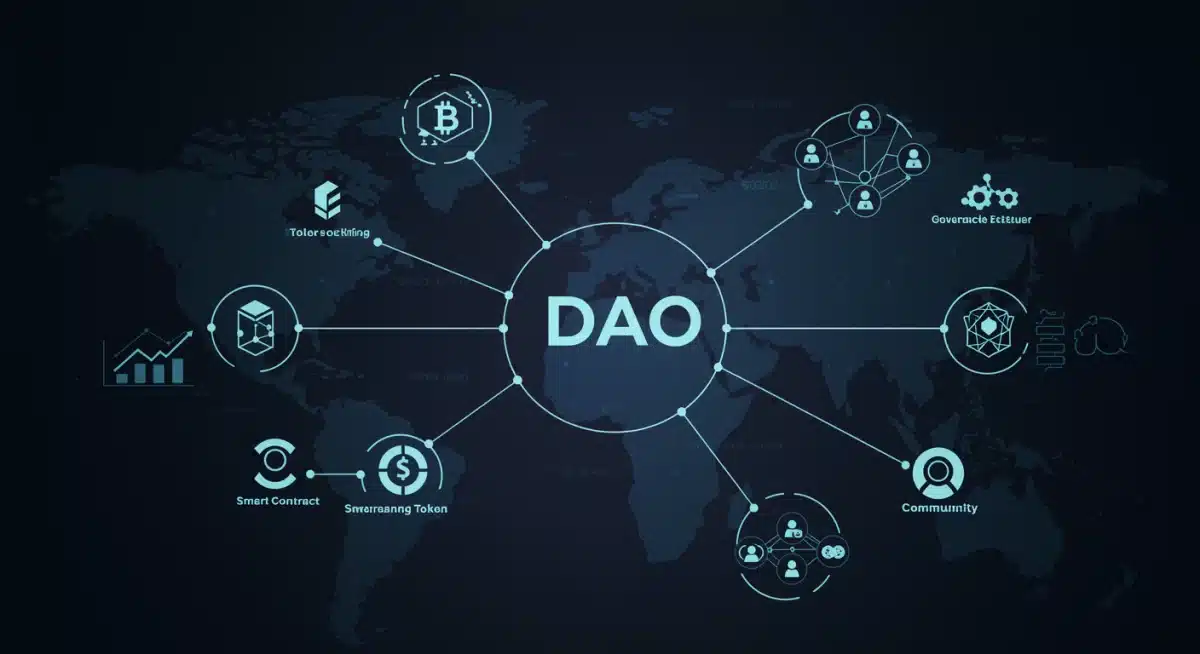
Bridging the blockchain divide
The core of NexusFlow’s breakthrough is its ‘Universal Interoperability Layer’ (UIL), a sophisticated middleware that translates and executes commands across various blockchain protocols. This UIL handles cryptographic proofs and state synchronizations, ensuring secure and reliable cross-chain operations.
The ability to move assets and execute logic across different chains without intermediaries significantly enhances liquidity and functionality within the DeFi ecosystem. It also allows developers to build more complex, multi-chain applications that leverage the unique strengths of different networks.
NexusFlow’s protocol is designed with a focus on security and decentralization, utilizing zero-knowledge proofs and a network of decentralized relayers to validate cross-chain transactions. This minimizes trust assumptions and reduces the risk of single points of failure, which are common in less robust bridging solutions.
The impact of NexusFlow’s technology is profound, as it paves the way for a truly interconnected blockchain ecosystem, where different networks can communicate and collaborate seamlessly. This will undoubtedly accelerate the development and adoption of next-generation Web3 applications.
The broader impact of these technological advancements
The technological breakthroughs exemplified by QuantumLedger, EcoChain, and NexusFlow are not isolated incidents; they represent a significant leap forward for the entire blockchain industry. These innovations address critical limitations that have long constrained the growth and mainstream adoption of decentralized technologies.
QuantumLedger’s focus on post-quantum cryptography ensures the long-term security of digital assets in an increasingly quantum-aware world. This proactive measure is vital for maintaining trust and stability in the face of future computational threats.
EcoChain’s sustainable approach to consensus mechanisms provides a much-needed answer to the environmental concerns surrounding blockchain. By demonstrating that high performance and ecological responsibility can coexist, EcoChain is setting a precedent for future protocol development.
NexusFlow’s cross-chain interoperability protocol is breaking down barriers, fostering a more fluid and integrated blockchain ecosystem. This will enable more complex applications and enhance user experience by allowing seamless interaction across different networks.
Collectively, these advancements contribute to a more resilient, efficient, and accessible decentralized future. They lay the groundwork for Web3 applications that are not only powerful but also secure, sustainable, and truly interconnected, pushing the boundaries of what was previously thought possible.
Navigating the future of altcoin investments
For investors and enthusiasts alike, understanding these technological underpinnings is crucial for making informed decisions in the rapidly evolving altcoin market. The projects highlighted here are examples of how fundamental innovation drives long-term value, rather than speculative hype.
When evaluating altcoins, it’s important to look beyond market capitalization and short-term price movements. Instead, focus on the core technology, the problem it solves, the team behind it, and its potential for broad adoption. Projects with genuine utility and robust technical foundations are often the ones that achieve sustained success.
Key considerations for investors
- Technological utility: Does the project solve a real-world problem or significantly improve existing solutions?
- Team and partnerships: Is there a strong, experienced team with relevant industry connections?
- Community engagement: Is there an active and supportive community contributing to the project’s development?
- Roadmap and development: Is there a clear, ambitious, and achievable roadmap for future development?
- Market fit: Does the project address a significant market need or create a new one?
Investing in altcoins requires a degree of due diligence and a long-term perspective. While the market can be volatile, projects like QuantumLedger, EcoChain, and NexusFlow, with their foundational technological breakthroughs, offer compelling cases for potential growth and impact in early 2026 and beyond.
The future of altcoins is bright, characterized by continuous innovation and a relentless pursuit of decentralized excellence. By staying informed and focusing on projects with substantive technological advancements, investors can better position themselves to capitalize on the hidden value within this exciting space.
| Key Project | Technological Breakthrough |
|---|---|
| QuantumLedger | Post-quantum cryptography integration for future-proof security. |
| EcoChain | Proof-of-Sustainable-Stake (PoSS) for eco-friendly and scalable consensus. |
| NexusFlow | Universal Interoperability Layer (UIL) for seamless cross-chain asset and data transfer. |
Frequently asked questions about altcoin innovation
Under-the-radar technology usually refers to innovations that are significant but not yet widely recognized by the mainstream market. These projects often focus on deep technical challenges or niche applications, building foundational improvements that will eventually have broad impact.
Post-quantum cryptography employs algorithms designed to resist attacks from quantum computers, which could potentially break current encryption standards. By integrating these new cryptographic methods, blockchain networks ensure the long-term security and integrity of their data and transactions against future threats.
EcoChain’s PoSS is crucial because it addresses the environmental impact of blockchain technology. By incentivizing validators to use sustainable practices and energy-efficient hardware, it offers a greener, more responsible alternative to traditional, energy-intensive consensus mechanisms, promoting eco-conscious blockchain development.
Cross-chain interoperability solves the problem of blockchain silos, where different networks cannot easily communicate or transfer assets. By enabling seamless interaction between various blockchains, it enhances liquidity, functionality, and the overall user experience across the decentralized ecosystem.
Investors should prioritize projects with strong technological utility, a capable development team, active community engagement, and a clear roadmap. Focus on solutions that address significant market needs and demonstrate long-term viability, rather than purely speculative ventures.
Conclusion
The altcoin landscape in early 2026 is rich with innovation, showcasing projects that are not merely incremental upgrades but genuine technological breakthroughs. QuantumLedger, EcoChain, and NexusFlow exemplify this trend, each addressing critical challenges in security, sustainability, and interoperability. These projects, while potentially under the radar for now, are laying the foundational groundwork for a more robust, efficient, and interconnected decentralized future. For those seeking to understand and potentially invest in the next wave of crypto innovation, focusing on such fundamental technological advancements is paramount.