Avoiding Crypto Scams in 2025: 5 Essential Digital Security Protocols

To effectively combat evolving crypto scams in 2025, US investors must implement five critical digital security protocols, including advanced authentication, secure storage, and continuous education, safeguarding a significant portion of their digital assets.
As the digital asset landscape continues its rapid evolution, the sophistication of illicit activities targeting investors also grows. For US investors, understanding and implementing robust digital security measures is no longer optional; it’s a critical imperative. This article delves into avoiding crypto scams in 2025: 5 essential digital security protocols for US investors to protect 90% of your assets, providing actionable strategies to safeguard your hard-earned investments against increasingly cunning cyber threats.
Understanding the Evolving Threat Landscape in 2025
The cryptocurrency market, while offering unprecedented opportunities, remains a prime target for malicious actors. In 2025, scams are not just about simple phishing emails; they involve highly sophisticated social engineering, advanced malware, and elaborate schemes designed to exploit both technological vulnerabilities and human psychology.
US investors face a unique set of challenges, from regulatory uncertainties to the sheer volume of new projects, many of which lack proper vetting. Identifying legitimate opportunities from fraudulent ones requires a keen eye and a deep understanding of the tactics employed by scammers. The digital realm offers anonymity, which, while a core tenet of blockchain, also provides cover for those looking to defraud unsuspecting individuals.
common crypto scam tactics
- Phishing and Spoofing: Impersonating legitimate entities to trick users into revealing sensitive information.
- Rug Pulls: Developers abandoning a project and running away with investors’ funds, often seen with new altcoins.
- Impersonation Scams: Scammers pretending to be reputable figures or support staff to gain access to accounts.
- Malware and Spyware: Software designed to steal private keys, seed phrases, or login credentials from your devices.
The sheer scale of these threats necessitates a proactive and multi-layered approach to security. Relying on a single defense mechanism is akin to leaving other doors open. As the digital frontier expands, so too must our commitment to safeguarding our digital wealth. The goal is not just to react to threats but to anticipate and prevent them, creating a formidable barrier against potential losses.
Protocol 1: Fortifying Your Digital Gates with Advanced Authentication
The first line of defense in protecting your crypto assets is robust access control. Passwords alone are no longer sufficient in an era where data breaches are commonplace. Advanced authentication protocols are paramount for any US investor serious about avoiding crypto scams in 2025.
Multi-factor authentication (MFA) goes beyond a simple password, requiring two or more verification methods to grant access. This significantly reduces the risk of unauthorized access, even if your password is compromised. Hardware security keys, such as YubiKey or Ledger Nano X, offer superior protection compared to software-based MFA like SMS codes or authenticator apps, which can be vulnerable to SIM-swapping attacks.
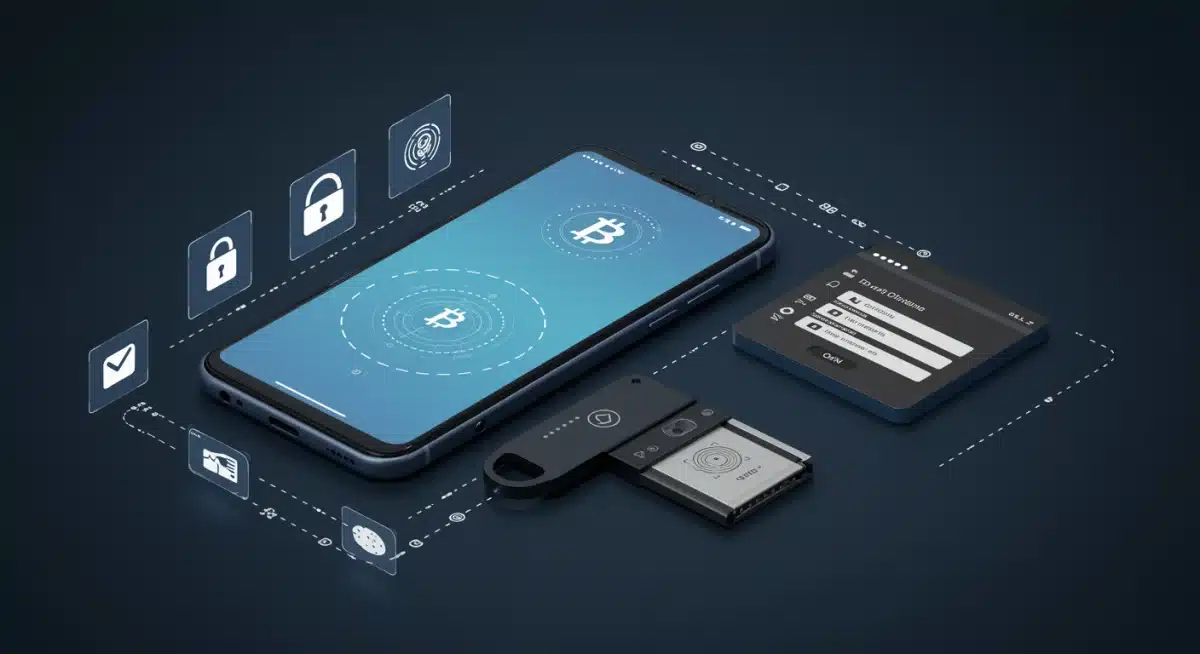
Beyond MFA, consider implementing biometrics where available, such as fingerprint or facial recognition, for added convenience and security on supported devices and platforms. Regularly reviewing and updating your authentication settings across all crypto exchanges, wallets, and related services is crucial. Think of your digital assets as a vault; you wouldn’t rely on a single lock, so why do so for your crypto?
Implementing strong authentication practices
- Hardware Security Keys: Prioritize FIDO2 compliant hardware keys for critical accounts.
- Biometric Authentication: Utilize fingerprint or facial recognition on devices and apps when possible.
- Unique, Strong Passwords: Use a password manager to generate and store complex, unique passwords for each service.
- Regular Security Audits: Periodically review all security settings and connected devices on your crypto platforms.
By making advanced authentication a non-negotiable standard for all your crypto-related activities, you dramatically decrease the attack surface for scammers. This foundational protocol is essential for protecting a significant portion of your digital wealth against unauthorized access.
Protocol 2: Secure Cold Storage Solutions for the Majority of Your Assets
Hot wallets, while convenient for trading, are inherently more susceptible to online threats due to their persistent internet connection. For US investors aiming to protect 90% of their assets, moving the bulk of your holdings to secure cold storage solutions is a non-negotiable step in avoiding crypto scams in 2025.
Cold storage refers to keeping your cryptocurrency offline, making it virtually impervious to online hacking attempts. Hardware wallets are the most common and recommended form of cold storage. These physical devices store your private keys offline, and transactions must be manually confirmed on the device itself, providing an extra layer of security. Examples include Ledger and Trezor devices.
Paper wallets, while also offline, come with their own set of risks, such as physical damage or loss, and are generally less recommended for significant holdings due to their fragility and the complexity of secure generation and use. The key principle here is minimizing exposure. Only keep the amount of crypto you actively trade or need for immediate transactions in hot wallets.
best practices for cold storage
- Diversify Hardware Wallets: Consider using different brands or models for very large holdings.
- Secure Seed Phrase Storage: Store your seed phrase physically in multiple, secure, and geographically diverse locations, away from your hardware wallet.
- Regular Firmware Updates: Keep your hardware wallet’s firmware up to date to patch potential vulnerabilities.
- Test Your Recovery: Periodically practice restoring a wallet from your seed phrase (with a small, disposable amount) to ensure you understand the process.
Implementing cold storage for the vast majority of your crypto assets creates a robust barrier against online theft, significantly bolstering your defense strategy. This move alone can protect a substantial portion of your investment from the most common forms of digital compromise.
Protocol 3: Vigilant Software Practices and System Hygiene
The digital tools and operating systems you use to access your crypto are just as critical to your security as the wallets themselves. Poor software practices and neglected system hygiene present open invitations for scammers. Maintaining a clean, updated, and secure digital environment is fundamental for avoiding crypto scams in 2025.
This protocol involves several layers, starting with your operating system. Always ensure your OS, web browsers, and any crypto-related applications are running the latest versions. Software updates often include critical security patches that address newly discovered vulnerabilities. Delaying these updates can leave you exposed to known exploits that scammers are quick to leverage.
Furthermore, be extremely cautious about the software you install. Only download applications from official sources and be wary of unsolicited links or downloads. Malware, disguised as legitimate software or browser extensions, can log keystrokes, capture screenshots, or directly steal your private keys. A dedicated, clean machine for crypto transactions, free from other personal browsing or downloads, can significantly enhance security.
essential software security tips
- Dedicated Crypto Device: Use a separate computer or mobile device solely for crypto transactions.
- Antivirus and Anti-Malware: Install and regularly update reputable security software.
- Firewall Protection: Ensure your operating system’s firewall is active and configured correctly.
- Browser Security: Use privacy-focused browsers and extensions, and be cautious of installing unverified add-ons.
By adhering to stringent software practices and maintaining excellent system hygiene, US investors can drastically reduce the risk of malware-based attacks and other digital intrusions, thereby safeguarding a larger percentage of their crypto holdings.
Protocol 4: Mastering OpSec and Recognizing Social Engineering Tactics
Technical security measures are vital, but human vulnerabilities are often the easiest entry points for scammers. Operational Security (OpSec) and an acute awareness of social engineering tactics are crucial for avoiding crypto scams in 2025. Scammers are experts at manipulating human trust and curiosity.
Social engineering involves psychological manipulation to trick individuals into performing actions or divulging confidential information. This can manifest as phishing emails, fake customer support calls, imposter profiles on social media, or even romantic scams (pig butchering). The key to combating these is skepticism and verification.
Never share your private keys, seed phrases, or passwords with anyone, regardless of who they claim to be. Legitimate entities will never ask for this information. Be wary of urgent requests, unsolicited offers that seem too good to be true, and anyone pressuring you to act quickly. Always verify the identity of the person or entity you are interacting with through independent channels.
opsec best practices and scam identification
- Verify Everything: Double-check URLs, email addresses, and sender identities before clicking links or providing information.
- Limit Public Information: Be mindful of what you share online, as scammers can use personal details for targeted attacks.
- Understand Urgency Tactics: Recognize that scammers often create a sense of urgency to bypass rational thought.
- Report Suspicious Activity: Report phishing attempts and scams to relevant authorities and platforms.
Developing strong OpSec habits and sharpening your ability to recognize social engineering tactics are powerful defenses. By understanding the psychological ploys used by scammers, US investors can avoid falling victim to these insidious schemes, protecting their assets from manipulation and deceit.
Protocol 5: Continuous Education and Community Engagement
The cryptocurrency space is dynamic, with new technologies, trends, and, unfortunately, new scamming methods emerging constantly. The fifth essential protocol for avoiding crypto scams in 2025 is a commitment to continuous education and active, discerning community engagement.
Staying informed about the latest security threats, common scam patterns, and best practices is paramount. Follow reputable crypto security researchers, official project announcements, and trusted news sources. Be cautious of information shared on unverified social media channels, as these are often breeding grounds for misinformation and coordinated pump-and-dump schemes.
Engaging with the broader crypto community can also be beneficial, but with a critical mindset. Forums, Discord servers, and Telegram groups can be excellent sources of information and peer support. However, they also attract scammers. Always cross-verify information, be suspicious of direct messages from strangers, and never click on unsolicited links or download files from unknown sources.
leveraging education and community safely
- Follow Trusted Sources: Subscribe to newsletters and follow social media accounts of established security experts and crypto projects.
- Participate Critically: Engage in community discussions but always question and verify information.
- Learn from Others’ Mistakes: Pay attention to reported scams and understand how they operated to avoid similar pitfalls.
- Stay Updated on Regulations: Be aware of any new US regulations concerning digital asset security and reporting.
By making continuous learning a cornerstone of your crypto investment strategy, US investors can adapt to new threats and leverage collective knowledge to enhance their security posture. This proactive approach ensures you remain one step ahead of those seeking to exploit vulnerabilities.
Integrating These Protocols for Maximum Protection
Each of these five protocols, when implemented individually, offers a significant layer of defense. However, their true power lies in their synergistic application. For US investors to truly achieve the goal of protecting 90% of their assets and effectively avoiding crypto scams in 2025, these strategies must be integrated into a comprehensive security framework.
Think of it as building a fortress. Advanced authentication forms the drawbridge and main gate. Secure cold storage represents the impenetrable treasury within. Vigilant software practices are the constant maintenance and patrol of the walls. Mastering OpSec and recognizing social engineering is the intelligence network, identifying spies and saboteurs. Finally, continuous education and community engagement are the ongoing training of the guards and the adaptation of defenses to new siege technologies.
Regularly review your security setup. The digital world is not static, and neither should your security strategy be. What was sufficient in 2024 might not be enough in 2025. US investors must embrace a mindset of perpetual vigilance and adaptation. By doing so, you not only protect your current assets but also build a resilient foundation for future participation in the exciting, yet challenging, world of digital finance.
| Key Protocol | Brief Description |
|---|---|
| Advanced Authentication | Implement MFA, especially hardware keys, for all crypto accounts. |
| Cold Storage | Move the majority of assets to offline hardware wallets. |
| System Hygiene | Keep software updated, use antivirus, and consider a dedicated crypto device. |
| OpSec & Social Engineering | Be skeptical, verify identities, and understand manipulation tactics. |
Frequently asked questions about crypto security in 2025
The most effective way is to use a hardware wallet (cold storage) for the majority of your assets. These devices keep your private keys offline, making them immune to online hacking attempts. Combine this with strong multi-factor authentication for any online accounts you maintain.
Phishing scams often involve suspicious links, urgent requests, or offers that seem too good to be true. Always check the sender’s email address or the website’s URL for discrepancies. Legitimate entities will never ask for your private keys or seed phrase. When in doubt, navigate directly to the official website.
No, storing your seed phrase digitally, even encrypted, is highly risky. Digital storage methods are vulnerable to malware and hacking. Your seed phrase should always be written down on paper or metal and stored in multiple secure, offline locations, away from your hardware wallet.
A ‘rug pull’ is when developers abruptly abandon a new crypto project and disappear with investors’ funds. To avoid them, research projects thoroughly, check for audited smart contracts, assess team transparency, and be wary of projects with extremely high, unsustainable returns. Diversify your investments and don’t invest more than you can afford to lose.
Yes, using a dedicated, clean device (like a separate computer or smartphone) solely for crypto transactions can significantly enhance security. This minimizes the risk of malware or spyware installed from unrelated browsing or activities compromising your crypto accounts. Keep this device free from unnecessary software and regularly updated.
Conclusion
Avoiding crypto scams in 2025 requires a proactive, multi-faceted approach, especially for US investors navigating a complex digital landscape. By diligently implementing advanced authentication, securing assets in cold storage, maintaining impeccable system hygiene, mastering operational security, and committing to continuous education, you can significantly mitigate risks. These five essential digital security protocols are not merely suggestions but critical safeguards designed to protect a substantial portion of your digital assets, ensuring a more secure and confident participation in the evolving world of cryptocurrency.