DAO Governance in Practice: 6 Key Learnings from US-Based Decentralized Autonomous Organizations in Early 2026

DAO Governance in Practice: 6 Key Learnings from US-Based Decentralized Autonomous Organizations in Early 2026
The landscape of decentralized autonomous organizations (DAOs) has evolved at a dizzying pace over the past few years. What began as a nascent concept in the blockchain space has matured into a complex, multifaceted ecosystem, particularly within the United States. As we navigate early 2026, US-based DAOs are at the forefront of innovation, grappling with unique challenges and pioneering novel solutions in governance, legal standing, and operational efficiency. This deep dive explores six critical learnings emerging from the practical application of DAO governance, offering invaluable insights for anyone involved in or curious about the future of decentralized organizations.
The promise of DAOs – a future of truly democratic, transparent, and efficient organizations – remains a powerful driving force. However, turning this promise into reality requires navigating a labyrinth of technical, social, and regulatory hurdles. US-based DAOs, operating within one of the world’s most dynamic and scrutinizing regulatory environments, provide a rich case study for understanding these complexities and identifying best practices. From managing multi-million dollar treasuries to fostering genuine community participation, these organizations are writing the playbook for decentralized governance in real-time.
Our exploration will touch upon the intricate balance between decentralization ideals and the practical necessities of execution. We’ll examine how DAOs are structuring their decision-making processes, adapting to evolving legal landscapes, and building resilient communities. These learnings are not merely theoretical; they are drawn from the lived experiences of projects that are actively shaping the decentralized future, offering actionable intelligence for both aspiring DAO founders and seasoned contributors.
1. The Evolving Legal & Regulatory Landscape: A Double-Edged Sword for DAO Governance
One of the most significant and rapidly changing aspects of DAO operation in the US is the legal and regulatory environment. Early 2026 sees a more refined, if still complex, understanding of DAOs by various governmental bodies. What was once a wild west of legal ambiguity is slowly giving way to specific rulings, proposed frameworks, and an increasing focus on consumer protection and financial stability. This evolving landscape is, in many ways, a double-edged sword for DAO governance.
On one hand, greater clarity can provide a much-needed foundation for DAOs to operate with more confidence. States like Wyoming have continued to lead with progressive DAO LLC laws, offering a legal wrapper that helps define liability and organizational structure. Other states and federal agencies are beginning to follow suit, or at least acknowledge the unique nature of decentralized organizations. This movement towards legal recognition can attract more mainstream investment and participation, as the risks associated with legal uncertainty are mitigated. However, this clarity often comes with increased compliance requirements.
On the other hand, increased regulation can stifle the very decentralization that DAOs strive for. The challenge lies in applying traditional legal frameworks, designed for hierarchical corporations, to flat, distributed, and often pseudonymous organizations. Issues such as identifying responsible parties, enforcing smart contract agreements, and ensuring anti-money laundering (AML) and know-your-customer (KYC) compliance become incredibly complex. US-based DAOs are learning that proactive engagement with legal counsel and a deep understanding of potential liabilities are no longer optional but essential. Many DAOs are exploring hybrid legal structures, combining on-chain governance with traditional legal entities to manage real-world assets and liabilities. This pragmatic approach to DAO legal frameworks is becoming a hallmark of successful US operations.
The key learning here is that while the ideal of complete decentralization remains, the practical reality in the US demands a strategic approach to legal integration. This involves:
- Proactive Legal Counsel: Engaging specialized legal teams to navigate state and federal regulations.
- Hybrid Structures: Utilizing legal wrappers (e.g., LLCs, foundations) to mitigate risk for core contributors and manage off-chain assets.
- Compliance-by-Design: Integrating compliance considerations into the very architecture of the DAO’s smart contracts and governance processes where feasible.
- Advocacy: Participating in lobbying efforts and educational initiatives to help shape future regulations in a way that supports decentralized innovation.
The balancing act between regulatory adherence and decentralized ethos will continue to be a defining characteristic of US-based DAOs, and those that master this balance will set the standard for others.
2. Treasury Management & Capital Allocation: Beyond Simple HODLing
The vast treasuries accumulated by many successful DAOs present both incredible opportunity and significant responsibility. In early 2026, the days of simply ‘HODLing’ native tokens and hoping for appreciation are largely over. US-based DAOs are demonstrating a sophisticated approach to DAO treasury management and capital allocation, recognizing that these assets are the lifeblood of their long-term sustainability and growth.
One critical learning is the shift towards active, diversified treasury strategies. Instead of a single-asset treasury, many DAOs are now employing multi-asset portfolios, including stablecoins, various cryptocurrencies, and even real-world assets (RWAs) through tokenization. This diversification helps mitigate volatility risk and provides a more stable foundation for operational expenses and strategic investments. Furthermore, DAOs are increasingly exploring yield-generating opportunities, such as staking, lending protocols, and liquidity provision, to grow their treasuries rather than just holding static assets.
This increased sophistication demands robust governance mechanisms for capital allocation. Proposals for spending, investment, and diversification are often subject to rigorous community review and voting. Sub-DAOs or specialized working groups focused solely on treasury management are becoming common, bringing financial expertise into the decentralized structure. These groups often propose strategies, conduct due diligence, and execute approved plans, subject to the overarching approval of the main DAO.
Key considerations in this area include:
- Risk Management Frameworks: Developing clear policies for acceptable risk levels, asset allocation limits, and rebalancing strategies.
- Transparency & Reporting: Providing clear, auditable reports on treasury holdings, performance, and expenditures to the community.
- Expertise Integration: Attracting and empowering individuals with financial and investment expertise to contribute to treasury strategy.
- Strategic Investments: Moving beyond just operational funding to make strategic investments in ecosystem development, grants, and partnerships that align with the DAO’s mission.
The ability to effectively manage and strategically deploy capital is a strong indicator of a DAO’s maturity and its potential for long-term impact. US-based DAOs are setting a high bar for responsible and innovative treasury stewardship.
3. Community Engagement & Participation: Beyond Token-Weighted Voting
True decentralization hinges on active community participation, but US-based DAOs in early 2026 have learned that simply having token-weighted voting is not enough. The challenge lies in fostering genuine, sustained engagement that empowers diverse voices and prevents voter apathy or plutocracy. The third key learning is the evolution of DAO community engagement beyond simplistic voting mechanisms.
Many DAOs are experimenting with and implementing more nuanced governance structures. This includes:
- Delegated Voting: Allowing token holders to delegate their voting power to trusted representatives (delegates) who are more informed and engaged. This helps address voter apathy and allows for more expert-driven decision-making while maintaining decentralized principles.
- Quadratic Voting & Funding: Exploring alternative voting mechanisms that reduce the influence of large token holders and give more weight to broader community sentiment. Similarly, quadratic funding is being used to allocate resources based on collective preference rather than just the size of contributions.
- Active Forums & Discussions: Prioritizing well-moderated forums, Discord channels, and community calls where proposals are debated, refined, and understood before a vote. This pre-voting discourse is crucial for informed decision-making.
- Contributor Onboarding & Education: Developing clear pathways for new members to understand the DAO’s mission, governance processes, and how they can contribute. Educational resources and mentorship programs are becoming vital.
- Incentivizing Participation: Beyond financial incentives, DAOs are exploring non-monetary rewards, recognition systems, and clear impact pathways to encourage active involvement from diverse contributors.
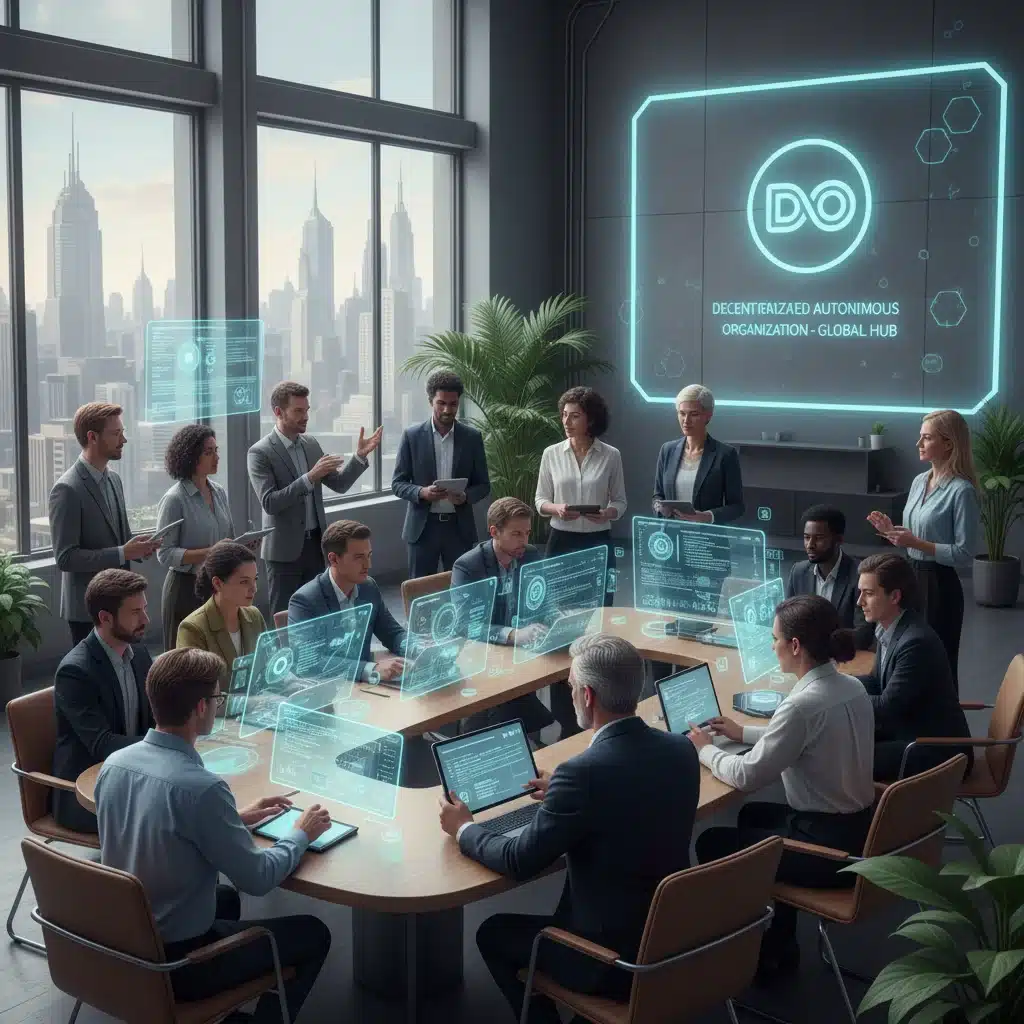
The goal is to cultivate a culture of active stewardship rather than passive ownership. US-based DAOs are recognizing that a healthy community is one where members feel a sense of ownership, have opportunities to contribute meaningfully, and believe their voices can impact the direction of the organization. This requires continuous effort in communication, education, and the iteration of governance tools and processes. The most successful DAOs are those that view their community as their greatest asset and invest heavily in nurturing its growth and engagement.
4. Operational Efficiency & Tooling: The Rise of DAO-Native Infrastructure
As DAOs mature, the need for robust and efficient operational infrastructure becomes paramount. Early DAOs often cobbled together disparate tools, leading to inefficiencies and friction. By early 2026, US-based DAOs are increasingly adopting and even developing specialized DAO-native tooling that streamlines operations, enhances transparency, and improves overall DAO operational efficiency.
This includes advancements in several key areas:
- Proposal & Voting Platforms: More sophisticated platforms that integrate seamlessly with various blockchains, offer customizable voting parameters (e.g., quorum requirements, voting periods), and provide clear dashboards for tracking proposal status and outcomes.
- Contributor Management & Compensation: Tools designed to track contributor work, manage bounties, process payroll in crypto, and distribute rewards fairly. These platforms often integrate with identity solutions to manage permissions and reputation.
- Treasury Management Dashboards: Comprehensive interfaces that provide real-time visibility into treasury holdings, transaction history, and investment performance, often with multi-signature capabilities for enhanced security.
- Communication & Collaboration Suites: While Discord and Telegram remain popular, DAOs are also using more structured collaboration tools that facilitate project management, document sharing, and asynchronous communication, all while maintaining a decentralized ethos.
- Analytics & Reporting: Tools that provide insights into governance participation, treasury health, and community sentiment, enabling DAOs to make data-driven decisions about their operations and strategies.
The learning here is that while the decentralized nature of DAOs removes traditional hierarchies, it introduces a new set of operational challenges. Addressing these challenges requires purpose-built technology that respects decentralized principles while facilitating effective coordination. The most successful US DAOs are those actively investing in or contributing to the development of this DAO-native infrastructure, understanding that good tooling is foundational to scalable and sustainable decentralized operations.
5. The Importance of Clear Mission & Values: Guiding Decentralized Decisions
In a decentralized organization where decisions are made by a distributed collective, a clear and compelling mission statement, coupled with well-defined core values, is not just a nice-to-have; it’s a fundamental necessity. US-based DAOs in early 2026 have learned that without these guiding principles, decision-making can become fragmented, contentious, and ultimately ineffective. This is the fifth crucial learning: the paramount importance of a well-articulated mission and values for effective DAO governance principles.
A strong mission statement provides a North Star for all proposals, discussions, and strategic directions. It helps the community evaluate whether a particular action aligns with the DAO’s ultimate purpose. For instance, a DAO focused on public goods funding will evaluate proposals differently than one focused on DeFi protocol development. This clarity helps to filter out irrelevant or conflicting ideas, streamlines decision-making, and maintains coherence across diverse contributors.
Similarly, clearly defined values (e.g., transparency, inclusivity, innovation, security) establish the ethical and operational boundaries within which the DAO operates. These values serve as a common language and a framework for resolving disputes, fostering a positive community culture, and attracting like-minded contributors. When a difficult decision arises, referring back to the core values can help guide the community towards a consensus that respects the DAO’s foundational principles.
The process of establishing and embedding these mission and values is itself a governance exercise. It often involves:
- Community-Driven Definition: The mission and values should ideally emerge from the collective input of the community, ensuring broad buy-in.
- Regular Reinforcement: These principles should be regularly communicated, referenced in discussions, and integrated into onboarding materials.
- Adaptability: While foundational, the mission and values may require slight iteration over time as the DAO evolves, always through a decentralized governance process.
- Alignment with Actions: The most important aspect is that the DAO’s actions consistently reflect its stated mission and values, building trust and credibility within the community and beyond.
Without this foundational clarity, DAOs risk devolving into aimless collectives or becoming susceptible to capture by factions with divergent agendas. The most resilient US-based DAOs are those that have successfully enshrined their purpose and principles at the heart of their decentralized operations.
6. Bridging the Centralization-Decentralization Divide: Pragmatism in Practice
The ideal of complete decentralization is often contrasted with the practical realities of launching, managing, and scaling a complex organization. US-based DAOs in early 2026 are demonstrating a pragmatic approach to bridging this centralization-decentralization divide. The sixth key learning is that effective DAO decentralization strategy often involves a thoughtful, iterative journey rather than an immediate leap to full decentralization.
Many successful DAOs acknowledge that some degree of initial centralization, particularly during the bootstrapping phase, can be beneficial or even necessary. This might involve a core team making critical early decisions, developing initial infrastructure, or securing foundational funding. The key is to have a clear roadmap and commitment to progressive decentralization, gradually transferring power and control to the wider community as the DAO matures.
This pragmatic approach manifests in several ways:
- Phased Decentralization: Starting with a more centralized core for rapid development and then progressively decentralizing governance, treasury control, and operational roles.
- Hybrid Decision-Making: Employing a mix of on-chain voting for major decisions and off-chain discussion forums or working groups for more routine operational tasks.
- Specialized Sub-DAOs: Delegating specific functions (e.g., marketing, development, grants) to smaller, more agile sub-DAOs or working groups that can operate with a degree of autonomy while remaining accountable to the main DAO. This allows for efficiency without sacrificing the overarching decentralized ethos.
- Transparency about Centralization: Being upfront with the community about any centralized elements and providing a clear path towards their eventual decentralization. Trust is built on transparency, even regarding the imperfections of the journey.
- Emergency Powers & Safeties: Implementing multi-sig wallets or emergency governance mechanisms, often with a small, trusted group, to address critical security vulnerabilities or unforeseen crises quickly, with a clear plan for community oversight post-event.
The learning is that while decentralization is the ultimate goal, a rigid adherence to it from day one can sometimes hinder a DAO’s ability to execute and adapt. The most resilient and impactful US-based DAOs are those that embrace a nuanced approach, understanding that decentralization is a spectrum, and the journey towards it is often as important as the destination. They prioritize building robust, sustainable organizations that can truly deliver on their mission, even if it means a gradual and thoughtful path to full decentralization.
Conclusion: The Maturing Landscape of DAO Governance
The early months of 2026 paint a picture of a maturing DAO ecosystem in the United States. The six key learnings outlined above – navigating the evolving legal landscape, sophisticated treasury management, fostering genuine community engagement, adopting DAO-native operational tooling, upholding clear mission and values, and embracing pragmatic decentralization – underscore the journey these organizations are undertaking. This journey is not without its complexities, but the innovation and resilience demonstrated by US-based DAOs offer a compelling vision for the future of decentralized governance.
These organizations are moving beyond theoretical ideals, confronting real-world challenges, and developing practical solutions that blend blockchain’s transformative power with the necessities of effective organizational management. The insights gleaned from their experiences provide a valuable roadmap for future DAOs, highlighting the importance of adaptability, strategic planning, and a deep commitment to community-driven principles.
As the Web3 space continues to grow, the lessons learned from US-based DAOs in early 2026 will undoubtedly serve as foundational pillars for the next wave of decentralized innovation. The ongoing evolution of DAO governance insights promises a future where organizations are not just more transparent and democratic, but also more resilient, efficient, and impactful in the digital age.
The journey of decentralization is continuous, and the collective wisdom emerging from these pioneering organizations is invaluable. By understanding and applying these key learnings, both existing and aspiring DAOs can better navigate the challenges and harness the immense potential of decentralized autonomous organizations.