Securing DAOs with Smart Contracts: 3-Month Guide 2026
Securing Decentralized Autonomous Organizations (DAOs) with smart contracts in 2026 requires a strategic 3-month implementation plan focusing on audit, upgrade, and continuous monitoring to ensure robust and resilient decentralized governance.
Securing Decentralized Autonomous Organizations (DAOs) with Smart Contracts: A 3-Month Implementation Guide for 2026 – Practical Solutions is no longer just a best practice but a critical necessity in the rapidly evolving Web3 landscape. As DAOs grow in complexity and value, the integrity of their underlying smart contracts becomes paramount. This guide outlines a structured, three-month approach to fortify DAO security, offering actionable steps for developers and governance participants alike.
Understanding the Evolving Threat Landscape for DAOs in 2026
The digital frontier of 2026 presents an increasingly sophisticated array of threats to decentralized autonomous organizations. While the promise of decentralization offers immense benefits, it also introduces unique vulnerabilities that malicious actors are eager to exploit. Understanding these evolving risks is the first step toward building truly resilient DAOs.
Traditional cybersecurity models often fall short when applied to DAOs, primarily due to their immutable nature and reliance on open-source code. Attack vectors have diversified, moving beyond simple code exploits to include complex governance manipulation and economic attacks. The interconnectedness of Web3 protocols means a vulnerability in one component can cascade, affecting an entire ecosystem.
Common attack vectors and their impact
- Re-entrancy Attacks: These classic exploits remain a threat if not properly mitigated, allowing attackers to repeatedly withdraw funds before a transaction is finalized.
- Flash Loan Exploits: Leveraging uncollateralized loans to manipulate asset prices or governance votes within a single block, often leading to significant financial losses.
- Governance Takeovers: Accumulating enough voting power to push through malicious proposals, such as draining the DAO treasury or altering core protocols.
- Front-Running and Sandwich Attacks: Exploiting transaction ordering on public blockchains to profit at the expense of other users, particularly prevalent in DeFi DAOs.
The impact of a successful attack extends beyond financial loss; it erodes trust, damages reputation, and can halt the progress of an entire decentralized project. Therefore, a proactive and multi-layered security strategy is indispensable for any DAO aiming for long-term sustainability and credibility.
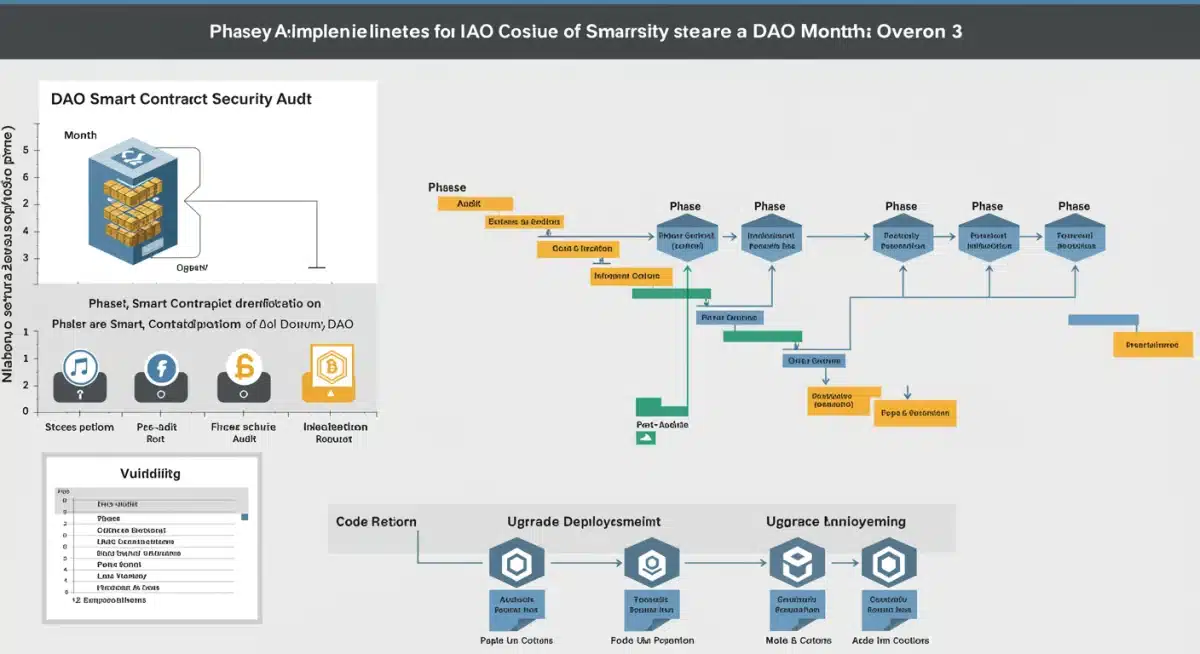
Month 1: Comprehensive Audit and Vulnerability Identification
The initial month of our security implementation guide focuses heavily on a thorough and systematic examination of your DAO’s existing smart contracts. This phase is foundational, as it aims to identify every potential weakness before any new security measures are deployed. A robust audit goes beyond automated tools, incorporating expert human review and adversarial thinking.
Starting with an exhaustive code review, every line of the smart contract logic should be scrutinized. This includes not only the core governance contracts but also any associated treasury, token, or application-specific contracts. The goal is to uncover logical flaws, coding errors, and potential attack vectors that automated scanners might miss.
Engaging expert security auditors
Partnering with reputable blockchain security firms is crucial during this stage. These firms bring specialized knowledge and experience in identifying subtle vulnerabilities unique to smart contract environments. Their expertise can uncover issues that might otherwise go unnoticed by internal development teams.
- Formal Verification: Employing mathematical methods to prove the correctness of smart contract code against a formal specification, significantly reducing logical errors.
- Penetration Testing: Simulating real-world attacks to test the resilience of the DAO’s contracts and infrastructure under adversarial conditions.
- Tokenomics Review: Analyzing the economic design of the DAO’s native tokens for potential manipulation or instability that could be exploited.
The outcome of this month should be a detailed report outlining all identified vulnerabilities, categorized by severity, along with recommended remediation steps. This report will serve as the roadmap for the subsequent phases of the security upgrade.
Month 2: Strategic Smart Contract Upgrades and Patch Deployment
With a clear understanding of existing vulnerabilities from the first month’s audit, month two is dedicated to implementing the necessary smart contract upgrades and deploying patches. This phase requires meticulous planning and execution to ensure that fixes are effective and do not introduce new issues. The emphasis is on secure development practices and rigorous testing.
Remediating identified vulnerabilities involves not only fixing code but often refactoring entire sections to improve security posture. This might include implementing re-entrancy guards, upgrading access control mechanisms, or enhancing input validation. Each change must be carefully considered for its impact on the DAO’s overall functionality and security.
Implementing governance-approved changes
All proposed smart contract changes must go through the DAO’s governance process. This involves creating detailed proposals, engaging with the community, and securing sufficient votes for approval. Transparency and clear communication are vital to ensure community buy-in and understanding of the security enhancements.
- Multi-signature Wallets: Implementing or upgrading multi-sig requirements for critical transactions, adding an extra layer of approval for sensitive operations.
- Time-Locks: Introducing time-locks for significant changes or treasury withdrawals, providing a window for the community to react to potentially malicious actions.
- Upgradeability Patterns: Ensuring that contracts are designed with secure upgradeability in mind, allowing for future patches without requiring a complete redeployment.
Before deployment, all upgraded contracts must undergo a second, focused audit to confirm that the patches are effective and haven’t inadvertently created new vulnerabilities. This iterative process of audit and remediation is key to achieving a high level of security.
Month 3: Continuous Monitoring, Incident Response, and Future-Proofing
The final month of the implementation guide shifts focus from reactive patching to proactive, continuous security management. Even after significant upgrades, the Web3 landscape is dynamic, and new threats emerge regularly. Establishing robust monitoring and incident response protocols is crucial for long-term DAO resilience.
Continuous monitoring involves deploying specialized tools and services that actively track contract activity, detect anomalies, and alert the DAO to potential threats in real-time. This includes monitoring transaction patterns, governance proposals, and external market conditions that could impact the DAO’s security.
Establishing a rapid incident response plan
A well-defined incident response plan is vital for minimizing the impact of any security breach. This plan should outline clear roles, responsibilities, and communication protocols for various types of incidents. Speed and coordination are paramount when responding to an active exploit.
- Bug Bounty Programs: Incentivizing white-hat hackers to discover and report vulnerabilities before they can be exploited by malicious actors.
- Decentralized Oracles for Threat Intelligence: Utilizing decentralized oracle networks to feed real-time threat intelligence and market data into smart contracts for dynamic risk assessment.
- Community Security Awareness: Educating DAO members on common phishing attempts, social engineering tactics, and the importance of secure wallet practices.
Future-proofing involves regularly reviewing and updating security practices, staying abreast of the latest exploits, and planning for upcoming blockchain innovations. This continuous adaptation ensures the DAO remains secure against evolving threats.
Leveraging Advanced Smart Contract Features for Enhanced DAO Security
Beyond basic security measures, the smart contract ecosystem in 2026 offers advanced features that DAOs can leverage to create incredibly robust and flexible security frameworks. These features move beyond simple fixes, integrating sophisticated logic directly into the governance mechanisms to preemptively mitigate risks.
One primary area of advancement lies in programmable governance. This allows DAOs to define complex rules for proposal submission, voting, and execution, making it harder for malicious actors to manipulate the system. For instance, proposals affecting large treasury movements could require a supermajority vote combined with a longer time-lock period.
Implementing AI-driven anomaly detection
Artificial intelligence is playing an increasingly significant role in smart contract security. AI-driven systems can analyze vast amounts of transaction data and contract interactions to identify unusual patterns that might indicate an ongoing attack or a previously unknown vulnerability. These systems provide a layer of proactive defense that human auditors might miss.
- Conditional Execution Logic: Designing smart contracts to execute actions only when certain on-chain or off-chain conditions are met, adding a layer of protection against unexpected scenarios.
- Zero-Knowledge Proofs (ZKPs) in Governance: Utilizing ZKPs to enable private voting or to verify the integrity of off-chain data used in governance decisions without revealing sensitive information.
- Self-Healing Contracts: Developing contracts that can automatically trigger predefined recovery mechanisms or revert malicious transactions under specific, pre-approved conditions.
These advanced features are not just theoretical; they are becoming practical solutions for DAOs looking to build truly resilient and future-proof governance structures in a complex digital environment.
Integrating Third-Party Security Protocols and Tools
The decentralized nature of DAOs means they often interact with various external protocols and tools. Securing these integrations is just as critical as securing the core smart contracts. In 2026, a rich ecosystem of third-party security solutions is available, offering specialized protection and monitoring capabilities.
Carefully vetting and integrating these tools can significantly enhance a DAO’s overall security posture. This includes everything from decentralized identity solutions that strengthen member authentication to specialized monitoring services that track cross-chain interactions for nefarious activity. The key is to choose solutions that align with the DAO’s specific risk profile and operational needs.
Essential third-party security integrations
Many specialized services have emerged to address the unique challenges of Web3 security. Integrating these can provide a comprehensive defense strategy. For example, some platforms offer real-time contract monitoring with customizable alert systems, while others specialize in simulating complex attack scenarios.
- Decentralized Identity (DID) Solutions: Enhancing member verification and permissioning within the DAO, reducing the risk of sybil attacks or unauthorized access.
- On-Chain Analytics Platforms: Utilizing tools that provide deep insights into transaction flows, token movements, and contract interactions to detect suspicious behavior.
- Cross-Chain Security Bridges: Implementing secure bridging solutions for DAOs operating across multiple blockchains, mitigating risks associated with asset transfers and data integrity.
By strategically integrating these external security protocols, DAOs can create a more robust and adaptive defense system, extending their protective shield beyond their immediate contract boundaries. This collaborative approach to security is a hallmark of the evolving Web3 ecosystem.
Best Practices for Ongoing DAO Security in 2026
Achieving a secure DAO is not a one-time event; it is an ongoing commitment that requires continuous vigilance and adaptation. In 2026, best practices for DAO security have matured, emphasizing a culture of security awareness, regular audits, and proactive risk management. These practices ensure that a DAO remains resilient against both known and emerging threats.
Regular security audits, even after the initial implementation phase, are paramount. The blockchain landscape changes rapidly, and what is secure today might not be tomorrow. Scheduling periodic re-audits and engaging in continuous bug bounty programs helps maintain a high level of security posture. Furthermore, fostering a security-first mindset among all DAO members is crucial.
Cultivating a security-conscious DAO culture
Security is a collective responsibility within a decentralized organization. Educating members on security best practices, encouraging critical thinking regarding governance proposals, and promoting responsible participation are essential. A well-informed community is the first line of defense against many social engineering and governance attacks.
- Mandatory Security Training: Implementing regular security awareness training for core contributors and active members, covering topics like phishing, wallet security, and proposal vetting.
- Dedicated Security Working Groups: Establishing a specialized group within the DAO focused solely on monitoring security, researching new threats, and proposing proactive measures.
- Transparent Vulnerability Disclosure: Creating clear and accessible channels for members to report potential vulnerabilities and ensuring a swift, transparent response process.
By embedding these best practices into the very fabric of the DAO, organizations can build a sustainable security model that protects their assets, maintains trust, and ensures their long-term success in the decentralized world.
| Key Point | Brief Description |
|---|---|
| Month 1: Audit Phase | Conduct comprehensive smart contract audits to identify vulnerabilities and secure expert review. |
| Month 2: Upgrade Phase | Implement strategic smart contract upgrades, deploy patches, and ensure governance approval. |
| Month 3: Monitor & Respond | Establish continuous monitoring, develop incident response plans, and future-proof security. |
| Advanced Features | Leverage AI-driven detection, ZKPs, and conditional logic for enhanced DAO security. |
Frequently Asked Questions about DAO Smart Contract Security
A structured 3-month guide provides a systematic approach to address complex security challenges in DAOs. It breaks down the process into manageable phases: initial auditing, strategic upgrades, and continuous monitoring, ensuring all critical aspects are covered for robust protection.
In 2026, DAOs face sophisticated threats including re-entrancy attacks, flash loan exploits, governance takeovers, and front-running. These can lead to significant financial losses and reputational damage, highlighting the need for advanced security measures.
AI-driven anomaly detection systems can analyze vast amounts of on-chain data to identify unusual patterns indicative of attacks or vulnerabilities. This proactive approach helps detect and mitigate threats in real-time, augmenting traditional auditing methods effectively.
Governance is central to DAO security. All significant smart contract upgrades and security patches must undergo community-approved proposals and voting. This ensures transparency, collective decision-making, and prevents unauthorized or malicious changes to the protocol.
Ongoing security practices include regular re-audits, continuous bug bounty programs, and fostering a security-conscious DAO culture. Educating members on best practices and establishing dedicated security working groups are vital for long-term resilience against evolving threats.
Conclusion
The journey to effectively securing Decentralized Autonomous Organizations with smart contracts by 2026 is an intricate but achievable one. By adhering to a rigorous 3-month implementation guide, DAOs can systematically identify vulnerabilities, deploy robust upgrades, and establish continuous monitoring protocols. This comprehensive approach, combined with leveraging advanced smart contract features and fostering a security-first culture, ensures that DAOs can navigate the complex Web3 landscape with confidence, safeguarding their assets and sustaining their decentralized vision for the future.