Decentralized Identifiers 2026: US Developer’s Guide to DIDs
The digital world is in constant flux, and at its core, the concept of identity is undergoing a profound transformation. For US developers, staying ahead of these shifts isn’t just about competitive advantage; it’s about building the foundational infrastructure for the next generation of secure, private, and user-centric applications. As we approach 2026, one technology stands out as particularly pivotal: Decentralized Identifiers (DIDs). This comprehensive guide delves into the evolving landscape of Decentralized Identifiers 2026, examining recent updates, regulatory considerations, and practical implications for developers across the United States.
For too long, our digital identities have been fragmented, controlled by central authorities, and vulnerable to breaches. From social media logins to banking credentials, users often cede significant control over their personal data in exchange for convenience. Decentralized Identifiers, or DIDs, offer a radical alternative. They are a new type of globally unique identifier that enables verifiable, decentralized digital identity. Unlike traditional identifiers tied to centralized registries, DIDs are self-owned and cryptographically secured, giving individuals and organizations unprecedented control over their digital presence.
The promise of DIDs extends far beyond mere convenience. They are fundamental to achieving true self-sovereign identity (SSI), a paradigm where individuals manage their own identity data without reliance on intermediaries. In an era of escalating data privacy concerns and increasing cyber threats, the importance of robust, user-controlled identity solutions cannot be overstated. US developers who grasp the intricacies of DIDs now will be at the forefront of shaping this more secure and equitable digital future.
This article will explore the core concepts behind DIDs, the current state of their development and adoption, and what US developers need to know to effectively integrate them into their projects. We’ll examine the technical specifications, the burgeoning ecosystem, and the emerging regulatory environment that will define the future of Decentralized Identifiers 2026.
Understanding Decentralized Identifiers (DIDs): The Core Concepts
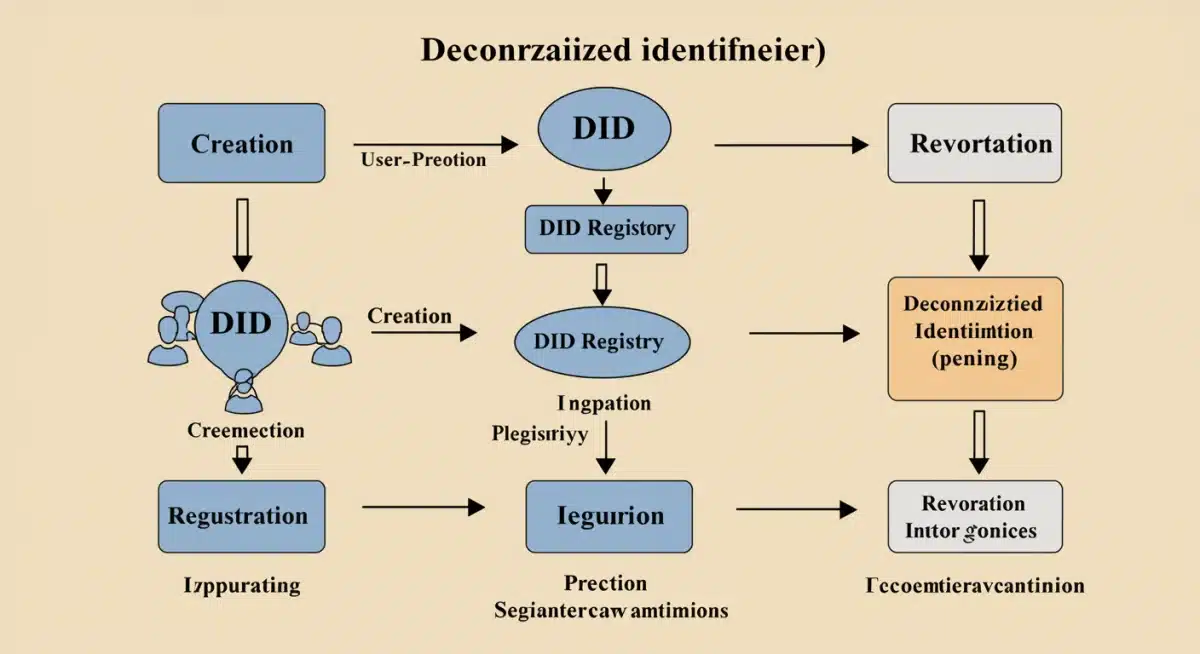
At its heart, a Decentralized Identifier (DID) is a URI (Uniform Resource Identifier) that is globally unique and resolves to a DID Document. This DID Document contains information associated with the DID, including cryptographic material (public keys), authentication methods, and service endpoints. The key differentiator is that DIDs are designed to be resolvable without requiring a centralized registry. Instead, they leverage decentralized networks, often blockchain-based, to ensure their integrity and availability.
The Anatomy of a DID
A typical DID has three main parts: the did: URI scheme, the DID method name, and the DID method-specific identifier. For example, did:example:123456789abcdefghi. Here, did: signifies it’s a DID, example is the DID method (which dictates how the DID is created, resolved, and updated), and 123456789abcdefghi is the unique identifier specific to that method.
DID Methods: The Backbone of Decentralization
The concept of DID methods is crucial. Each method defines the rules and mechanisms for a particular decentralized network to create, resolve, update, and deactivate DIDs. There are numerous DID methods under development and in use, each with its own characteristics, such as:
did:ion: Built on the Bitcoin Sidetree Protocol, offering high throughput and scalability.did:ethr: Leveraging the Ethereum blockchain for DID management.did:key: A simple method where the DID itself contains the public key, making it self-authenticating.did:web: Utilizing existing web infrastructure (domain names) for DID resolution.
Choosing the right DID method depends on the specific requirements of an application, including scalability, security, privacy, and the underlying decentralized network. US developers need to be familiar with the strengths and weaknesses of various methods to make informed decisions for their projects.
DID Documents: The Information Hub
When a DID is resolved, it points to a DID Document. This JSON-LD document contains critical information about the DID subject. Key components of a DID Document include:
id: The DID itself.verificationMethod: Public keys and associated cryptographic material used for authentication and digital signatures.authentication: References to verification methods that can be used to authenticate the DID subject.assertionMethod: References to verification methods used to assert claims about the DID subject.service: Endpoints for interacting with the DID subject, such as messaging services, data stores, or credential repositories.
The DID Document acts as a public record of how to interact securely with the DID subject, without revealing the subject’s private information directly. This separation of identifier from personally identifiable information is a cornerstone of DID privacy. Understanding and manipulating DID Documents will be a core skill for US developers working with Decentralized Identifiers 2026.
The Evolving Landscape of Decentralized Identifiers in 2026: Key Trends and Updates
The DID ecosystem is maturing rapidly. What was once a niche concept is now gaining significant traction in various industries. For US developers, understanding these trends is essential for strategic planning and implementation.
Widespread Adoption and Interoperability
One of the most significant trends for Decentralized Identifiers 2026 is the push towards widespread adoption and, critically, interoperability. Various industries, from healthcare to finance, are exploring DIDs for secure data exchange, identity verification, and supply chain transparency. Organizations like the Decentralized Identity Foundation (DIF) and the World Wide Web Consortium (W3C) are instrumental in standardizing DID specifications, ensuring that DIDs created using different methods can still interact seamlessly.
The concept of "universal resolvers" is gaining prominence. These are services that can resolve DIDs across multiple DID methods, simplifying the integration process for developers. As more such tools become available, the barrier to entry for DID adoption will significantly decrease, accelerating their use in enterprise and consumer applications.
Regulatory Scrutiny and Compliance
In the US, the regulatory landscape for digital identity and data privacy is complex and constantly evolving. As DIDs gain prominence, they will inevitably face increased scrutiny from regulatory bodies. Developers must be aware of frameworks like GDPR (for international interactions), CCPA, and emerging state-level data privacy laws, ensuring their DID implementations are compliant. The self-sovereign nature of DIDs aligns well with privacy-by-design principles, but careful consideration of data storage, access control, and consent mechanisms is paramount.
The US government is also exploring the potential of DIDs for secure digital credentials and government services. Initiatives related to digital identity are likely to provide clarity and potentially even mandates for certain DID-based solutions in the coming years. Staying informed about these policy developments will be crucial for US developers.
Advancements in Verifiable Credentials (VCs)
DIDs are often discussed hand-in-hand with Verifiable Credentials (VCs). VCs are tamper-evident digital credentials that can be issued by an issuer, held by a holder, and presented to a verifier. Think of a digital driver’s license, university degree, or professional certification. DIDs provide the underlying identifiers for the issuer, holder, and verifier, creating a robust and trustworthy ecosystem for exchanging digital proofs.
In 2026, we can expect significant advancements in the ecosystem around VCs, including more sophisticated credential formats, improved revocation mechanisms, and user-friendly wallet applications for managing and presenting credentials. US developers will find immense opportunities in building applications that leverage DIDs and VCs for secure and privacy-preserving data exchange across various sectors.
Practical Implications for US Developers: Building with DIDs
For US developers looking to integrate DIDs into their projects, understanding the practical aspects of implementation is key. This involves choosing the right tools, adhering to best practices, and anticipating future challenges.
Choosing the Right DID Method and Tools
The first step is often selecting an appropriate DID method. As mentioned earlier, this choice depends on factors like the desired level of decentralization, the underlying blockchain or distributed ledger technology (DLT), and performance requirements. For many enterprise applications, methods like did:ion or did:ethr might be suitable due to their established infrastructure and community support. For simpler use cases or proof-of-concept projects, did:key can be a good starting point.
Several open-source libraries and SDKs are available to facilitate DID implementation. These include:
- DID Core Libraries: Implement the foundational W3C DID Core specification, providing basic DID creation, resolution, and update functionalities.
- DID Method-Specific SDKs: Libraries tailored to specific DID methods (e.g.,
ion-sdkfordid:ion) that handle the intricacies of interacting with the underlying DLT. - Verifiable Credential Libraries: Tools for creating, issuing, holding, and verifying VCs, often integrated with DID functionalities.
Familiarity with these tools will significantly accelerate development cycles and ensure adherence to established standards. US developers should actively engage with the open-source communities surrounding these projects to stay updated on the latest features and best practices.
Designing for User Experience (UX) and User Interface (UI)
One of the biggest hurdles to widespread DID adoption has been the perceived complexity for end-users. While DIDs offer immense benefits in terms of privacy and control, the underlying cryptographic operations and decentralized concepts can be daunting. US developers have a critical role to play in designing intuitive and user-friendly interfaces that abstract away this complexity.
Key considerations for UX/UI design include:
- Wallet Applications: Developing secure and easy-to-use digital wallets for managing DIDs and VCs. These wallets should provide clear visual cues for identity ownership, credential presentation, and consent management.
- Simplified Onboarding: Streamlining the process of creating and registering DIDs, perhaps through familiar authentication methods combined with DID generation in the background.
- Clear Consent Flows: Ensuring users clearly understand what data they are sharing, with whom, and for what purpose, and providing granular control over their information.
The success of Decentralized Identifiers 2026 will heavily depend on developers’ ability to make these powerful tools accessible to the average user.
Security Best Practices in DID Implementation
While DIDs are inherently designed for security, improper implementation can introduce vulnerabilities. US developers must adhere to stringent security best practices:
- Key Management: Securely managing private keys associated with DIDs is paramount. This often involves hardware security modules (HSMs), secure enclaves, or multi-factor authentication for key access.
- Code Audits: Regularly auditing DID-related code for vulnerabilities, especially when interacting with blockchain networks.
- Threat Modeling: Conducting thorough threat modeling to identify potential attack vectors and implement appropriate countermeasures.
- Regular Updates: Keeping all DID-related libraries, SDKs, and underlying DLT infrastructure updated to patch known vulnerabilities.
The decentralized nature of DIDs means that while there’s no single point of failure in the identity system itself, individual implementations can still be compromised if not secured properly. Developers must prioritize security from the outset.
Use Cases and Opportunities for US Developers in 2026
The potential applications of DIDs are vast and continue to expand. For US developers, this translates into numerous opportunities across various sectors.
Enhanced Digital Wallets and Self-Sovereign Identity
The most direct application of DIDs is in powering advanced digital wallets that enable self-sovereign identity. Users can store and manage their DIDs and VCs, presenting them as needed without relying on a central identity provider. This can revolutionize online authentication, KYC (Know Your Customer) processes, and access control for digital services. Developers can build these wallets, integrate them into existing applications, or create new services that leverage their capabilities.
Secure Data Exchange and Privacy
DIDs and VCs offer a powerful mechanism for secure and privacy-preserving data exchange. Instead of sharing entire datasets, individuals can selectively present verifiable proofs about specific attributes. For example, proving one is over 21 without revealing their exact birthdate. This has profound implications for industries dealing with sensitive personal information, such as healthcare, finance, and government services. Developers can build secure data marketplaces, consent management platforms, and privacy-enhancing applications using DIDs.
Supply Chain Transparency and Provenance
In supply chain management, DIDs can be used to identify products, components, and even organizations involved in the production and distribution process. By linking DIDs to verifiable credentials about origin, quality, and certifications, consumers and businesses can gain unprecedented transparency and trust in the provenance of goods. US developers can create blockchain-based supply chain solutions that leverage DIDs for immutable tracking and verification.
Decentralized Autonomous Organizations (DAOs) and Web3
The rise of Web3 and Decentralized Autonomous Organizations (DAOs) creates a natural synergy with DIDs. DIDs can serve as the foundational identity layer for DAO members, enabling secure voting, governance, and access to decentralized applications (dApps). Developers building in the Web3 space will find DIDs indispensable for creating robust and censorship-resistant identity solutions for the decentralized internet.

Internet of Things (IoT) Device Identity
As IoT devices become more ubiquitous, securing their identities and ensuring trusted communication is critical. DIDs can provide unique, tamper-proof identities for IoT devices, enabling secure authentication, authorization, and data exchange within a decentralized network. This can prevent device spoofing and enhance the overall security of IoT ecosystems. US developers with expertise in IoT can explore building DID-based identity solutions for smart cities, industrial IoT, and connected vehicles.
Challenges and Future Outlook for Decentralized Identifiers 2026
While the future of DIDs appears bright, several challenges remain. US developers need to be mindful of these obstacles to contribute effectively to the ecosystem’s growth.
Scalability and Performance
Many DID methods rely on blockchain or DLTs, which can face scalability challenges. As the number of DIDs and transactions grows, ensuring fast and efficient resolution becomes crucial. Ongoing research and development in layer-2 solutions, sharding, and alternative consensus mechanisms aim to address these performance bottlenecks. Developers should consider the scalability of their chosen DID method and architecture.
User Education and Adoption Barriers
Despite improvements in UX, educating the general public about the benefits and mechanics of DIDs remains a significant challenge. Overcoming the inertia of existing centralized identity systems and building trust in decentralized alternatives will require sustained effort from the entire ecosystem, including developers, educators, and policymakers.
Regulatory Harmonization
The fragmented regulatory landscape across different US states and internationally can complicate the development and deployment of DID-based solutions. Harmonizing regulations around digital identity, data privacy, and the legal recognition of DIDs and VCs will be essential for widespread adoption. Developers should actively engage with legal experts and industry bodies to navigate this evolving environment.
Interoperability Across Different DID Methods
While efforts are underway to ensure interoperability, the existence of numerous DID methods can still pose challenges. Ensuring seamless communication and credential exchange between different DID ecosystems will be a continuous area of focus. Developers should prioritize solutions that adhere to open standards and leverage universal resolvers to maximize compatibility.
The Road Ahead for US Developers
By 2026, Decentralized Identifiers are poised to move beyond early adoption into mainstream integration for many applications. For US developers, this means a significant opportunity to build the next generation of secure, private, and user-centric digital services. Mastering the principles of DIDs, understanding the various DID methods, and staying abreast of regulatory changes will be essential skills.
The shift towards self-sovereign identity is not just a technological trend; it’s a fundamental re-imagining of how individuals and organizations interact in the digital realm. Developers who embrace DIDs now will not only be at the forefront of innovation but will also contribute to a more trustworthy and empowering internet. The journey to a truly decentralized digital identity future is complex, but with the right knowledge and tools, US developers are uniquely positioned to lead the way.