Hardhat vs. Foundry 2026: Choosing Your DApp Development Framework

The landscape of decentralized application (DApp) development is constantly evolving, with new tools and frameworks emerging to streamline the process of building smart contracts. For U.S. DApp builders, selecting the right framework is paramount to ensuring efficiency, security, and scalability. As we look ahead to 2026, two dominant forces have cemented their positions as frontrunners: Hardhat and Foundry. Both offer robust environments for smart contract development, but they approach the task with distinct philosophies and feature sets. This comprehensive guide aims to provide an in-depth Hardhat Foundry Comparison, helping you navigate their intricacies and make an informed decision for your next blockchain project.
Choosing between Hardhat and Foundry isn’t merely a matter of preference; it’s a strategic decision that impacts development speed, testing methodologies, debugging capabilities, and ultimately, the success of your DApp. The blockchain ecosystem, particularly within the U.S., demands tools that are not only powerful but also adaptable to rapidly changing regulatory and technological environments. Understanding the core strengths and weaknesses of each framework in 2026 will empower developers to optimize their workflow, reduce development cycles, and produce higher-quality decentralized applications.
This article will delve into the architectural differences, key features, performance metrics, community support, and future outlook for both Hardhat and Foundry. We’ll explore their respective strengths in areas like testing, deployment, debugging, and integration with other Web3 tools. By the end of this comparison, you will have a clear understanding of which framework aligns best with your project requirements, team expertise, and long-term development goals in the ever-expanding world of smart contracts.
Understanding Hardhat: The JavaScript/TypeScript Powerhouse
Hardhat has long been a staple in the Ethereum development community, renowned for its flexibility, extensibility, and developer-friendly environment. Primarily built on JavaScript and TypeScript, Hardhat offers a familiar development experience for a vast number of web developers transitioning into Web3. Its core philosophy revolves around providing a complete toolkit that is highly configurable and extensible through a rich plugin ecosystem. This makes Hardhat an incredibly versatile choice for a wide range of smart contract development tasks.
Key Features and Strengths of Hardhat in 2026:
- JavaScript/TypeScript Native: For teams already proficient in these languages, Hardhat offers a seamless onboarding experience. This significantly lowers the barrier to entry for traditional web developers looking to build DApps.
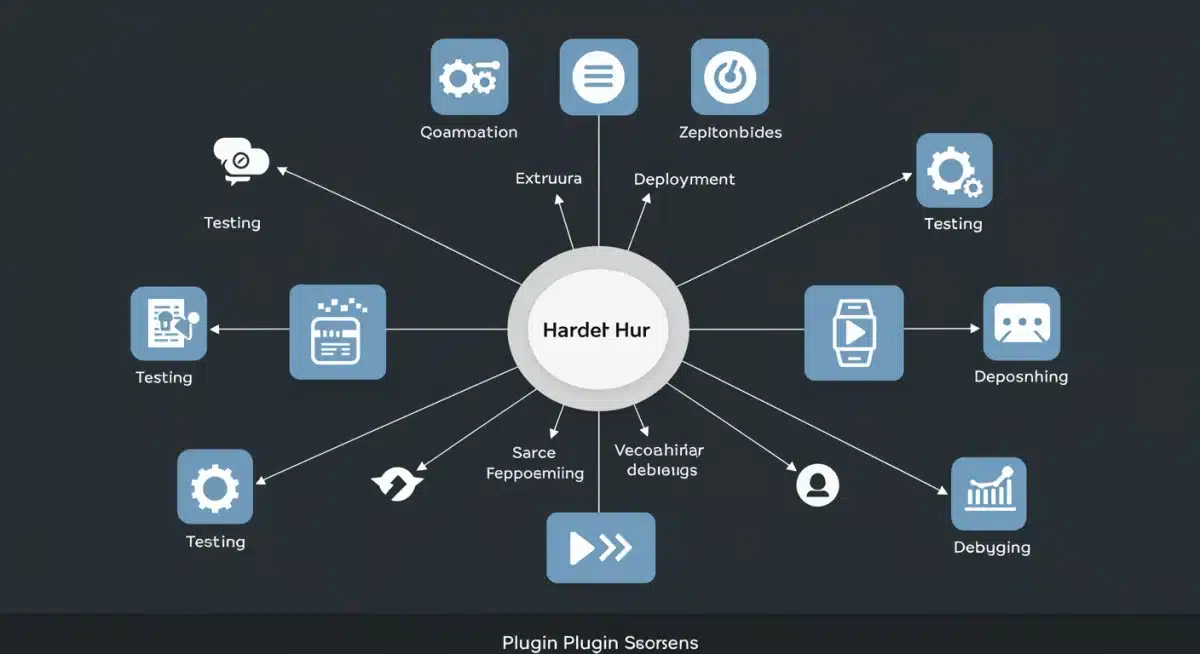
- Extensive Plugin Ecosystem: Hardhat’s strength lies in its modularity. It boasts a vast collection of official and community-contributed plugins that extend its functionality for tasks like testing (Waffle, Chai), deployment, network interaction, Etherscan verification, and more. This allows developers to tailor their environment precisely to their needs.
- Built-in Hardhat Network: This local Ethereum network is designed specifically for development. It provides instant feedback, excellent debugging capabilities, and features like console.log for smart contracts, which is invaluable during the testing phase.
- Advanced Debugging: Hardhat offers powerful debugging tools, including stack traces and transaction inspection, making it easier to pinpoint issues within complex smart contracts. The ability to use
console.logdirectly in Solidity code is a game-changer for many developers. - Task Runner: Hardhat comes with a built-in task runner that allows developers to define custom tasks, automating repetitive processes and improving workflow efficiency.
- Strong Community and Documentation: Given its long-standing presence, Hardhat benefits from a mature and active community, along with comprehensive documentation and numerous tutorials. This ensures that developers can easily find support and resources when encountering challenges.
- TypeScript Support: Full TypeScript support enables type safety, improved code quality, and better maintainability, especially for larger projects.
Potential Considerations for Hardhat:
- Performance Overhead: While generally efficient, Hardhat’s reliance on JavaScript/TypeScript can sometimes introduce a slight performance overhead compared to frameworks built on lower-level languages, particularly for very large test suites.
- Dependency Management: Managing JavaScript dependencies can sometimes be complex, especially in projects with many plugins.
- Learning Curve for Non-JS Developers: Developers unfamiliar with JavaScript or TypeScript might face a steeper learning curve when adopting Hardhat.
Hardhat continues to be a go-to choice for many DApp builders, particularly those with a strong web development background. Its mature ecosystem and powerful debugging features make it ideal for complex projects requiring extensive customization and reliable testing. The Hardhat Foundry Comparison often highlights Hardhat’s developer experience as a significant advantage for JavaScript/TypeScript users.
Exploring Foundry: The Rust-Powered Performance King
Foundry has rapidly gained traction as a formidable alternative to Hardhat, especially among developers prioritizing performance, efficiency, and a more direct interaction with the Ethereum Virtual Machine (EVM). Written in Rust, Foundry offers a suite of tools including Forge (for testing, deploying, and interacting with contracts), Cast (for CLI interaction), and Anvil (a local testnet). Its design philosophy emphasizes speed, minimal overhead, and a highly optimized developer experience for Solidity-native workflows.
Key Features and Strengths of Foundry in 2026:
- Rust-Native Performance: Being written in Rust, Foundry delivers exceptional performance, especially in test execution speed. This is a significant advantage for large codebases or projects requiring extensive fuzz testing.
- Solidity-Native Testing (Forge): Foundry’s testing framework, Forge, allows developers to write tests directly in Solidity. This eliminates context switching between languages, leading to a more intuitive and efficient testing process for smart contract engineers.
- EVM Fuzz Testing: Foundry excels in fuzz testing, enabling developers to discover edge cases and vulnerabilities by systematically feeding random or semi-random inputs to smart contracts. This is crucial for building highly secure DApps.
- Gas Optimization Features: Foundry provides detailed gas reports out-of-the-box, helping developers optimize their smart contracts for lower transaction costs, a critical factor on the Ethereum blockchain.
- Anvil Local Testnet: Similar to Hardhat Network, Anvil provides a fast, local EVM instance for development and testing. It offers features like forking, impersonating accounts, and manipulating block times.
- Cast CLI: A powerful command-line tool for interacting with the EVM, sending transactions, querying blockchain data, and more. It offers a low-level, high-control interface for advanced users.
- Minimal Dependencies: Foundry prides itself on being a lean tool with fewer external dependencies, contributing to its speed and ease of setup.
- Growing Community and Innovation: While newer than Hardhat, Foundry has a rapidly growing and passionate community. Its innovative features and focus on performance are attracting a significant number of developers.
Potential Considerations for Foundry:
- Rust Learning Curve: While developers don’t necessarily need to write Rust, understanding the underlying tooling and contributing to the ecosystem might require some familiarity with the language.
- Less Mature Plugin Ecosystem: Compared to Hardhat, Foundry’s plugin ecosystem is still developing, though it is expanding rapidly. Some specialized integrations might not be as readily available.
- Solidity-Only Testing: While a strength for Solidity purists, teams with a strong JavaScript/TypeScript background might find the switch to Solidity-native testing less intuitive initially.
Foundry is increasingly becoming the preferred choice for developers who prioritize raw performance, deep EVM interaction, and Solidity-native testing. Its strengths in fuzz testing and gas optimization make it an excellent fit for high-security and performance-critical DApps. This Hardhat Foundry Comparison often highlights Foundry’s speed as its primary differentiator.
Hardhat Foundry Comparison: A Head-to-Head Battle in 2026
Now that we’ve explored each framework individually, let’s conduct a direct Hardhat Foundry Comparison across several critical aspects relevant to U.S. DApp builders in 2026.
1. Language and Developer Experience:
- Hardhat: JavaScript/TypeScript based. Offers a familiar environment for web developers, allowing for easy integration with existing frontend tooling. The developer experience is highly customizable and plugin-driven.
- Foundry: Rust-based tooling, Solidity-native testing. Ideal for developers who prefer to stay within the Solidity paradigm for testing and interaction. Offers a more low-level, performance-focused experience.
- Verdict: Hardhat wins for teams with strong JS/TS expertise. Foundry wins for Solidity purists and performance-critical projects.
2. Testing Frameworks:
- Hardhat: Uses JavaScript/TypeScript-based testing frameworks like Mocha and Chai, often integrated with Waffle. Provides extensive assertion libraries and mocks.
- Foundry: Uses Forge, which allows writing tests directly in Solidity. This enables deep integration with contract logic and powerful fuzz testing capabilities.
- Verdict: Hardhat offers flexibility with JS/TS. Foundry offers unparalleled speed and native fuzz testing for Solidity.
3. Performance and Speed:
- Hardhat: Good performance, but JavaScript/TypeScript overhead can be noticeable for very large test suites.
- Foundry: Exceptional performance due to Rust implementation and efficient EVM interaction. Test execution is significantly faster, especially for fuzzing.
- Verdict: Foundry is the clear winner for raw performance and speed.
4. Debugging Capabilities:
- Hardhat: Excellent debugging with
console.login Solidity, detailed stack traces, and transaction inspection within the Hardhat Network. - Foundry: Strong debugging with detailed revert messages, stack traces, and the ability to step through transactions. The low-level control of Cast also aids in debugging.
- Verdict: Both offer robust debugging. Hardhat’s
console.logis often cited as a significant convenience, while Foundry’s direct EVM interaction gives deep insights.
5. Local Development Network:
- Hardhat: Hardhat Network provides a feature-rich, in-memory EVM for rapid development and testing.
- Foundry: Anvil offers a highly performant local EVM with features like forking, impersonation, and fast block progression.
- Verdict: Both are excellent; Anvil often has a slight edge in speed for complex forking scenarios.
6. Deployment and Interaction:
- Hardhat: Provides flexible deployment scripts in JS/TS, allowing for complex deployment strategies and integration with other tools.
- Foundry: Forge and Cast offer powerful CLI tools for deployment and direct contract interaction, favored by those who prefer command-line efficiency.
- Verdict: Hardhat offers more programmatic control; Foundry offers highly efficient CLI interaction.
7. Ecosystem and Community:
- Hardhat: Mature, large, and well-established community with a vast array of plugins and resources.
- Foundry: Rapidly growing and highly active community, known for innovation and performance-focused developments. The ecosystem is maturing quickly.
- Verdict: Hardhat has a historical advantage, but Foundry’s growth is undeniable.
Future Trends and Considerations for 2026 and Beyond
Looking towards 2026, the evolution of blockchain technology, regulatory frameworks in the U.S., and developer preferences will continue to shape the utility of both Hardhat and Foundry. Here are some key trends influencing the Hardhat Foundry Comparison:
1. Modularity and Composability:
Both frameworks are likely to enhance their modularity, allowing developers to pick and choose components more freely. Hardhat’s plugin system is already strong, and Foundry is continually adding new features and integrations. This trend will cater to increasingly specialized DApp development needs.
2. AI-Assisted Development and Security:
The integration of AI tools for code generation, vulnerability detection, and test case generation will become more prevalent. Frameworks that can seamlessly integrate with these AI assistants will gain a significant edge. Foundry’s performance and fuzz testing capabilities position it well for AI-driven security audits.
3. Cross-Chain and Layer 2 Development:
As the blockchain ecosystem expands beyond single chains, support for cross-chain smart contracts and Layer 2 solutions will be crucial. Both Hardhat and Foundry are expected to evolve their tooling to facilitate multi-chain DApp development, including enhanced support for various EVM-compatible chains and rollup technologies.
4. Developer Tooling Interoperability:
Expect greater interoperability between different Web3 tools. This means that even if you primarily use one framework, you might leverage specific features or libraries from others. For instance, using Foundry’s fuzz testing alongside Hardhat’s deployment scripts could become a common practice.
5. Regulatory Compliance in the U.S.:
U.S. DApp builders face a complex and evolving regulatory landscape. Frameworks that offer features or integrations to assist with compliance (e.g., identity verification, transaction monitoring hooks) might become more attractive, though this is more likely to be handled at the application layer rather than the core framework.
6. Formal Verification Integration:
As smart contracts become more critical, formal verification to mathematically prove their correctness will become a more integrated part of the development lifecycle. Frameworks that offer better hooks or native support for formal verification tools will be highly valued.
When to Choose Hardhat in 2026
You should lean towards Hardhat if:
- Your team has a strong background in JavaScript or TypeScript.
- You prioritize a highly customizable and extensible development environment through plugins.
- You require advanced debugging features like
console.login Solidity for complex logic. - Your project benefits from a mature ecosystem with extensive documentation and community support.
- You are building DApps that might involve significant frontend integration, where a JS/TS-native backend is advantageous.
- You prefer a more guided and opinionated development flow for common tasks.
Hardhat’s strength lies in its comprehensive environment that caters to a broad spectrum of developers, especially those coming from a web development background. Its versatility makes it suitable for educational purposes, rapid prototyping, and large-scale projects that benefit from a rich plugin ecosystem.
When to Choose Foundry in 2026
You should opt for Foundry if:
- Your primary concern is raw performance, especially for fast test execution and fuzz testing.
- You prefer writing tests directly in Solidity, reducing context switching and leveraging Solidity’s expressiveness.
- You need deep, low-level control over the EVM and prioritize gas optimization.
- Your project demands rigorous security testing, including advanced fuzzing techniques.
- You appreciate a lean, efficient command-line interface for all development tasks.
- Your team is comfortable with a more ‘Solidity-first’ approach and potentially a steeper initial learning curve for the tooling.
Foundry is the choice for developers who demand peak performance and a highly optimized workflow for Solidity-centric development. It’s particularly well-suited for high-value smart contracts where security and gas efficiency are paramount, and for teams comfortable with a more technical, command-line driven environment. The Hardhat Foundry Comparison often boils down to a choice between developer familiarity and raw performance.
Hybrid Approaches and Interoperability
It’s also worth noting that the choice between Hardhat and Foundry is not necessarily an ‘either/or’ situation. As both ecosystems mature, we might see more hybrid approaches. For example, a team might use Hardhat for its deployment scripts and frontend integration, while leveraging Foundry’s Forge for its superior fuzz testing capabilities. Tools like hardhat-foundry are already emerging to facilitate this kind of interoperability, allowing developers to harness the strengths of both frameworks within a single project.
This trend towards interoperability underscores the idea that the best framework is the one that solves your specific problems most effectively. As U.S. DApp builders push the boundaries of decentralized technology, they will increasingly seek flexible solutions that allow them to integrate the best tools available, regardless of their native language or framework.
Conclusion: Making Your Informed Decision in 2026
The Hardhat Foundry Comparison in 2026 reveals two incredibly powerful, yet distinct, smart contract development frameworks. Hardhat, with its JavaScript/TypeScript foundation and extensive plugin ecosystem, remains a highly flexible and developer-friendly choice, particularly for those with a web development background. It excels in providing a rich, customizable environment with excellent debugging.
Foundry, on the other hand, stands out for its unparalleled performance, Solidity-native testing, and deep EVM control. Its Rust-powered tooling makes it the go-to for projects where speed, gas optimization, and rigorous fuzz testing are critical. For developers who live and breathe Solidity, Foundry offers an incredibly efficient and powerful workflow.
Ultimately, the best framework for your DApp development in 2026 depends on your team’s expertise, project requirements, and priorities. Consider the scale of your project, the complexity of your smart contracts, your budget for gas fees, and your security requirements. Both Hardhat and Foundry are robust choices that will undoubtedly continue to evolve, offering cutting-edge features to the U.S. DApp building community. By carefully weighing the strengths and weaknesses of each, you can make an informed decision that sets your decentralized application up for success in the years to come.
The future of Web3 development is bright, and with tools like Hardhat and Foundry continually pushing the boundaries of what’s possible, U.S. DApp builders are well-equipped to innovate and create the next generation of decentralized applications.