Optimize Gas Fees: 5 Smart Contract Architectures for U.S. Businesses

In the rapidly evolving landscape of blockchain technology, smart contracts have emerged as a foundational element, enabling automated, trustless transactions across various industries. From decentralized finance (DeFi) to supply chain management and digital identity, their applications are vast and growing. However, the operational costs associated with executing these contracts, primarily in the form of ‘gas fees,’ present a significant challenge, particularly for businesses operating at scale. These fees, essentially payments to network validators for processing and securing transactions, can fluctuate wildly based on network congestion and demand, directly impacting profitability and the viability of blockchain-based solutions. For U.S. businesses looking to leverage the power of smart contracts, understanding and implementing strategies to optimize gas fees is not just an advantage; it’s a necessity for sustainable growth and competitiveness.
The imperative to optimize gas fees has become even more pronounced as blockchain adoption accelerates. High transaction costs can deter businesses from migrating to decentralized platforms, hinder innovation, and create barriers to entry for smaller enterprises. Imagine a scenario where a business executes hundreds or thousands of smart contract transactions daily; even a small per-transaction fee can accumulate into substantial expenses over time. This financial burden can negate the benefits of blockchain, such as enhanced transparency, security, and efficiency. Therefore, developing and deploying smart contract architectures that inherently minimize gas consumption is a critical area of focus for developers and business strategists alike.
This article delves into five advanced smart contract architectures specifically designed to help U.S. businesses significantly optimize gas fees. Our goal is to provide a comprehensive guide that not only explains the technical underpinnings of these architectures but also highlights their practical application and potential for substantial cost savings. By adopting these strategies, businesses can aim to reduce their transaction costs by up to 15% by 2026, fostering a more economically viable and scalable blockchain ecosystem. We will explore Layer 2 Scaling Solutions, Modular Smart Contract Design, Efficient Data Storage and Retrieval, Gas-Efficient Libraries and Opcodes, and Proxy Contracts with Upgradeability. Each section will break down the concept, explain how it contributes to gas fee optimization, and offer insights into its implementation, empowering businesses to make informed decisions and build more cost-effective decentralized applications.
Understanding Gas Fees: The Cost of Doing Business on the Blockchain
Before diving into optimization techniques, it’s crucial to grasp what gas fees are and why they exist. In blockchain networks like Ethereum, every operation performed by a smart contract, from a simple data storage to complex computational logic, consumes a certain amount of ‘gas.’ Gas is a unit of computational effort. The more complex an operation, the more gas it consumes. The gas fee for a transaction is calculated by multiplying the gas consumed by the ‘gas price,’ which is the amount of cryptocurrency (e.g., Gwei for Ethereum) a user is willing to pay per unit of gas. This gas price fluctuates based on network demand; higher demand leads to higher gas prices, as users bid more to have their transactions prioritized by validators.
The primary purpose of gas fees is twofold: first, to compensate validators (miners or stakers) for the computational resources they expend to process and secure transactions, thus incentivizing network participation. Second, gas fees act as a spam prevention mechanism, making it economically unfeasible to flood the network with frivolous transactions. Without gas fees, a malicious actor could overload the network with infinite computations, leading to denial-of-service attacks. Therefore, while often seen as a burden, gas fees are fundamental to the security and operational integrity of most public blockchain networks.
For businesses, managing and minimizing these costs is paramount. Unpredictable and high gas fees can significantly impact operational budgets, reduce profit margins, and even render certain blockchain applications economically unviable. For instance, a DeFi protocol that requires frequent micro-transactions might become too expensive for users if gas fees are consistently high. Similarly, a supply chain solution tracking numerous small items could face prohibitive costs if each update incurs a substantial gas fee. This is why strategies to optimize gas fees are not merely about saving money; they are about enabling the practical and scalable adoption of blockchain technology for real-world business use cases. By focusing on efficient smart contract design, U.S. businesses can build more robust, cost-effective, and competitive blockchain solutions.
1. Layer 2 Scaling Solutions: Off-Chain Efficiency
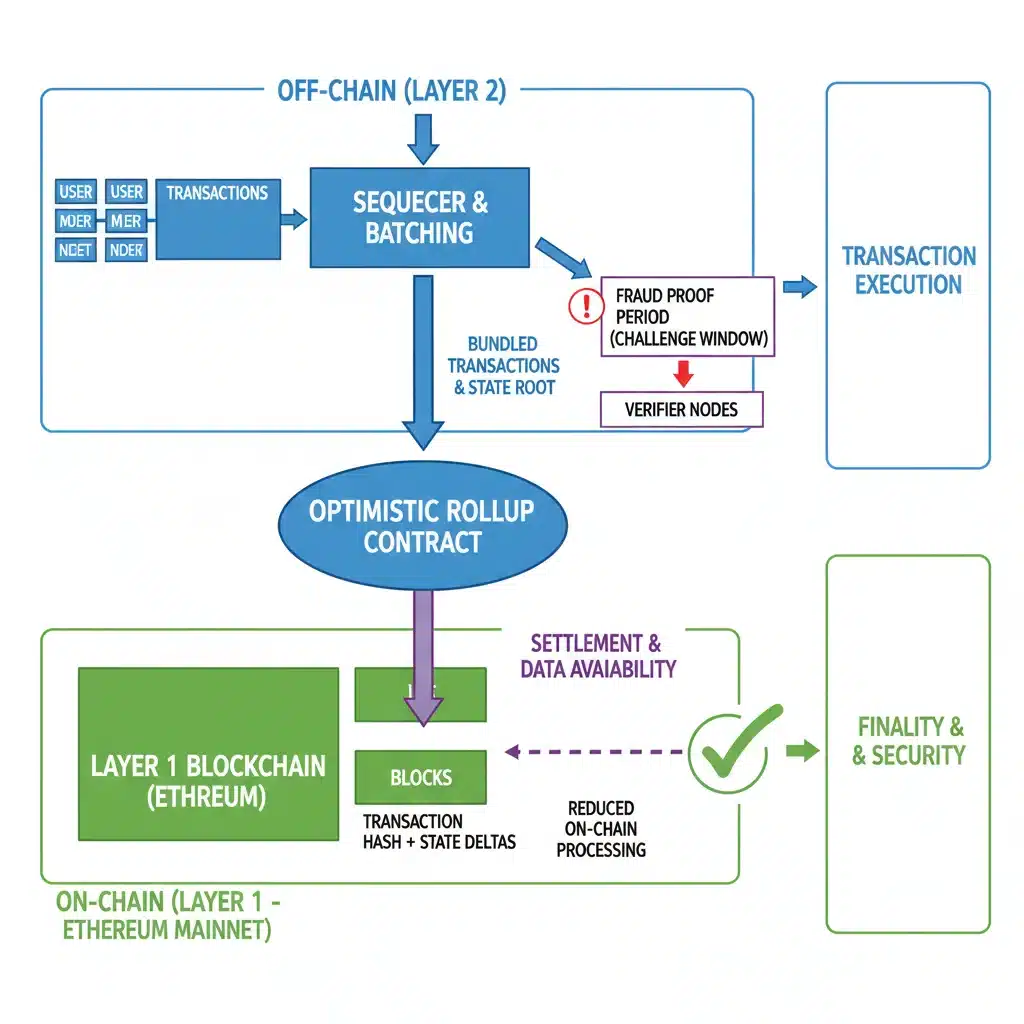
One of the most impactful strategies to optimize gas fees involves leveraging Layer 2 (L2) scaling solutions. These technologies are built on top of a main blockchain (Layer 1, or L1) to handle transactions off-chain, thereby reducing the load on the L1 and significantly lowering gas costs. Instead of processing every single transaction on the main network, L2 solutions bundle multiple transactions together, process them externally, and then submit a single, condensed proof or summary back to the L1. This drastically reduces the amount of gas consumed per individual transaction.
Types of Layer 2 Solutions:
- Rollups (Optimistic and ZK-Rollups): These are perhaps the most popular L2 solutions.
- Optimistic Rollups (e.g., Arbitrum, Optimism): Assume transactions are valid by default and only run computations if a challenge arises. This optimistic approach allows for faster and cheaper transactions. After a certain challenge period, if no one disputes the transaction, it’s considered final on the L1.
- ZK-Rollups (e.g., zkSync, StarkWare): Use zero-knowledge proofs to cryptographically verify the correctness of off-chain transactions. While more complex to implement, ZK-Rollups offer instant finality on the L1 because the validity of transactions is proven mathematically, eliminating the need for a challenge period.
- State Channels (e.g., Raiden Network): Allow participants to conduct multiple transactions off-chain without broadcasting each one to the main blockchain. Only the opening and closing of the channel, or in case of a dispute, are settled on L1. Ideal for frequent, direct interactions between a limited number of parties.
- Sidechains (e.g., Polygon PoS Chain, xDai): Are independent blockchains with their own consensus mechanisms, connected to the main chain via a two-way bridge. They offer high throughput and lower fees but rely on their own security model, which might differ from the L1.
How L2s Optimize Gas Fees:
The core principle behind L2 solutions is to move the bulk of computational and storage work off the congested L1. By batching hundreds or thousands of transactions into a single L1 transaction, the fixed cost of L1 gas is amortized across many individual operations. For example, instead of paying for a separate transaction fee for each swap on a decentralized exchange, an L2 solution might process hundreds of swaps off-chain and then submit one proof to Ethereum, effectively dividing the L1 gas cost by the number of bundled transactions. This can lead to a reduction in gas fees by orders of magnitude, making micro-transactions and high-frequency operations economically viable for U.S. businesses.
Practical Application for U.S. Businesses:
For businesses involved in high-volume transactions, such as payment processing, gaming platforms, or supply chain logistics, adopting L2 solutions can unlock significant cost savings. For instance, a company managing a loyalty program on the blockchain could process millions of reward point distributions on an optimistic rollup, drastically cutting down the cost per distribution. Similarly, a DeFi lending platform could use ZK-Rollups to offer cheaper and faster loan originations and repayments. The choice of L2 solution depends on the specific business needs, considering factors like transaction finality requirements, security assumptions, and ease of integration.
2. Modular Smart Contract Design: Deconstructing for Efficiency
Modular smart contract design is an architectural approach that breaks down complex smart contracts into smaller, independent, and reusable components. Instead of deploying a single monolithic contract that contains all functionalities, businesses can deploy multiple, specialized contracts that interact with each other. This approach offers significant advantages in terms of gas optimization, maintainability, and upgradeability, which are crucial for long-term business operations.
Key Principles of Modular Design:
- Separation of Concerns: Each module is responsible for a specific function or set of functions. For example, a contract might have separate modules for token management, access control, and business logic.
- Code Reusability: Common functionalities can be encapsulated in library contracts and reused across multiple main contracts, reducing redundant code deployments and associated gas costs.
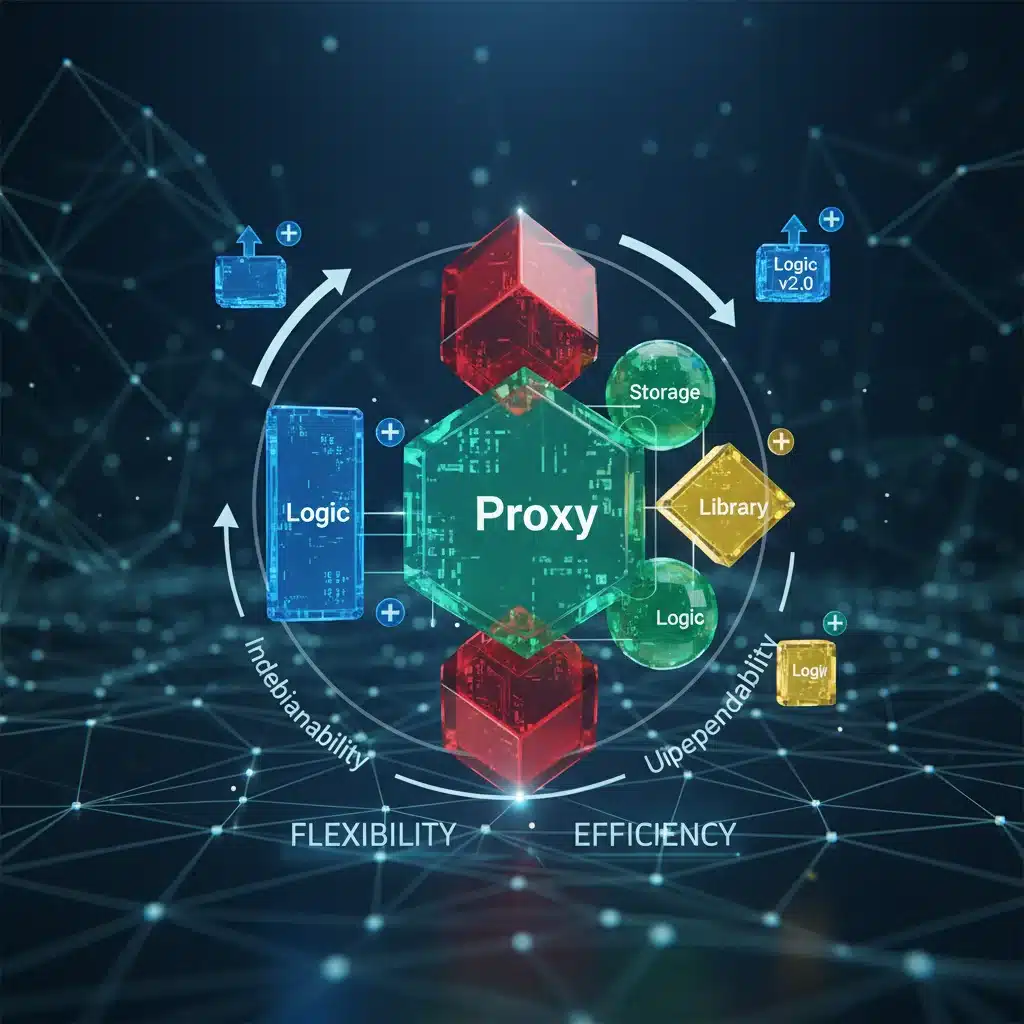
- Proxy Patterns: Utilize proxy contracts to separate logic from data storage. The proxy contract holds the state (data) and delegates calls to an implementation contract (logic). This allows the logic to be upgraded without migrating the data or changing the contract address, which is highly gas-efficient for upgrades.
How Modular Design Optimizes Gas Fees:
Modular design contributes to gas optimization in several ways:
- Reduced Deployment Costs: Deploying smaller, specialized contracts individually or reusing existing library contracts often costs less gas than deploying one very large, complex contract.
- Targeted Interactions: When a user interacts with a modular system, they only need to call the specific function in the relevant module, rather than loading the entire monolithic contract. This can lead to lower gas consumption for individual transactions, as less code needs to be executed.
- Efficient Upgrades: Using proxy patterns allows businesses to upgrade contract logic without redeploying the entire system or migrating data. Redeploying a new implementation contract and updating the proxy’s pointer is significantly cheaper than deploying a completely new monolithic contract and transferring all associated state. This is a massive gas saver over the lifecycle of a DApp.
- Optimized Storage: By separating data storage into dedicated contracts or using more efficient data structures within modules, developers can minimize storage writes and reads, which are among the most expensive operations on the blockchain.
Practical Application for U.S. Businesses:
For businesses building intricate decentralized applications (DApps) or platforms, modular design is indispensable. Consider a financial institution building a tokenized asset platform. Instead of one massive contract, they could have separate modules for asset issuance, trading, compliance, and governance. This not only makes development and auditing easier but also ensures that updates to one part of the system don’t necessitate costly redeployments of the entire platform. By embracing modularity, U.S. businesses can build more agile, cost-effective, and future-proof blockchain solutions, significantly helping them optimize gas fees.
3. Efficient Data Storage and Retrieval: Minimizing On-Chain Footprint
One of the most significant contributors to high gas fees is inefficient data storage and retrieval on the blockchain. Storing data on-chain is expensive because it requires validators to perpetually maintain that data across the entire network. Therefore, optimizing how data is stored and accessed is a critical strategy to optimize gas fees.
Strategies for Efficient Data Storage:
- Minimize On-Chain Data: The golden rule is to store only essential data on-chain. If data can be reliably stored off-chain (e.g., in IPFS, Arweave, or traditional databases) and referenced on-chain via a hash, it should be. Only critical data that requires blockchain’s immutability and censorship resistance should reside on-chain.
- Packing Storage Variables: Solidity allocates storage slots in 32-byte chunks. Developers can save gas by ‘packing’ smaller variables (e.g.,
uint8,uint16,bool) into a single 32-byte slot, rather than letting each occupy its own slot. This reduces the total number of storage slots used. - Using Mappings vs. Arrays: While both have their uses, mappings (
mapping(key => value)) are generally more gas-efficient for dynamic data storage and retrieval when you only need to access specific elements. Arrays, especially dynamic ones, can be more expensive to manage, particularly when resizing or iterating. - Optimized Structs: Similar to packing variables, designing structs to group related variables of smaller types together can lead to efficient storage slot utilization.
- Avoiding Dynamic Arrays in Storage: Dynamic arrays (e.g.,
string[],bytes[]) when stored in state variables can be very expensive to modify or append to, as they often require re-allocating storage. If possible, consider alternative data structures or off-chain storage for such data.
Strategies for Efficient Data Retrieval:
- Event Logging: Events are a gas-efficient way to log data on the blockchain. While event data isn’t directly accessible by other smart contracts, it can be easily read by off-chain applications, allowing them to reconstruct the state or track changes without performing expensive on-chain queries.
- View and Pure Functions: Functions marked as
vieworpuredo not modify the blockchain state and therefore do not consume gas when called externally. These should be used extensively for data retrieval and calculations that don’t require state changes. - Caching and Off-Chain Indexing: For frequently accessed data, U.S. businesses can implement off-chain caching mechanisms or dedicated indexing services (like The Graph) to retrieve data without incurring gas fees for every query. The blockchain then serves as the immutable source of truth, while off-chain services provide fast, cheap access to derived or indexed data.
Practical Application for U.S. Businesses:
Consider a blockchain-based supply chain tracking system. Instead of storing every granular detail of each product’s journey on-chain, a business could store a unique identifier and a hash of the full data record on-chain. The detailed data (e.g., temperature logs, specific location coordinates) could reside on an off-chain decentralized storage solution like IPFS. This significantly reduces the gas cost for each update while maintaining the integrity and verifiability of the data. Similarly, for a decentralized social media platform, user posts could be stored off-chain, with only a hash and perhaps a timestamp recorded on-chain, drastically cutting down on transaction costs for users. Implementing these data storage and retrieval best practices is paramount to optimize gas fees effectively.
4. Gas-Efficient Libraries and Opcodes: Fine-Tuning Code for Savings
Beyond architectural choices, granular optimization at the code level can yield substantial gas savings. This involves understanding the underlying Ethereum Virtual Machine (EVM) opcodes and utilizing gas-efficient libraries and patterns. Every opcode (elementary operation) executed by the EVM has an associated gas cost. By writing code that executes fewer expensive opcodes or uses more efficient ones, developers can directly reduce gas consumption.
Leveraging Gas-Efficient Opcodes and Patterns:
- External Calls vs. Internal Calls: While internal calls (calling functions within the same contract) are generally cheaper, external calls (calling functions in other contracts) can be optimized. For instance, using
callwith a fixed gas limit can prevent reentrancy attacks and save gas if the called function is simple. - Short-Circuiting Logic: In conditional statements (
if/else,require), arrange conditions such that the cheapest and most likely-to-fail checks occur first. This allows the transaction to revert earlier, saving gas that would have been spent on subsequent, more expensive checks. - Using
calldatafor External Function Parameters: For external functions, usingcalldatafor complex parameters (like arrays or structs) instead ofmemorycan save gas, ascalldatais a read-only, non-modifiable area that does not incur the same memory allocation costs. - Minimizing Loops and Iterations: Loops, especially those iterating over dynamic arrays stored in state, are gas-guzzlers. If possible, redesign logic to avoid large loops or shift iterative processes off-chain.
- Careful Use of
SSTOREandSLOAD: Storage writes (SSTORE) and reads (SLOAD) are among the most expensive EVM operations. Minimize their usage. For example, avoid writing to storage inside loops if the value can be computed once and then written, or if it can be passed as a function argument. - Delete Storage Variables: The
DELETEopcode, used when setting a storage slot to zero, actually refunds some gas. This incentivizes developers to clear unnecessary storage, but it should be used judiciously, as deleting critical data can have unintended consequences.
Utilizing Gas-Optimized Libraries:
Several well-vetted libraries are specifically designed with gas efficiency in mind:
- OpenZeppelin Contracts: This is the de facto standard for secure smart contract development. Many of its components, like
ERC20,ERC721, and access control modules, are highly optimized for gas. Using these battle-tested libraries not only enhances security but also ensures gas efficiency. - Solady (formerly Solmate): A newer collection of gas-optimized Solidity libraries that often provides even more optimized implementations for common functionalities compared to some OpenZeppelin counterparts, particularly for arithmetic operations and data structures.
- Custom Libraries for Common Operations: For operations unique to a business but frequently used across multiple contracts, developing and deploying a custom, gas-optimized library contract can save significant gas over time by avoiding code duplication and ensuring consistent efficiency.
Practical Application for U.S. Businesses:
A U.S. business building a complex financial instrument on-chain, such as a collateralized debt position (CDP) protocol, would greatly benefit from fine-tuning its smart contract code. By using gas-efficient arithmetic libraries for interest calculations and collateral ratio checks, or by structuring its data storage for minimal SSTORE operations, the business can significantly reduce the transaction costs for users interacting with the protocol. This not only makes the platform more attractive but also enhances its competitive edge in the market. Developers should regularly profile their contracts for gas usage during development and testing to identify bottlenecks and areas for optimization. This detailed approach is fundamental to optimize gas fees at the code level.
5. Proxy Contracts with Upgradeability: Future-Proofing for Cost Efficiency
As mentioned briefly in the modular design section, proxy contracts play a pivotal role in creating upgradeable smart contracts. This architecture is so critical for long-term gas optimization and business agility that it warrants its own dedicated discussion. The immutability of smart contracts, while a core strength of blockchain, presents a challenge: once deployed, a contract cannot be changed. This means bugs are permanent, and new features cannot be added without deploying an entirely new contract, which is costly and disruptive. Proxy patterns solve this by separating the contract’s data storage from its logic.
How Proxy Contracts Work:
A typical proxy pattern involves two main contracts:
- The Proxy Contract: This contract is immutable and holds the contract’s state (data). It acts as a gateway, receiving all external calls and delegating them to an implementation contract. Users always interact with the proxy contract, so its address remains constant.
- The Implementation Contract: This contract contains the actual business logic. The proxy contract delegates calls to this implementation contract using mechanisms like
DELEGATECALL(in EVM-compatible chains).
How Proxy Contracts Optimize Gas Fees:
- Cost-Effective Upgrades: The primary gas-saving benefit comes from upgrades. When new features are needed or bugs are found, developers only need to deploy a new implementation contract and update a pointer in the proxy contract to point to this new logic. This process is significantly cheaper than deploying an entirely new contract and migrating all existing data, which would involve numerous expensive
SSTOREoperations. For businesses with evolving DApps, this can save millions in gas fees over time. - Reduced Redeployment Risks: Beyond gas costs, redeploying a new contract and migrating data introduces significant operational risks, including potential data loss or service disruption. Proxy patterns minimize these risks, leading to more stable and cost-efficient operations.
- Separation of Concerns: As with modular design, separating logic from data storage inherently leads to cleaner, more manageable codebases, which can indirectly contribute to gas efficiency by making it easier to identify and optimize specific functionalities.
Popular Proxy Patterns:
- Transparent Proxy Pattern: This pattern uses different function signatures for the proxy and implementation contracts. The proxy distinguishes between calls intended for its own logic (e.g., upgrade functions) and calls to be delegated to the implementation contract.
- Universal Upgradeable Proxy Standard (UUPS): This pattern shifts the upgrade logic into the implementation contract itself, making the proxy contract even simpler and more gas-efficient. It’s often favored for its elegance and reduced proxy footprint.
Practical Application for U.S. Businesses:
For U.S. businesses developing long-term blockchain solutions, such as enterprise resource planning (ERP) systems on-chain, digital asset management platforms, or complex governance protocols, proxy contracts are indispensable. Imagine a business that launches a token and associated smart contracts. Without upgradeability, any future changes (e.g., adding new token functionalities, adjusting governance rules) would require deploying a new token contract and migrating all user balances – a technically complex, gas-intensive, and user-disruptive process. With a proxy, the business can seamlessly upgrade the logic without affecting the token’s address or user experience, ensuring continuous service and significant cost savings. This is a powerful strategy to optimize gas fees over the lifecycle of a project.
Conclusion: A Path to Sustainable Blockchain Operations
The journey to optimize gas fees for U.S. businesses is multifaceted, requiring a blend of architectural foresight, meticulous code design, and strategic deployment choices. The five advanced smart contract architectures discussed – Layer 2 Scaling Solutions, Modular Smart Contract Design, Efficient Data Storage and Retrieval, Gas-Efficient Libraries and Opcodes, and Proxy Contracts with Upgradeability – collectively offer a robust framework for achieving significant cost reductions in blockchain operations. By strategically implementing these approaches, businesses can realistically aim to save up to 15% on their blockchain transaction costs by 2026, transforming what can be a prohibitive expense into a manageable and predictable operational cost.
The benefits extend beyond mere financial savings. By embracing gas-efficient practices, U.S. businesses can build more scalable, resilient, and user-friendly decentralized applications. Lower transaction costs translate to better user experiences, facilitating broader adoption of blockchain technology across various sectors. Furthermore, a focus on efficiency encourages best practices in smart contract development, leading to more secure and maintainable codebases. As the blockchain ecosystem continues to mature, the ability to optimize gas fees will become a key differentiator for businesses seeking to innovate and lead in the decentralized future.
For any U.S. business venturing into or expanding its blockchain initiatives, the message is clear: proactive gas optimization is not an afterthought but a foundational pillar of success. Investing in the right architectures and development practices now will pay dividends in the form of sustainable growth, enhanced competitiveness, and a stronger position in the evolving digital economy. By understanding and applying these advanced strategies, businesses can unlock the full potential of smart contracts, ensuring their blockchain solutions are not only innovative but also economically viable for years to come.