Combating SIM Swapping: New 2026 Protocols for US Crypto Account Protection
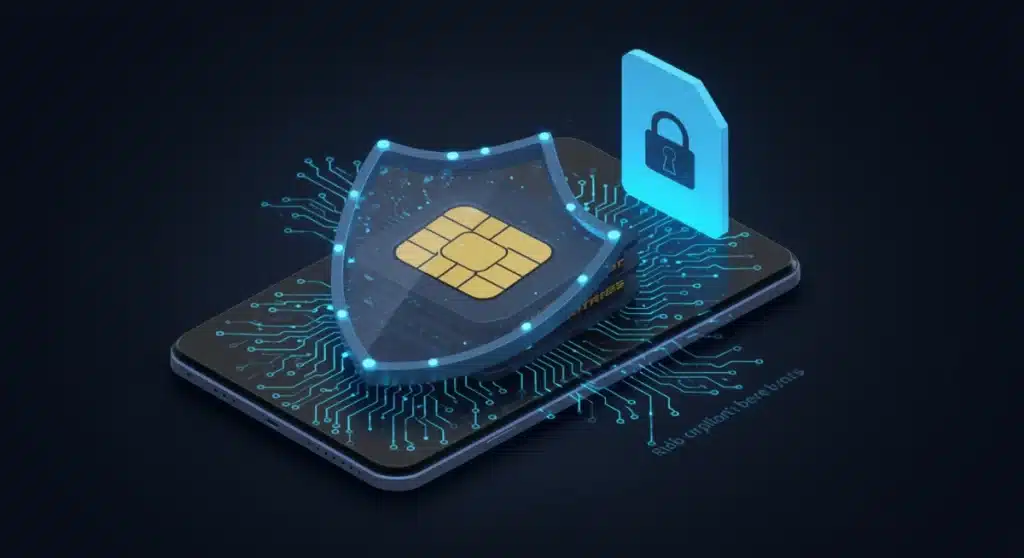
The 2026 protocols for US crypto account protection against SIM swapping attacks involve a multi-pronged approach integrating advanced authentication, enhanced carrier security, and user education to secure digital assets.
The digital landscape is constantly evolving, and with it, the sophistication of cyber threats. One of the most insidious and persistent dangers facing cryptocurrency holders is SIM swapping. This article delves into the new 2026 protocols designed to fortify US crypto account protection against these increasingly clever attacks.
understanding the evolving threat of SIM swapping
SIM swapping, also known as SIM hijacking, is a cunning form of identity theft where criminals trick mobile carriers into transferring a victim’s phone number to a SIM card they control. Once they have control of the phone number, they can intercept two-factor authentication (2FA) codes, reset passwords, and gain access to various online accounts, including highly lucrative cryptocurrency wallets. The financial implications for victims can be devastating, often resulting in the complete loss of their digital assets.
The methods employed by SIM swappers have become increasingly sophisticated. Initially, it often involved social engineering tactics like impersonating the victim. However, recent years have seen a rise in insider threats, where rogue employees within mobile carriers are bribed or coerced into facilitating the swap. This makes prevention even more challenging, as it bypasses many traditional security measures.
the human element in SIM swapping attacks
While technology plays a crucial role, the human element remains a primary vulnerability. Attackers often exploit human weaknesses through phishing, pretexting, and other social engineering techniques to gather enough information about a target to convince a carrier representative to perform a SIM swap. This highlights the need for a multi-layered defense that includes both technological safeguards and robust human-centric security awareness.
- phishing emails designed to steal personal information.
- pretexting calls to gather data about the target.
- insider threats within mobile carrier companies.
- lack of awareness among general users regarding SIM swapping risks.
The evolving nature of these attacks necessitates a dynamic and adaptive defense strategy. The 2026 protocols aim to address these multifaceted vulnerabilities by introducing stronger safeguards at every point of potential compromise, from the mobile carrier to the crypto exchange, and ultimately, the individual user.
the bedrock of 2026 protocols: enhanced carrier security measures
At the core of the new 2026 protocols for Combating SIM Swapping: New 2026 Protocols for US Crypto Account Protection are significantly enhanced security measures implemented by mobile carriers. Recognizing their critical role in preventing these attacks, telecommunication companies are now mandated to adopt more stringent verification processes and internal controls.
These new regulations move beyond simple password and PIN verifications, which have proven insufficient. Instead, they integrate advanced biometric authentication and decentralized identity verification for any sensitive account changes, including SIM transfers. This makes it far more difficult for criminals to impersonate legitimate account holders, even with stolen personal data.
biometric verification for account changes
The implementation of biometric verification, such as facial recognition or fingerprint scans, is a cornerstone of the 2026 protocols. When a user requests a SIM transfer or other critical account modification, carriers are now required to match biometric data on file. This significantly raises the bar for attackers, as simply possessing personal information is no longer enough to execute a swap.
- mandatory facial recognition for SIM transfers.
- fingerprint scanning for critical account updates.
- voice recognition for phone-based support requests.
- multi-factor biometric authentication for high-risk operations.
Furthermore, internal protocols for carrier employees have been tightened. Regular audits, advanced surveillance of sensitive operations, and enhanced background checks for personnel handling customer accounts are now standard. This aims to mitigate the insider threat vector that has plagued the industry.
These robust carrier-level security enhancements are crucial because they address the root cause of SIM swapping by making the initial act of transferring a phone number to an unauthorized party exponentially more difficult. Without control over the phone number, the attacker’s ability to compromise crypto accounts is severely curtailed.
advanced authentication for crypto platforms
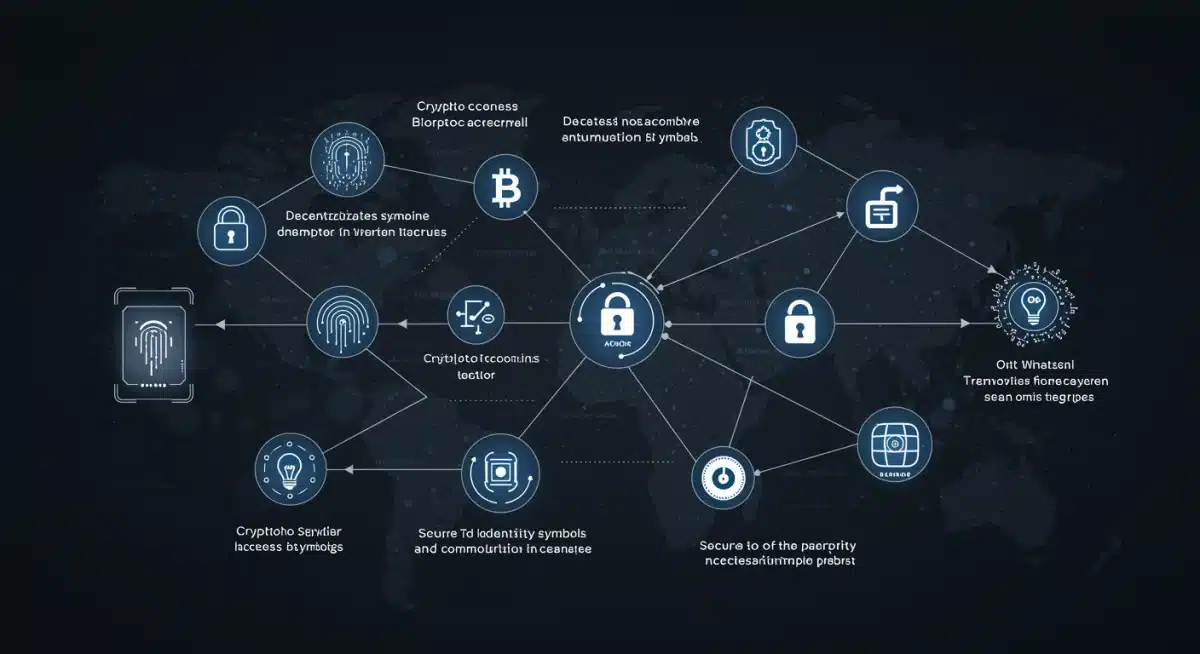
Beyond carrier-level defenses, crypto exchanges and decentralized finance (DeFi) platforms are implementing their own set of advanced authentication protocols as part of the 2026 mandate. These measures aim to create a formidable barrier between a compromised phone number and a user’s digital assets. The focus has shifted from relying solely on SMS-based 2FA to more secure, hardware-backed, and decentralized authentication methods.
Hardware security keys, such as FIDO2-certified devices, are now strongly recommended, and in some cases, mandated for high-value crypto accounts. These keys provide a robust form of 2FA that is immune to SIM swapping, as they require physical possession and a user interaction to authenticate. This significantly improves US crypto account protection.
decentralized identity solutions (DID) integration
A major advancement in the 2026 protocols is the widespread adoption of Decentralized Identity (DID) solutions. DIDs allow users to control their own digital identities, issuing verifiable credentials that can be used across multiple platforms without relying on centralized identity providers. When integrated with crypto exchanges, DIDs offer a highly secure and privacy-preserving method for authentication and account recovery.
- hardware security keys as primary 2FA method.
- mandatory use of authenticator apps for time-based one-time passwords (TOTP).
- integration of Decentralized Identity (DID) for enhanced security.
- multi-signature (multisig) wallets for high-value transactions.
Furthermore, many platforms are implementing behavioral biometrics, which analyze unique patterns in user interaction, such as typing cadence or mouse movements, to detect anomalies that might indicate an unauthorized user. This continuous authentication layer adds another robust defense, making it harder for attackers to maintain access even if they bypass initial login procedures. These comprehensive authentication strategies create a formidable defense against SIM swapping.
proactive user education and best practices
While technological advancements are critical, the human element remains a key factor in digital security. The 2026 protocols place a significant emphasis on proactive user education and the adoption of best practices to empower individuals in the fight against SIM swapping. Awareness campaigns are being rolled out nationwide, educating crypto holders on the risks and preventive measures they can take.
Users are now strongly advised to disable SMS-based 2FA wherever possible and opt for more secure alternatives like authenticator apps or hardware security keys. Understanding the vulnerabilities associated with phone numbers as a primary authentication factor is paramount. This shift in user behavior is essential for bolstering SIM Swapping Crypto Protection.
setting up a strong SIM lock
One of the simplest yet most effective steps users can take is to set up a strong SIM lock or port-out protection with their mobile carrier. This requires a unique PIN or password to be entered before any changes can be made to the SIM card or phone number, adding an extra layer of defense against unauthorized transfers. This proactive measure is a vital component of personal digital security.
- disable SMS 2FA for critical accounts.
- utilize authenticator apps (e.g., Authy, Google Authenticator).
- invest in hardware security keys (e.g., YubiKey).
- implement a strong SIM lock or port-out protection with your carrier.
- regularly monitor account activity for suspicious behavior.
Moreover, users are encouraged to compartmentalize their digital identities, using different email addresses and phone numbers for various services, especially for high-value crypto accounts. This reduces the attack surface and limits the damage an attacker can inflict if one piece of information is compromised. Continuous education and adherence to these best practices are indispensable for a secure crypto ecosystem.
regulatory frameworks and legal recourse
The 2026 protocols are not just about technological fixes; they are also underpinned by a stronger regulatory framework and enhanced legal recourse for victims of SIM swapping. Recognizing the severe financial impact of these attacks, governments and regulatory bodies have stepped up efforts to hold responsible parties accountable and provide clearer pathways for restitution.
New legislation has been introduced that imposes stricter penalties on individuals involved in SIM swapping, both the attackers and any complicit insiders. This aims to create a stronger deterrent against these criminal activities. Furthermore, mobile carriers and crypto exchanges are now subject to more rigorous compliance checks to ensure they are adhering to the latest security standards for US Crypto Account Protection.
streamlined reporting and victim support
A critical aspect of the new regulatory environment is the establishment of streamlined reporting mechanisms and enhanced support services for victims. Previously, victims often faced a bureaucratic maze when trying to report incidents and recover funds. The 2026 protocols aim to simplify this process, providing clear guidelines and dedicated resources to assist those affected by SIM swapping.
- stricter penalties for SIM swapping criminals.
- increased accountability for mobile carriers and crypto exchanges.
- streamlined reporting procedures for victims.
- dedicated legal and financial support for those affected.
- collaborative efforts between law enforcement and industry.
This includes faster communication channels between law enforcement, mobile carriers, and crypto platforms to freeze compromised accounts and trace stolen funds more effectively. The goal is to not only prevent attacks but also to minimize the damage and improve the chances of recovery for victims, thereby fostering greater trust in the digital asset space.
the role of decentralized technologies in future protection
Looking beyond immediate fixes, decentralized technologies are poised to play an increasingly significant role in shaping the future of Combating SIM Swapping: New 2026 Protocols for US Crypto Account Protection. The inherent design of blockchain and decentralized systems offers unique advantages in creating robust, tamper-proof security layers that reduce reliance on centralized points of failure, which are often exploited in SIM swapping.
Decentralized Identity (DID) systems, built on blockchain, empower users with sovereign control over their identity data. Instead of custodians like mobile carriers or social media platforms holding and verifying identity, users can present verifiable credentials directly, reducing the risk of identity theft through centralized breaches or social engineering attacks. This paradigm shift offers a more resilient security model.
self-sovereign identity and crypto security
Self-Sovereign Identity (SSI) frameworks, a subset of DIDs, allow individuals to manage their digital identity without relying on third-party intermediaries. In the context of crypto, SSI can be used for account creation, authentication, and recovery, making it virtually impossible for an attacker to compromise an account by merely gaining control of a phone number. The user’s identity is cryptographically secured and verified across a distributed network.
- blockchain-based decentralized identity systems.
- self-sovereign identity (SSI) for enhanced user control.
- zero-knowledge proofs for privacy-preserving authentication.
- decentralized autonomous organizations (DAOs) for protocol governance.
Furthermore, the development of advanced multi-signature wallet solutions, managed by DAOs or smart contracts, can add layers of approval beyond a single individual, making it significantly harder for an attacker to drain funds even if they gain partial access. These decentralized approaches represent a fundamental shift towards a more secure and user-controlled digital asset environment, offering a long-term solution to the evolving threat landscape.
| Key Aspect | Brief Description |
|---|---|
| Enhanced Carrier Security | Mandatory biometric verification and internal controls for mobile carriers. |
| Advanced Crypto Authentication | Mandated hardware keys, authenticator apps, and Decentralized Identity (DID) for crypto platforms. |
| Proactive User Education | Campaigns promoting secure 2FA, SIM locks, and digital identity compartmentalization. |
| Regulatory Frameworks | Stricter penalties, increased accountability, and streamlined victim support for SIM swapping. |
Frequently Asked Questions About SIM Swapping Protection
SIM swapping involves criminals transferring your phone number to their SIM card, allowing them to intercept SMS-based two-factor authentication (2FA) codes. This grants them unauthorized access to your cryptocurrency exchange accounts, enabling them to drain your digital assets, making it a severe threat to crypto holders.
The 2026 protocols mandate advanced biometric verification, such as facial or fingerprint scans, for any sensitive account changes like SIM transfers. This makes it significantly harder for criminals to impersonate users and execute a SIM swap, bolstering the first line of defense against these attacks.
Crypto platforms are now strongly recommending, and in some cases requiring, hardware security keys and authenticator apps for 2FA. Decentralized Identity (DID) solutions are also being integrated, moving away from vulnerable SMS-based authentication to provide stronger, more resilient security layers.
User education is paramount. The 2026 protocols emphasize widespread campaigns encouraging users to disable SMS 2FA, utilize SIM lock protection, and compartmentalize their digital identities. Empowering users with knowledge and best practices significantly reduces their vulnerability to social engineering tactics.
Decentralized technologies like Decentralized Identity (DID) and Self-Sovereign Identity (SSI) offer a robust future for crypto protection. By giving users sovereign control over their identity and moving away from centralized identity providers, these systems create tamper-proof and resilient security layers against identity theft and SIM swapping attacks.
conclusion
The comprehensive new 2026 protocols for Combating SIM Swapping: New 2026 Protocols for US Crypto Account Protection represent a critical leap forward in safeguarding digital assets. By integrating enhanced carrier security, advanced authentication on crypto platforms, proactive user education, and robust regulatory frameworks, the ecosystem is building a formidable defense against one of the most pervasive cyber threats. The future of crypto security hinges on this multi-faceted approach, continually adapting to the evolving tactics of malicious actors and ensuring greater peace of mind for all participants in the digital economy.