Multi-Factor Authentication in 2026: Top 3 Web3 Security Methods Explained
Multi-Factor Authentication in 2026: A Deep Dive into 3 Superior Methods for Web3 Account Security
The digital landscape is evolving at an unprecedented pace, and with it, the threats to our online security. As we hurtle towards 2026, the decentralized web, or Web3, is no longer a nascent concept but a burgeoning reality. Web3 promises a paradigm shift, empowering users with greater control over their data and digital assets. However, this newfound autonomy comes with significant responsibilities, particularly regarding security. The traditional centralized security models are ill-suited for the distributed nature of Web3, making robust Multi-Factor Authentication (MFA) not just a best practice, but an absolute necessity for safeguarding Web3 accounts.
In this comprehensive guide, we will delve into the critical importance of Web3 MFA Security in 2026. We will explore why conventional security measures fall short in the Web3 era and then conduct a deep dive into three superior MFA methods that are poised to define the future of decentralized account protection. Our analysis will cover the mechanics, benefits, and practical implementation of each method, providing you with the knowledge to make informed decisions about your digital asset security.
The Imperative of Web3 MFA Security: Why Traditional Approaches Fall Short
Before we dissect the advanced MFA techniques, it’s crucial to understand why standard authentication methods, which have served us relatively well in Web2, are inadequate for the demands of Web3. In Web2, security often relies on centralized entities – banks, social media platforms, email providers – to manage our identities and protect our accounts. If a password is stolen, these entities have mechanisms for recovery, such as ‘forgot password’ links or identity verification processes. While not foolproof, these centralized safety nets offer a degree of recourse.
Web3, by its very design, eschews centralization. Users are sovereign over their digital identities and assets. There are no central authorities to appeal to if a private key is lost or compromised. The immutable nature of blockchain transactions means that once an unauthorized transaction occurs, it is nearly impossible to reverse. This stark reality means that the responsibility for securing Web3 MFA Security falls squarely on the user.
Consider the implications: a single compromised private key can lead to the irreversible loss of all associated cryptocurrencies, NFTs, and other digital assets. Phishing attacks, malware, and social engineering schemes are becoming increasingly sophisticated, targeting unsuspecting users with devastating efficiency. A simple username and password, even if complex, represent a single point of failure. This is where Web3 MFA Security becomes the bedrock of digital asset protection.
MFA, at its core, requires users to provide two or more verification factors to gain access to an account. These factors typically fall into three categories:
- Something you know: Passwords, PINs, security questions.
- Something you have: Physical tokens, smartphones, hardware keys.
- Something you are: Biometric data like fingerprints or facial recognition.
By combining factors from different categories, MFA significantly increases the difficulty for unauthorized individuals to access an account, even if they manage to compromise one factor. In the context of Web3, where the stakes are inherently higher due to the direct ownership of valuable digital assets, the need for robust, decentralized, and user-centric MFA solutions is paramount. The future of digital ownership hinges on our ability to implement and adopt superior Web3 MFA Security protocols.
Method 1: Hardware Security Keys with Advanced Cryptography
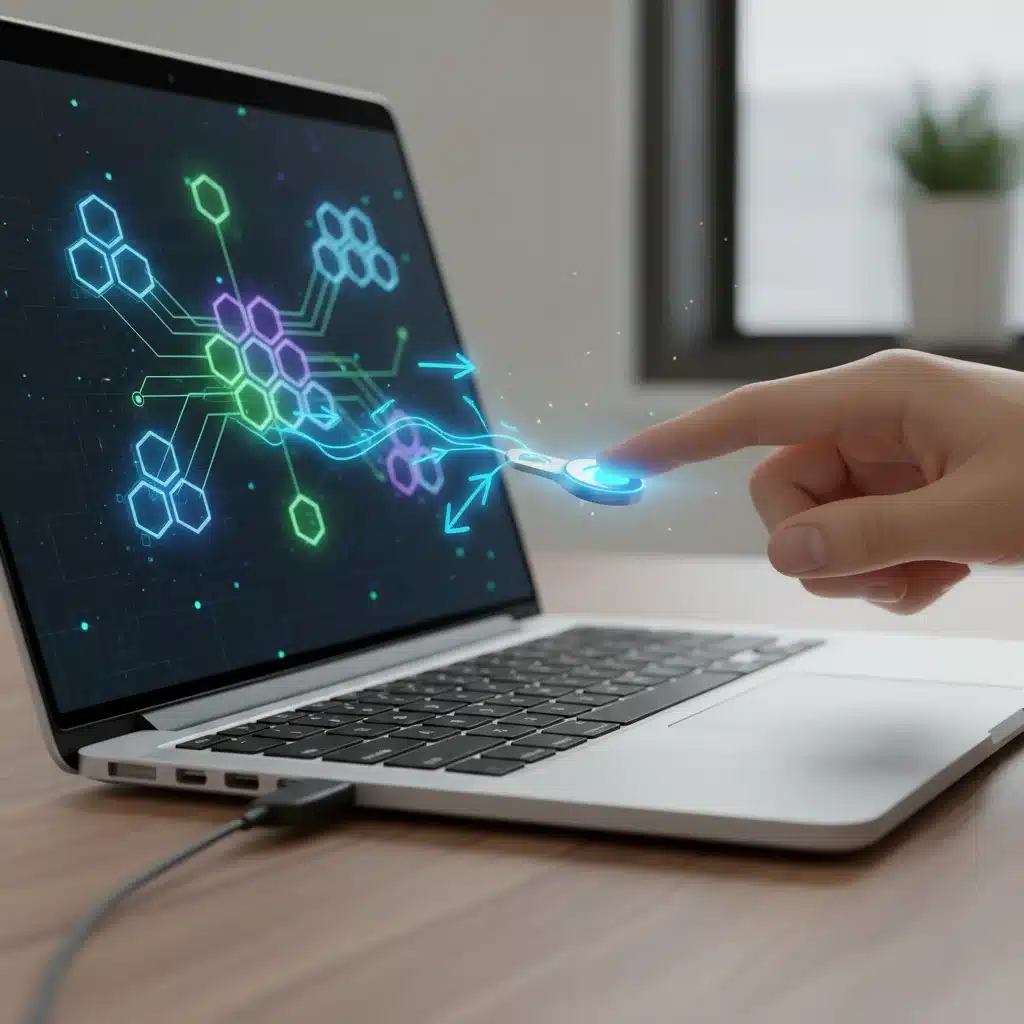
Hardware security keys have long been lauded for their superior protection in traditional Web2 environments, but their application and sophistication in Web3 are reaching new heights by 2026. These physical devices, often resembling a small USB stick, provide a tamper-resistant cryptographic processor that stores private keys securely and performs cryptographic operations on the device itself. This ‘something you have’ factor is incredibly difficult to compromise remotely.
How it Works in Web3:
In a Web3 context, a hardware security key can act as a secure element for signing blockchain transactions. Instead of your private key being stored on your computer or smartphone, where it’s vulnerable to malware, it resides within the hardware key. When you initiate a transaction (e.g., sending cryptocurrency, interacting with a dApp), your wallet application will prompt you to confirm the action by physically interacting with the hardware key. This might involve pressing a button on the device or entering a PIN directly on the key’s interface.
The key then uses its internal secure element to sign the transaction, and only the signed (but never the private key itself) is transmitted to the blockchain. This process ensures that even if your computer is compromised, the attacker cannot steal your private key or sign transactions without physical access to and interaction with your hardware key. By 2026, many hardware keys are incorporating advanced features like:
- Multi-signature capabilities: Requiring approval from multiple hardware keys or other factors for critical transactions.
- Biometric integration: Some keys now include fingerprint sensors for an additional layer of ‘something you are’ verification directly on the device.
- Air-gapped transaction signing: For the highest level of security, certain hardware keys can sign transactions without ever connecting to an internet-enabled device, using QR codes or NFC for data transfer.
Benefits:
- Highest Level of Phishing Protection: Hardware keys are inherently resistant to phishing attacks because they verify the origin of the request cryptographically. They will only sign transactions for legitimate domains or applications.
- Malware Resistance: Private keys are isolated from your computer’s operating system, making them immune to software-based attacks like keyloggers or viruses.
- Portability and Convenience: Once set up, they offer a relatively seamless authentication experience, often requiring just a tap or button press.
- Enhanced Web3 MFA Security: Combines ‘something you have’ with ‘something you know’ (a PIN for the key) and increasingly ‘something you are’ (biometrics on the key).
Challenges:
- Loss or Damage: Losing a hardware key can be catastrophic if not properly backed up (e.g., with a secure seed phrase).
- Cost: High-quality hardware keys can be an upfront investment.
- User Adoption: Requires a shift in user behavior and understanding compared to simpler password-based systems.
By 2026, the integration of hardware security keys with various Web3 wallets and platforms has become more streamlined, making them a cornerstone of robust Web3 MFA Security. Their tamper-proof nature and cryptographic strength offer unparalleled protection against a myriad of digital threats.
Method 2: Decentralized Identity (DID) with Verifiable Credentials (VCs)
Decentralized Identity (DID) frameworks, coupled with Verifiable Credentials (VCs), represent a revolutionary approach to identity management and authentication in Web3. Unlike traditional identity systems where a central authority (like a government or a corporation) issues and controls your identity, DIDs empower individuals with self-sovereign control over their digital identities. By 2026, this technology has matured significantly, offering a powerful, privacy-preserving, and secure form of Web3 MFA Security.
How it Works in Web3:
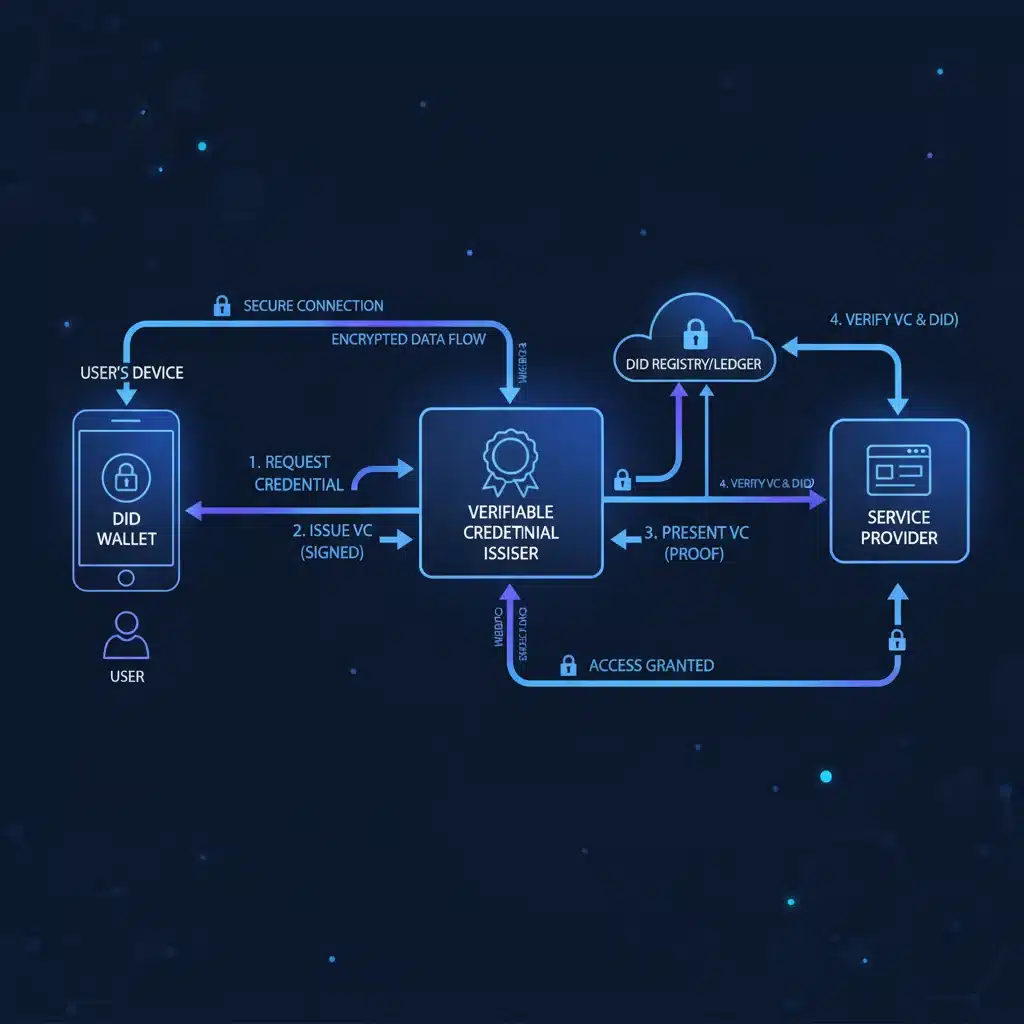
A DID is a unique, persistent identifier that you own and control, anchored to a decentralized ledger (blockchain). Instead of logging in with a username and password, or even a hardware key alone, you present a Verifiable Credential. A VC is a tamper-evident digital credential issued by an ‘issuer’ (e.g., a university issuing a degree, a government issuing an ID, or a bank confirming your financial standing) to a ‘holder’ (you). This VC is cryptographically signed by the issuer and stored in your digital wallet (often a specialized DID wallet or a self-custodial crypto wallet with DID capabilities).
When you need to prove something to a ‘verifier’ (e.g., a dApp requiring age verification, a DeFi protocol needing KYC), you present the relevant VC from your wallet. The verifier can then cryptographically confirm:
- The authenticity of the issuer.
- The integrity of the credential (it hasn’t been tampered with).
- That the credential belongs to you.
Crucially, you only reveal the minimum necessary information (zero-knowledge proofs are often employed here), preserving your privacy. For Web3 MFA Security, this means accessing a dApp could require:
- Presenting a VC proving you are over 18 (without revealing your birth date).
- Signing a transaction with your private key (from your wallet, potentially secured by a hardware key).
- Confirming the interaction with a biometric scan on your device.
This multi-layered approach combines ‘something you have’ (your DID wallet and VCs), ‘something you know’ (your wallet’s password/PIN), and ‘something you are’ (biometrics), all within a decentralized, privacy-focused framework.
Benefits:
- Enhanced Privacy: You control what information is shared and with whom, minimizing data exposure.
- Stronger Security: VCs are cryptographically secured and tamper-proof. The decentralized nature reduces single points of failure common in centralized identity systems.
- Reduced Fraud: Impersonation becomes significantly harder when relying on verifiable, cryptographically-backed credentials.
- Interoperability: DIDs and VCs are designed to be globally interoperable across different Web3 platforms and even traditional systems.
- User Empowerment: Puts identity control back into the hands of the individual, a core tenet of Web3.
Challenges:
- Complexity: The underlying technology can be complex, requiring user education for widespread adoption.
- Ecosystem Development: Dependent on the growth of issuers and verifiers willing to adopt DID/VC standards.
- Recovery Mechanisms: Designing robust and user-friendly recovery methods for lost DID wallets is crucial.
By 2026, DID and VC technologies are no longer theoretical. They are actively being implemented in various sectors, from financial services to gaming, offering a powerful and flexible framework for advanced Web3 MFA Security without compromising user privacy or decentralization.
Method 3: Social Recovery Wallets with Multi-Signature (Multi-Sig) Capabilities
One of the most significant challenges in Web3 security is the single point of failure associated with private keys. If a user loses their private key or seed phrase, or if it’s stolen, their assets are gone forever. Social recovery wallets, often combined with multi-signature (multi-sig) functionalities, emerged as a pragmatic and user-friendly solution to this problem, offering a robust form of Web3 MFA Security that balances self-custody with practical recovery options by 2026.
How it Works in Web3:
A social recovery wallet doesn’t rely on a single seed phrase or private key for complete control. Instead, it designates a set of ‘guardians’ or ‘social contacts’ who can collectively help you recover access to your wallet if you lose your primary access method (e.g., your device, your password). These guardians do not have direct access to your funds; they merely have the power to approve a recovery request.
The core mechanism often utilizes multi-signature technology. A multi-sig wallet requires a predefined number of signatures (e.g., 2 out of 3, or 3 out of 5) from a group of authorized private keys to execute a transaction or initiate a recovery process. In the context of social recovery:
- Primary Access: You access your wallet normally with your primary private key (secured by a password, biometric, or hardware key).
- Guardian Setup: You designate a number of trusted individuals (friends, family, even other devices you own) as guardians. Each guardian holds a unique key or approval mechanism.
- Recovery Process: If you lose primary access, you initiate a recovery request. A threshold number of your designated guardians (e.g., 3 out of 5) must approve this request. Once approved, a new primary private key can be set for your wallet, effectively ‘recovering’ your assets.
- Transaction Security: For highly valuable assets or critical transactions, the multi-sig feature can also be used. For example, moving a large sum of cryptocurrency might require your primary key’s signature AND the signature from one of your guardians, or even a dedicated hardware key. This adds an extra layer of Web3 MFA Security for high-stakes operations.
By 2026, social recovery wallets have become more sophisticated, offering features like time-locks on recovery requests (to prevent immediate malicious recovery attempts), rotating guardian sets, and integration with other MFA methods like biometric approvals from guardians’ devices.
Benefits:
- Eliminates Single Point of Failure: Mitigates the risk of permanent asset loss due to a lost or compromised private key.
- User-Friendly Recovery: Provides a practical and human-centric way to recover access, unlike complex seed phrase management.
- Enhanced Transaction Security: Multi-sig adds an additional layer of approval for critical operations, making unauthorized transactions much harder.
- Flexibility: Users can choose their guardians and set their own recovery thresholds, tailoring security to their needs.
- Robust Web3 MFA Security: Combines ‘something you know’ (your password) with ‘something you have’ (your device/key) and ‘social proof’ (guardian approvals).
Challenges:
- Guardian Trust: Requires careful selection of trustworthy guardians, as they collectively hold the power to recover your wallet.
- Guardian Availability: If guardians become unresponsive or lose their keys, recovery can be complicated.
- Complexity in Setup: Initial setup can be more involved than a simple single-key wallet.
- Social Engineering Risks: Guardians could potentially be targeted by social engineering attacks if not careful.
Social recovery wallets with multi-sig capabilities bridge the gap between absolute self-custody and practical usability, offering a powerful and resilient form of Web3 MFA Security that addresses one of the most pressing concerns for Web3 users: asset recovery.
Comparison and Integration of Web3 MFA Security Methods
Each of these three methods – hardware security keys, decentralized identity with verifiable credentials, and social recovery wallets with multi-sig – offers distinct advantages for Web3 MFA Security. While they can be used independently, their true power often lies in their synergistic integration.
Comparative Analysis:
| MFA Method | Primary Security Factor | Key Strength | Key Weakness | Best Use Case |
|---|---|---|---|---|
| Hardware Security Keys | Something you have (physical device) | Phishing/Malware resistance, private key isolation. | Loss/damage, initial cost. | High-value asset protection, frequent transactions. |
| Decentralized Identity (DID) & VCs | Something you are (cryptographic proof of identity) | Privacy, verifiable claims, fraud reduction. | Complexity, ecosystem reliance. | Identity verification for dApps, privacy-preserving interactions. |
| Social Recovery Wallets with Multi-Sig | Collective ‘something you know/have’ (guardian approvals) | Asset recovery, eliminates single point of failure, enhanced transaction security. | Reliance on trusted guardians, setup complexity. | Long-term asset storage, family/organizational funds. |
Synergistic Integration: The Ultimate Web3 MFA Security Stack
The most robust Web3 MFA Security in 2026 often involves combining these methods. Imagine a scenario:
- Your primary Web3 wallet is a social recovery wallet with multi-sig, protecting against loss of your main access key and requiring multiple approvals for large transactions.
- Your primary access key for this wallet is stored on a hardware security key, providing phishing and malware resistance for daily interactions.
- When interacting with a dApp, you use your Decentralized Identity (DID) with Verifiable Credentials (VCs) to prove necessary attributes (e.g., age, residency) without revealing underlying personal data, and the dApp might require a signature from your hardware key as an additional authentication step.
This layered approach creates a formidable defense, combining the physical security of hardware, the privacy and verifiable claims of DIDs, and the resilience of social recovery. It addresses different attack vectors and failure points, offering a holistic security posture that is essential for navigating the complexities of Web3.
The Evolving Landscape: What’s Next for Web3 MFA Security?
As we look beyond 2026, the innovation in Web3 MFA Security will undoubtedly continue. Several emerging trends and technologies are set to further enhance these methods:
- Quantum-Resistant Cryptography: As quantum computing advances, the threat to current cryptographic algorithms grows. Research into quantum-resistant MFA methods will become crucial for long-term security.
- Advanced Biometrics: Beyond fingerprints and facial recognition, technologies like behavioral biometrics (gait, typing patterns) and even brainwave analysis could offer passive, continuous authentication.
- Artificial Intelligence and Machine Learning: AI can be deployed to detect anomalous behavior patterns, flag suspicious transactions, and adapt MFA requirements dynamically based on risk assessment.
- Interoperable Standards: Greater standardization across different blockchain networks and Web3 platforms will make it easier to implement and manage MFA solutions seamlessly. Projects like the Decentralized Identity Foundation (DIF) are already paving the way.
- Passkeys Integration: While primarily a Web2 technology, the concept of FIDO passkeys, which leverage cryptographic keys generated on-device, could evolve to integrate more deeply with Web3 wallets, offering a simpler, yet secure, passwordless experience.
- Self-Sovereign Data Storage: Secure, decentralized storage solutions will complement DIDs and VCs, allowing users to store and manage their personal data with the same level of cryptographic security as their digital assets.
The goal is to make Web3 MFA Security simultaneously more robust, more user-friendly, and more integrated into the fabric of decentralized applications. The challenge lies in balancing security with usability, ensuring that these advanced protections don’t create insurmountable barriers for the average user.
Practical Tips for Implementing Web3 MFA Security Today
While some of the advanced features discussed are still evolving, there are immediate steps you can take to significantly enhance your Web3 MFA Security:
- Start with a Hardware Wallet: For any significant amount of cryptocurrency or NFTs, invest in a reputable hardware wallet (e.g., Ledger, Trezor). This is the foundational layer of ‘something you have’ security.
- Enable All Available MFA: Whenever interacting with a centralized exchange or service that holds your crypto, enable all available MFA options (TOTP authenticators, SMS, email, if necessary, though hardware keys are preferred).
- Understand Your Wallet’s Recovery Options: For self-custodial wallets, diligently back up your seed phrase OFFLINE and in multiple secure locations. Consider using a metal seed phrase storage solution for durability.
- Explore Social Recovery: If your wallet supports it (e.g., Argent, Gnosis Safe), set up social recovery with trusted guardians. Educate your guardians on their role.
- Be Wary of Phishing: Always double-check URLs, verify senders of emails, and never click on suspicious links. Assume every unsolicited message is a potential scam.
- Stay Informed: The Web3 security landscape changes rapidly. Follow reputable security researchers, news outlets, and project updates to stay ahead of new threats and best practices for Web3 MFA Security.
- Use a Dedicated Device for Web3: If possible, use a separate, clean device (or a dedicated browser profile) exclusively for your Web3 interactions to minimize exposure to malware.
- Practice Good OpSec: Operational security is paramount. Use strong, unique passwords for all accounts, avoid public Wi-Fi for sensitive transactions, and regularly review your wallet permissions.
Conclusion
The journey into Web3 is one of immense potential and transformative power. However, realizing this potential hinges on our collective ability to secure our digital assets and identities. By 2026, Web3 MFA Security will have evolved from a niche concern to a universal standard, driven by the sophistication of threats and the increasing value of on-chain assets.
The three superior methods we’ve explored – hardware security keys, decentralized identity with verifiable credentials, and social recovery wallets with multi-signature capabilities – represent the vanguard of this evolution. They offer distinct yet complementary layers of protection, moving beyond the limitations of traditional security models to embrace the decentralized ethos of Web3.
As users, embracing these advanced MFA techniques is not just about protecting our investments; it’s about safeguarding our digital sovereignty and laying the groundwork for a more secure and equitable decentralized future. The time to fortify your Web3 MFA Security is now, ensuring that you are well-equipped to navigate the exciting, yet challenging, landscape of the decentralized web in 2026 and beyond.