Decentralized Identity Altcoins: Reshaping Data Privacy Standards by 2026

Decentralized Identity Altcoins: How They’re Reshaping Data Privacy Standards for 2026
In an increasingly digital world, the concept of identity has evolved dramatically. Our lives are inextricably linked to our online personas, and with that comes a growing concern for data privacy and security. Traditional identity management systems, often centralized and prone to breaches, are proving inadequate for the demands of the modern internet. This is where decentralized identity altcoins emerge as a beacon of hope, promising to fundamentally reshape data privacy standards by 2026 and beyond. These innovative digital assets, built on blockchain technology, offer a paradigm shift, giving individuals unprecedented control over their personal data.
The current landscape is fraught with vulnerabilities. Data breaches are commonplace, and individuals often have little say in how their personal information is collected, stored, and shared. Companies, governments, and various online services hold vast troves of sensitive data, making them attractive targets for malicious actors. The consequences of these breaches can be devastating, ranging from financial fraud to identity theft. The need for a more secure, private, and user-centric approach to digital identity has never been more pressing. Decentralized identity altcoins are stepping up to meet this challenge, offering a robust alternative to the status quo.
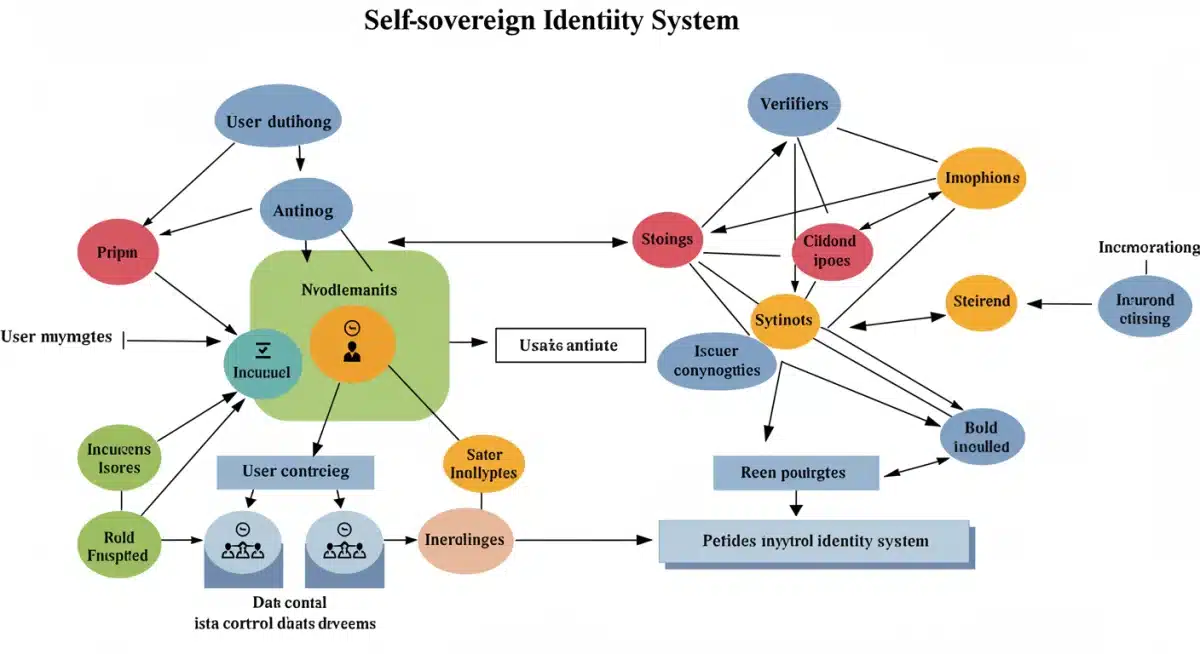
By leveraging the inherent security and immutability of blockchain, decentralized identity altcoins empower users to own and manage their digital identities without reliance on a central authority. This move towards self-sovereign identity (SSI) is not merely a technological upgrade; it represents a philosophical shift in how we perceive and interact with our personal data. Instead of being a product to be harvested and sold, our identity becomes a tool we control, shared only when and with whom we choose. This article will delve deep into the world of decentralized identity altcoins, exploring their mechanisms, benefits, challenges, and the profound impact they are expected to have on data privacy standards by 2026.
Understanding Decentralized Identity: A New Paradigm for Data Ownership
Before we dive into the specifics of decentralized identity altcoins, it’s crucial to grasp the core concept of decentralized identity itself. At its heart, decentralized identity aims to put individuals in control of their digital identities, moving away from the current model where corporations and governments act as central arbiters of identity. In traditional systems, when you create an account on a website, you hand over your personal data to that entity. They store it, manage it, and are responsible for its security. This creates single points of failure and reduces user agency.
Decentralized identity, often referred to as Self-Sovereign Identity (SSI), flips this model. Instead of relying on a central authority, individuals create and manage their own digital identifiers and verifiable credentials. These credentials, such as a digital driver’s license, a university degree, or a verified employment record, are issued by trusted entities but are then stored and controlled by the individual, typically on a blockchain or a decentralized ledger. When proof of identity or a specific attribute is required, the individual can selectively present only the necessary information, rather than sharing their entire profile. This principle of ‘minimal disclosure’ is a cornerstone of enhanced data privacy.
Think of it like this: currently, when you prove your age to buy alcohol, you often show your driver’s license, which contains much more information than just your birthdate. With decentralized identity, you could present a verifiable credential that simply states, ‘I am over 21,’ without revealing your name, address, or exact birthdate. This granular control over personal data is a significant leap forward for privacy. The underlying technology, primarily blockchain, ensures the integrity, authenticity, and immutability of these credentials, making them highly resistant to tampering and fraud. This foundational shift is what makes decentralized identity altcoins so powerful in reshaping data privacy standards.
What Are Decentralized Identity Altcoins?
So, what exactly are decentralized identity altcoins? These are cryptocurrencies or tokens specifically designed to power and facilitate decentralized identity ecosystems. While Bitcoin and Ethereum are general-purpose blockchains, altcoins focused on decentralized identity are built with specific functionalities to support the creation, management, and verification of digital identities and credentials. They often provide the economic incentives, governance mechanisms, and utility necessary for these ecosystems to function effectively.
These altcoins can serve various purposes within their respective decentralized identity networks:
- Transaction Fees: Paying for the creation of Decentralized Identifiers (DIDs) or the issuance/verification of credentials on the blockchain.
- Staking: Securing the network or participating in governance by locking up tokens.
- Incentives: Rewarding users or network participants for maintaining infrastructure or providing services.
- Governance: Allowing token holders to vote on key protocol upgrades and decisions.
- Data Storage: Facilitating secure, decentralized storage of identity-related data, often off-chain but linked to on-chain DIDs.
Unlike traditional cryptocurrencies whose primary function might be a store of value or a medium of exchange, decentralized identity altcoins are utility tokens deeply embedded within the architecture of SSI solutions. They are the fuel that drives the engine of self-sovereign identity, enabling secure interactions and fostering trust in a trustless environment. The emergence of these specialized altcoins signifies a maturation of the blockchain space, moving beyond purely financial applications to address fundamental issues of digital trust and identity.
Key Technologies Powering Decentralized Identity Altcoins
The success of decentralized identity altcoins hinges on a combination of innovative technologies working in concert:
1. Blockchain and Distributed Ledgers (DLTs)
The bedrock of decentralized identity is blockchain technology or other Distributed Ledger Technologies. Blockchains provide an immutable, transparent, and tamper-proof record of transactions and data. For identity, this means that once a credential is issued or an identity is registered, its authenticity can be verified cryptographically without relying on a central server. Different altcoins may utilize various blockchain platforms, from public chains like Ethereum (with its ERC-721 or ERC-1155 standards for NFTs that can represent credentials) to purpose-built identity chains.
2. Decentralized Identifiers (DIDs)
DIDs are a new type of globally unique identifier that enables verifiable, decentralized digital identity. Unlike traditional usernames or email addresses linked to a central service, DIDs are self-owned and self-managed. They are typically registered on a blockchain and point to a DID Document, which contains public keys and service endpoints necessary for interacting with the DID subject. DIDs are a fundamental component, allowing individuals to establish a digital presence independent of any single organization.
3. Verifiable Credentials (VCs)
Verifiable Credentials are tamper-evident digital attestations that can be cryptographically verified. They are issued by an issuer (e.g., a university) to a holder (e.g., a student) and can then be presented to a verifier (e.g., an employer). VCs are a digital equivalent of physical documents like passports or diplomas, but with enhanced security and privacy features. They allow for selective disclosure, meaning only the necessary information is shared, protecting the user’s broader identity. Decentralized identity altcoins often play a role in the issuance, storage, and verification processes of VCs.
4. Zero-Knowledge Proofs (ZKPs)
Zero-Knowledge Proofs are cryptographic methods that allow one party (the prover) to prove to another party (the verifier) that a given statement is true, without revealing any information beyond the validity of the statement itself. In the context of decentralized identity, ZKPs are revolutionary for privacy. For instance, a user could prove they are over 18 without revealing their exact birthdate, or prove they have a specific qualification without disclosing the issuing institution or other personal details on their degree. This technology is crucial for achieving true minimal disclosure and enhancing data privacy.

The Benefits of Decentralized Identity Altcoins for Data Privacy
The adoption of decentralized identity altcoins brings a multitude of benefits, particularly in the realm of data privacy. These advantages are set to redefine how individuals interact with digital services and manage their personal information by 2026.
Enhanced User Control and Ownership
Perhaps the most significant benefit is the shift from corporate or governmental control of identity to individual self-sovereignty. Users gain complete control over their digital identities and personal data. They decide what information to share, with whom, and for how long. This dramatically reduces the risk of unauthorized data access and empowers individuals to manage their digital footprint proactively. No longer are users merely data points; they become owners and stewards of their own digital selves.
Reduced Risk of Data Breaches
Centralized identity systems are honeypots for hackers. A single successful attack can expose millions of user records. By decentralizing identity, there is no single point of failure. User data is not stored in one massive database but is distributed and cryptographically secured, often on a blockchain or in encrypted personal data vaults controlled by the user. This makes large-scale data breaches significantly harder to execute and less impactful if they do occur, thereby bolstering overall data privacy.
Improved Security and Authenticity
The cryptographic primitives underlying blockchain and verifiable credentials provide a robust layer of security. DIDs and VCs are cryptographically signed, making them tamper-proof and easily verifiable. This dramatically improves the authenticity of digital identities and reduces the risk of identity fraud. When you interact with a service using a decentralized identity, you can be more confident that the other party is who they claim to be, and vice versa.
Greater Privacy Through Selective Disclosure
As discussed with Zero-Knowledge Proofs, decentralized identity enables selective disclosure. Users can prove specific attributes about themselves without revealing the underlying sensitive data. This is a game-changer for privacy, allowing individuals to meet verification requirements (e.g., age verification, accreditation) without oversharing personal information. This principle is fundamental to elevating data privacy standards.
Streamlined and Efficient Identity Verification
While the focus is on privacy, decentralized identity also offers significant efficiency gains. Once a verifiable credential is issued, it can be reused across multiple services without having to undergo the entire verification process again. This reduces friction for users and costs for businesses, making online interactions smoother and more secure. The interoperability inherent in many decentralized identity frameworks means that credentials issued by one entity can be recognized and verified by others, fostering a more seamless digital experience.
Challenges and Hurdles for Decentralized Identity Altcoins
Despite their immense potential, decentralized identity altcoins and the broader SSI movement face several significant challenges that need to be overcome for widespread adoption by 2026.
Interoperability and Standardization
For decentralized identity to truly flourish, different systems and protocols must be able to communicate and interoperate seamlessly. Currently, there are multiple projects and standards emerging (e.g., W3C DIDs, Verifiable Credentials). Ensuring these different approaches can work together is crucial to avoid a fragmented ecosystem. Organizations like the Decentralized Identity Foundation (DIF) are working towards common standards, but it’s an ongoing process.
User Experience and Accessibility
Blockchain technology can be complex, and managing cryptographic keys or understanding DIDs and VCs might be daunting for the average user. For mass adoption, decentralized identity solutions need to be as intuitive and user-friendly as possible. Wallets for digital credentials must be easy to use, and the process of obtaining, storing, and presenting credentials needs to be streamlined. Simplifying the user experience is paramount.
Regulatory and Legal Frameworks
The legal and regulatory landscape around decentralized identity is still evolving. Questions regarding legal liability, data sovereignty, compliance with existing data protection laws (like GDPR and CCPA), and the recognition of digital credentials by governments and institutions need clear answers. Governments and legal bodies are often slow to adapt to new technologies, and this lag could impede adoption.
Scalability of Underlying Blockchains
Many decentralized identity solutions rely on public blockchains. For these systems to handle the identity needs of billions of people, the underlying blockchains must be highly scalable, capable of processing a vast number of transactions quickly and affordably. While layer-2 solutions and new blockchain architectures are addressing this, scalability remains a critical factor for widespread deployment.
Centralization Risks Within Decentralization
Even in a decentralized system, there’s a risk of new forms of centralization emerging. For example, if a few large companies become the dominant issuers of verifiable credentials, or if a small number of entities control the most widely used DID methods, it could undermine the core principle of decentralization. Maintaining true decentralization requires continuous vigilance and robust governance models.
Leading Decentralized Identity Altcoins and Their Impact
Several decentralized identity altcoins are already making significant strides in this space, each with its unique approach and ecosystem. While the market is dynamic and new projects emerge regularly, here are some prominent examples and their potential impact:
1. Decentralized Identity Foundation (DIF) & W3C Standards
While not an altcoin itself, the Decentralized Identity Foundation (DIF) and the World Wide Web Consortium (W3C) are crucial to the success of this sector. Many altcoins and projects adhere to the standards they develop for DIDs and VCs. Projects that align with these open standards have a greater chance of interoperability and long-term success, directly impacting the widespread adoption of secure identity solutions.
2. ION (Decentralized Identifier Network)
Built on the Bitcoin blockchain, ION is a Layer 2 DID network implemented by Microsoft. It uses Sidetree protocol to create a robust, scalable, and permissionless network for DIDs. ION’s strength lies in leveraging Bitcoin’s security and immutability, providing a foundational layer for verifiable credentials. Its development by a major tech player like Microsoft signals serious enterprise interest in decentralized identity, paving the way for broader integration and reshaping data privacy in corporate environments.
3. Civic (CVC)
Civic is an identity verification ecosystem that allows users to securely store and prove their identity information. Its CVC token is used for identity verification services. Civic aims to reduce the need for multiple login credentials and simplifies KYC (Know Your Customer) processes. By providing a secure, reusable digital identity, Civic contributes to reducing repetitive data sharing and enhancing user privacy across various online services. Their focus on user-friendly applications is key to mass adoption.
4. SelfKey (KEY)
SelfKey offers an identity wallet that allows users to manage their digital identity documents and access various services that require identity verification. The KEY token is used for transactions within the SelfKey marketplace. SelfKey emphasizes self-sovereignty, enabling users to maintain control over their data and choose when and with whom to share it. Their platform aims to streamline identity verification for financial services, immigration, and cryptocurrency exchanges, significantly improving the privacy and efficiency of these processes.
5. uPort (on Ethereum)
uPort is a self-sovereign identity platform built on Ethereum. It allows users to register their DIDs and receive verifiable credentials from trusted issuers. uPort focuses on enabling secure, private interactions between individuals, businesses, and decentralized applications (dApps). Its integration with the broader Ethereum ecosystem provides a fertile ground for developers to build privacy-preserving applications, showcasing how decentralized identity altcoins can drive innovation in Web3.
6. Other Emerging Projects
Many other projects are contributing to the decentralized identity space, including Sovrin, KILT Protocol, and cheqd, each with unique technical approaches and target markets. The diversity of these projects indicates a vibrant and competitive landscape, all working towards the common goal of empowering individuals with greater data privacy and control. The continued innovation from these decentralized identity altcoins will be critical in achieving the privacy standards envisioned for 2026.
The Future of Data Privacy: What to Expect by 2026 and Beyond
By 2026, the impact of decentralized identity altcoins on data privacy standards is expected to be profound and far-reaching. While challenges remain, the trajectory points towards a future where individuals have significantly more control over their digital lives.
Widespread Adoption in Niche Sectors
Initially, we can expect to see widespread adoption of decentralized identity in sectors where privacy, security, and compliance are paramount. This includes financial services (KYC/AML), healthcare (patient data management), education (digital diplomas and transcripts), and government services (digital IDs for citizens). These sectors stand to gain the most from reduced fraud, streamlined processes, and enhanced data protection.
Integration with Web3 and Metaverse
As the Web3 and Metaverse ecosystems mature, decentralized identity will become an indispensable component. Users will need portable, interoperable, and privacy-preserving identities to navigate these new digital worlds. Decentralized identity altcoins will provide the infrastructure for users to own their avatars, digital assets, and reputation across different platforms without being tied to a single corporate entity, fundamentally reshaping how identity and privacy function in these immersive environments.
Evolution of Regulatory Frameworks
In response to technological advancements and growing public demand for privacy, regulatory bodies worldwide will likely evolve their frameworks to accommodate decentralized identity. We may see new laws and standards that recognize DIDs and VCs as legally binding and secure forms of identification, further legitimizing and accelerating their adoption. This regulatory clarity will be crucial for enterprise and governmental integration.
Consumer Demand for Privacy-Focused Solutions
As awareness of data privacy issues grows, consumers will increasingly demand services that offer self-sovereign identity options. This will put pressure on traditional service providers to integrate decentralized identity solutions, or risk losing market share to more privacy-conscious competitors. The market will reward companies that prioritize user control and data protection.
A More Equitable and Secure Internet
Ultimately, the widespread adoption of decentralized identity altcoins has the potential to create a more equitable and secure internet. It can empower individuals who lack traditional forms of identification, provide a stronger defense against online fraud and identity theft, and foster a digital environment where trust is earned through cryptographic proof rather than centralized intermediaries. By 2026, the foundational elements for this transformation will be firmly in place, driven by the innovation and utility of decentralized identity altcoins.
Conclusion: The Dawn of Self-Sovereign Data Privacy
The journey towards a truly self-sovereign digital identity is well underway, and decentralized identity altcoins are at the forefront of this revolution. By leveraging blockchain, DIDs, VCs, and Zero-Knowledge Proofs, these innovative projects are not just offering incremental improvements to existing identity systems; they are proposing a fundamental reimagining of how we manage our personal data online. The shift from centralized control to individual ownership represents a monumental step forward for data privacy and digital security.
While challenges such as interoperability, user experience, and regulatory clarity need to be addressed, the momentum behind decentralized identity is undeniable. Major tech companies, startups, and open-source communities are all contributing to building a more private and secure digital future. By 2026, we can anticipate significant strides in the adoption of these technologies, particularly in critical sectors and the emerging Web3 landscape.
The promise of decentralized identity altcoins is a future where individuals are no longer passive recipients of data policies but active participants in managing their digital selves. It’s a future where data breaches are less impactful, identity theft is harder to perpetrate, and privacy is a default setting, not an afterthought. As we move closer to 2026, the transformative power of decentralized identity altcoins will continue to reshape data privacy standards, ushering in an era of unprecedented control and security for every internet user.