Altcoin Staking: 12% APY Yield Strategies Unveiled
In the ever-evolving landscape of cryptocurrency, the pursuit of passive income has become a driving force for many investors. While Bitcoin and Ethereum often dominate headlines, the burgeoning world of altcoins offers a fertile ground for generating significant returns, particularly through staking. This comprehensive guide delves into advanced altcoin staking strategies aimed at helping you achieve an ambitious yet attainable 12% APY in the current market. We’ll explore the nuances of staking, identify high-potential altcoins, and outline robust risk management techniques to safeguard your investments.
Staking, at its core, involves locking up your cryptocurrency holdings to support the operations of a blockchain network. In return for your participation, you receive rewards, often in the form of additional cryptocurrency. This mechanism is primarily found in Proof-of-Stake (PoS) blockchains, which offer a more energy-efficient and scalable alternative to Proof-of-Work (PoW) systems like Bitcoin. The allure of staking lies in its ability to generate passive income, allowing your digital assets to work for you even while you sleep. However, not all staking opportunities are created equal, and achieving a 12% APY requires a strategic approach, careful selection, and a deep understanding of market dynamics.
Understanding the Mechanics of Altcoin Staking
Before diving into specific strategies, it’s crucial to grasp the fundamental mechanics of altcoin staking. When you stake your altcoins, you’re essentially helping to validate transactions and secure the network. This participation can take various forms:
- Direct Staking: Holding your altcoins in a compatible wallet and delegating them to a validator node. You retain control of your assets, and the validator performs the technical operations.
- Exchange Staking: Many centralized exchanges offer staking services, simplifying the process for users. While convenient, it often means relinquishing direct control of your private keys.
- DeFi Protocols: Decentralized finance (DeFi) platforms offer a wide array of staking and yield farming opportunities, often with higher potential returns but also increased complexity and risk.
The rewards you earn from staking are typically proportional to the amount of altcoins you stake and the network’s inflation rate. Factors like network activity, the number of stakers, and the specific altcoin’s economic model all influence the actual APY. Our goal is to identify and leverage these factors to consistently hit or exceed our 12% target.
Identifying High-Potential Altcoins for 12% APY Staking
The first step in any successful altcoin staking strategy is selecting the right altcoins. Not all altcoins offer staking, and among those that do, the APY can vary wildly. To target a 12% APY, we need to look for altcoins that offer a compelling combination of high staking rewards, strong fundamentals, and reasonable market stability. Here are some key considerations:
1. Network Fundamentals and Adoption
A high APY on a fundamentally weak or dying project is a trap. Prioritize altcoins with robust technology, a clear use case, active development, and growing adoption. Look for projects solving real-world problems or offering significant improvements over existing solutions. A strong community and transparent communication from the development team are also positive indicators.
2. Staking Reward Structure
Investigate how staking rewards are calculated and distributed. Some networks offer fixed rewards, while others adjust based on network participation. Be mindful of inflation rates; a high APY can be diluted if the inflation rate is even higher, leading to a net loss in purchasing power. Look for projects with sustainable tokenomics that balance incentives for stakers with long-term value preservation.
3. Market Capitalization and Liquidity
While smaller cap altcoins might offer higher APYs due to less competition for staking rewards, they also come with increased volatility and liquidity risks. A sudden price drop can quickly negate any staking gains. A balanced approach might involve a mix of mid-cap altcoins with established ecosystems and potentially some carefully selected smaller cap projects for higher yield potential, managed with appropriate risk strategies.
4. Lock-up Periods and Unbonding Times
Many staking mechanisms involve lock-up periods during which your assets are inaccessible. These can range from a few days to several weeks or even months. Longer lock-up periods often come with higher rewards but reduce your liquidity. Understand the unbonding period – the time it takes for your staked assets to become liquid again after you decide to unstake. This is crucial for managing your capital and responding to market changes.
Strategic Platform Selection for Optimal Staking Yields
The platform you choose for staking your altcoins can significantly impact your overall APY, security, and user experience. There are three primary categories of staking platforms, each with its own advantages and disadvantages:
1. Centralized Exchanges (CEXs)
Pros: Ease of use, convenient for beginners, often offer competitive APYs, integrated with trading platforms. Many major exchanges like Binance, Coinbase, Kraken, and KuCoin offer staking services for a wide range of altcoins.
Cons: You don’t control your private keys (not your keys, not your crypto), potential for censorship or asset freezing, counterparty risk, generally lower APYs compared to direct staking or DeFi due to fees.
2. Decentralized Finance (DeFi) Protocols
Pros: Higher potential APYs, greater control over your assets, transparency through smart contracts, innovative staking models (e.g., liquidity mining, yield farming).
Cons: Higher complexity, increased risk of smart contract bugs or exploits, impermanent loss in liquidity pools, often require more technical knowledge.
3. Dedicated Staking Platforms and Wallets
Pros: Often provide a balance between ease of use and control, support for a wide range of altcoins, some offer advanced features like compounding rewards automatically, examples include Ledger Live, Trust Wallet, or specific project-native wallets.
Cons: Can still have some level of centralization depending on the service, may require more setup than CEXs.
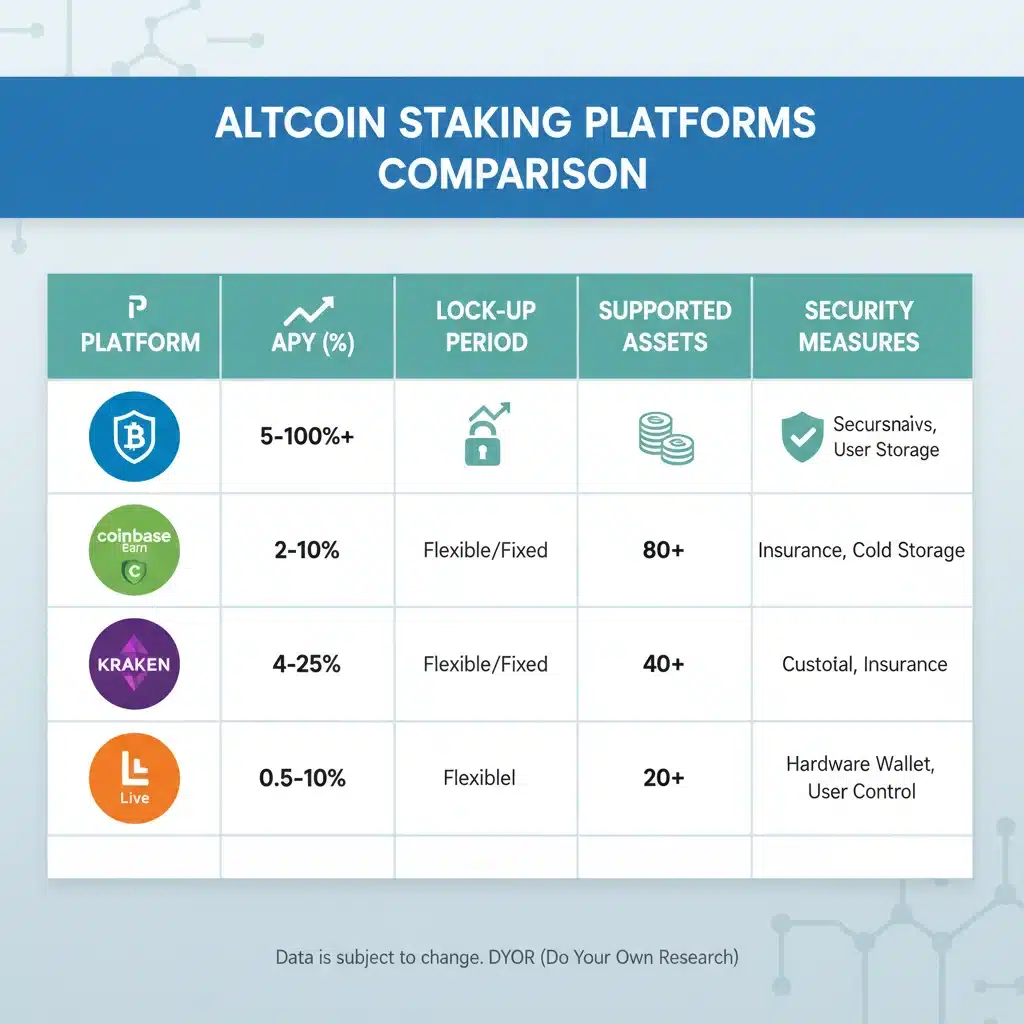
To achieve a 12% APY, you’ll likely need to explore options beyond basic exchange staking, venturing into more advanced DeFi protocols or carefully selected direct staking opportunities that offer higher returns. Always conduct thorough due diligence on any platform before committing your funds.
Advanced Altcoin Staking Strategies to Target 12% APY
Simply staking an altcoin with a listed 12% APY isn’t enough; you need a dynamic strategy to maintain and potentially exceed that target. Here are some advanced techniques:
1. Dynamic Portfolio Allocation
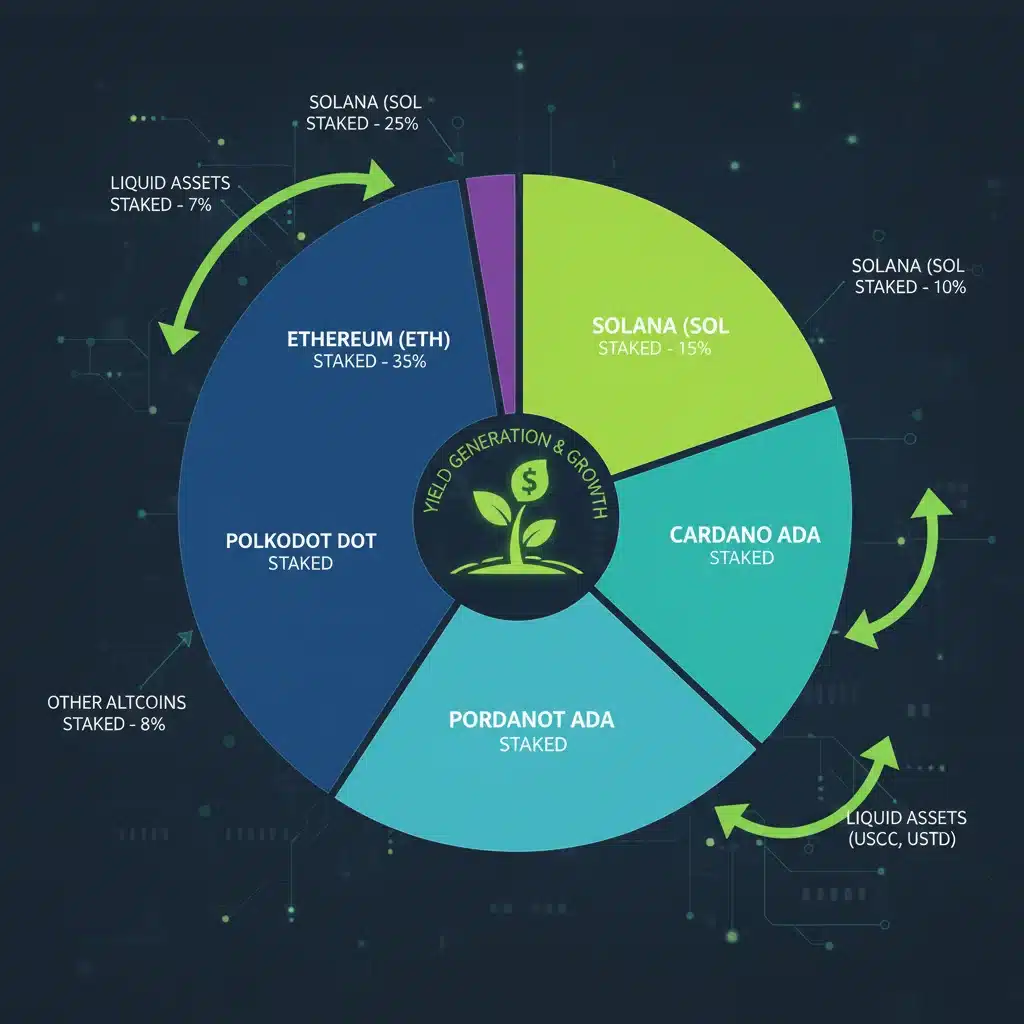
Don’t put all your eggs in one basket. Diversify your staking portfolio across multiple altcoins and platforms. This hedges against potential price drops in a single asset or platform failures. Regularly review the performance of your staked assets and rebalance your portfolio as market conditions change. If one altcoin’s APY drops significantly or its fundamentals weaken, be prepared to shift your capital to more promising opportunities.
2. Compounding Your Rewards
The power of compounding is immense. Reinvest your staking rewards back into the same altcoin to earn rewards on your rewards. Many platforms offer automatic compounding, while others require manual action. Even small, consistent reinvestments can significantly boost your overall APY over time, turning an initial 10% into a much higher effective yield.
3. Leveraging DeFi Opportunities (Yield Farming and Liquidity Providing)
For those comfortable with higher risk, DeFi offers avenues like yield farming and providing liquidity to decentralized exchanges (DEXs). These often provide significantly higher APYs than traditional staking, sometimes well above 12%. However, they come with risks such as impermanent loss (for liquidity providers), smart contract vulnerabilities, and rug pulls. Thorough research and understanding of the specific protocol are paramount.
4. Participating in Validator Networks
If you have a substantial amount of capital and technical expertise, running your own validator node can offer the highest potential returns and direct control. However, this involves significant setup costs, ongoing maintenance, and the risk of slashing (penalties for validator downtime or misbehavior). For most investors, delegating to a reputable validator is a more practical approach.
5. Staking Derivatives and Liquid Staking
Liquid staking protocols (e.g., Lido Finance for Ethereum, or similar solutions for other altcoins) allow you to stake your assets while receiving a liquid token representing your staked position. This liquid token can then be used in other DeFi protocols (e.g., as collateral for loans, or in liquidity pools) to earn additional yield, effectively creating a layered staking strategy. This can significantly boost your overall APY, but also introduces additional layers of smart contract risk.
Risk Management in Altcoin Staking
While the prospect of a 12% APY is enticing, it’s crucial to approach altcoin staking strategies with a robust risk management framework. The crypto market is inherently volatile, and staking introduces its own set of unique risks:
1. Price Volatility
The most significant risk is the price of your staked altcoin declining. Even a high APY can be wiped out if the underlying asset loses substantial value. Diversification is key, as is only staking capital you can afford to lose. Regular market analysis and staying informed about your chosen altcoin’s developments are essential.
2. Smart Contract Risks
If you’re using DeFi protocols or even some centralized platforms, there’s a risk of smart contract exploits or bugs. Always choose reputable protocols that have undergone multiple audits by independent security firms. Even then, no smart contract is 100% foolproof.
3. Slashing Penalties
If you’re delegating to a validator, ensure they have a strong track record and reliable infrastructure. Poor validator performance (e.g., downtime, double-signing) can result in slashing penalties, where a portion of your staked assets is taken away. Research your validators carefully.
4. Liquidity Risk (Lock-up Periods)
As mentioned, lock-up and unbonding periods can tie up your capital, preventing you from reacting quickly to market downturns or taking advantage of new opportunities. Balance your desire for high APY with your need for liquidity. Liquid staking solutions can mitigate this, but introduce additional smart contract risk.
5. Regulatory Risk
The regulatory landscape for cryptocurrencies is still evolving. New regulations could impact the legality or profitability of certain staking activities, especially in specific jurisdictions. Stay informed about regulatory developments that could affect your investments.
Practical Steps to Implement Your 12% APY Staking Strategy
Now that we’ve covered the theoretical aspects, let’s outline a practical approach to implementing your altcoin staking strategies:
- Research and Selection: Identify 3-5 altcoins with strong fundamentals, a sustainable staking model, and a current or projected APY that, when combined, could realistically average 12% or higher. Consider factors like network security, development activity, and community support.
- Platform Due Diligence: For each chosen altcoin, research the best staking platforms. Compare APYs, fees, lock-up periods, and security measures for centralized exchanges, DeFi protocols, and dedicated wallets. Don’t solely chase the highest APY; balance it with security and reliability.
- Wallet Setup and Security: Set up secure wallets (preferably hardware wallets for larger sums) for your chosen altcoins. Understand how to delegate your tokens safely. Never share your private keys or seed phrases.
- Start Small and Scale: Begin with a smaller amount of capital to test your chosen strategy and platform. Once you’re comfortable and have verified the process, you can gradually increase your staked amount.
- Monitor and Rebalance: Regularly monitor the performance of your staked assets, the APYs offered, and the overall market conditions. Be prepared to rebalance your portfolio, adjust your staking positions, or explore new opportunities if your target APY is not being met or if risks increase.
- Compounding: Actively compound your rewards. Whether manually or automatically, reinvesting your earnings is crucial for maximizing your effective APY and reaching the 12% target more efficiently.
- Stay Informed: The crypto space moves fast. Continuously educate yourself on new projects, market trends, regulatory changes, and security best practices. Join communities, follow reputable crypto news sources, and always question information.
The Current Market Landscape and Future Outlook
The current crypto market is dynamic, with periods of high volatility interspersed with significant growth. Achieving a 12% APY through altcoin staking strategies is certainly possible, especially in a bull market where altcoin prices are appreciating, amplifying staking rewards. However, bear markets present their own challenges, as price depreciation can offset staking gains. This highlights the importance of selecting fundamentally strong projects that can weather market downturns.
Looking ahead, the trend towards Proof-of-Stake continues to strengthen, with more projects migrating to PoS or launching with it from the outset. This means a growing number of staking opportunities. Innovations in liquid staking and DeFi protocols are also likely to continue, offering new and potentially more lucrative ways to earn yield. However, increased regulatory scrutiny is also a possibility, which could impact the accessibility and profitability of certain staking activities.
Conclusion: Mastering Altcoin Staking for Sustainable Yield
Achieving a consistent 12% APY with altcoin staking strategies is an ambitious but achievable goal for the diligent investor. It requires a blend of careful research, strategic platform selection, dynamic portfolio management, and a robust understanding of risk. By focusing on altcoins with strong fundamentals, leveraging compounding, and exploring advanced DeFi opportunities with caution, you can significantly boost your passive income in the crypto space.
Remember that no investment is without risk, and higher returns often come with higher risk. Always do your own research (DYOR), never invest more than you can afford to lose, and prioritize the security of your assets. With the right approach, altcoin staking can become a powerful tool in your financial arsenal, helping you build wealth and navigate the exciting world of decentralized finance.